Have one like this?
Upload a photo for a free check of what yours may be worth.
Lot description
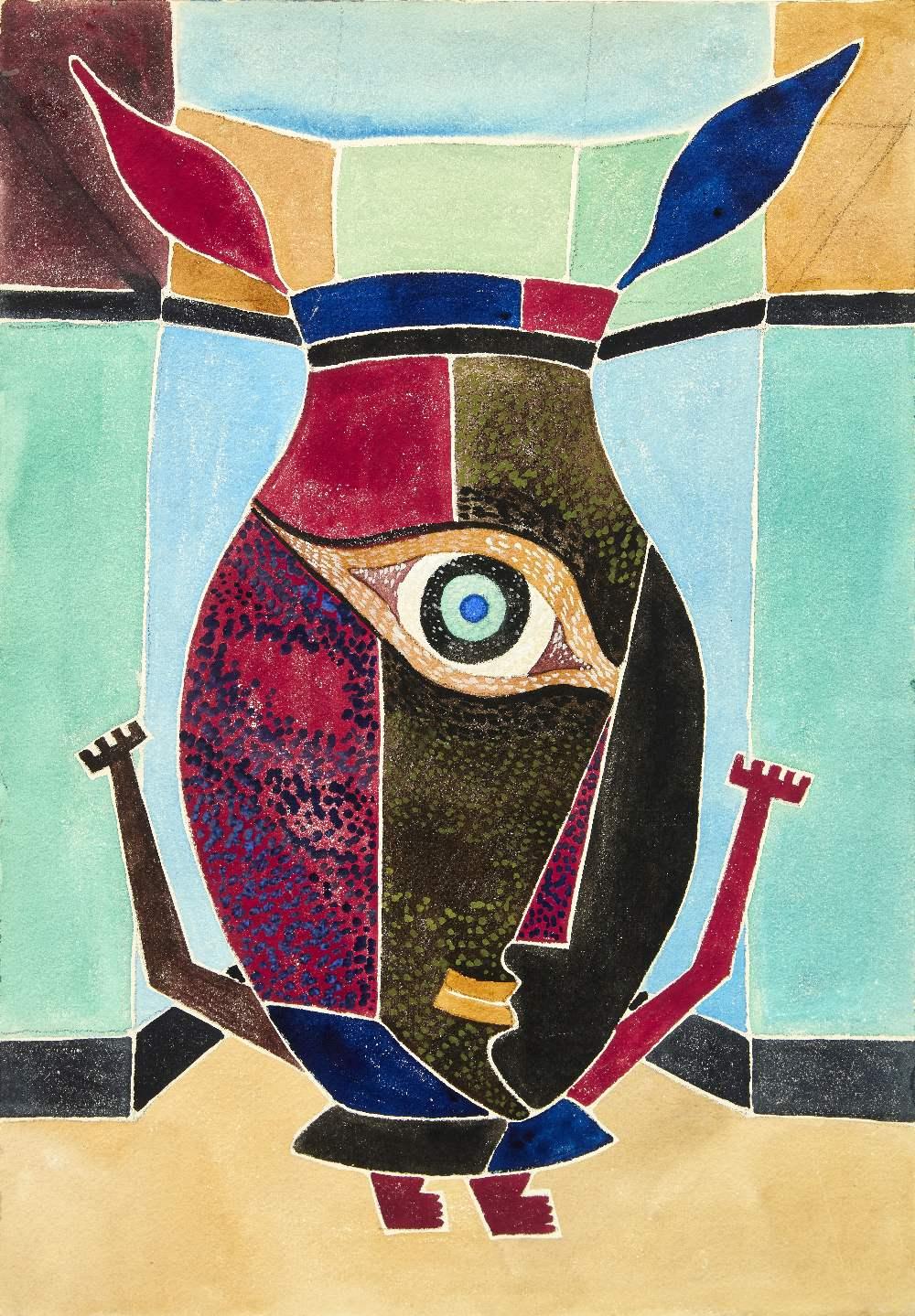
Basil Rákóczi, British/French 1908-1979 - Cenochoe, 1948; watercolour on paper, bears inscription with artist's name, title, date and numbering on the reverse '1000 Cenochoe / B. Rákóczi 48', 50.5 x 35.3 cm (unframed) (ARR) Provenance: the Estate of the Artist Note: in this early work, Rákóczi creates a Surrealist image based on a classic Corinthian vase from around 500BC called a cenochoe, meaning a wine pitcher or jug. Rákóczi (1908-1979) and his partner, Kenneth Hall (1913-1946), founded The White Stag Group of modernist artists in 1935. Influenced by Surrealism and founded in London, they moved to Ireland in late 1939, following the start of the Second World War. There the Group flourished, gaining both local and continental members, including Nano Reid and Patrick Scott. Rakoczi and Halls work brought a modernism to Dublin and they gained a sizeable and positive reputation for their work, which focused on psychological states and esoteric myth and symbols. Instrumental to both artists careers, was the influential dealer Lucy Wertheim, who ran a celebrated gallery in Mayfair during the 1930s, one of the spaces focused on young artists working in a Modern idiom. Wertheim promoted major figures such as Barbara Hepworth, Christopher Wood, Frances Hodgkins and Henry Moore at an early age, but she is perhaps most known for her support of a diverse group of lesser known artists, many of whom worked in either expressionistic or faux-naïve styles. An exhibition of Wertheims legacy 'A Life in Art & Reuniting the Twenties Group' has recently been on display at Towner Eastbourne, UK, including works by both Hall and Rákóczi.