Have one like this?
Upload a photo for a free check of what yours may be worth.
Lot description
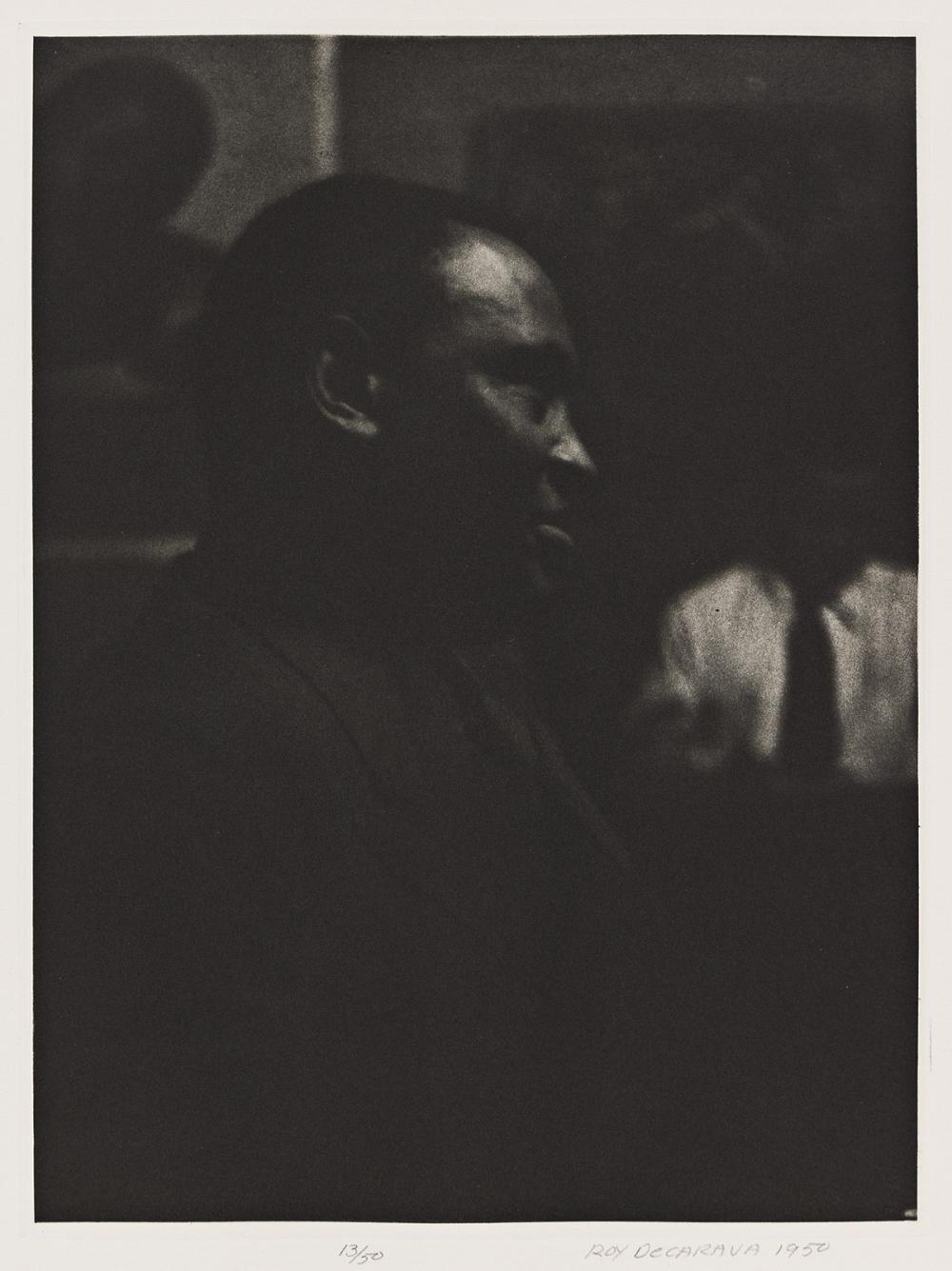
ROY DECARAVA (1919-2009) Portfolio entitled Roy DeCarava. 1950-79; printed 1991. With 11 (of 12) stunning, hand printed dust-grain photogravures made from DeCarava's poignant photographs, including many of his iconic images of Harlem. Photogravures, the images measuring approximately 8x11 inches (20.3x28 cm.), and the reverse, the sheets 18x22 inches (45.7x55.9 cm.), each with DeCarava's signature, negative date, and edition notation 13/50 in pencil on recto. Elephant folio-sized black clamshell case with a gilt-lettered leather title label; contents loose as issued. Renaissance Press Paul Robeson, New York, 1950 * Lingerie, New York, 1950 * Horace Silver, New York, 1963 * Across the Street, Night, Brooklyn, 1978 * Night Feeding, Brooklyn, 1973 * Billie [Holiday] at Braddocks, New York, 1952 * Man in Window, Brooklyn, 1978 * Fourth of July, Prospect Park, Brooklyn, 1979 * Dancers, New York, 1956 * Four Men, New York, 1956 * Milt Jackson, New York, 1956 This edition is limited to 62 sets. The plates were subsequently destroyed by the artist. Roy DeCarava began his artistic career as a painter and print-maker. He initially began using a hand-held camera as a tool to aid in his sketches. Yet within only a few years, DeCarava embraced photography with fervor, embarking on a career in the medium in the late 1940s that would take him into the present day. Born and raised in New York, DeCarava is Harlem's photographer, as his honest and gripping photographs of the vagaries of modern life attest. Showcasing the urban environment in all of its gritty glory, DeCarava accentuates the quotidian activities of the everyday African-American men and women, avoiding sensationalist and outré crafted personas in favor of social realism. DeCarava describes his methodology as, "I want to photograph Harlem through the Negro people. Morning, noon, night, at work, going to work, coming home from work, at play, in the streets, talking, laughing, in the home, in the playgrounds, in the schools, bars, stores, libraries, beauty parlors, churches . . ." While not the first African-American photographer to chronicle Harlem, DeCarava quickly became its champion as the neighborhood morphed from the center of artistic and intellectual creativity during the Harlem Renaissance to an essential destination for Civil Rights luminaries and their messages of change. Imbued with a dark tonal range, DeCarava's photographs provide keen insight to a deft eye intent on discovering visual truths. He illuminates integral components of mid-twentieth century urban life in New York.