Lot description
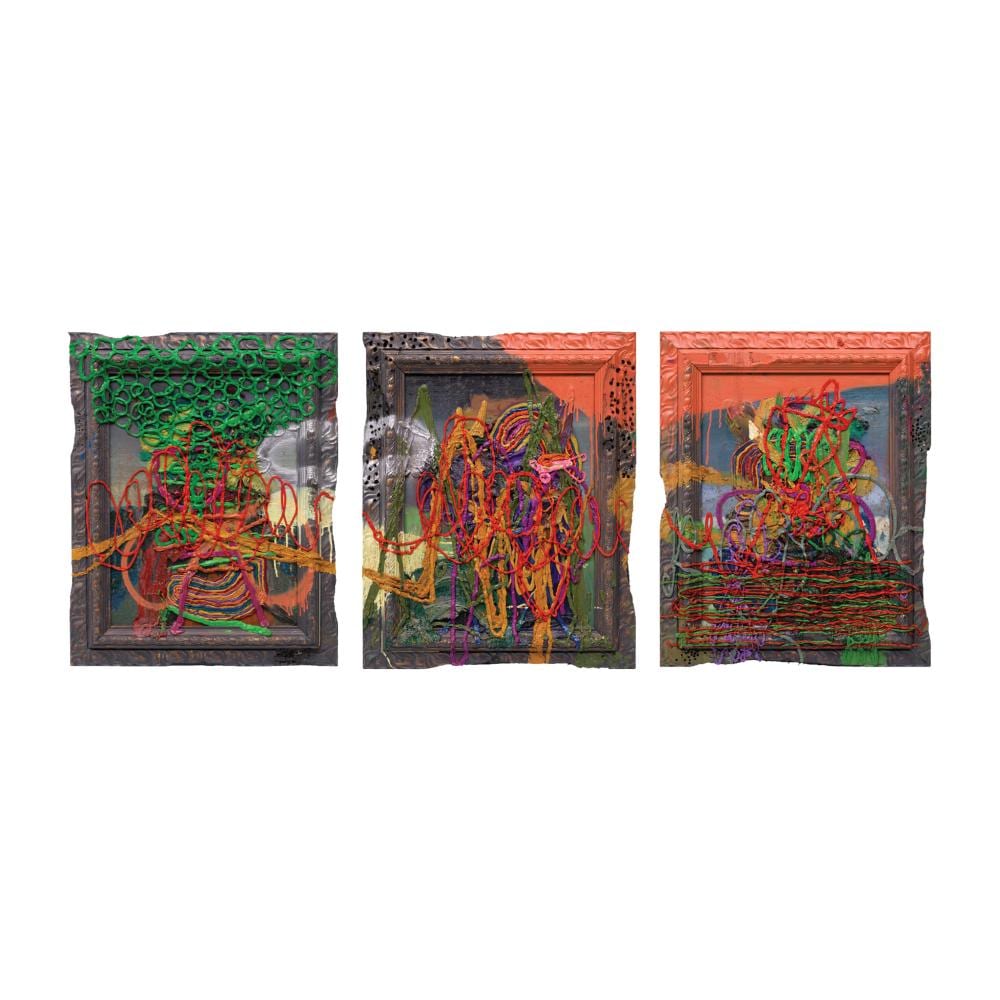
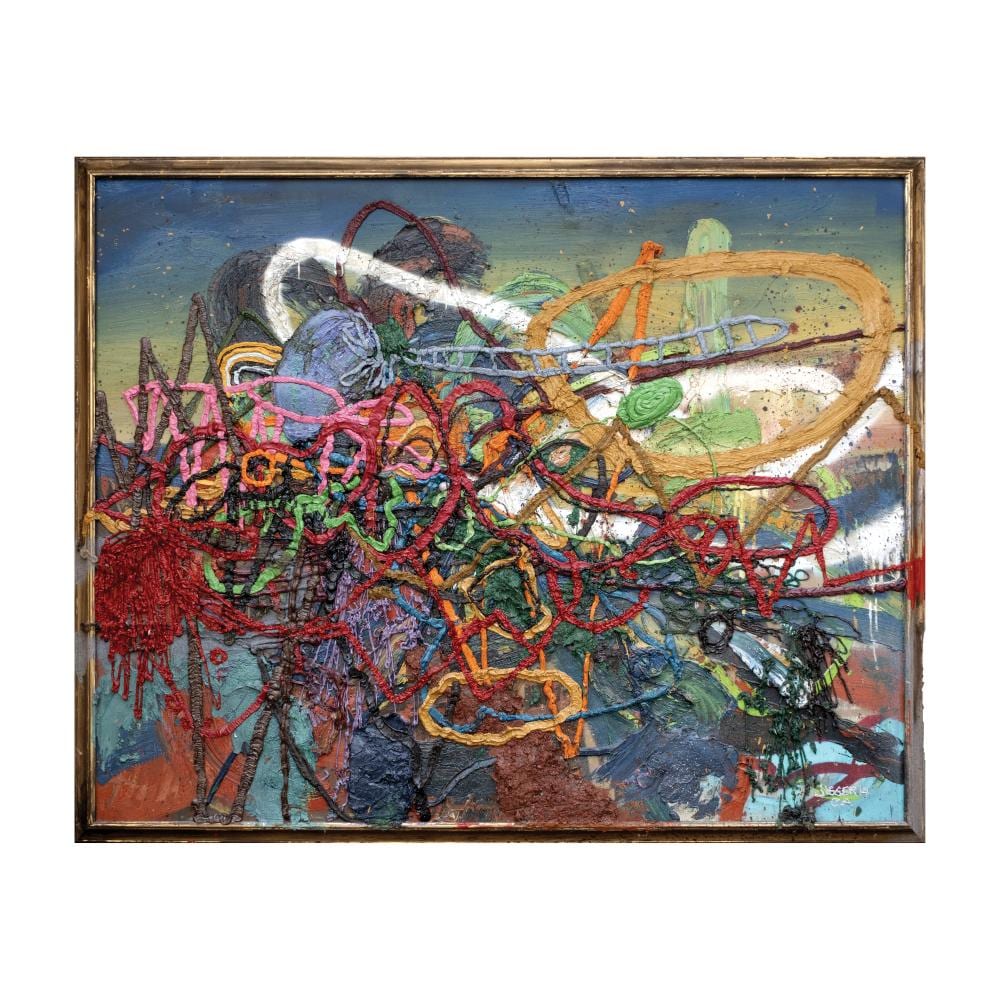
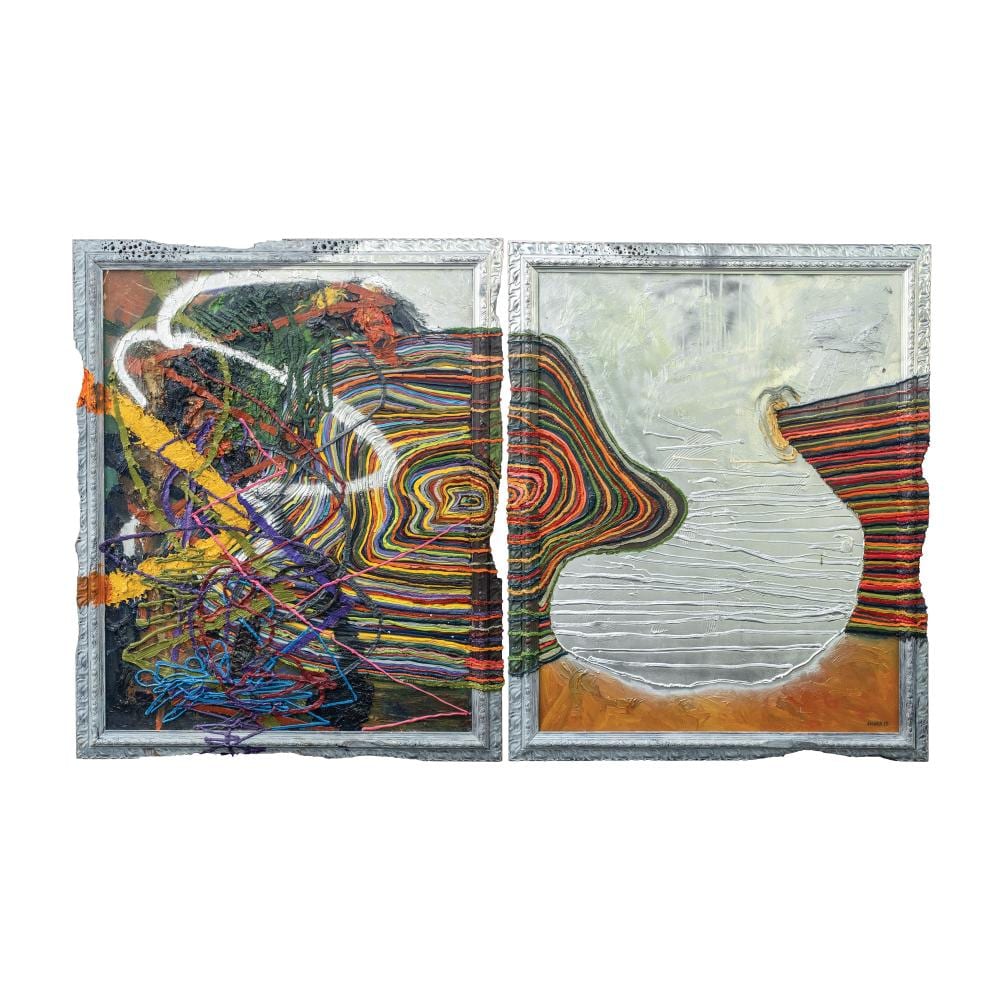
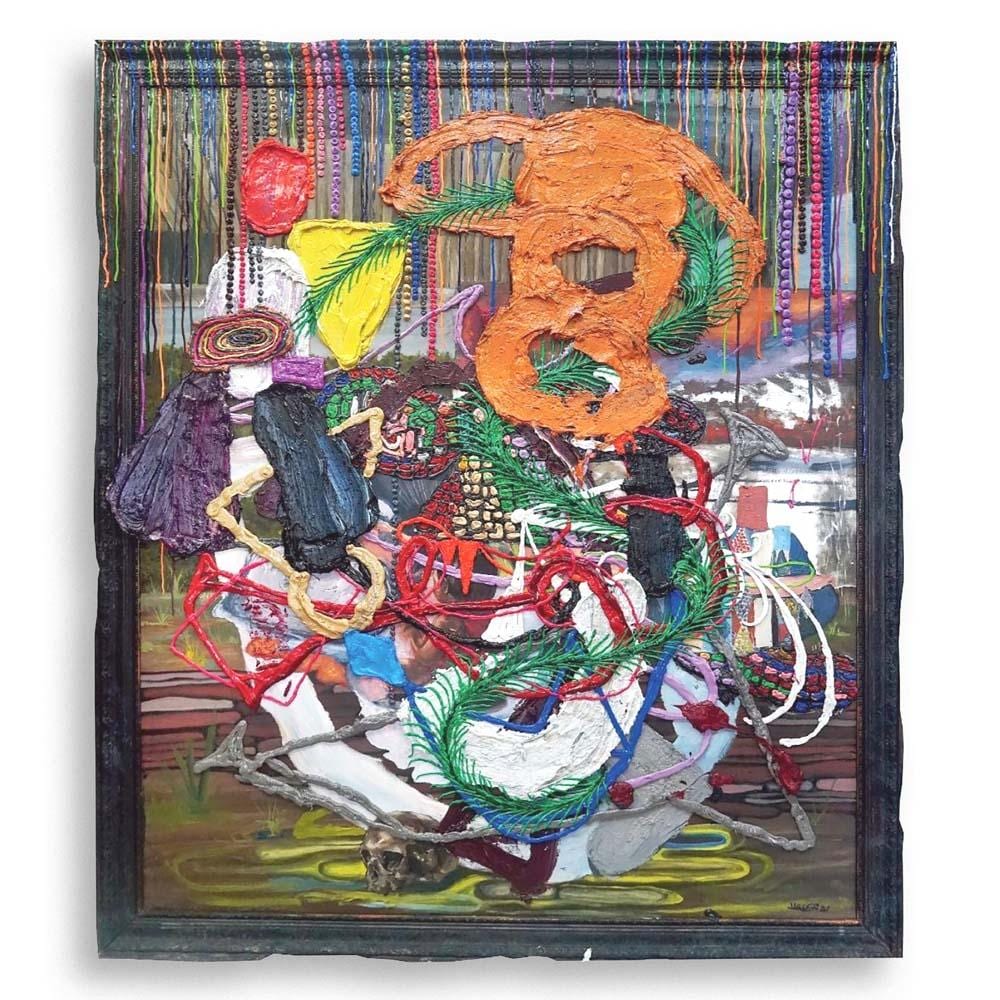
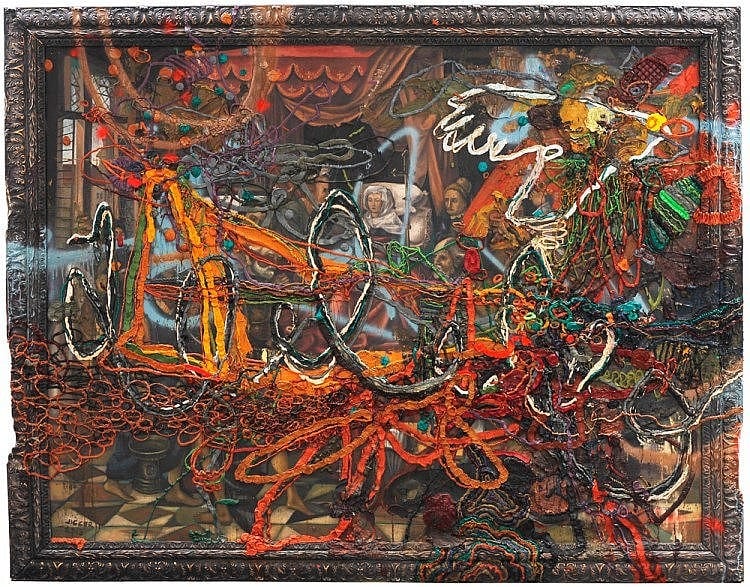
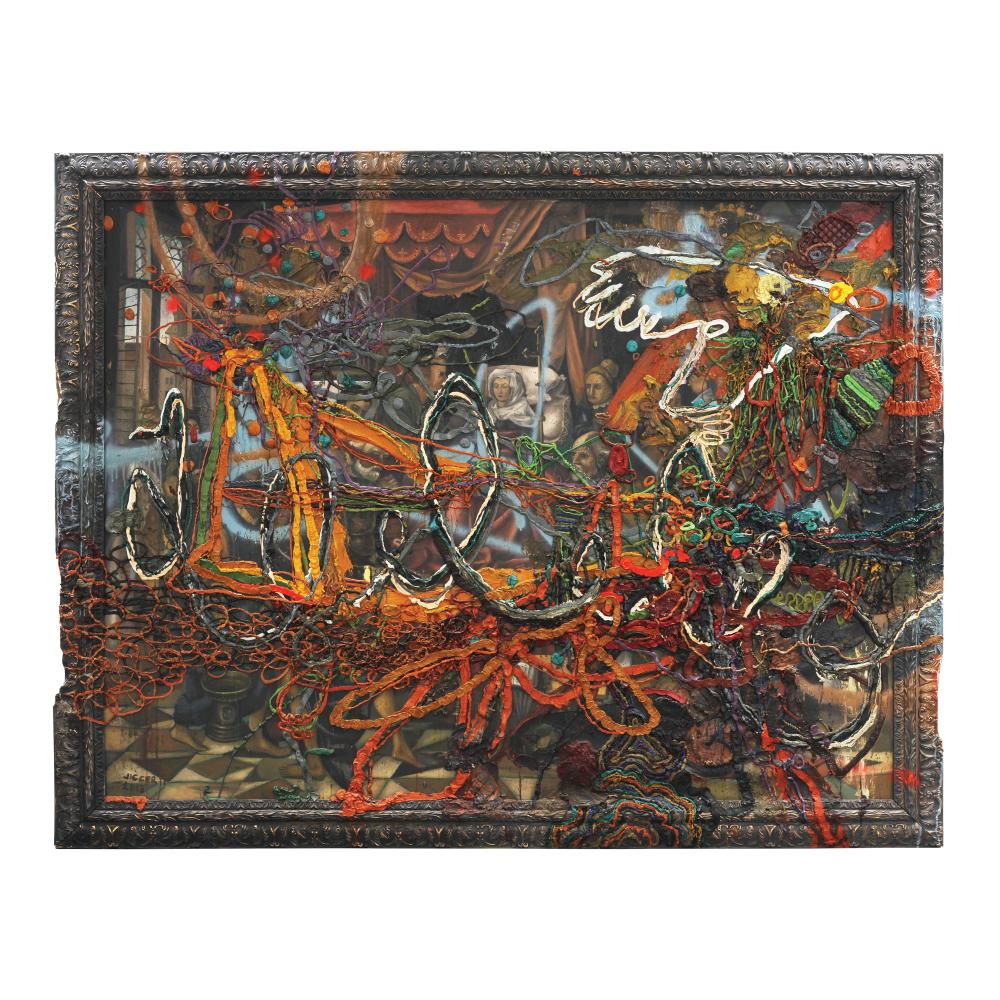
Blares of the Opposite signed and dated 2013 (lower left) oil and spray paint on canvas and wooden frame 65” x 80 1/2” (165 cm x 204 cm) PROVENANCE Sothebys, Modern and Contemporary Southeast Asian Paintings, Hongkong, April 6, 2013, Lot 232 León Gallery, The Kingly Treasures Auction 2015, Makati City, 05 December 2015, Lot 194 LITERATURE Arndt, Mathias, ed. Wasak! Filipino Art Today. Berlin: DISTANZ Verlag GmbH, 2016. Full-color illustration and paintign description on page 54. Ito, Lisa and Benny Nemerofsky Ramsay. Jigger Cruz. Berlin: DISTANZ Verlag GmbH, 2015. Full-color illustration on page 20. EXHIBITED ARNDT Fine Art, Wasak! Filipino Art Today (Group Exhibition Zean Cabangis, Annie Cabigting, Marina Cruz, Kawayan de Guia, Nona Garcia, Manuel Ocampo, Ronald Ventura, Jose John Santos III, etc.), Berlin, Germany, 5 December 2015 - 30 January 2016 The works of Jigger Cruz are an exercise in understanding two paintings existing simultaneously on the same canvas. Equal parts sacrilegious dissection and faithful reconstruction, Cruz is unrepentant yet purposeful in his usage of vandalism and controlled destruction. The surfaces of his works deceptively look like they were only thick squiggly lines of paint of varying textures; however, look closely at the background and you will find that it is not the case. The background is a classical type of painting following the basic compositional style of Western art. Sometimes, it is a painting Cruz painted himself, but sometimes, like this one, it is a recreation of an already existing masterpiece. Blades of the Opposite features Joos Van Cleve’s "The Death of the Virgin." In this scene, the central figure is the Virgin Mary lying in bed, draped in white amidst an overwhelmingly red and yellow room. Blades of the Opposite takes not just paint but also graffiti spray on his replica of the painting. Streaks of orange, blue, and green cover almost the entire canvas, leaving only Mary clearly visible. “As Cruz paints over existing surfaces charged with meaning, he leaves room for interpretation, for doubt, for the very equivocacy of the paint that lies splattered on the studio floor,” Benny Nemerofsky Ramsay writes in the book JIGGER CRUZ. “One cannot say if Cruz’s intervention is about destruction or reverence, aggression or ennui. The artist seems alternatively furious with, and bored by, the cultural baggage with which he is forced to contend. (Hannah Valiente)