Lot description
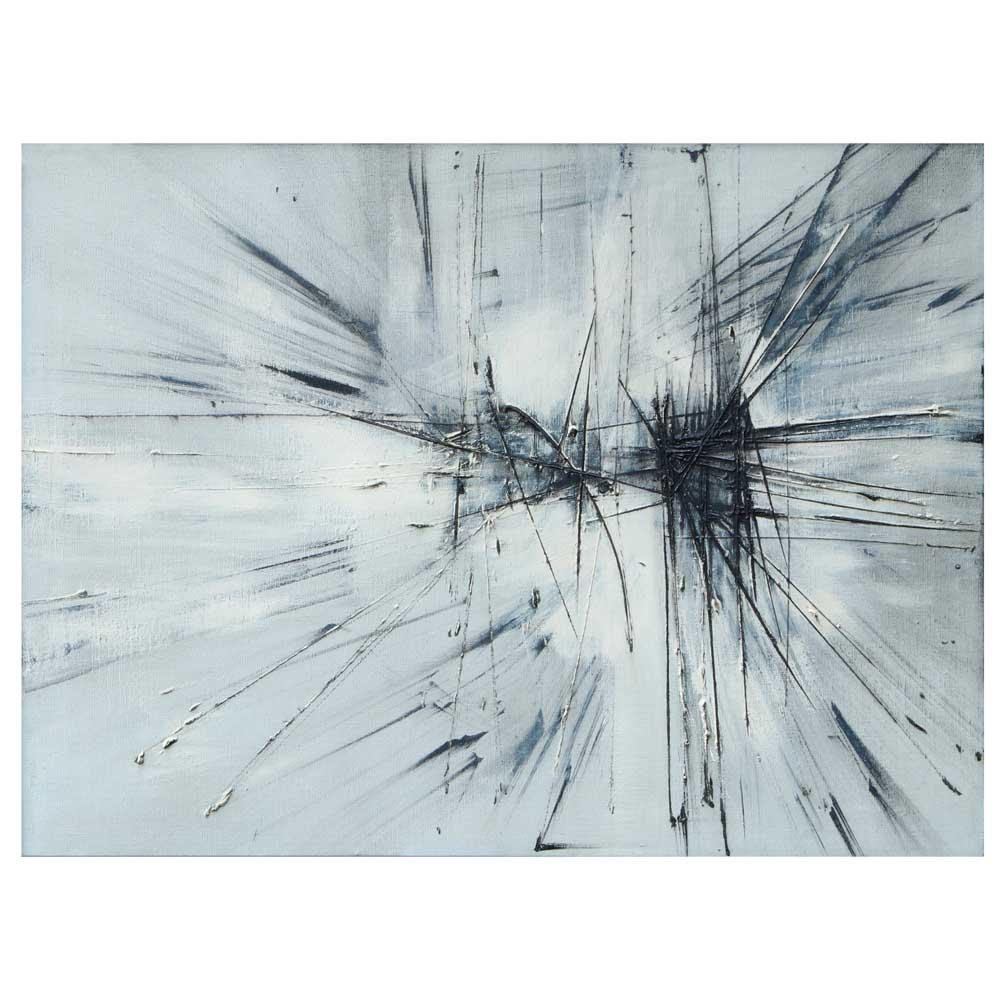
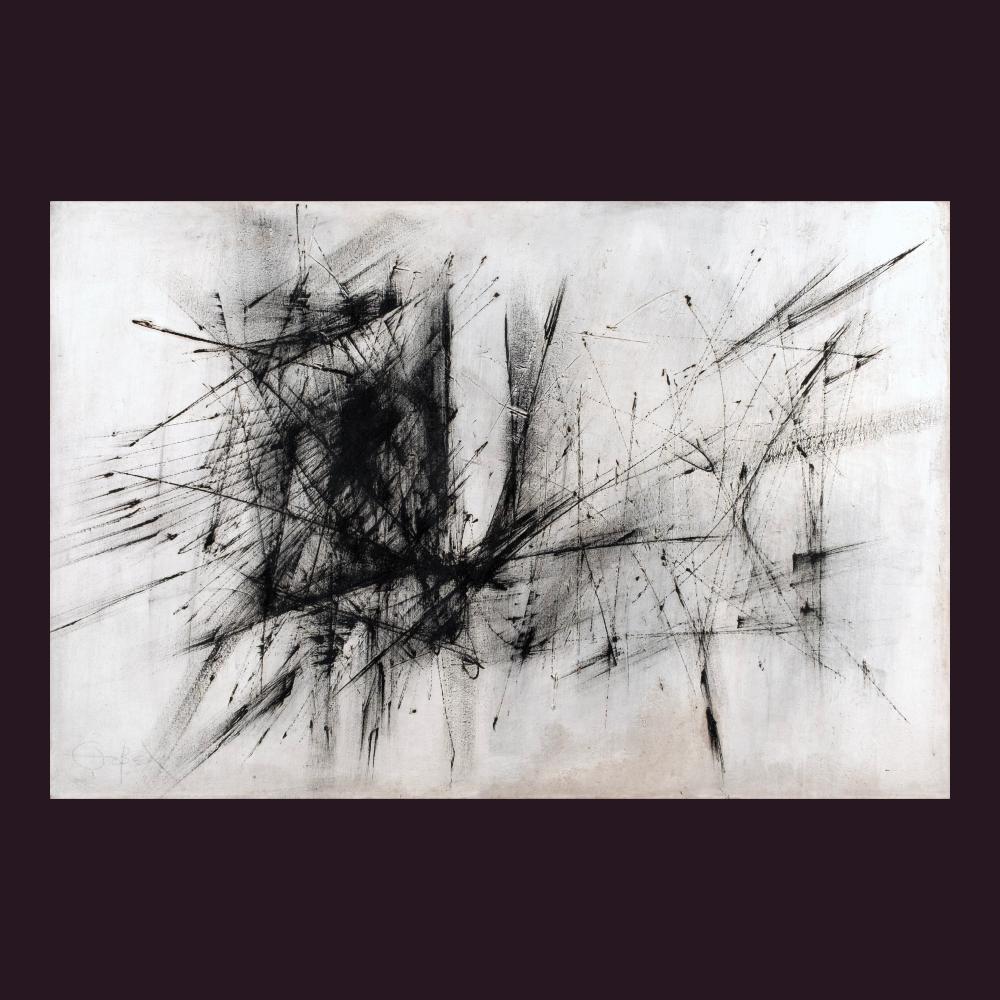
PROPERTY OF AN OLD MANILA FAMILY Tarraco signed (lower left and verso), dated 1960, and inscribed "Tarraco / #369 / Dec 17/60" (verso) dated 1960 oil on canvas PROVENANCE Luz Gallery LITERATURE Torres, Emmanuel. "Calligraphy, space, black & white." The Sunday Times Magazine. January 29, 1961. Black-and-white illustration on page 14. DE LA TORRE, Alfonso (Director). In collaboration with Rafael Pérez-Madero. Fernando Zóbel. Catalogue Raisonné of Paintings (1946-1984)-Catálogo Razonado de Pinturas de Fernando Zóbel (1946 - 1984). Madrid-Manila: Fundación Azcona, Fundación Juan March, Ayala Foundation and Fernando Zóbel Heirs, 2023. Nº cat. 60-24, p. 200. EXHIBITED The Luz Gallery, Fernando Zóbel: Exhibition of Paintings, Manila, 14 - 31 January 1961 returned to Manila. Zóbel's restrained palette in his Serie Negra was majorly influenced by his friendship with the El Paso artists. However, Zóbel's Serie Negra veered from the group's political commentaries by focusing on gestural meditation, akin to Oriental calligraphy, and was much closer to Rueda's painterly and lyrical abstraction. Serie Negra, symbolizing Zóbel's own freedom Zóbel succinctly described his black paintings as: "Painting of light and line, of movement. Pictures of a swift, improvised execution, like Chinese and Japanese painting. Improvisation permitted by...infinite...drawings. Line; trajectory. Imprint of movement. Painting without any fuss, without anguish, without any melodramatics.” By the time the Serie Negra was coming to fruition, Zóbel had realized that color was beginning to serve merely aesthetic purposes. His introduction to the monochromatic works of El Paso made him discover the infinite expressionism inherent in black and white. For Zóbel, fond references to the Spanish landscape are seen in some works of the Serie Negra, made possible through the seemingly swift movement of black lines. In this case, Zóbel's Tarraco sees him "departing" from his hectic Manila corporate life and into the solemn, meditative search for personal freedom and expression, which he found in Spain. Zóbel's identification with the Spanish abstractionists of his generation was the final key to his freedom, and the Serie Negra became the ultimate symbol of this newfound joy. As Canogar once said, "In our Spanish culture, black is a symbol of mourning and death, connoting transcendental transit to another dimension, unknown and mysteriously always present on man's horizon." What ultimately binds El Paso and Zóbel is a unifying picture of the human spirit yearning to break free from all constraints. For Zóbel, the transition to monochrome meant the end of a former life and the metamorphosis of an existence unbound, one that pursued the creative expressions of the soul. The connection with Oriental roots As seen in Tarraco, a heavy concentration of black paint is seen on the left side, likely representing the hilly city of Tarragona and its dynamic confluence of ancient Roman structures (the old terraces the Romans built to adapt to the terrain), medieval Catholic complexes, and modern-day urban planning all overlooking an expanse of white evoking the Mediterranean Sea. This time, Zóbel's draftsmanship becomes the core, accentuated by the solid, rhythmical blacks applied through a syringe on a field of whites, reflecting the immensity of a landscape through the delicate tension between line and space. The absence of colors allows form and space to shine through, with Zóbel's gestural draftsmanship spiritually drawing the viewer into the setting he evokes, making a certain natural quality (the movement of a bustling cityscape where the ancient meets the cosmopolitan) discernible beyond the plastic forms. Zóbel observed and studied the Spanish landscape, producing countless drawings of its everyday energies and the rhythms of quaint Spanish urban living, meditating on them like an Oriental calligrapher, before translating them onto the canvas. This affirms that for Zóbel, "order is essential,” emphasizing the need for composition and method. This practice aligned with the Oriental principle of black and white—the yin and yang—the dual-centric perspective on harmony, centered on the balance between unrestrained introspection and outward expression, and the need for disciplined practice to achieve a liberating expression. With this, Nature is esteemed, highlighting our oneness with it, a mark of poetic Oriental elegance. Zóbel's interest in Oriental art was further fueled by the archaeological discovery of Chinese porcelains at the family's Calatagan estate in Batangas, prompting him to study Chinese painting and calligraphy under Professor Chen Bing Sun, often referred to as the “Father of Chinese Brush Painting in the Philippines.