Have one like this? Check yours freeOr have an appraiser value it
Lot description
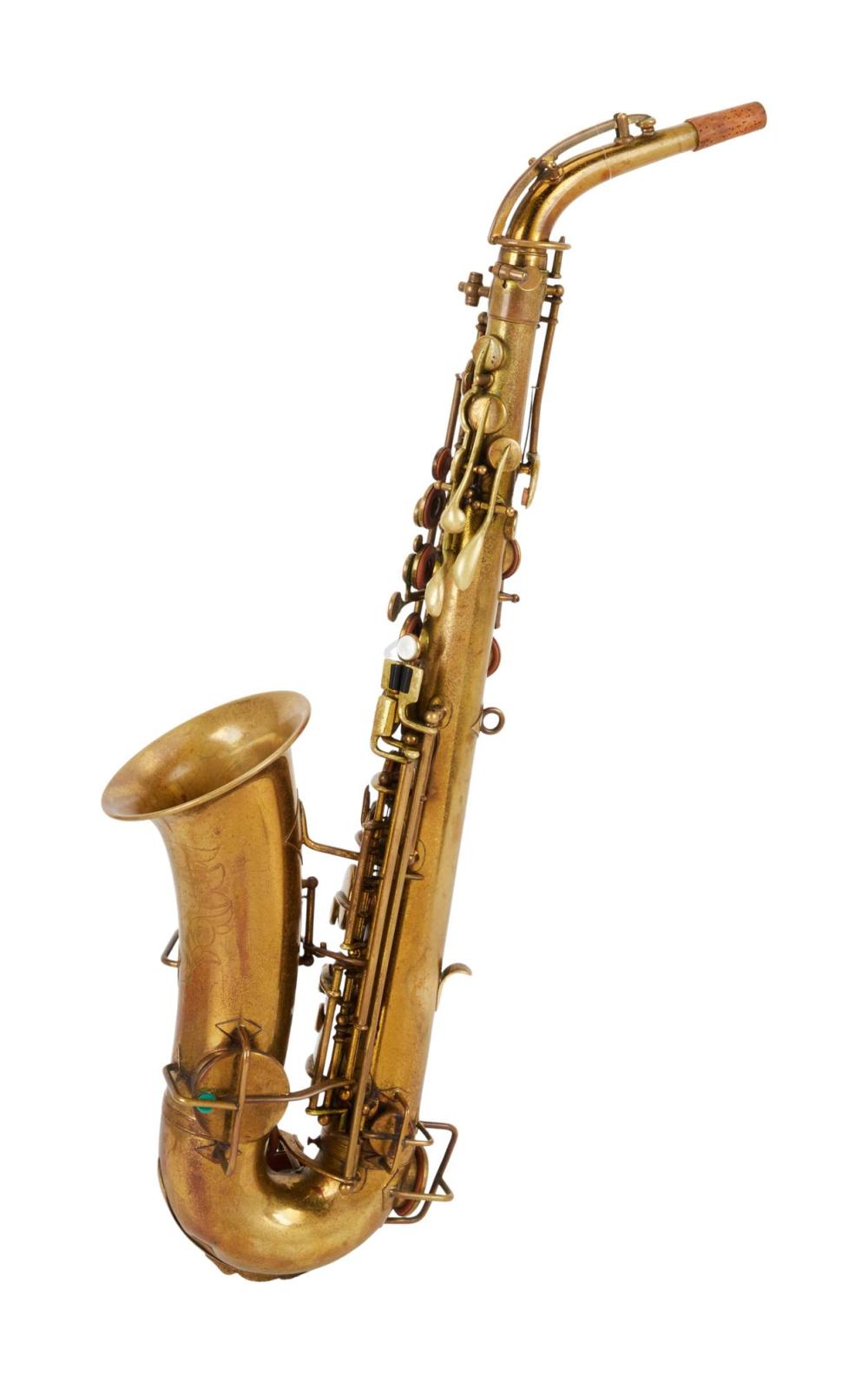
A 1925 Buescher True Tone alto saxophone (serial number: 176254) with Berg Larsen mouthpiece played by John Coltrane during a Prestige Records recording session with the Gene Ammons All Stars that took place in the Van Gelder studio in Hackensack, NJ on January 3, 1958. This historic session resulted in two Gene Ammons All Stars albums: The Big Sound (1958) and Groove Blues (1961). The alto saxophone was loaned to Coltrane by former Prestige Records producer, Down Beat magazine editor, and jazz critic, Ira Gitler, and used by Coltrane while recording the following tracks: "The Real McCoy" (The Big Sound) and "Groove Blues," "Ammon Joy," and "It Might As Well Be Spring" (Groove Blues). The instrument was additionally played on Prestige recordings over the years by other musicians (such as Jackie McLean and Sonny Stitt). Made by the Buescher Band Instrument Company in Elkhart, Indiana. Brass, plateau keys with mother of pearl key touches, Berg Larsen mouthpiece. Bell engraved "The Buescher / Elkhart Ind" with serial number and True Tone trademark stamped below the thumb rest. Housed in a non-original black soft case. Includes a cloth and an additional ligature. The 1958 Gene Ammons All Stars' session for Prestige was one of many that year for the prolific Coltrane, but one of the very few times he recorded on the alto saxophone. While Coltrane started on clarinet and transitioned to alto sax in high school, he would become best known for his ground-breaking work on the tenor saxophone throughout the 1950s and into the mid-1960s. His focus on the tenor is likely why he wouldn't have had an alto horn of his own for the 1958 session (he would return to the alto later, playing a Yamaha in Japan in 1966 and on). Gitler, who was no longer a producer for Prestige by 1958 but continued to attend many recording sessions, supplied the instrument, which is mentioned in the liner notes for Groove Blues by Joe Goldberg: "Coltrane recorded on an instrument belonging to amateur altoist Ira Gitler, who would probably not quarrel with the opinion that no better use has ever been made of his horn." One can hear Coltrane's unmistakable tone coming out of this historic horn on these tracks, his "sheets of sound" (a phrase coined by Gitler soon after this recording to describe Coltrane's distinctive style of playing), though it was not his usual tenor saxophone or even an instrument he had ever played before. Goldberg elaborates in his liner notes: "John's conviction in his conception is so strong that it carries through identically no matter what horn he chooses. These solos are, I think, some of his very best on any horn: the by now well-known Coltrane fury and intensity is present throughout most of the record." Coltrane's time with Gitler's Buescher was memorialized in legendary photos by Esmond Edwards, which were included in the extensive booklet for the 2009 Coltrane box set Side Steps. Coltrane can be seen playing the Buescher in several of those photos (which depict a mouthpiece and ligature that appear to be those that remain with the instrument to the current day). The instrument's historic significance has been recognized several times in recent years, appearing in exhibitions such as The Grammy Museum's Chasing Trane: John Coltrane's Musical Journey Transcended (2017-2019), the Grammy-curated A Love Supreme: The Jazz of John Coltrane Through the Eyes of Chuck Stewart in Coltrane's childhood hometown of High Point, North Carolina (2021), and Music America: Iconic Objects from America's Music History at the LBJ Presidential Museum Library in Austin, TX (2024).