Have one like this?
Upload a photo for a free check of what yours may be worth.
Lot description
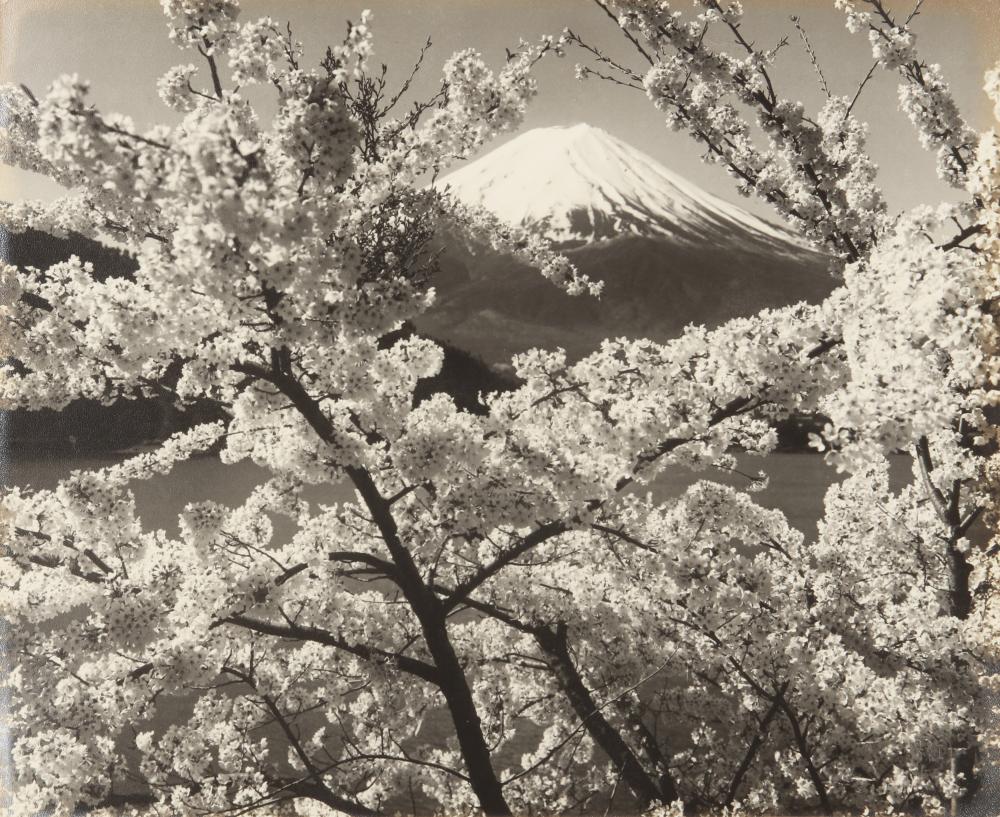
A unique and rare album, comprising 12 of Okada's most iconic views of Mt Fuji, compiled c.1960, each image size approx. 22.5 x 28cm, tipped-in to cream album pages, each print with the photographer's blindstamp lower image recto. Housed in a folio with textured blue cloth boards and tassle-tied binding, overall measuring 36 x 38.5cm, signed, titled, and stamped by the photographer in calligraphy on the title page. Japanese photographer Koyo Okada (1895–1972) was born in present-day Tokamachi, Niigata Prefecture, into a family of painters and calligraphers. Initially, he trained in law at Tokyo’s Waseda University, though the trajectory of his career was altered during a 1916 visit to Oshino Village near Mount Fuji. Okada was so moved by the majestic beauty of the mountain landscape that he began to document it with his camera. 'Fujiko-san', as he affectionately referred to the mountain, became his lifelong subject, and his images came to define the visual expression of Japan’s most sacred mountain. Okada opened his first photo studio in Tokyo in 1925, and by the 1930s his landscape photography had gained national attention. In 1923, he documented the Great Kanto Earthquake for the International Red Cross, publishing Kanto Daishinsai Kinen Shashin-cho (Memorial Photographic Album of the Great Kanto Earthquake). During the 1930s, he also travelled to Japan’s new national parks, producing luminous images that brought him international recognition. In 1940, Okada founded the Mount Fuji Photography Association, serving as its first chairman. Although he lost his negatives and equipment during World War II, he resumed photographing Mount Fuji with renewed devotion. From the 1950s onward, his Tokyo atelier, first in Shibuya and later at his home in Kichijoji, Musashino City became the centre of his activity. At Kichijoji he built a small studio and a “Fujimidai” (Fuji-viewing platform) from which he photographed the mountain under changing skies. His studio also trained younger photographers, including Shirahata Shiro, and produced large-format prints, postcards, and photobooks in collaboration with Tokyo publishers such as Heibonsha, Tomondo, and the Social Thought Research Group. During the postwar economic boom, Okada developed a long relationship with Fuji Bank of Japan, which began using his Mt. Fuji photographs for its calendars in 1950. His images soon appeared in bank branches across the country, and framed prints were distributed as commemorative gifts for new branch openings and special customers. Fuji Bank’s use of his photographs helped make Mt. Fuji a national symbol of stability and beauty in the post-war era. By the 1960s, Okada’s Fuji landscapes were widely published and exhibited. His 1935 photograph Spring by the Lake became the basis for the reverse of Japan’s 1,000-yen note, and more than twenty of his works appeared on postage stamps. His prints were collected internationally, including by the Museum of Modern Art in New York. In 2004, the Koyo Okada Photo Art Museum was established in Oshino, Yamanashi Prefecture, to preserve his archive. The present album, compiled by Okada himself, is a showcase of Mount Fuji through the seasons, and highlights the serene, balanced, and deeply spiritual sensibilities of his practice. As he noted later in life, he was always in pursuit of documenting the mountains perfection: “No matter how many years I photograph her, I still cannot capture her as I see her in my heart.” Qty: (12) Provenance:Private Collection