Have one like this?
Upload a photo for a free check of what yours may be worth.
Lot description
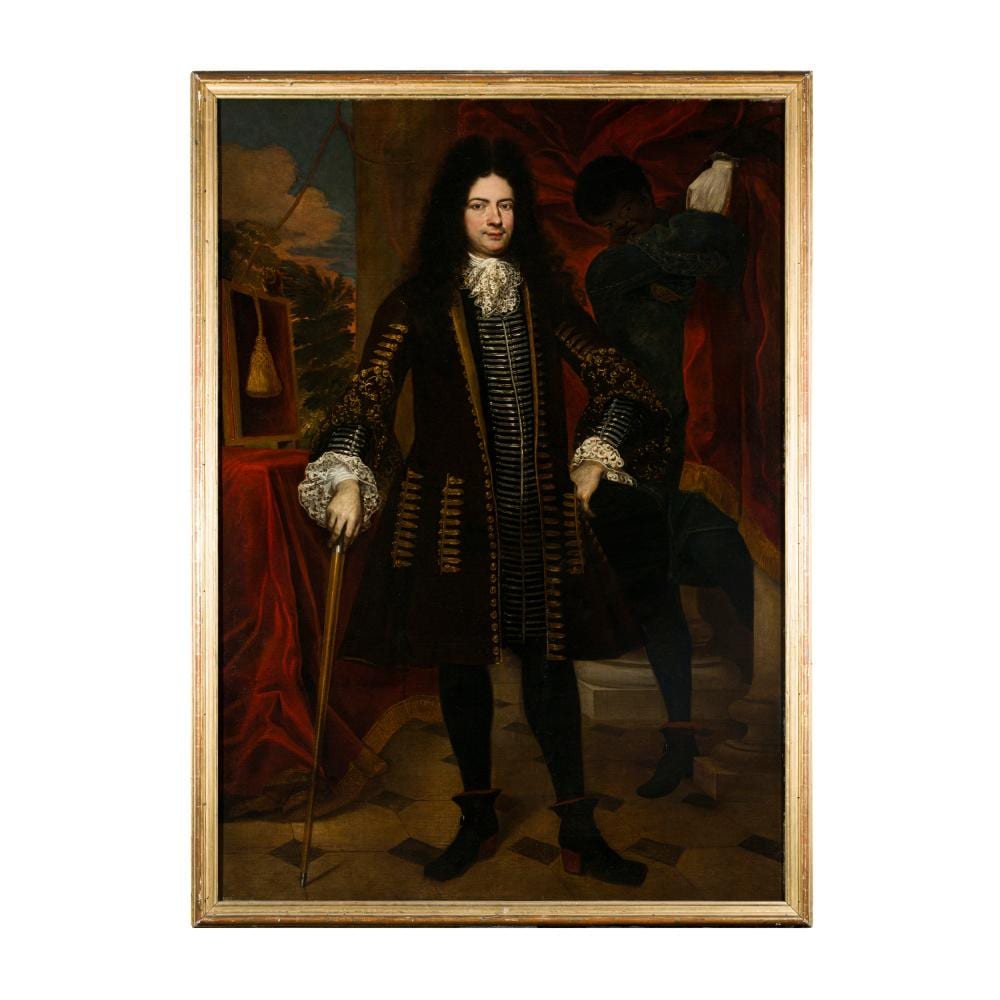
Giovanni Bernardo Carbone (Genova 1616 - 1683) Ritratto di gentiluomo con paggio Olio su tela 200 x 142 cm L’opera, di squisita qualità, palesa lo spirito della ritrattistica del Seicento, ovvero la dualità tra ostentato benessere e l'inquietudine derivata dal contesto politico e sanitario del periodo. Riferendosi alla città di Genova, il tutto si può riassumere con il titolo che Giorgio Doria dà al suo intervento nel catalogo della mostra Genova nell’età barocca (Nuova Alfa Editoriale, 1992), cioè "L’opulenza ostentata nel declino di una città". La marsina indossata dall'effigiato ci aiuta a datare l'opera nell'ultimo quarto del Seicento, ovvero alla fase ultima di Carbone. Il nostro vigoroso ritratto raffigura un austero nobile in un interno con giovane paggio di colore che sistema la tenda alle sue spalle, espediente pittorico desunto da Van Dyck (Ritratto di Elena Grimaldi conservato alla National Gallery di Washington) che conferma l'attribuzione a Carbone, che del maestro fiammingo fu il seguace più importante sotto la Lanterna. Inoltre la posa gentile e manierata è assunta dalla ritrattistica francese dell'epoca e ci informa di come l'artista genovese, anche se in tarda età, fosse informato e pronto ad adattare la sua arte ai nuovi stimoli d'oltralpe e alla mutevolezza delle mode. La formazione di Carbone si deve a Giovanni Andrea De Ferrari, Giovanni Benedetto Castiglione e Giovanni Andrea Podestà. Successivamente a concorrere alla formazione del suo stile pittorico concorrono il soggiorno a Venezia e la feconda amicizia con Valerio Castello e Giovanni Battista Carlone. A determinare la sua arte, comunque, fu il soggiorno genovese di Antoon van Dyck, avvenuto negli anni venti del XVII secolo. Carbone infatti fu uno tra i più apprezzati ritrattisti della sua epoca grazie alla sua capacità di adeguarsi allo stile vandyckiano propagandolo per larga parte del secolo. Giovanni Bernardo Carbone (Genoa 1616 - 1683) Portrait of a Gentleman with Page Oil on canvas 200 x 142 cm The artwork, of exquisite quality, manifests the spirit of 17th century portraiture, namely the duality between ostentatious wealth and the restlessness derived from the political and health context of the period. Referring to the city of Genoa, the whole thing can be summed up with the title that Giorgio Doria gives to his intervention in the catalogue of the exhibition Genova nell’età barocca (Nuova Alfa Editoriale, 1992), namely "L’opulenza ostentata nel declino di una città". The tailcoat worn by the effigy helps us date the artwork in the last quarter of the 17th century, that is, Carbone's last phase. Our vigorous portrait depicts an austere nobleman in an interior with a young black page arranging the curtain behind him, a pictorial device inferred from Van Dyck (Portrait of Elena Grimaldi preserved at the National Gallery in Washington) that confirms the attribution to Carbone, who was the Flemish master's most important follower under the Lantern. Moreover, the gentle, mannered pose is taken from French portraiture of the time and informs us how the Genoese artist, though late in life, was informed and ready to adapt his art to the new stimuli from beyond the Alps and the changing fashions.