Have one like this? Check yours freeOr have an appraiser value it
Lot description
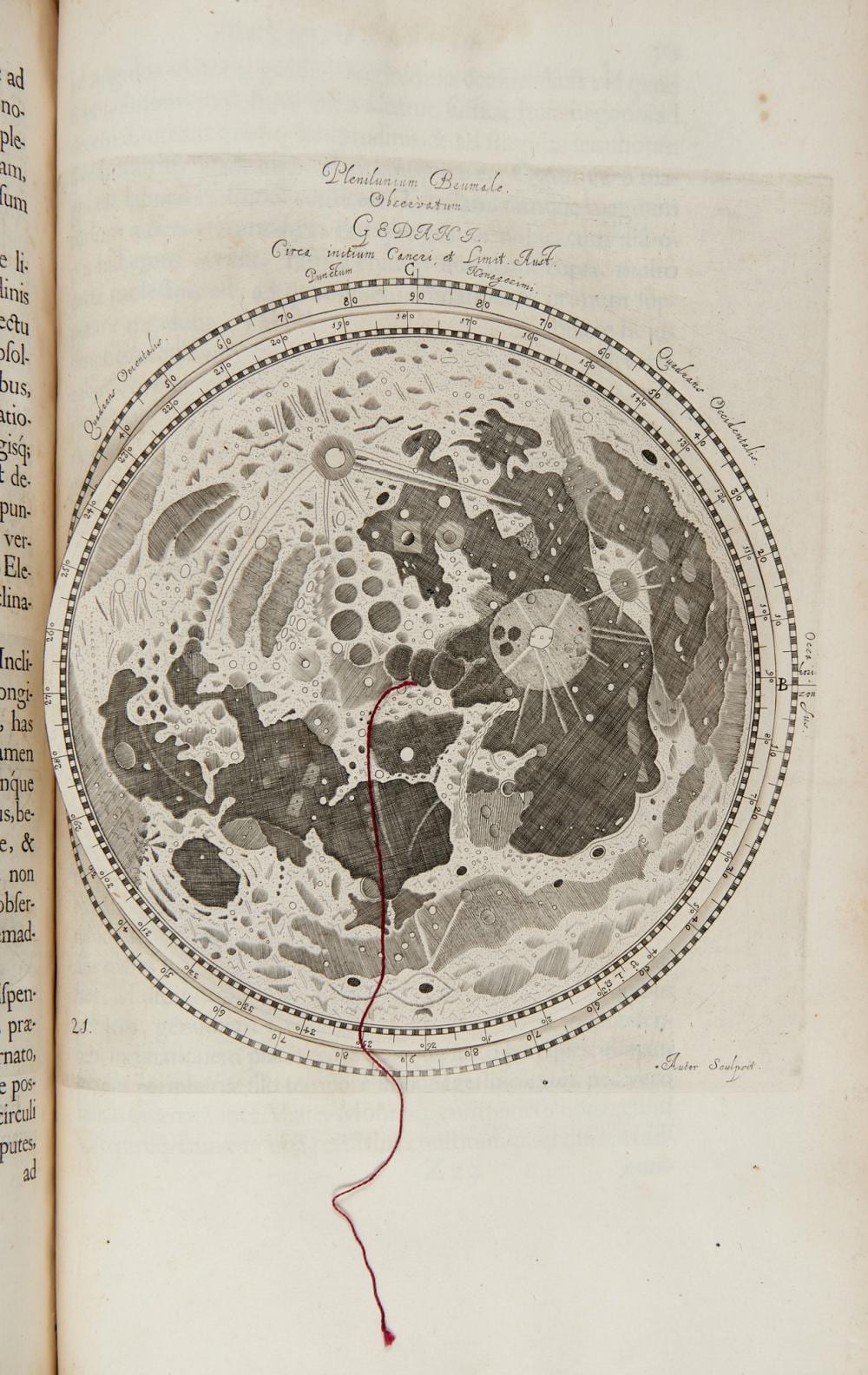
Selenographia sive lunae descriptio. Gdansk: Andreas Hünefeld, 1647. First edition of the first complete lunar atlas, the result of observations conducted by Hevelius regarding the surface and phases of the moon in Gdansk over a period of four years, illustrated with refined engravings by the author himself. Our copy also contains the RRR plate, absent in the index. In the first part of the work, Hevelius describes his instruments in detail, provides methods for turning telescope lenses and for evaluating their quality and parameters, and reports observations on planets and solar eclipses. The treatise continues with an analysis of extraordinary importance on the characteristics of the lunar surface, represented entirely in three splendid double-page plates, and with a rich account of the lunar phases, abundantly illustrated. Many of the names he attributed to craters and lunar peculiarities are still in use today. Particularly relevant were also his observations on the phenomenon of libration, the apparent movement of the Moon with respect to the Earth, which decisively influenced subsequent studies. The second work contained in the volume is dedicated to lunar libration: [BOUND WITH, by the same author:] - Epistola de utriusque luminaris defectu. Gdansk: Andreas Julius Müller, 1654. A difficult work to find on the market in which Hevelius also analyzed the two eclipses of 1654. The title and the collation of this second work do not fully correspond to the work "Epistolae II. Prior: De motu lunae libratorio.. Posterior: De utriusque luminaris defectu", but it mostly coincides with "Epistolae IV. I. De observatione deliquii solis anno 1649 habita.." (see the digitized copy of the Biblioteca Nazionale of Florence); the collation is as follows: x1 p4, A-I4. Brunet III, 150; BYU/Hevelius 1; Houzeau and Lancaster 1252; Honeyman 1672; Wardington 1030. 2 works in one volume, folio (341 x 215mm). Half-title, engraved title by Jeremias Falck after Adolf Boÿ with portraits of Alhasen and Galileo, title printed in red and black, engraved portrait of Hevelius, 111 engraved plates on 91 leaves of which 20 printed recto and verso, 3 double-page and one with volvelle and string and reinforcement - apparently editorial - on verso, many engraved illustrations in text; second work with engraved vignette on title, 6 engraved plates and one full-page engraved illustration (initial portrait detached but present, first leaves loose, light waterstaining to upper margin, volvelle detached, small wormholes at gatherings 2X-2Y touching the text, small wormtrack in text of gathering C of second work, other occasional tiny holes, occasional light browning and foxing). Contemporary calf, gilt decorations and title on spine, speckled edges (anciently rebacked, recornered and restored, some rubbing and chipping). Some previously auctioned copies of the first work featured an additional plate depicting the solar eclipse not included in the index and not present here. IT Selenographia sive lunae descriptio. Danzica: Andreas Hünefeld, 1647. Prima edizione del primo atlante lunare completo, frutto delle osservazioni condotte da Hevelius sulla superficie e sulle fasi della luna a Danzica nell’arco di quattro anni, illustrate da raffinate incisioni eseguite dallo stesso autore. La nostra copia contiene anche la tavola RRR, assente nell'indice. Nella prima parte dell’opera, Hevelius descrive dettagliatamente i propri strumenti, fornisce metodi per la tornitura delle lenti dei telescopi e per valutarne qualità e parametri, e riporta osservazioni sui pianeti e sulle eclissi solari. La trattazione prosegue con un’analisi di straordinaria importanza sulle caratteristiche della superficie lunare, rappresentata interamente in tre splendide tavole a doppia pagina, e con un ricco resoconto delle fasi lunari, abbondantemente illustrate. Molti dei nomi da lui attribuiti a crateri e peculiarità lunari sono ancora oggi in uso. Particolarmente rilevanti furono anche le sue osservazioni sul fenomeno della librazione, il movimento apparente della Luna rispetto alla Terra, che influenzarono in modo decisivo gli studi successivi. Proprio alla librazione lunare è dedicata la seconda opera contenuta nel volume: [LEGATO CON, dello stesso autore:] - Epistola de utriusque luminaris defectu. Danzica: Andreas Julius Müller, 1654. Trattato difficile a trovarsi sul mercato, nel quale Hevelius analizzò anche le due eclissi del 1654. Il frontespizio e la collazione di questa seconda opera non corrispondono all'opera "Epistolae II. Prior: De motu lunae libratorio.. Posterior: De utriusque luminaris defectu", ma molti passaggi coincidono con "Epistolae IV. I. De observatione deliquii solis anno 1649 habita.." (si veda la copia digitale della Biblioteca Nazionale di Firenze); la collazione è la seguente: x1 p4, A-I4. Brunet III, 150; BYU/Hevelius 1; Houzeau and Lancaster 1252; Honeyman 1672; Wardington 1030. 2 opere in un volume, folio (341 x 215mm). Occhiello, frontespizio calcografico di Jeremias Falck da Adolf Boÿ con i ritratti di Alhasen e Galileo, frontespizio stampato in rosso e nero, ritratto calcografico di Hevelius, 111 tavole calcografiche su 91 carte di cui 20 stampate recto e verso, 3 a doppia pagina e una con volvella e stringa e rinforzo - apparentemente editoriale - al verso, numerose illustrazioni calcografiche nel testo; nella seconda opera vignetta calcografica al frontespizio, 6 tavole calcografiche e una illustrazione calcografica a piena pagina (ritratto iniziale distaccato ma presente, prime carte lente, lievi gore d'acqua al margine superiore, volvella staccata, forellini di tarlo ai fascicoli 2X-2Y che toccano il testo, piccola traccia di tarlo al testo del fascicolo C della seconda opera, altri occasionali minuscoli forellini, occasionali lievi bruniture e fioriture). Pelle coeva, decori e titolo in oro al dorso, tagli decorati a spruzzo (anticamente reindorsata, angoli, piatti ed estremità restaurate, difetti). Alcune copie precedentemente passate in asta della prima opera presentavano un'ulteriore tavola aggiuntiva raffigurante l'eclissi solare non compresa nell'indice, qui non presente.