Lot description
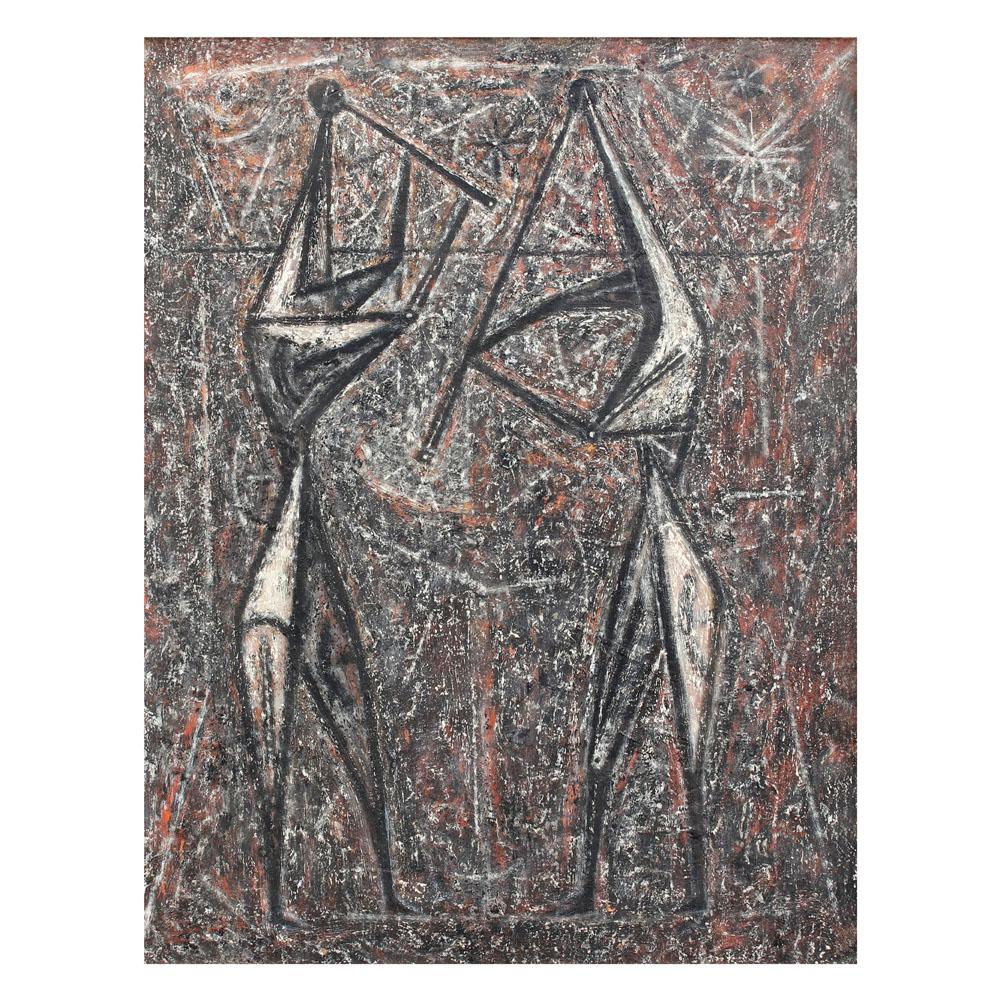
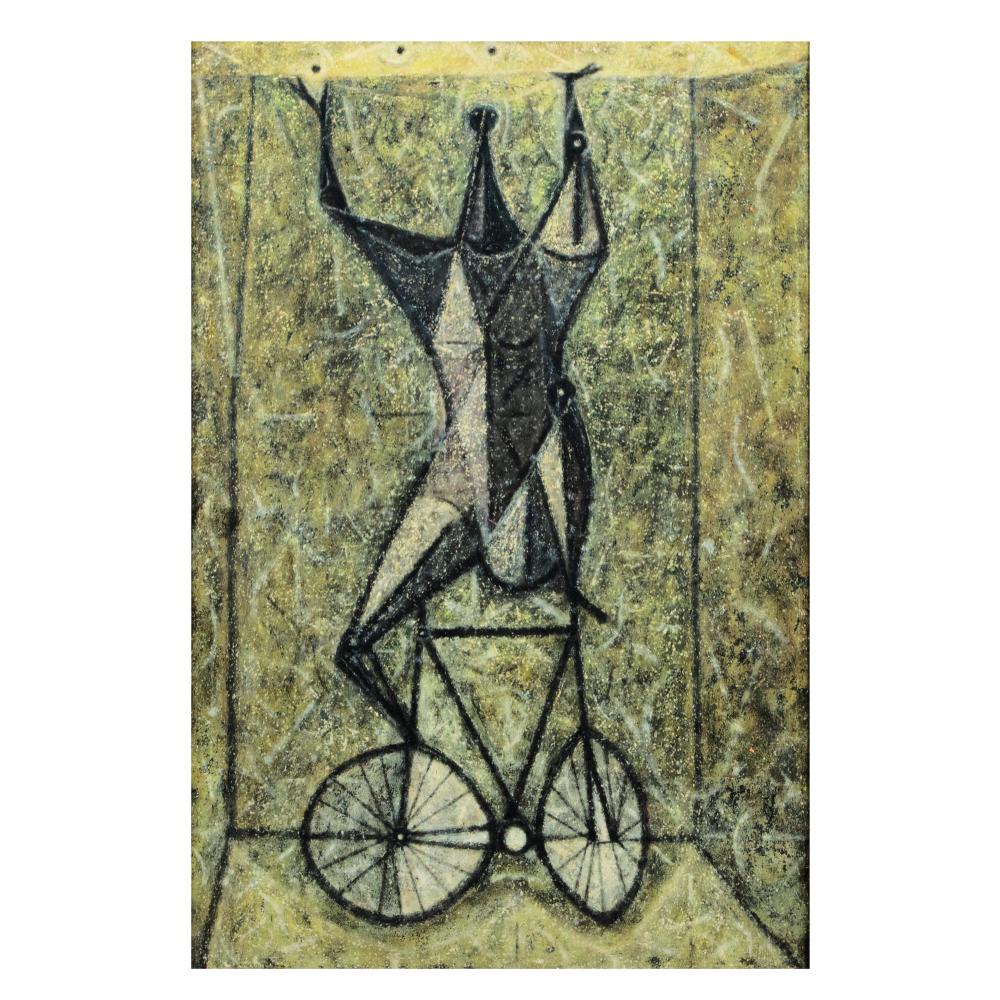
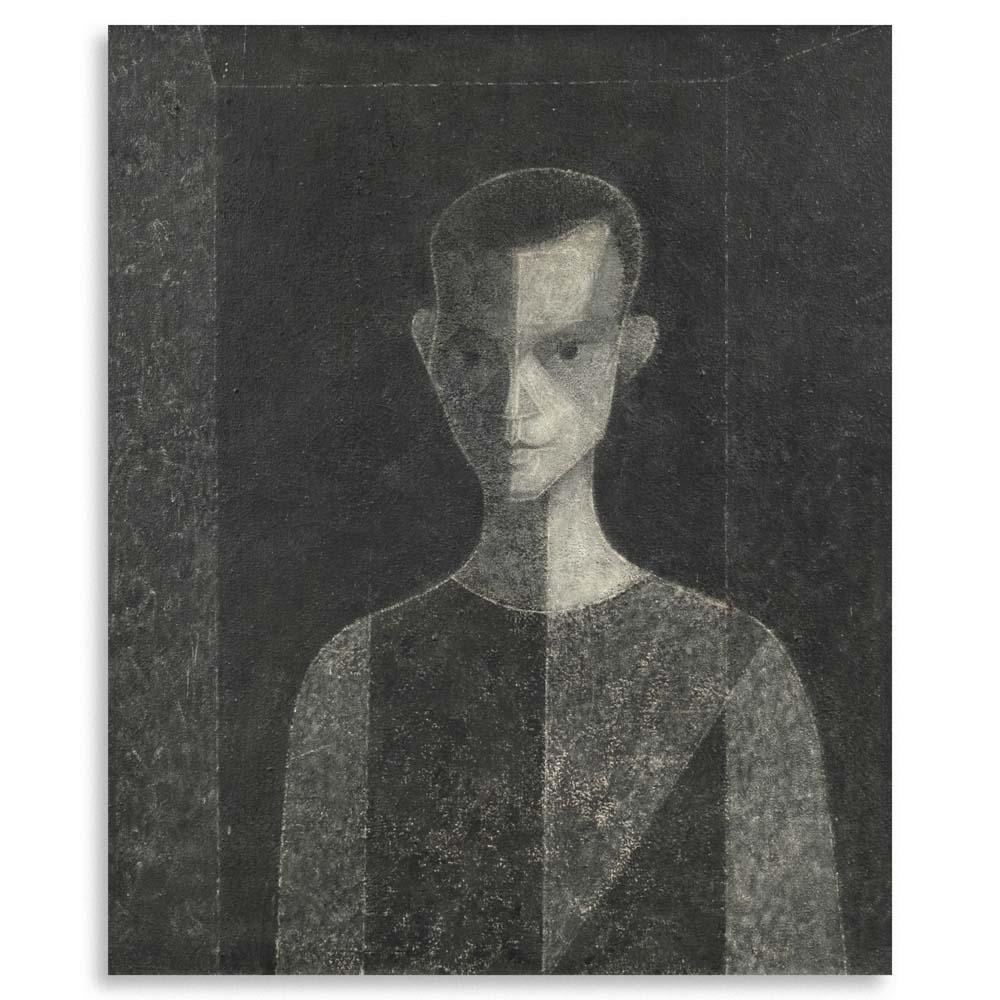
PROPERTY FORMERLY IN THE NATIVIDAD "NATI" VALENTIN COLLECTION Self-Portrait early 1960s oil on canvas 31 1/2" x 26" (80 cm x 66 cm) PROVENANCE A gift from the artist to Natividad "Nati" Valentin Acquired from the above by the present owner LITERATURE Ocampo, Ambeth R. Arturo Luz: First Light. Published in conjunction with the exhibitions "Arturo Luz: First Light" at the Ayala Museum and "#Luz@90" at the Ateneo Art Gallery. Quezon City: Vibal Foundation, Inc., Ateneo Art Gallery, and the Ayala Foundation, Inc. Full-color illustration and painting description on page 34. EXHIBITED Ayala Museum, Arturo Luz: First Light, Makati City, 14 February - 11 June 2017 A Rare Self-Portrait Resurfaces In anticipation of Arturo Luz's birth centennial on November 26, 2026, a rare self-portrait with a compelling provenance resurfaces. Luz's Self-Portrait last appeared during the First Light exhibition at the Ayala Museum from February to June 2017. Curated by Dr. Ambeth Ocampo, First Light was mounted as a retrospective celebrating Luz's 90th birthday and his 65 years as a professional artist. It formed part of the Images of Nation series, Ayala Museum's way of honoring the legacies of the country's National Artists for the Visual Arts. But there was one intriguing story about why Luz's Self- Portrait took so long to see the light of day. The answer can be traced back all the way to the early 1960s, within the whirlwind of Luz's romantic rendezvous. ArTi: The Love Story of Arturo Luz and Nati Valentin Luz originally gifted his winsome self-portrait to his thenfiancée, Natividad Valentin. Nati, as her closest circle called her, both had the wit and charm. She was at the top of her game as one of the leading art, culture, and society writers for The Manila Times, then the country's number one newspaper with over 1 million copies in circulation daily. Nati's friends were the equally gifted female literary bluebloods: Lyd Arguilla, Estrella Alfon, and Carmen Guerrero Nakpil, among others. The Manila Times’ manager, Chino Roces, was said to have selected only the brightest, the most beautiful, and the most intellectual writers for his newspaper for a fast recovery of its losses and a successful rebuilding of its reputation after being shut down during World War II. Nati met Arturo sometime in the late 1950s during her numerous stints for The Manila Times, on duty for her continuous coverage and comprehensive, insightful reviews on the Philippine art scene. Nati, as described by one of her closest friends and fellow Manila Times writer Edith Dizon, was also a master singer who possessed "a powerful dramatic soprano voice." Nati took voice lessons under the famous Italian tenor Arrigo Pola, who mentored Luciano Pavarotti. Dizon also recounted how Nati dabbled in and profoundly loved other art forms— flower arrangement, particularly the Japanese art of ikebana, Japanese ink and brush painting, and piano playing. Nati was a beautiful woman in every sense of the word, so much so that the young bachelor Luz was instantly captivated by her charisma. As a foremost writer for The Manila Times, Nati would often promote her boyfriend's new works and exhibitions in her column titled "All About Art." She was particularly adept in her art reviews, as evidenced in her 22 December 1961 column, in which she reviewed her fiancé's new works as "increasingly spare and linear" and possessing a color palette that is "simple and limited, gaining quality through tones rather than intensities." Nati was also there in December 1960 when Luz opened his brainchild, the Luz Gallery, which had Jose Joya's ninth solo show, featuring new paintings and sculptures as its inaugural exhibition. Nati wrote in her column to celebrate its first anniversary in December 1961, praising her beloved's "masterwork." She wrote, "The Luz Gallery became one year old, and set a new and dynamic trend in exhibits." Luz’s Self-Portrait, a gift to his beloved Nati Nati and Arturo would be engaged sometime in early 1960, and his handsome self-portrait was his gift of love to his fiancée, a celebration of enduring love and their eager commitment to a blissful marriage. Nati hung this self-portrait in her house. Shortly afterward, in 1962, Nati left the Philippines for a study grant in the United States. Luz's Self-Portrait showcases himself as one of his own figures, the iconic musicians, cyclists, and carnival characters typical of his early works from the 1950s to the 1960s. Luz captures the essence of his own self as he sees it through the lens of his art—a boyish-looking man in his thirties with an army-cut hairstyle powerfully evoking his spare, slender figures. His stance is confident, and his gaze bordering on sultry and naughty, fitting for the woman who roused his senses and rocked his world. One can picture Nati's profound joy as she received this painting, their banters as she teased Arturo of his "spicy" playfulness. It was a relationship that was both naughty and nice. One can also imagine how Nati would watch Luz as he painted and then proceed in their dynamic exchange of ideas. Luz was also an intellectual, a very discerning painter who prodigiously produced numerous preliminary sketches, a wide reader, and possessed a God-given gift for writing. Nati would begin formulating her words as Luz painted, entrusting the publicity of his works to his brilliant periodista novia. After all, the arts and the letters have that inseparable bond—much like Arturo and Nati's love, or so they thought. Tessie Ojeda Enter Teresita “Tessie” Ojeda. Records show that Tessie was a student of Fernando Zobel's art appreciation classes at the Ateneo Graduate School in the early '60s. Tessie, wrote Cid Reyes in his book on Luz, "was a regular visitor at the Luz Gallery." "[They] had known each other…but as mere nodding acquaintances," wrote Reyes. Through Zobel, a common friend, Luz and Tessie crossed paths. By then, Luz and Zobel had long been friends; both belonged to the second generation of Filipino modernists and PAG artists. Purita Kalaw-Ledesma, Filipino modernism's matriarch, wrote in her book The Biggest Little Room: "[Zobel] developed a close friendship with Arturo Luz. They would show each other the paintings they were working on. Luz learned a lot from Zobel, who was very profound, articulate, and well-read…[Zobel] was influenced by Luz's use of acid and neutral colors. His influence on Luz, on the other hand, was intellectual rather than visual." Zobel, in his capacity as Honorary Cultural Attaché of the Spanish Embassy in the Philippines, also helped Luz obtain his scholarship from the Instituto de Cultura Hispanica to study in Spain. A Tale of Star-Crossed Lovers In a surprising turn of events, Nati, who by then was still in the US for her months-long study grant, had been hearing rumors that her Arturo had "fallen in love" with a girl named Tessie Ojeda. According to tittle-tattles floating then, Tessie had been unusually close with Luz. Tessie, wrote Cid Reyes, was quoted as saying that Luz had always been "her favorite painter." While Nati was in the US, Luz also went there for a travel grant sponsored by the US Department of State. He was tasked to attend the Seattle's World's Fair. Coincidentally, Tessie was also present as a PR assistant for the Philippine Pavilion headed by Commissioner Don Luis Araneta. Reyes recounted this whirlwind of a romance: "In Seattle, Tessie shared an apartment with two other Filipinas, also with the staff. Miles away from home, Luz would be treated to Philippine hospitality: an adobo dinner. [Luz said], "Literally, it was the first time Tessie and I had gotten to talk. Before that, in Manila, we never exchanged more than five words." Reyes continued, "Tessie's plan was to see the world, so she was saving up her money." Luz invited Tessie to New York, where, for a month, they visited museums, exhibitions, and galleries. When it was time for Luz to go to Rome under another travel grant from the Italian government, he insisted that Tessie tag along with him. Luz and Tessie's romantic rendezvous was a rollercoaster of lightning and vehement emotions, and they married each other in Rome after only three months. When Nati returned to the Philippines, she was devastated to hear that Luz and Tessie had already been engaged, primed and prepared for their Roman wedding. Nati became the casualty of an unfortunate relationship—two star-crossed lovers chasing their dreams and building their careers and lives together. Sadly, the other could not handle the long-distance relationship and immediately longed for romantic solace. Nati: “Get rid of that painting!” Overwhelmingly heartbroken, Nati attempted to remove all vestiges of Arturo from her life, with this self-portrait being the first casualty of her emotional cleansing. Nati first asked one of her closest friends in her Manila Times circle, who is also the current owner's mother. To help Nati in her "moving on" stage, her close friend accepted the painting and hid it in the basement of her house. It was never displayed—not even once—and was left to collect dust, sort of a metaphor for Nati burying her painful misery. The current owner still remembers what Nati insisted on to his mom. With an agonizing voice, Nati exclaimed, "You have to hide it, get rid of it! I don't want to ever see this again! It caused me a heartbreak!" The current owner said, "So many people had asked to display this painting before, but my mom refused because of the heartbreaking story." A Closure Six Decades in the Making Luckily, Luz's Self-Portrait was showcased to the public, for the very first time, at the First Light exhibition at the Ayala Museum. Luz had discovered the whereabouts of his painting through the owner's mother, who was close to Rosario "Charing" Luz, Arturo's mother. "My Mama was very close to the Luz family," said the owner. "Luz's mom, Rosario, designed our ancestral house and furnished it with paintings from the Luz Gallery. She also commissioned Tito Alfredo, Arturo's brother, as our furniture designer before he emigrated to Canada after a successful architectural career. Basically, my Mama always confided in Tita Charing as she was in our house for remodeling over many years." It was then and there that Luz knew that his self-portrait had always been alive, even after decades had passed. Luz personally requested that his self-portrait be publicly shown at the Ayala Museum, where it hung on its own wall. "Luz wasn't in love anymore with Nati," the owner said. "He just chose the painting as part of his greatest works of art."