Have one like this?
Upload a photo for a free check of what yours may be worth.
Lot description
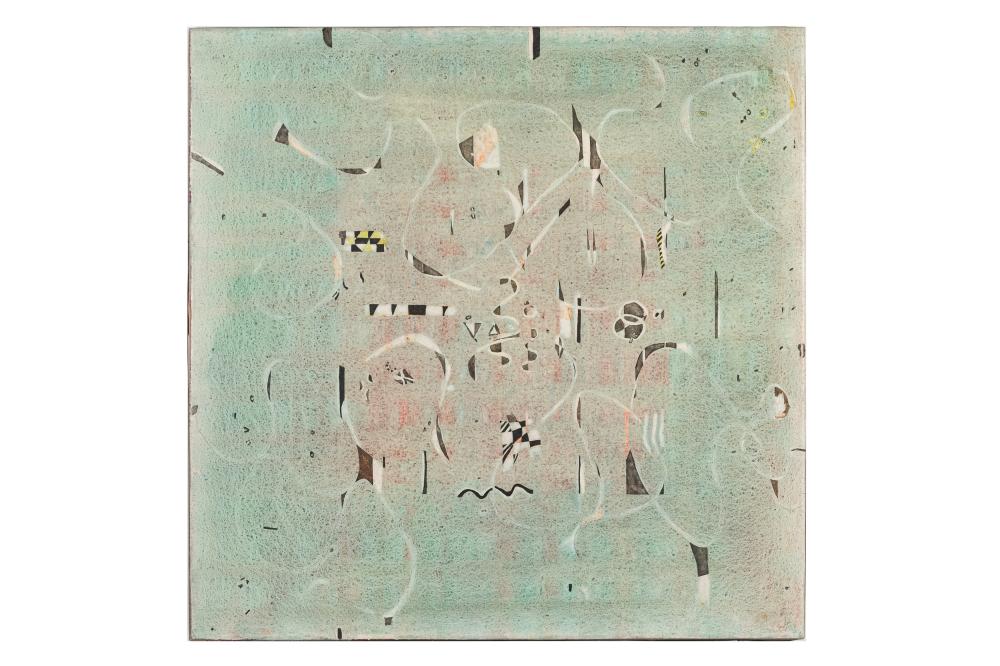
BALRAJ KHANNA (INDIA, 1939â2024) BALRAJ KHANNA (INDIA, 1939â2024) Regatta (Study), 1969 Oil on canvas Inscribed with title, date, artist's name and dimensions on reverse stretcher. 91.5 x 99cm (36 x 39 inches) Born in Amritsar, Punjab, India, Khanna grew up during a period of profound political and cultural transformation, with India gaining independence in 1947 and undergoing rapid modernisation. In the early 1960s, he moved to London to pursue his artistic studies at the Slade School of Fine Art. There, he encountered Western modernist movements, such as abstract expressionism and minimalism, which had a lasting impact on his creative development. His exposure to these influences, alongside the rich cultural and historical heritage of post-partition Indian art, led to a unique fluidity in his work, blending traditional miniature patterning with contemporary forms. Initially, Khanna moved to the UK in 1962 to study English literature but soon discovered his passion for drawing and painting. Within months, he found a community of like-minded artists, including notable figures like F.N. Souza and Avinash Chandra. By 1964, he had become a member of the Indian Painters Collective, an organisation advocating for the visibility of Indian artists in Britain. In 1965, following a road accident, Khanna underwent a lengthy recovery period in Metz, France, near the Forêt St-Bernard. This time in nature was transformative, marking a shift in his artistic approach. It was here that Khanna felt an intense connection to the natural world, which deeply influenced his work, leading him to develop layered, abstract compositions. Drawing inspiration from both organic and geometric forms, he sought to convey the âtheatre of the natural world.â Khannaâs artistic practice is rooted in abstraction, with a strong focus on the expressive potential of colour, form, and texture. His work often combines geometric and organic shapes, creating a dynamic visual language that is both meditative and energetic. Throughout his career, he explored various media, including painting, printmaking, and mixed media, crafting pieces that reflect his personal journey and experiences. Khanna held his first solo exhibition in 1965, and over the following decades, his works were displayed extensively in the UK, France, and the United States. Khanna's inclusion in the Tate Collection in London holds particular importance, as the gallery recognises his ability to bridge Eastern and Western artistic traditions. His work is a vital part of the post-independence Indian modern art movement, and it aligns with the Tateâs broader mission to represent global narratives in contemporary art. This current exhibition at the Tate in London celebrates their recent acquisition of three major pieces, particularly poignant due to the artistâs recent passing in January 2024.