Have one like this? Check yours freeOr have an appraiser value it
Lot description
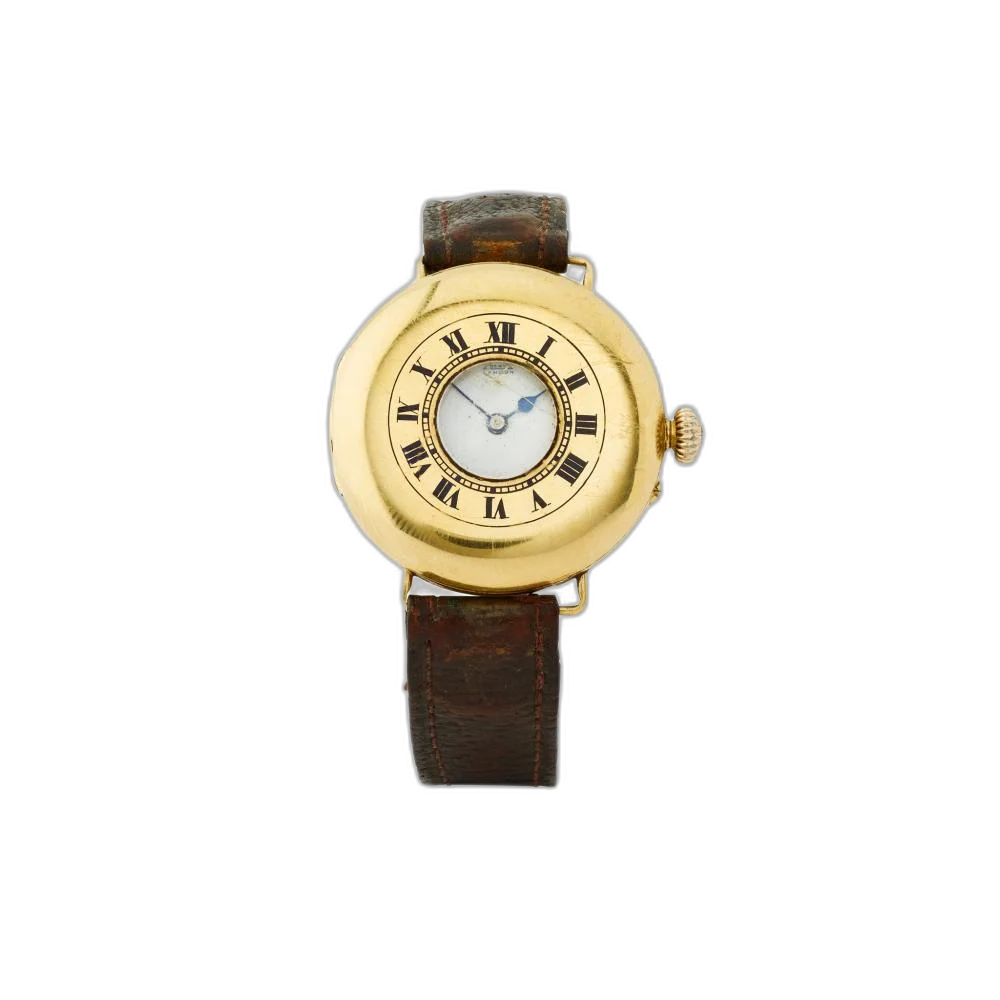
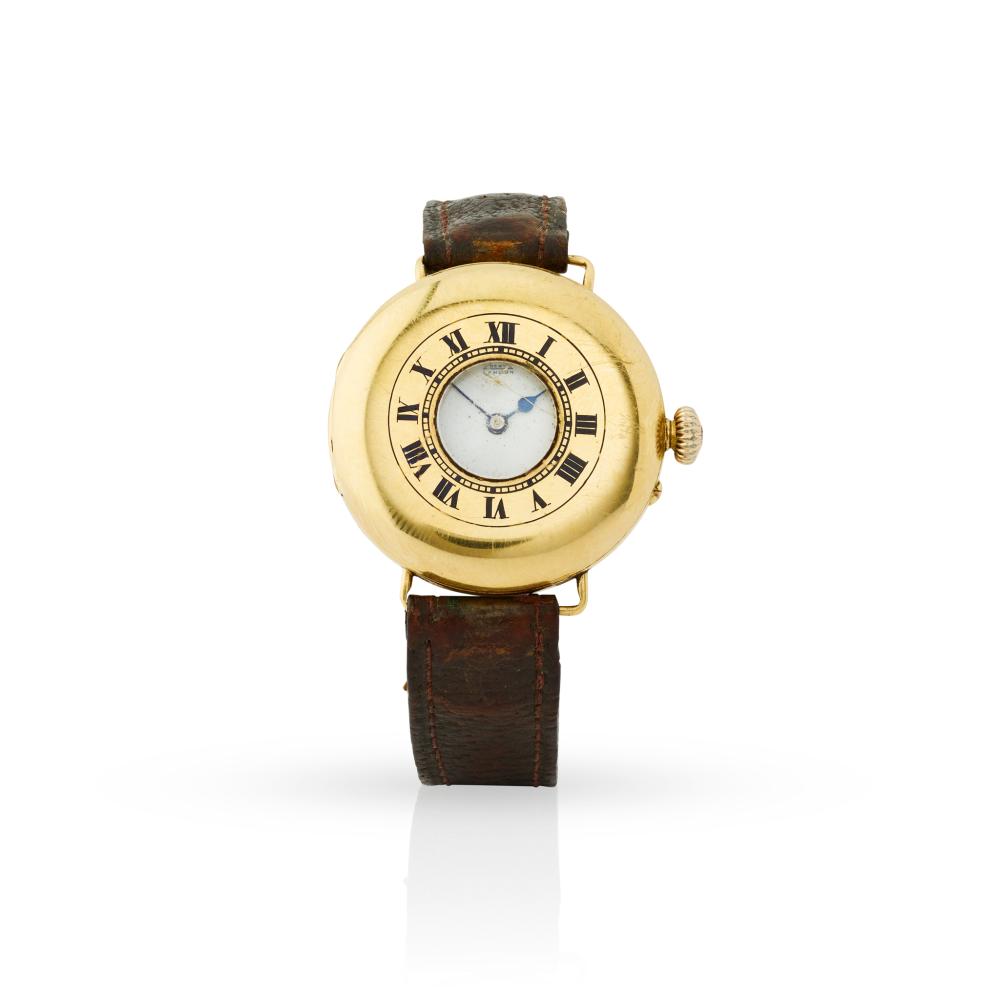
Dent, London. A fine and very unusual antique 18k yellow gold half-hunter cased wristwatch No.60607, hallmarked London 1911 Gilt three-quarter plate movement, lever escapement, overcoil hairspring, cut and compensated bi-metallic balance, white enamel dial with black Roman numerals, outer minute track, signed Dent within triangle cartouche, London, blued steel hands, hinged 4 piece case repeat stamped 43 to the case back, cuvette and cover, the inner reverse with London 18k hallmark for 1911, the inside cover hallmarked for London 1920, wire strap lugs, dark blue Roman numerals with minute track to the cover. Engraved initials WP to the reverse. Case, dial and movement signed, movement signed Maker To The King, 61 Strand, 4 Royal Exchange & 34 Cockspur Street, London. Accompanied by a period correct Dent, 28 Cockspur St, Charing Cross, London wristwatch box and vintage strap buckle stamped 18ct. Diameter 36mm. From the family of the original owner. Lieutenant Colonel William Petty, (1875-1963) apparently fought in the second Boer War (1899-1902), before returning to the UK to be a schoolteacher, he then enrolled in the First World War (1914-1918) with the SeaForth Highlanders and was also active in the Second World War (1939-1945), although due to his age, remained based in the UK, eventually retiring from a highly decorated military career. Dent, a highly reputable and famous London clock and watchmaker is today most famous for constructing Big Ben. When first introduced, wristwatches worn by men were very unfashionable within society and the sale of wristwatches didn't overtake pocket watches until 1930. The first world war significantly changed the masculine viewpoint on what was considered an item of jewellery, due to the practicality of wearing a watch on your wrist. It's very possible, indeed likely, after serving in the Boer War, Mr Petty appreciated the practicality of a wristwatch and sought to purchase one when financially viable. Although it's possible this 1911 example was converted from a pocket watch, the wristwatch box is of the correct period, another tell is the catch to release the cover via the crown as found in pocket watches has been removed, so the cover remains permanently closed. This was a design flaw in converted wristwatches as the cover would flip open and get caught on clothing, damaging it. Although the fact the watch is hallmarked 1911, no doubt when new, and the cover, with matching 43 stamp, is hallmarked for 1920, leading one to believe the watch was worn during the first world war, the cover damaged and replaced by the Dent factory post war. The gold buckle is of the correct style for a a pre-1920s wristwatch, making this one of the earliest wristwatches to appear. Please be aware that this lot contains material which may be subject to import/export restrictions, especially outside the EU, due to CITES regulations. Please note it is the buyer's sole responsibility to obtain any relevant export or import licence. For more information visit http://www.defra.gov.uk/ahvla-en/imports-exports/cites/