Have one like this?
Upload a photo for a free check of what yours may be worth.
Lot description
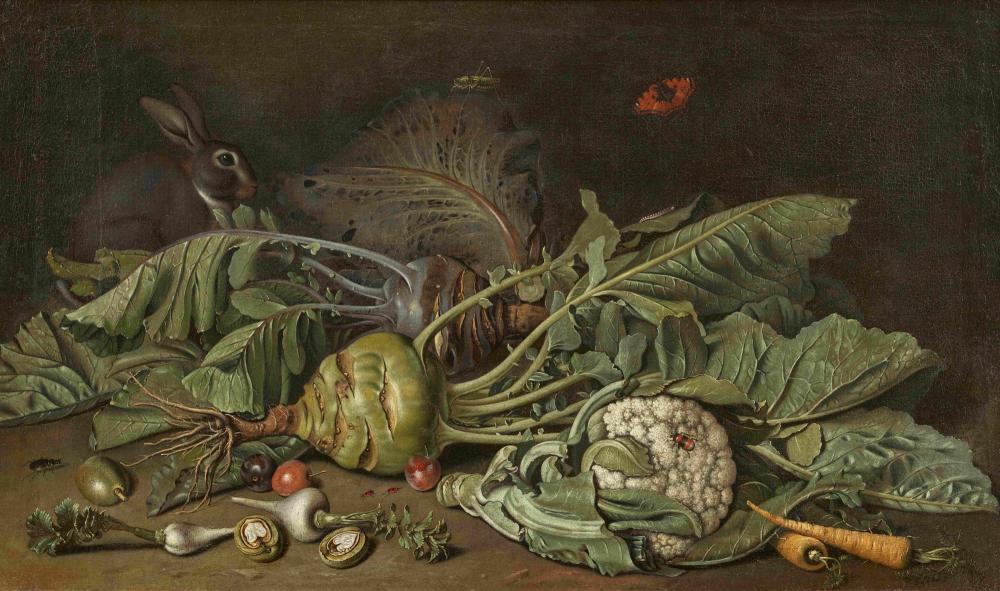
These two exceptional counterparts have been in private ownership for many years. They were made known to a wider audience as an important new discovery in 2015/16 on the occasion of the exhibition in Erfurt celebrating the 300th birthday of the Erfurt painter Jacob Samuel Beck. Typical of Beck's still lifes is the precise, quasi-scientific view of nature's world of forms and colours. Beck chose to paint particularly elongated pictures that offer as much space as possible for the presentation of various cruciferous vegetables and artichokes, which spread out as opulent leafy landscapes. On them is an unusual variety of insects, painted true to life. There are two fireflies (in front of the kohlrabi), two butterflies, a small tortoiseshell and a six-spot burnet, a common birch beetle (in front of the asparagus) and a cockchafer, among others. The muted colour palette with silvery-grey green tones, the contrasting light and also the unusual variety of insects distinguish the two pendants from other still lifes by Beck and make them stand out. In his catalogue entry on Beck's still lifes and animal paintings, Gero Seling points out that, unlike the works of the Dutch still life painters of the 17th century, it makes relatively little sense to try to analyse the symbolic component of Beck's works (p. 57f). He refers to the variety of the vegetables depicted, the economic importance of professional horticulture in Erfurt in the 18th century and praises its benefits. Erfurt, which had no princely court of its own and was instead ruled from the distant city of Mainz, lived from vegetable growing. In its fertile soil growers were able to cultivate even artichokes and cauliflowers, as shown here.