Lot description
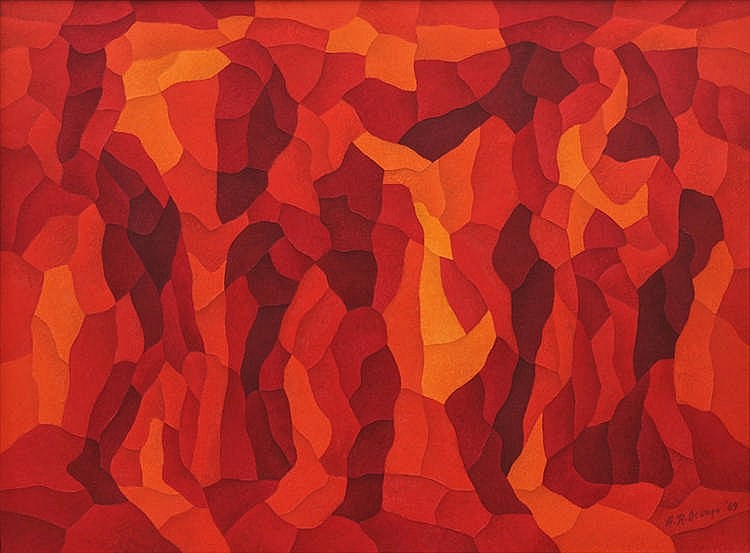
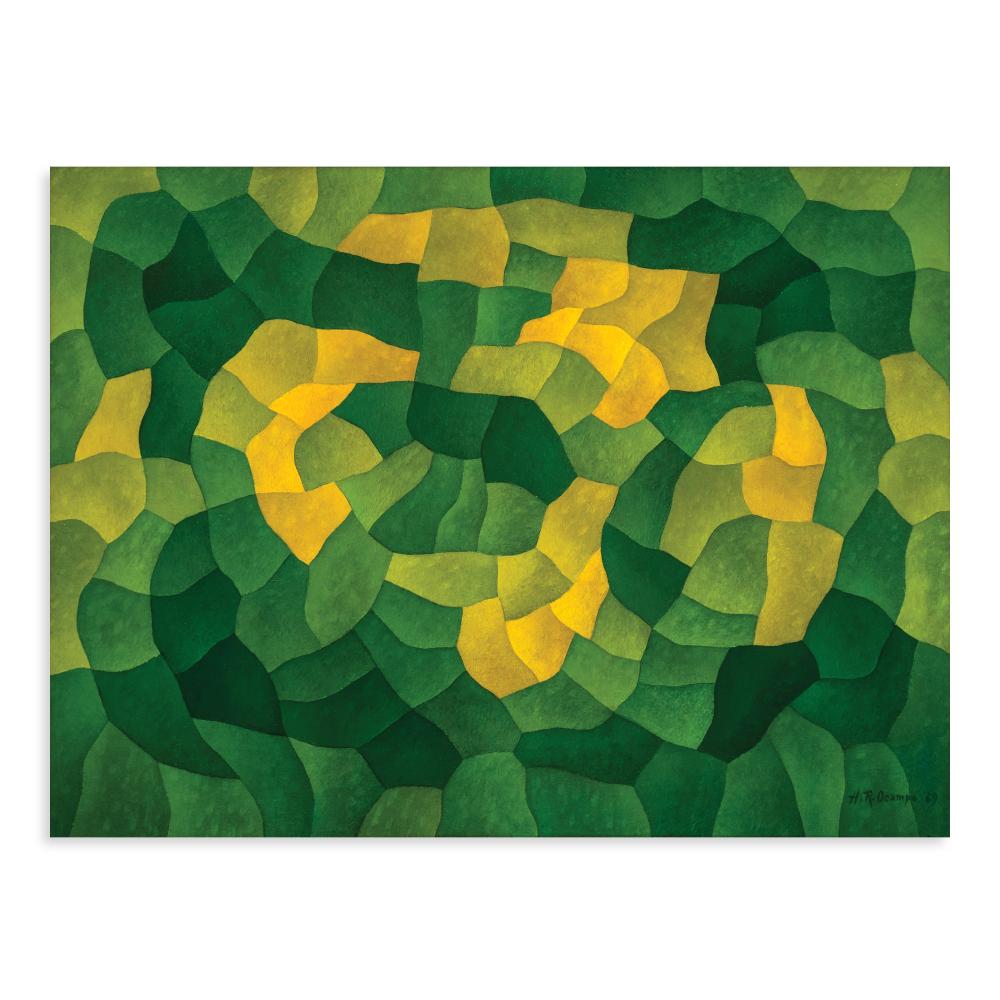
PROPERTY FORMERLY IN THE TITO AND ELVIRA MANAHAN COLLECTION Sonata in Green signed and dated 1969 (lower right) oil on canvas 30" x 40" (76 cm x 102 cm) PROVENANCE: Acquired directly from the artist LITERATURE: Duldulao, Manuel D. Contemporary Philippine Art (From the Fifties to the Seventies). Manila: Vera-Reyes, Inc., 1972. Full-color illustration and painting description on page 139. Laya, Jaime C, Mariano C. Lao, and Edilberto B. Bravo. Hidden Treasures, Simple Pleasures. Makati City: Bookhaven, Inc., 2009. Full-color illustration and painting description on page 76. Tiongson, Nicanor G., ed. Artista ng Bayan 1991. Cultural Center of the Philippines. Manila. 1991. Listed on page 37 as "302. Sonata in Green" under HR Ocampo's "List of Paintings (Partial)". Hufana, Alejandrino G., ed. Pamana 13 June 1974: A Cultural Quarterly Published by the Cultural Center of the Philippines. Manila: Cultural Center of the Philippines, 1974. Listed on page 20 as '302. Sonata in Green' under the artist's list of paintings. THE MANAHAN H.R. OCAMPO From the Artist’s Coveted Visual Melody Period When H.R. Ocampo painted Sonata in Green, he was at the height of his "Visual Melody Period." In a May 1972 interview with Cid Reyes, Ocampo described this period as "approximating the properties of music…I approach my paintings now as if they were chamber music, which, I suppose, one can consider pure music." The Visual Melody Period is Ocampo at his most lyrical, making this period his most coveted by collectors—and indeed, his most revered. In Sonata in Green, Ocampo charmingly captures various shades of green—from deep, dark tones to airy and more delicate hues. Ocampo paints a dynamic image of captivating musicality. Since a sonata means "a piece played," one can even imagine through the diverging shades of greens Ocampo going through the tranquilizing largos and adagios to the restrained andantinos and moderatos before progressing high up towards the electrifying allegros, coupled with the embellishments of a coloratura passagework. Through Ocampo's rendering of organic forms, music and painting come alive, dancing in unbridled harmony. Music is weaved into painting, both art forms singing in unison to mold a visual expression of resonating, philharmonic depth. Perhaps it was Ocampo's visual articulation of a concerto that had drawn the enchantress of a woman that was Elvira Manahan—herself an elite force in Philippine show business, and the dashing aficionado and patron of the arts that was Dr. Constantino Manahan. THE MANAHAN H.R. OCAMPO From the Artist’s Coveted Visual Melody Period Sonata in Green is one of Ocampo's most documented works. It is a gem of a book piece, appearing in numerous publications, including Manuel Duldulao's landmark monograph Contemporary Philippine Art, the June 1974 issue of the CCP quarterly Pamana, and Nicanor Tiongson's Artista ng Bayan. A year before the creation of Sonata in Green, Ocampo had painted the iconic Genesis, which he dubbed "the full-flowering of his Visual Melody Period." Genesis would be transformed into the monumental tapestry serving as the main stage curtain of the Cultural Center of the Philippines' Main Theater (Tanghalang Nicanor Abelardo). The Genesis tapestry and the CCP edifice were inaugurated in September 1969. There is an interesting backstory that occurs after Ocampo's high-powered use of a green palette in 1969, particularly with this work at hand. In his 9 October 1969 column in the Times, critic Alfredo Roces writes that Ocampo worked on a series of red and orange paintings "some months ago" because he could not find any supply of green oil paints due to what Roces says is an effect of tightened dollar restrictions thus, producing a shortage of art supplies, which are not produced locally. Retrospectively, Sonata in Green is part music appropriation and part reminder of Ocampo's adaptability and versatility in both medium and palette. Thus, Sonata in Green would form part of the genesis of yet another transitional period for Ocampo—the exceptional colorist, in terms of his color palette, which critics and collectors alike had always praised. (Adrian Maranan)