Have one like this? Check yours freeOr have an appraiser value it
Lot description
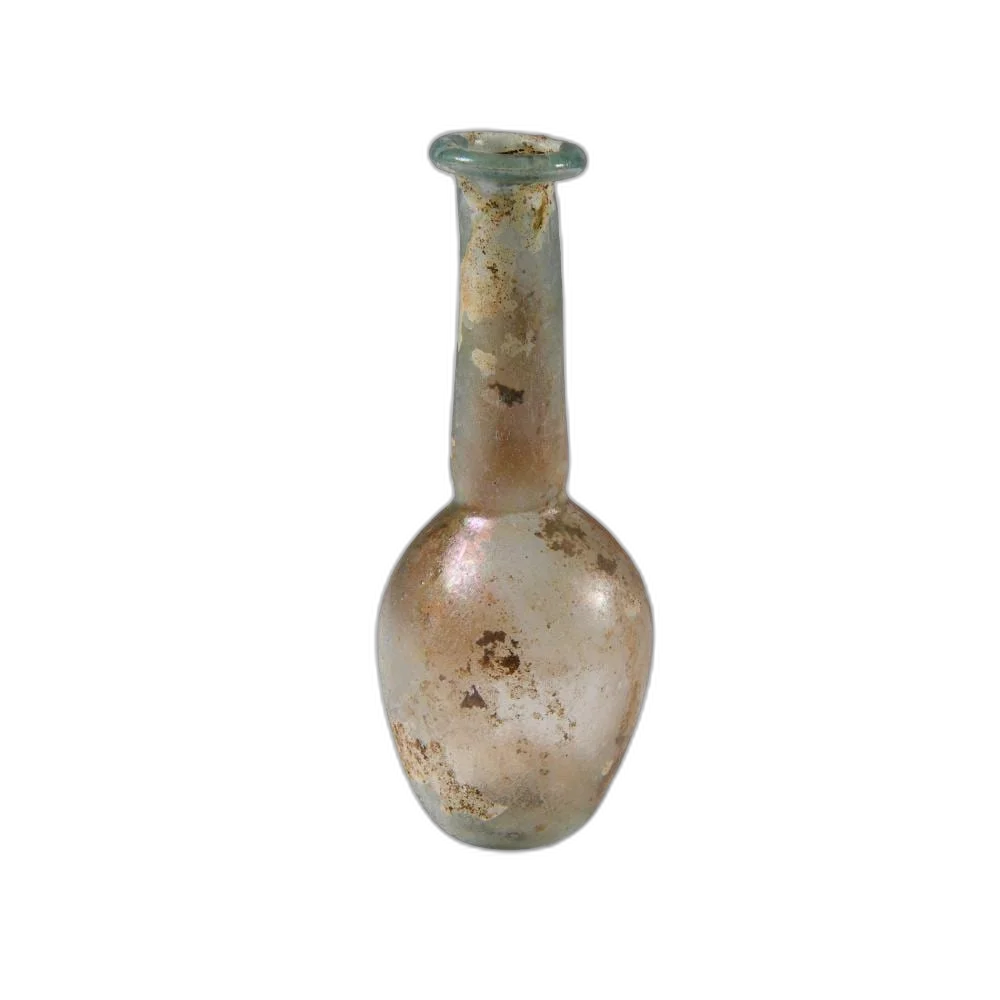
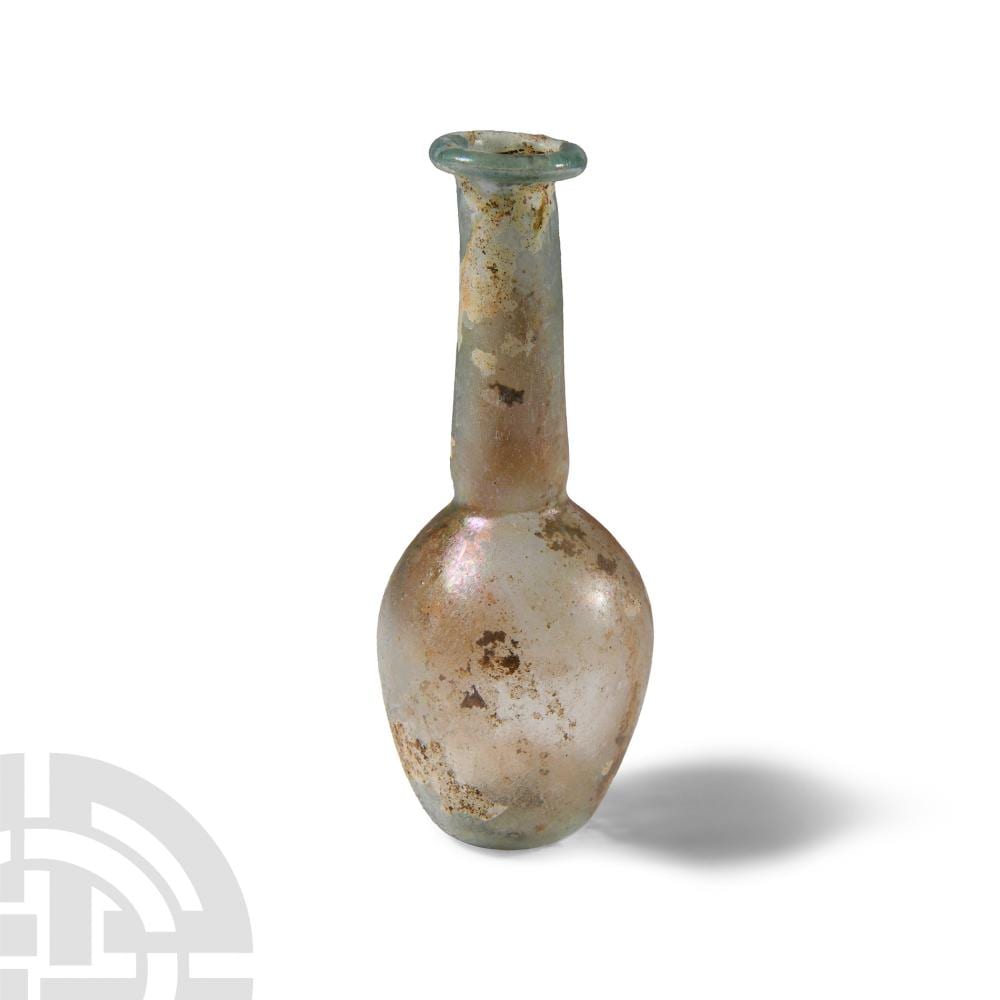
1st-2nd century A.D.. Having piriform-globular body and everted rim, tubular neck and flat base with small kick. See Whitehouse D., Roman Glass in the Corning Museum of Glass, volume I, New York, 1997, cat.200, for the type. 20 grams, 11.5 cm high (4 1/2 in.). Acquired 1980-2015.Ex Abelita family collection. The bottle seems to belong to the type 13 of the De Tommaso classification, but with a more piriform body. By the 1st century A.D., the technique of glass-blowing revolutionised the art of glass-making and allowed for the production of small medicine, incense, and perfume containers in new forms. Glass unguentaria, bottles and vessels of various shapes were manufactured with blow-pipes, free-blown, or mould-blown, and were prevalent throughout the all the provinces of the huge empire.