Have one like this? Check yours freeOr have an appraiser value it
Lot description
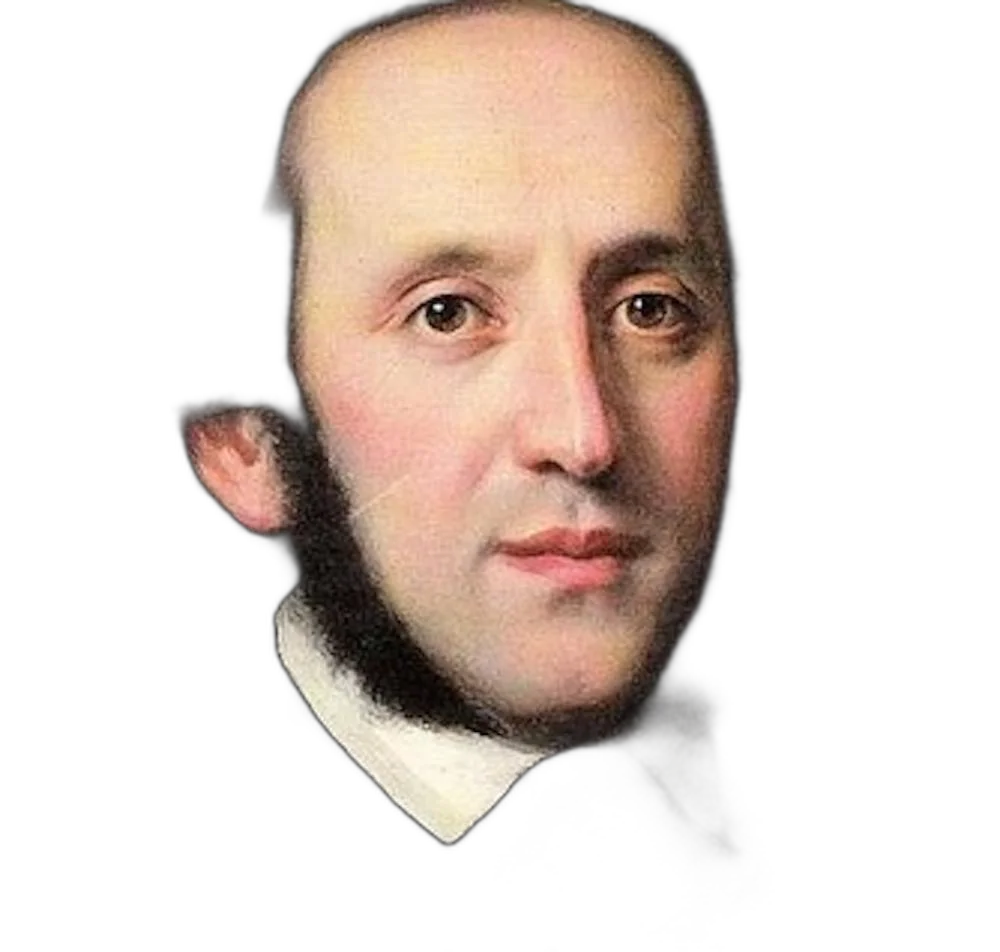
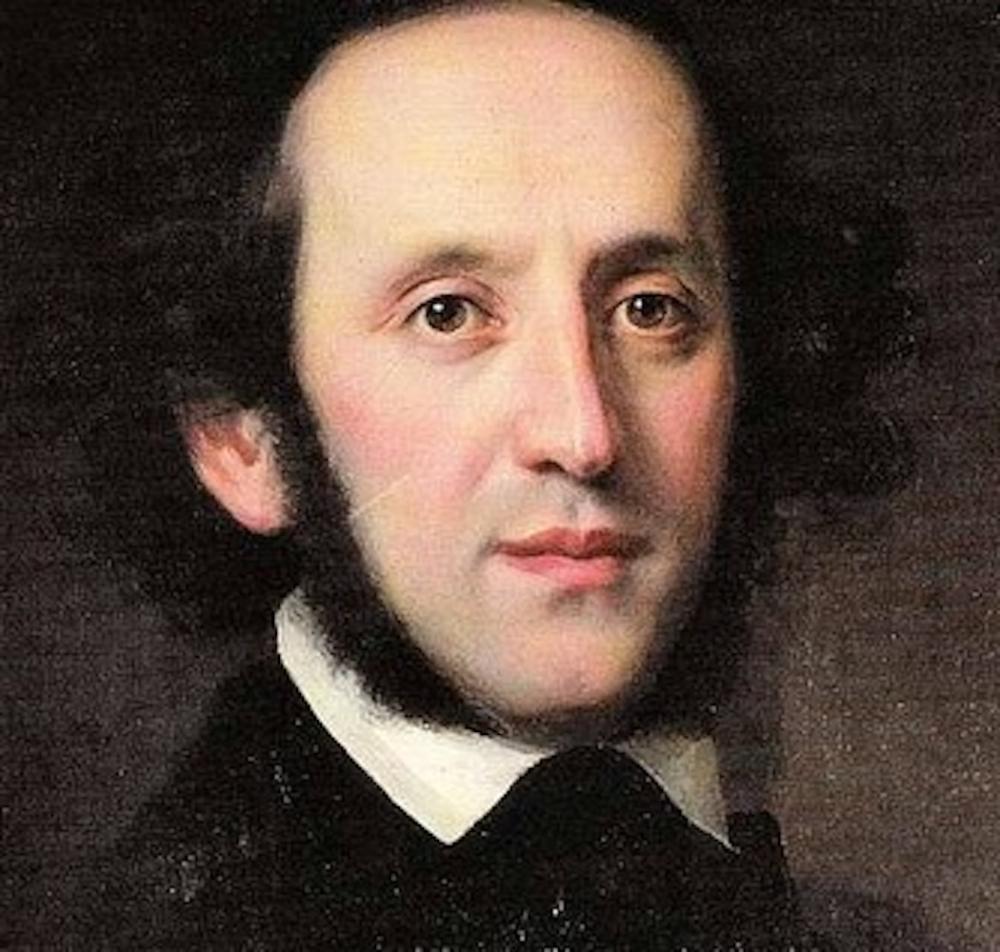
MENDELSSOHN-BARTHOLDY, FELIX. (1809-1847). German composer and one of the most gifted musicians of the 19th century. ALS. (“Felix Mendelssohn Bartholdy”). 3¼ pp. 4to. Berlin, August 23, 1841. To his close friend ERICH HEINRICH WILHELM VERKENIUS (1776-1841), a magistrate and founder and president of the Cologne Committee for the Lower Rhenish Music Festival. In German with translation. “You see that I am making use of your permission and intend to write diligently; if it becomes too much for you then do not read it or let me know. May God grant that I may soon receive the good news of your return to health! I think of that every day, wish for it every day. In my last letter I promised you some details of musical life here as far as I have gotten to know it by now. Unfortunately, there is not much to report that is gratifying. Here as everywhere it is primarily the musical directors who are responsible for that; at the same time, these do originate more or less from the public itself and so I really cannot make the distinction, which is so current among the Berliners, who attack and criticize all directors, musical and other, and yet are happy to let everything stay the way it is. The whole attitude of the musicians and of the music-lovers is too little directed toward practical matters; they actually play music mostly so that they can talk about it before and afterwards, and so the speeches turn out better and cleverer than in most other German towns, but the music less satisfactory. Now, unfortunately, there is very little to be said about music and its inadequacy; that must be felt and made better; and so I do not know either how that is ever going to change. Unfortunately, this can all be seen in the orchestra (however good the individual members are). I have heard such gross errors and such mistakes in tempo being made constantly in operas and symphonies that this is possible only through great carelessness. The people are royal officials, cannot be called to account and are irremovable, and if it is brought up afterwards, you are told that there is no tempo at all, or should not be, or something of the sort. But, in short, things are bad. I have played my trio here 10-12 times; each time there were these kinds of mistakes in timing, these kinds of careless slips in the accompaniment, although these were the leading local musicians who were playing with me. The whole orchestra is, in fact, demoralized to its foundations, and the greatest part of the blame for this attaches to Spontini who was at the head of it for such a long time and who suppressed rather than lifted and brought on the many sound musicians in it. As you know, he has now fallen out with the king, the public, and the theater; but the questions is whether he will leave here, and I doubt he will do it and, in that case, if any improvement will be undertaken, because everything is too much in a rut, too confused, it will take years to disentangle it and put it back on the right road. If Spontini did go (and as I have said, even this is extremely improbable), Meyerbeer has been approached, but he turned down the approaches immediately and quite definitely; I have done the same for the reasons I have written to you today and previously; now the intention is to bring in Taubert, the local composer, gradually; but even he does not have what it takes to put it all back in shape. I, myself, am certain that Spohr would be the right man to help, but precisely for that reason he will certainly not be taken; again there are too many who have a say in the matter and want everything to be ideally beautiful; the result is mediocrity. Things are almost worse with the amateur musicians. Their main organ and institute is the Sing-Akademie, and there, again, everyone believes he knows far more than the director, although it must be admitted that the latter is not a particularly outstanding musician. Yet, if they really did all know how things should be then they would all sing better together, and whatever the conducting was like the wrong notes and timing mistakes would disappear, and they do not disappear. Here again everything ends in talk. I recently heard Pasta in Semiramide. She now sings so terribly wrong, particularly in the middle ranges, that it is really torture; and yet, of course, the splendid traces of her great talent, the features which betray a singer of the first rank, are often unmistakable. In another city the dreadful intonation would have been noticed first, and only afterwards would it have been remembered that this was a great artist; here everyone said to himself beforehand, ‘this is Pasta, she is old and so she can no longer sing purely so one has to discount that.’ So elsewhere she might, perhaps, have been unjustly disparaged, while here people were unjustly delighted, and what is more, delighted after having reflected on the matter and in the awareness that they stood above the matter. That is glimmering delight. Oh dear, how hypochondriac this letter has become! I should prefer to write amusing things to cheer you up. And so next time I shall try to find a somewhat rose-colored aspect: forgive today’s dark brown one. I hope I shall soon hear something of your state of health; if not from you personally if writing tires you, then from one of your family; and I hope it will be good, welcome news that I receive then. Farewell, dear President. With a thousand regards to your family and with the warmest and most sincere wishes for your recovery, I am always, Your affectionate…” In 1835, “Mendelssohn was named the fifth conductor of the Leipzig Gewandhaus orchestra… His activities as conductor in Leipzig developed into what must have been regarded overwhelmingly as the most far reaching achievement of his life, sustained by his determination to secure a continuing improvement in the standards of orchestral performance, to advance the social position of its members, to plan programmes consisting of items of special historical interest as well as contemporary music, and to invite leading soloists to perform with the orchestra,” (The New Grove Dictionary). In undertaking these projects, Mendelssohn succeeded in making Leipzig the epicenter of Germany’s musical world. Beginning in 1841 Mendelssohn’s position at Leipzig’s Gewandhaus was augmented by a royal appointment to Berlin, the duties of which were vague. Our letter reports on Mendelssohn’s impressions of musical life in Berlin, including a disparaging account of the state of the Royal Court Orchestra under the direction of Italian conductor and composer Gaspare Spontini (1774-1851). Spontini was a controversial and contentious individual who made enemies easily and got into numerous altercations, making him profoundly disliked by most of his colleagues. After he was fired from his position as director of the Theatre Italien in Paris, Prussian King Friedrich Wilhelm III gave him a ten-year contract as General Music Director in 1819. There, however, Spontini’s “proud and truculent personality” and controversial behavior continued, even alienating his patron, King Wilhelm IV (1795-1861), according to Mendelssohn, (ibid.). Spontini’s appointment in Berlin was greatly resented by those who had wanted Carl Maria von Weber to have the position, and “Spontini saw the situation as a personal cabal...which he had to oppose with all his Italian powers of intrigue. The situation came to a head in 1824-5... during the rest of his stay in Berlin he was never able to be free of controversy and of criticism,” (ibid.). A new style of opera was emerging, and the public preferred the works of Weber, Italian composer Gioacchino Rossini (1792-1868), the composer of Semiramide, and German conductor and composer Giacomo Meyerbeer (1791-1864) to Spontini’s “older formulae of the tragedie lyrique... once again he tended to see this as a plot, one directed by Meyerbeer, for whom he developed a pathological hatred; this attitude, which was to endear him to Richard Wagner, reached its zenith when Meyerbeer replaced him in Berlin in 1842,” a possibility referred to in our letter, (ibid.). Combining German and Italian musical traditions, Meyerbeer helped develop the grand opera genre in Paris and, with such works as Les Huguenots and Le prophète, his influence grew, making him the most performed opera composer of the 19th century. His popularity eventually made him the target of antisemitic attacks by Wagner, whom he had aided early in his career. Rather than Meyerbeer, Mendelssohn proposes to Verkenius that German conductor and composer Louis Spohr (1784-1859), who had directed the Lower Rhenish Music Festival several times, replace Spontini. In addition to being a talented violinist who had practiced with Beethoven and been a concertmaster of several court orchestras, Spohr invented the violin chin rest as well as the rehearsal mark and was among the first to use a baton when conducting. His compositions, which numbered more than 150, were both popular and critically regarded. He is also remembered for his important treatise on violin technique Violinschule. Like Mendelssohn, German pianist, composer and conductor Wilhelm Taubert (1811-1891) had studied piano with Ludwig Berger. A prolific composer, Taubert’s works won Mendelssohn’s praise. He worked as assistant conductor and accompanist for the Berlin Court Orchestra beginning in 1831 and as its conductor from 1845-1869. “For more than a decade [Italian opera singer Giuditta Pasta (1797-1865)] was undoubtedly the greatest soprano in Europe, unrivalled in dramatic expression and in the ability to hold an audience spellbound with depth and sincerity of interpretation,” (ibid.). Pasta premiered numerous operatic roles written for her by Gaetano Donizetti, Vincenzo Bellini and Rossini. “Her performance in Anna Bolena was an essential factor in that work’s immense success, and in making it the turning point of Donizetti’s career. Her influence on Bellini’s style was considerable,” (ibid.). After the triumph of Rossini’s 1823 opera Semiramide in Venice, Pasta appeared in the lead role in London in the spring of 1824. After her 1835 retirement from the stage, Pasta made several return appearances, including an 1840-1841 tour through Germany and Russia, during which Mendelssohn must have heard her sing. Mendelssohn also discusses the performance of his trio, likely his Piano Trio No. 1 in D minor, Op. 49, composed in 1839 and premiered in Leipzig in 1840. He also reports on the state of amateur music in Berlin and specifically mentions the Sing-Akademie zu Berlin, of which his parents were patrons and which Mendelssohn and his sister, Fanny, were members during the 1820s. In fact, it was the 1829 performance of Bach’s St. Matthew Passion by the Sing-Akademie under Mendelssohn’s direction, the first performance of the piece outside of Leipzig, which revived the work and brought the 20-year-old conductor widespread notice. Eventually tension arising from Mendelssohn’s Berlin post and his Leipzig responsibilities forced him to terminate his position with Prussia’s King Friedrich Wilhelm IV who instead “appointed him general music director and entrusted him with the supervision and direction of sacred music. This meant that Mendelssohn, though still in the king’s service, had no binding duties and could instead devote himself entirely to the Gewandhaus orchestra,” (ibid.). In 1827, Verkenius, president of the Cologne University of Music, succeeded Spohr as the Lower Rhenish Music Festival director. Mendelssohn directed the festival in 1833, 1835, 1836, 1838, 1839, 1842, and 1846 and premiered several of his works there including his Italian Symphony and St. Paul Oratorio. Our letter is published in Felix Mendelssohn Bartholdy Sämtliche Briefe (#3241). Written on all four sides of a folded sheet. Beneath Mendelssohn’s signature is the address panel with remnants of a red wax seal and several ink postal cancellations. Folded. In fine condition. Mendelssohn letters of this length and content are uncommon.