Have one like this?
Upload a photo for a free check of what yours may be worth.
Lot description
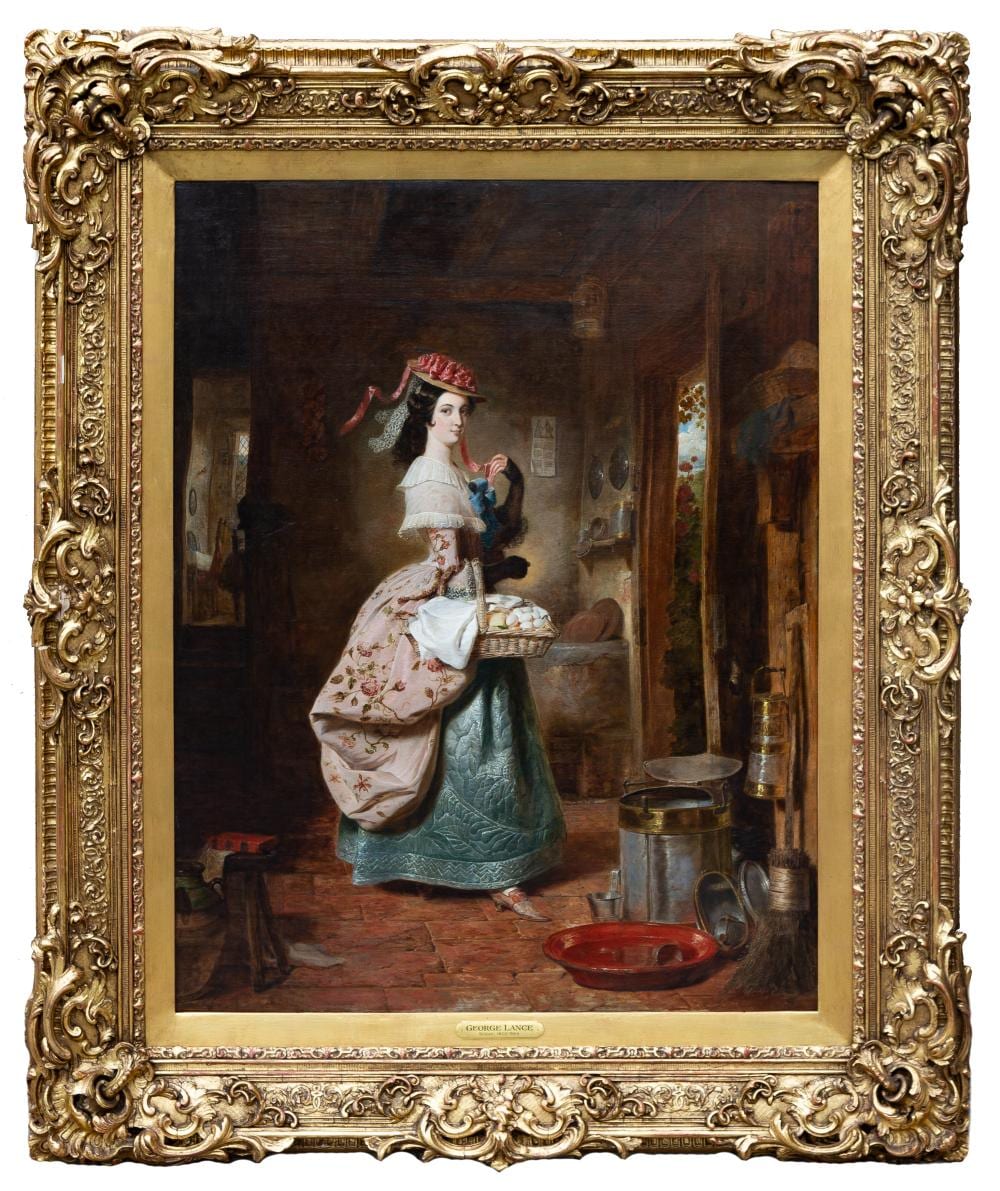
Oil on canvas. Signed "LANCE" (center right, on metal pail). Exhibited: Royal Academy, London, 1843, No. 606. Manchester, Art Treasures Exhibition) 1857, Paintings by Modern Masters, No. 401. Literature: British Artists: Their Style and Character, No. XXJX-George Lance) Art Journal, 1857, p. 307. Catalogue Note: George Lance was one of the greatest British still life and genre painters of his time, and his works were highly desirable even during his life. He studied under Benjamin Robert Haydon, whose life and career was always under scrutiny due to his harsh temper. Lance exhibited often throughout his life, primarily in London from 1824 to 1864. He also exhibited at the Royal Academy, in which this painting was exhibited in 1843, as well as numerous other clubs and exhibitions. More than his still life, which he personally enjoyed painting, his historical genre paintings were quite popular with the public. In 1836 he won the Liverpool Prize for a historical genre painting titled Melancthon's First Misgivings of the Church of Rome. His favorite pupil, William Duffield, was highly influenced by Lance's genre paintings, and would later follow in his mentor's footsteps. The Village Coquette is an exquisite example of Lance's ability in genre painting, and judging from the extensive provenance and exhibition history, he himself believed this to be one of his best paintings. As with many genre artists, Lance has incorporated symbolism into nearly every object depicted in the scene in order to give the viewer a clear view of the woman's character and life. Symbolism can be found from the basket of eggs she gingerly carries in the nook of her arm, to the rose garden she is about to enter, to the bedroom in the background, which she has recently left. With precise and expert brushwork, Lance has given us a story and fueled our imagination in one image.