Lot description
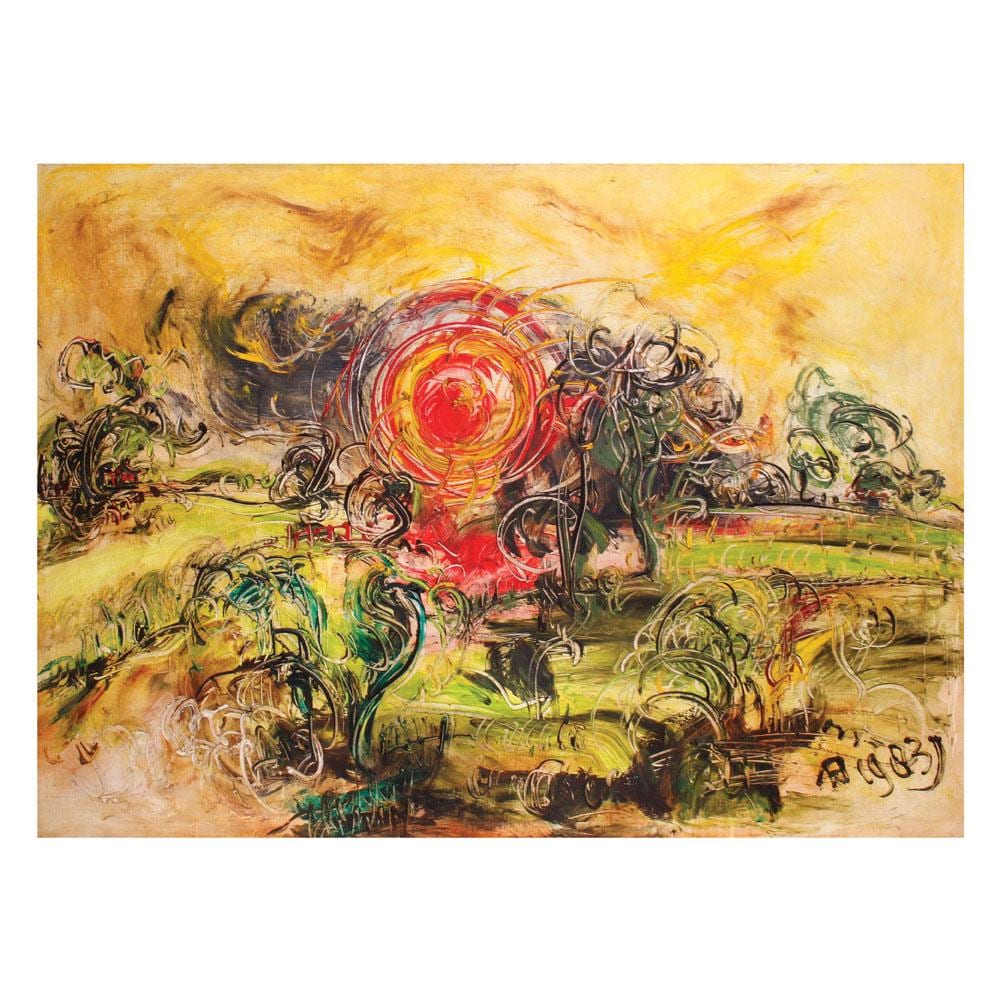
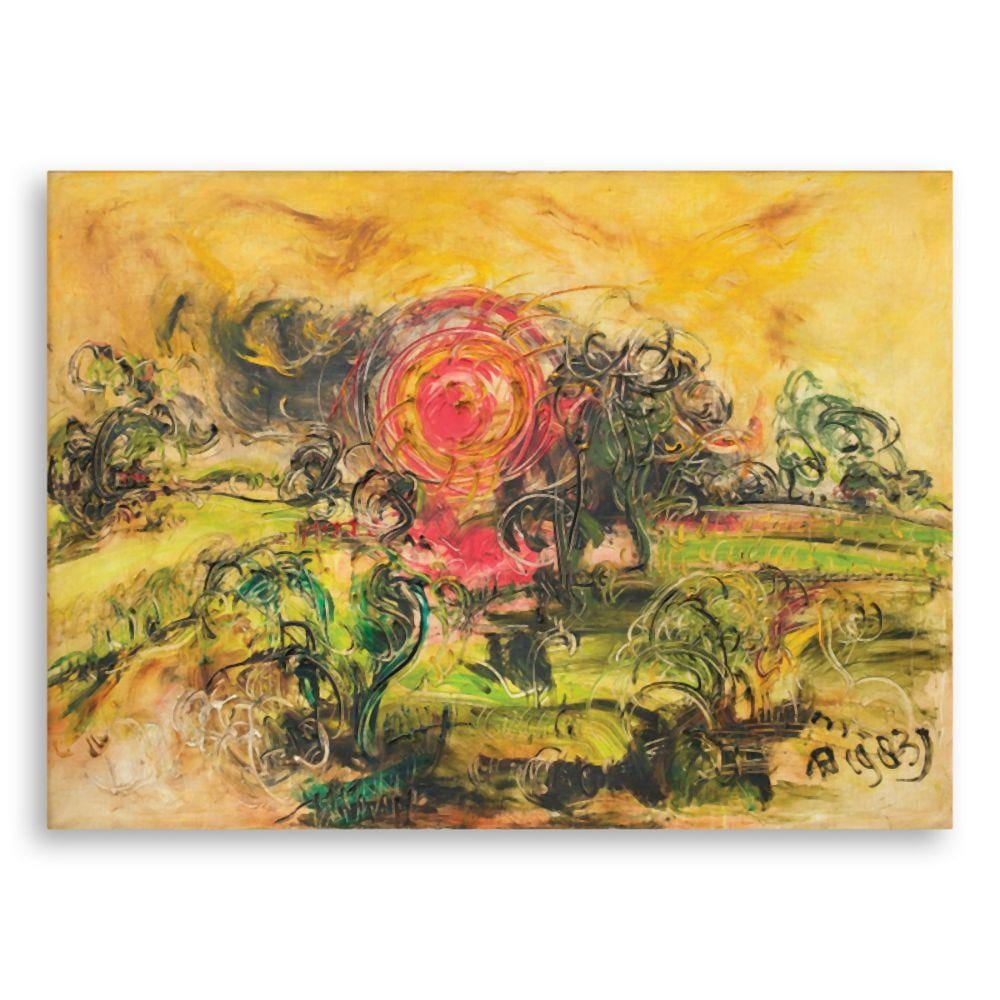
Affandi (1907 - 1990) Menyongsong Hari Yang Cerah (Sunny Day) signed and dated 1983 (lower right) oil on canvas 40" x 55" (102 cm x 140) Affandi’s Menyongsong Hari Yang Cerah (Sunny Day) is symbolic of the Indonesian modernist virtuoso’s undying homage to the radiant charm of their matahari (lit. “eye of the day”), the Indonesians’ term of endearment for their sun. By the time Affandi finished painting this work, he had already garnered an outstanding amount of local honors and international exposure, including being one of Indonesia’s representatives to the Venice (1954), São Paulo (1952, 1956), and Sydney (1973) Biennales. In 1974, Affandi was bestowed an honorary doctorate from the National University of Singapore, one of the world’s leading institutions for higher education. Affandi received the “Bintang Jasa Utama” in 1978 from the Indonesian government for his artistic contributions to the Indonesian Revolution. Menyongsong Hari Yang Cerah (Sunny Day) (trans. “Welcoming A Bright Day”) exhibits Affandi’s expressionist flair. The revered artist first ventured into expressionism in the late 1940s and would never abandon it for his photographic realism in the early stages of his career, giving more importance to emotional mastery rather than technical prowess. The sun, a recurring icon in Affandi’s art, possesses an all encompassing power and radiance, symbolizing its significance as the giver and sustainer of life. The lush flora seemingly rises in adoration and homage to the sun, welcoming the arrival of a new day and the restoration and renewal of one’s sense of hope and strength. It is a likely allusion to the Indonesian national motto, “Bhinneka Tunggal Ika,” which means “Unity in Diversity,” symbolizing Indonesia’s identity as an ethnically diverse nation. The swirling strokes, which manifest Affandi’s unbridled gush of emotions, expressive resonance, and solid creative impulses, epitomize his avant garde practice of squeezing paint onto his thumb and then spreading it throughout the canvas. In the TIME magazine issue dated January 12, 1953, Affandi’s painting technique is described as follows: “Affandi never learned to use a palette, dislikes brushes. Instead, he squeezes paint onto his thumb, then smears it around the canvas. He will often spend a week studying a subject, but the actual painting seldom takes longer than 90 furious minutes. ‘After about an hour,’ he says, ‘I usually feel my emotions declining. It’s better to stop then. The painting is finished.’” The vibrant intensity of Affandi’s colors engenders myriad expressions that show the artist’s emotional sensibilities. He possesses a creative eye so well adjusted to a kind of naturalism that underscores essence rather than the rigorousness in minute details. Thus, Affandi’s work not only provides authenticity of character but transcends the boundaries of the physical and exalted right into the spiritual. Affandi was a self-taught artist, learning from reading copies of Studio, a London-based art magazine, and seeing reproductions of paintings by numerous European masters, such as Francisco Goya, Edvard Munch, Pieter Breughel, and Sandro Botticelli. Affandi would become the foremost champion of Indonesian modernism, together with Sindudarsono Sudjojono, the “Father of Indonesian Modern Art.” They led Indonesia’s transition from the conservative style of the Mooi Indie (Beautiful Indies) to the modern art of the Impressionist/Expressionist influenced painters who revolutionized Indonesia’s art landscape by producing works depicting the people’s realities under a then- newly independent nation. Affandi also participated in the Indonesian National Revolution against the Dutch colonists, creating posters that awakened the sense of nationalism in his fellow countrymen. (Adrian Maranan)