Lot description
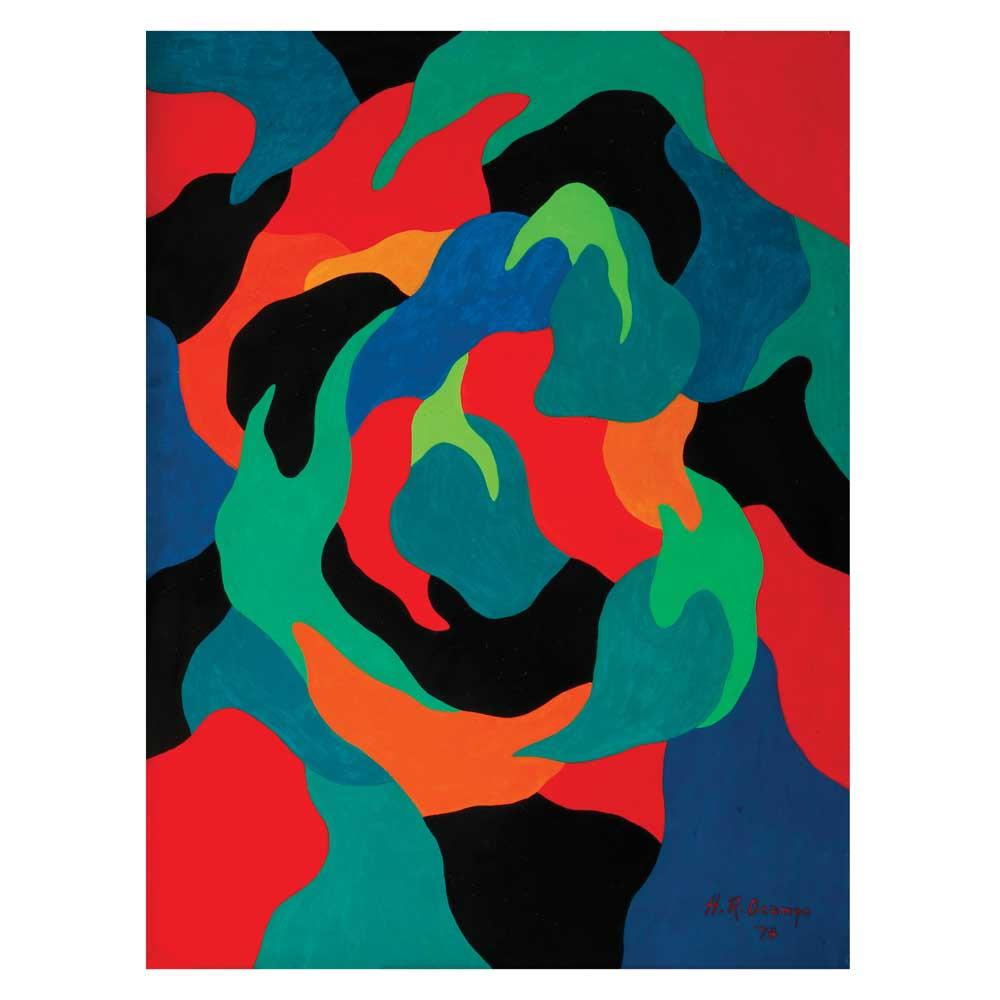
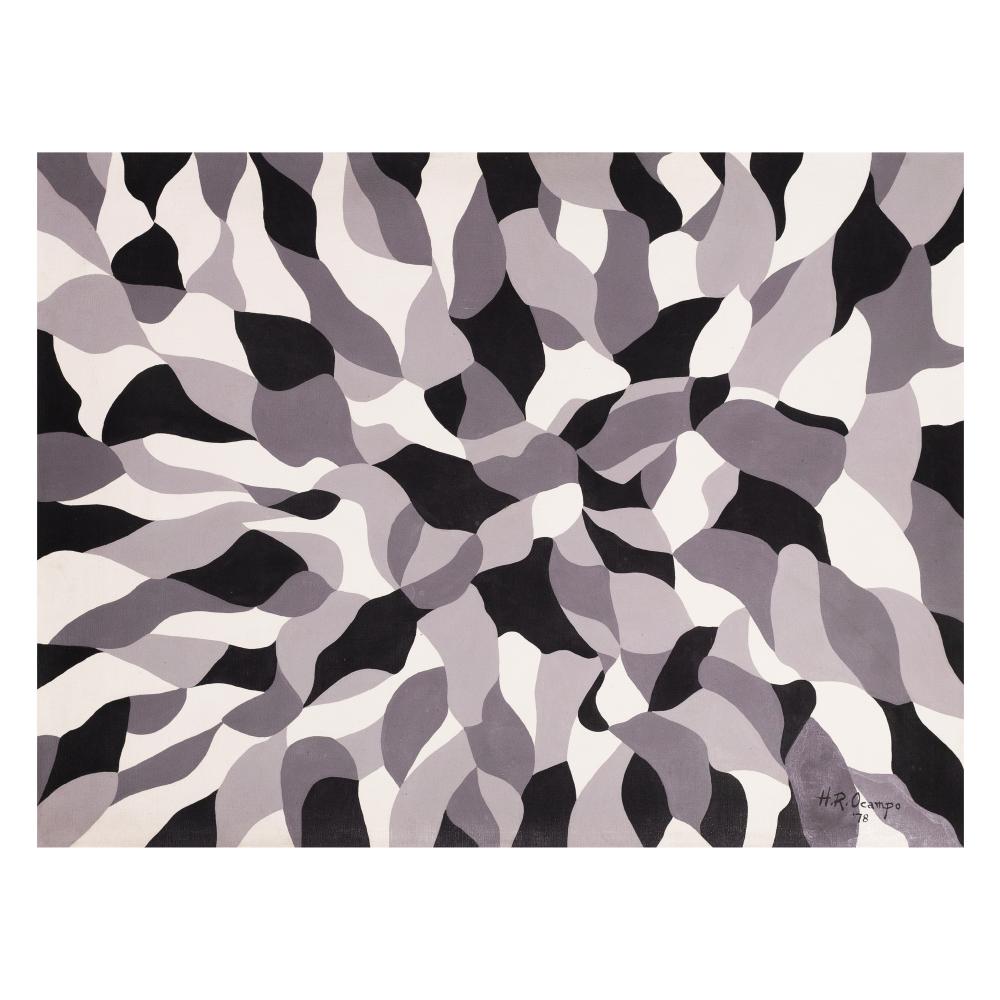
Hernando R. Ocampo (1911 - 1978) Festival signed and dated 1978 (lower right); inscribed "Pls. ring me tonight / Reggie" (verso) oil on canvas 30" x 40" (76 cm x 102 cm) PROVENANCE: Private Collection, Manila LITERATURE: De Jesus, Angel G. H.R. Ocampo: The Artist as Filipino. Quezon City: Heritage Publishing, 1979. Illustrated on page 174 with painting description on page 175. According to Hernando R. Ocampo’s biographer, Angel G. de Jesus, in his book on the artist titled H.R. Ocampo: The Artist as Filipino, the eminent modernist “roughly outlines the period of his art into the following: “Aping Amorsolo Period” (1929 – 1934; characterized by the emulation of Amorsolo’s works); “Proletarian Period” (1934 – 1945; characterized by paintings of “poverty-stricken humanity, driftwood of the ebbing tide of war); “Transitional Period” (1945 – 1963; marked Ocampo’s maturation as he transitioned into non-objective painting, the simplification of forms and figures); “Mutants Period” (1963 – 1968; paintings of “symbols of mutants, fantasies on the havoc wrought by nuclear warfare” inspired by the American 1957 sci-fi film The Beginning of the End); and finally the “Visual Melody Period” (1968 – 1978; characterized by “pure painting, something akin to chamber music). This particular piece, titled Festival, belongs to Ocampo’s “Visual Melody Period.” The book Kayamanan: Biographies of Philippine Visual Artists further describes this period where Ocampo “brought back tonalities and organic shapes into his abstract designs, creating a richer form of abstraction.” Seemingly antithetical to the work’s evocative title is Ocampo’s application of a muted monochromatic palette. Albeit known for his vivid and dynamic palette, this work is one of those pieces by Ocampo in which he veers away from his trademark identity as a foremost Filipino colorist. But Ocampo’s use of a monochromatic palette proves that he is a master of the exuberant. Ocampo evokes the gaiety of a festival through his undulating lines and sinuous curves, engendering an animated spectacle of merrymaking. Here, Ocampo’s monochromatic forms engage in a sublime visual dance, a confluence of expressions wrought in natural, uninhibited strokes. One can imagine a harmonious convergence of festival dancers frolicking on the streets, and everyone is in high spirits. It is as if the dancers flow harmoniously—lively, agile, and virtually acrobatic—extolling the praises of their native land. Festival is among Ocampo’s last works, having been painted in 1978, the year of his passing. Two years before his death, Ocampo was bequeathed the highest cultural award, the “Diwa ng Lahi,” by the City of Manila during the 1976 Araw ng Maynila festivities. Ocampo was posthumously conferred the title of National Artist for Visual Arts in 1991. (A.M.)