Have one like this?
Upload a photo for a free check of what yours may be worth.
Lot description
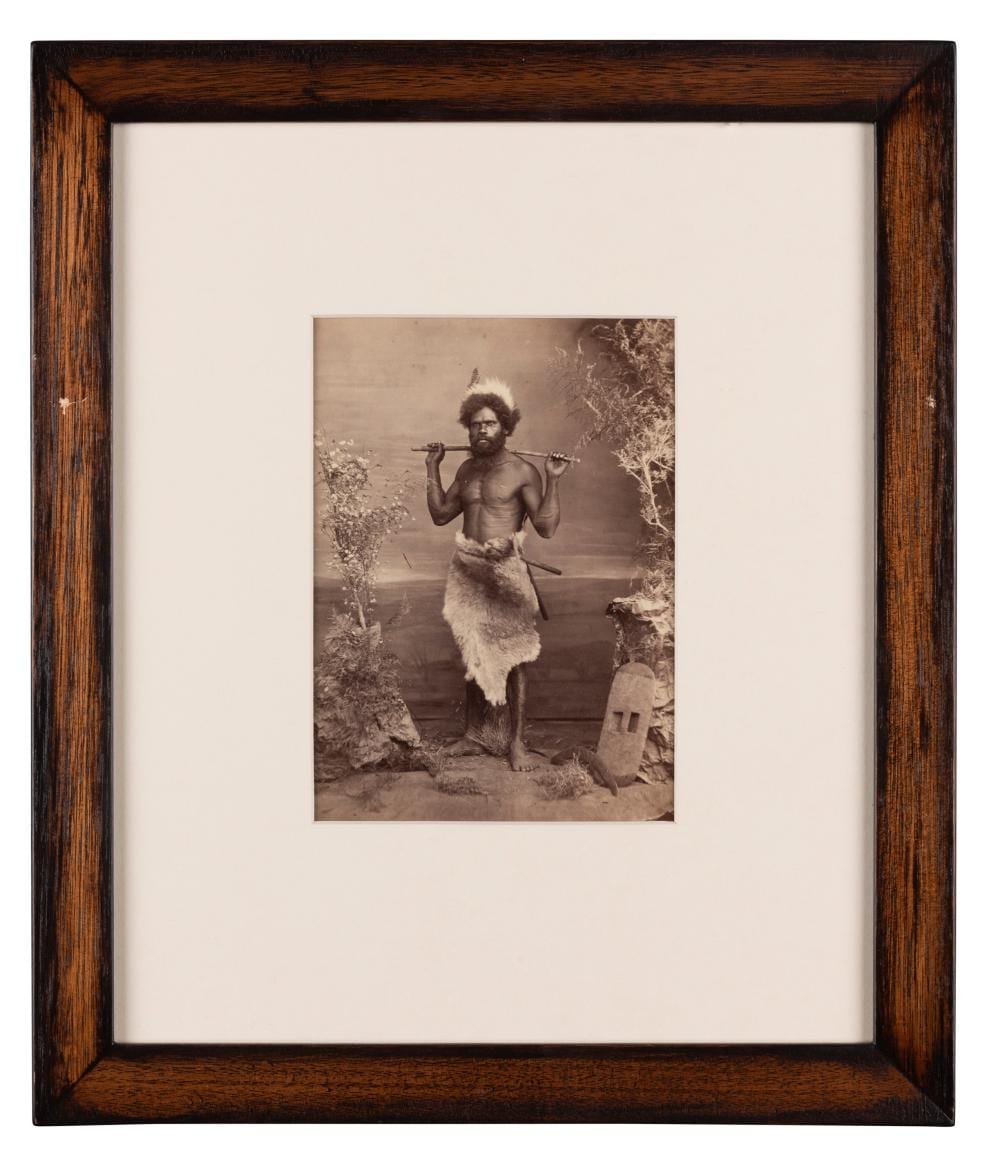
JOHN WILLIAM LINDT (1845-1926) Aboriginal Man with Shield albumen print embossed lower right: J W Lindt Grafton Artist Photographer 18.5 x 13.5cm ESSAY John William Lindt (1845-1926) Born in Frankfurt-on-Main, Germany, John William Lindt, son of a customs officer, received a thorough education with a promising and illustrious future ahead of him. His appetite for adventure drifted away from a traditional scholarly course. At seventeen, he ran away from home on board a Danish vessel en route to Australia. The voyage passed through the islands of New Guinea. Witnessing the native habitants of the islands was a formative experience for the young photographer, igniting a lifetime interest in anthropology. Lindt jumped ship at the Brisbane port and ventured into the outback, where he made a decent living in tuning and repairing pianos for Queensland homesteads. Restless and eager to explore, Lindt travelled further south, landing in Grafton, New South Wales. He took an assistant role under the local photographer Wagner where he eventually bought the studio outright in 1968. Lindt made the acquaintance of the Italian naturalist and explorer Signor D'Albertis, who happened to be convalescing in the area around 1873. This friendship reinforced the photographer's anthropological aptitude. The photographs produced during this time are some of the most captivating images of the artist's oeuvre. The locality allowed Lindt to observe the customs and traditions of the Indigenous people from the Bundjalung, Gumbaynggirr and Yaegl nations, one of the few accessible and relatively unaltered communities in the region. The portraits made here of the traditional owners were engineered with Lindt's Germanic thoughtfulness for aesthetic composition while simultaneously attempting to document cultural artefacts particular to each sitter. He staged the portraits in the studio, influenced by the nature of the Wet Collodion process. This laboursome process required the glass plates to be exposed and developed before the surface dried and was not readily portable. Lindt's photographs captured the volatile landscape and culture of colonial Australia, carrying an immeasurable value in the documentation of this period. His works are universally esteemed and enrich museum and gallery collections worldwide.