Lot description
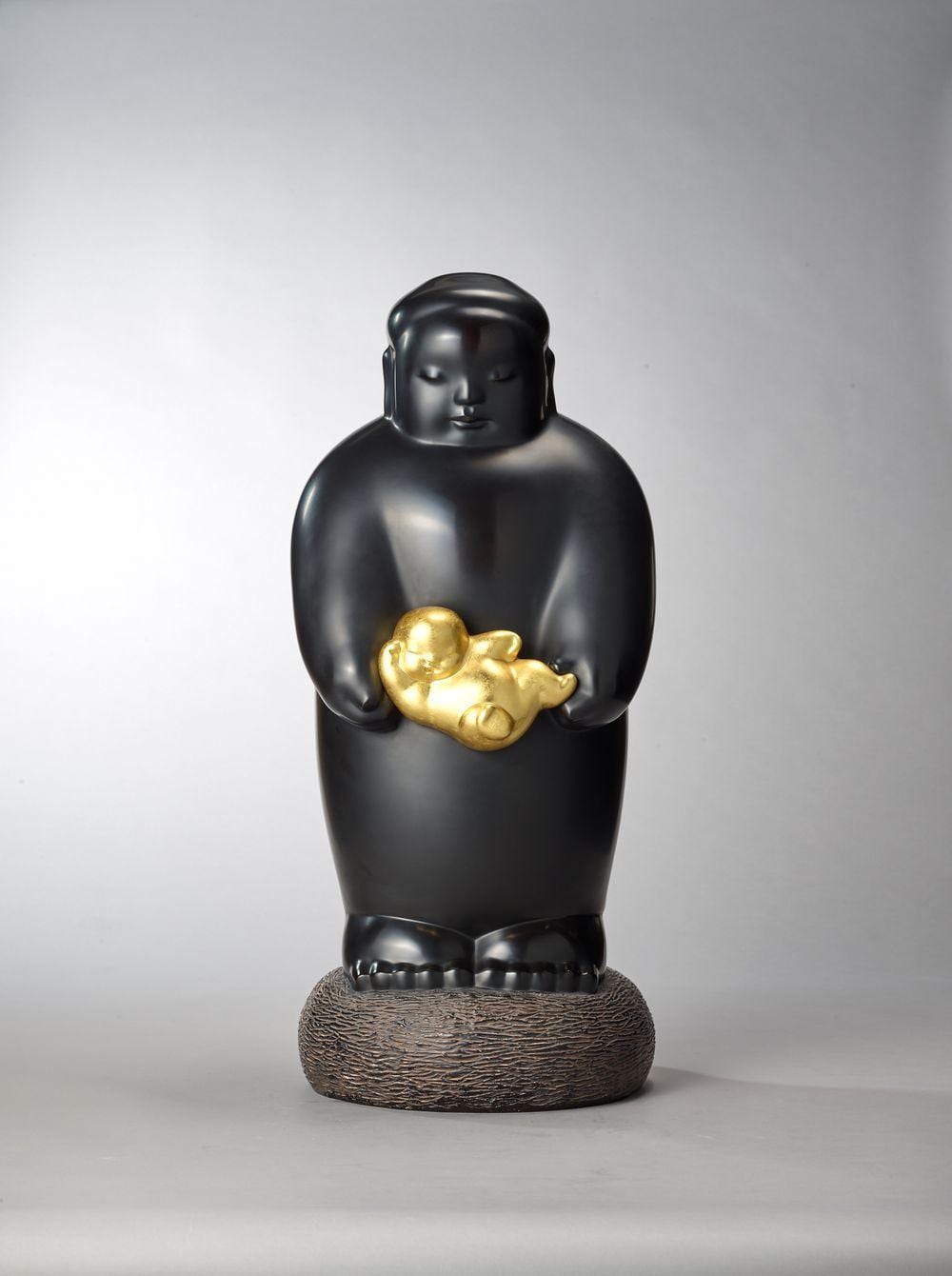
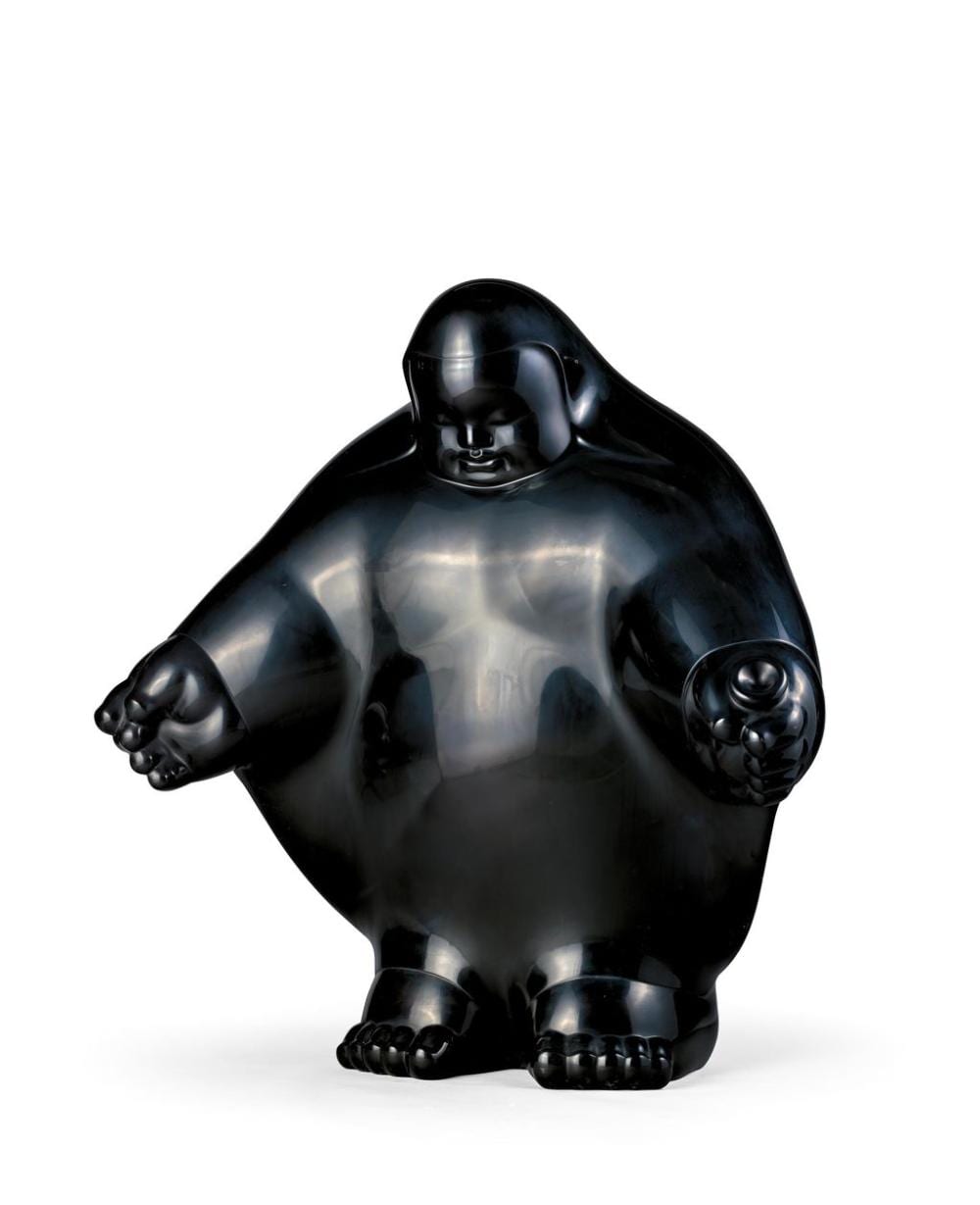
大士 Avalokitesvara 簽名雕刻背後:Li Chen 3/8 1999 雕刻鈐印:李真 Engraved on the back Li Chen in English, numbered 3/8 and dated 1999, with one seal of the artist 《大士》是李真「虛空中的能量」系列的代表作之一,2001年曾受邀參加美國紐約蘇富比總部「無疆界的中國」大型聯展,2007年更於第52屆威尼斯雙年展展出。《大士》一作臉部渾圓敦厚又慈悲的神情,在霧化面相中不失拙趣,是喜樂也是祥和。 以單純清淨,卻又充斥著沛然莫之禦的氣體能量,這種具形擴張效果,在極限與厚重間有了虛與實的官感,是太虛智慧包容的意涵,即簡單又直接傳達姿勢語彙。就雕塑肌理與線條關係,李真表現出高超的融合性,看似簡約,但在光影下確充滿著變化,圓滿造型中依然有其精妙的神韻,左握淨瓶,右拈指印,渾圓展臂而立。一種安穩態勢,讓人有平靜安定感。在質感上用中國墨黑色帶有霧亮處理形成特有效果,使觀者有既重又輕的感覺,是一件耐人尋味的精品。 人類文明之多元性,在全球化的趨勢中加速交流,但當下強勢文化的侵略與散佈,造成異文化間的存在與疆界快速的消失。全球化是共生概念,方便人類生活,但並非等於文化的統一化,在現代的時空裡,更突顯個別文化的傳統自由精神的重要與可貴。 雕塑家李真,生於台灣,是一位極具天份的藝術家,至今已於紐約、芝加哥、邁阿密、休士頓、巴黎、倫敦、日內瓦、威尼斯、上海、北京、新加坡、台北等多個城市展出,私人及公共收藏遍布許多國家,更於2007年受邀個展於全世界最高地位的學術展覽:第52屆義大利威尼斯雙年展,獲得國際廣大的迴響及曝光度,為至高的榮譽。 李真涉獵佛道學等經典、物外尋真,在藝術作品的追求上,是以雕塑來傳達東方文化的精神與內涵。李真以「虛空」為其重要的創作美學概念,「空」與「虛」是中國文化中佛學及道學的重要思想,佛學中的「空」並不是代表沒有,而是代表一個巨大寂靜的生滅智慧境界,在道家思想有兩句話:「虛空粉碎,大地平沉」,就是描述一個破與靜的極點狀態,在「易」之中求道。李真的雕塑是在探討虛空的能量,但他所表現出的雕塑實體,卻是空於外,道氣入內而充塞,一點也不空,原因是李真再現能量是以一種精神的形式,用誇張、通體漆黑的實體來表現懾人的物質精神,但雕塑所傳達確是甜美、浪漫、喜悅與滿足的精神概念,正因如此,即便他的部分作品巨大無比,但卻不顯壓迫笨重,似飄浮於空中,令人有「既重又輕」的感覺,這正是精神能量與物質能量完美的結合所致。 不但如此,李真竟能突破千年佛教雕塑既有的形式藩籬,轉化唐代佛教造像的豐厚飽滿,以及宋代俊美秀麗的精神暨形象特質,將雕塑的開臉與線條減至極簡,並且粹取中國5000年歷史文化的元素,如中國的仙、佛、龍、神話、民間故事等,更進一步注入當代藝術的元素及物件,成功的結合古典與當代,使其作品呈現一種前所未見的獨特型態及樣貌,賦予東方雕塑新的生命。 The "Avalokitesvara" is one of the representative series of Li Chen's artworks named "Energy in Emptiness". In 2001, this piece was invited by the Sotheby's Headquarters in New York, U.S.A. to attend a huge exhibition called "China without Border." Moreover, it was also displayed in the 52nd Venice Biennial in 2007. The work "Avalokitesvara" shows a full round face with mercy, humbleness and sincerity. It might look clumsy at first yet the misted facial expression conveys joy, peace and harmony. Besides offering people an innocent, clear and clean sense, it also has an abundance of energy which has an expansive effect. Between the limit and the heaviness, virtual and real senses are endowed. These are implications of the wisdom of tai xu (it means vision) which applies the language of various body postures to communicate with the audience in a simple and direct manner. In terms of the relation between sculptural textures and lines, Li Chen's work demonstrates his superb skills to combine them. It might look simple, but in the light and shadow, it is full of changes. Still, there is a sense of delicate spirit in the perfect design. With the left hand holding a clean bottle, the right hand's fingers making a lotus gesture, the sculpture stands tall with solemnity and dignity and gives a calm and secure feeling. The use of Chinese ink-black color with bright-misted approach creates an unique quality that makes audience feel the heaviness and lightness at the same time. It is a fine piece of artwork which arouses intense interests. Globalization is accelerating communication and interaction among the multitudes of human cultures and the boundaries between existing cultures are disappearing rapidly. While globalization is a universal concept that makes life easier for all, it does not unify cultures. In that sense the individualism of unique cultures is more important and precious now than it has even been before. The artist Li Chen was born in central Taiwan, and in his expansive studies of Buddhist and Taoist scriptures he seeks truth beyond the material world. He uses sculpture to convey the spirit and allusions of Eastern culture, taking the idea of "Emptiness", or "Void", as his central creative aesthetic concept. These are important concepts in Chinese Buddhist and Taoist cultures. But "Emptiness" in Buddhism does not mean "Nothing". Instead it connotes a vast and calm understanding of one's existence in the world. In the same vein, there is a Taoist saying that goes: "When emptiness is broken, the earth loses its balance"; it describes an extreme state of disturbing the balance of things as pursued though the idea of interconnectivity. Li Chen's sculptures investigate the energy of such emptiness, and his sculptural forms are not empty, but instead are full of a vital energy. He achieves this through an energetic and spiritual style that uses exaggerated shapes and dark black lacquer to create a spiritual matter that people can absorb. But the sculptures also convey emotions that are sweet, romantic, happy and satisfied. For this reason, though some of his works may be massive, they don't appear oppressive and heavy. Instead they seem to be floating in the air, exhibiting an alluring ambiguity between lightness and heaviness. Li Chen also makes breakthroughs in the already-existing styles of Buddhist sculpture that have existed over thousands of years. He alters the thick and full Tang Dynasty (A.D. 618–907) style Buddhist sculptures and the elegantly spiritual characteristics of Song Dynasty (A.D. 960-1279) sculpture, reaching an extreme simplification in both face and line. He extracts elements of China's five thousand years of history and culture, including Chinese immortals, Buddhas, dragons, fairy tales and folk tales, etc. and takes them a step further, creating contemporary artistic work from them. He successfully combines classical and contemporary perspectives and creates works that are unprecedented and unique forms, endowing new life to Eastern sculpture.