Have one like this?
Upload a photo for a free check of what yours may be worth.
Lot description
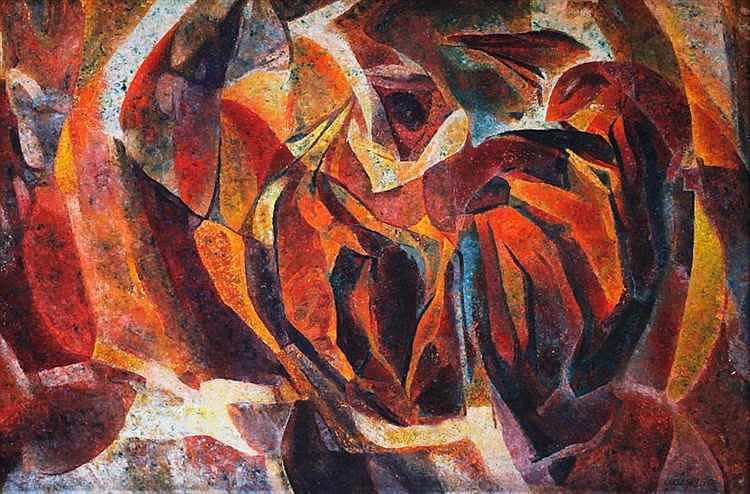
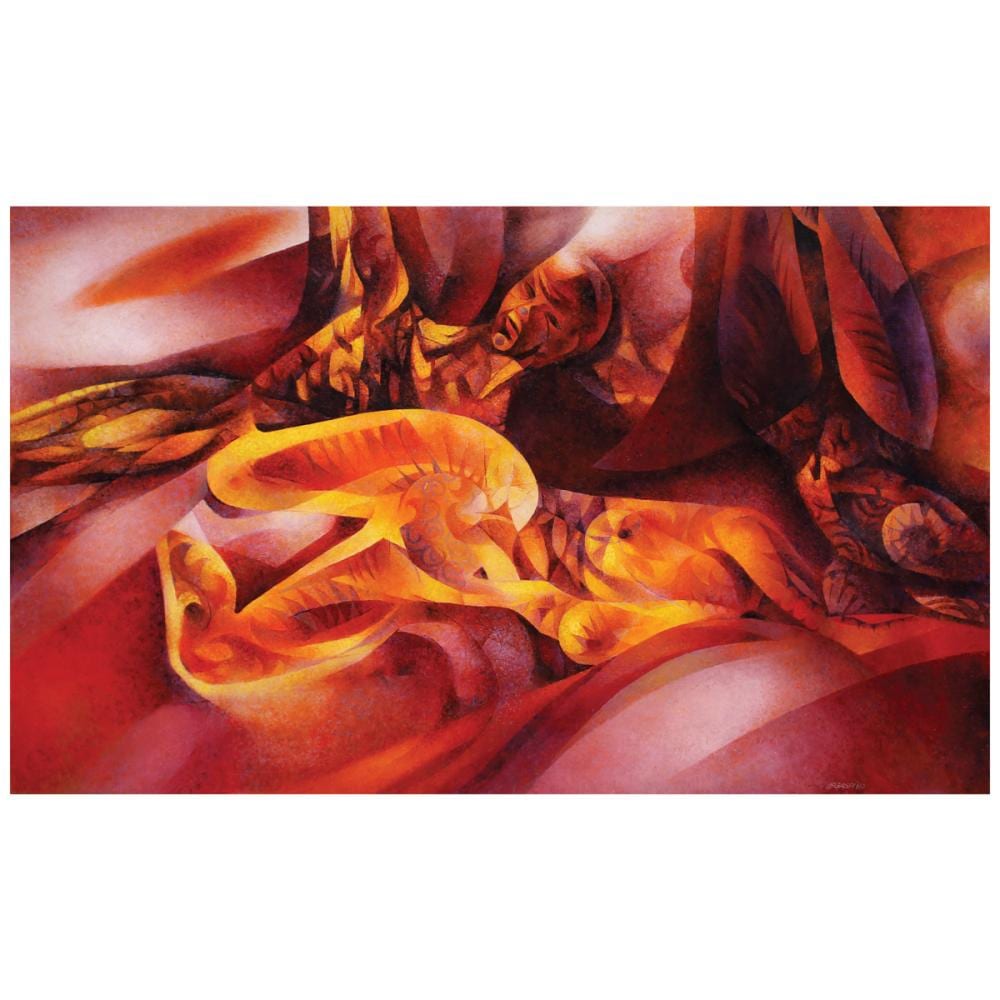
PROPERTY FROM an important private collection Cesar Legaspi (1917 - 1994) Incantation signed and dated 1989 (lower right) oil on canvas 36" x 60" (91 cm x 152 cm) P 4,000,000 Accompanied by the study of the work in pen and ink with the corresponding certificate of authenticity. Known for his extensive body of work that depict heroism, heritage and virtue Cesar Legaspii has melded into his art a distinct Filipino character that bears with it a sense of place and culture that is wholly unique to the country’s history and aesthetic. As one of the Thirteen Moderns, Legaspi helped develop and revolutionize the local artistic landscape in order to accommodate the groundbreaking ideals and aspirations that defined the 20th century. Most notably, Legaspi refined the core tenets of cubism in order to more aptly fit within the unique visual language of Filipino art. By doing so, not only does Legaspi pay homage to Cubism’s storied roots, but he also managed to create a distinct technique that has undoubtedly paved the way for a number of local artists, collectors, and enthusiasts. This particular 1989 oil on canvas piece is emblematic of Legaspi’s visual style and aesthetic. Rendered in an array of warm hues and populated by meticulously executed white highlights, Legaspi’s work presents us with two figures. The first figure features a distinctly familiar element; the nude. The figure is splayed atop of what appears to be a bed or cushion of some sort. They’re outstretched position communicates a sense of comfort and vulnerability, implying that the figure is willingly attuned to their surroundings. The secondary figure on the other hand is seemingly enraptured by their current situation. Their pose and body language suggests that it is intently observing the central figure in a way that it implies a sense of intimacy or, at the very least, respect. Yet the most striking feature of the work is how Legaspi’s distinctly cubist style manages to impart Legaspi’s message in a way that can be discerned from analysis but from experience. The dominant red and earth colors of the work wraps Legaspi’s figures in an aura of intimacy that implies both a sense of complexity and intuition.