Lot description
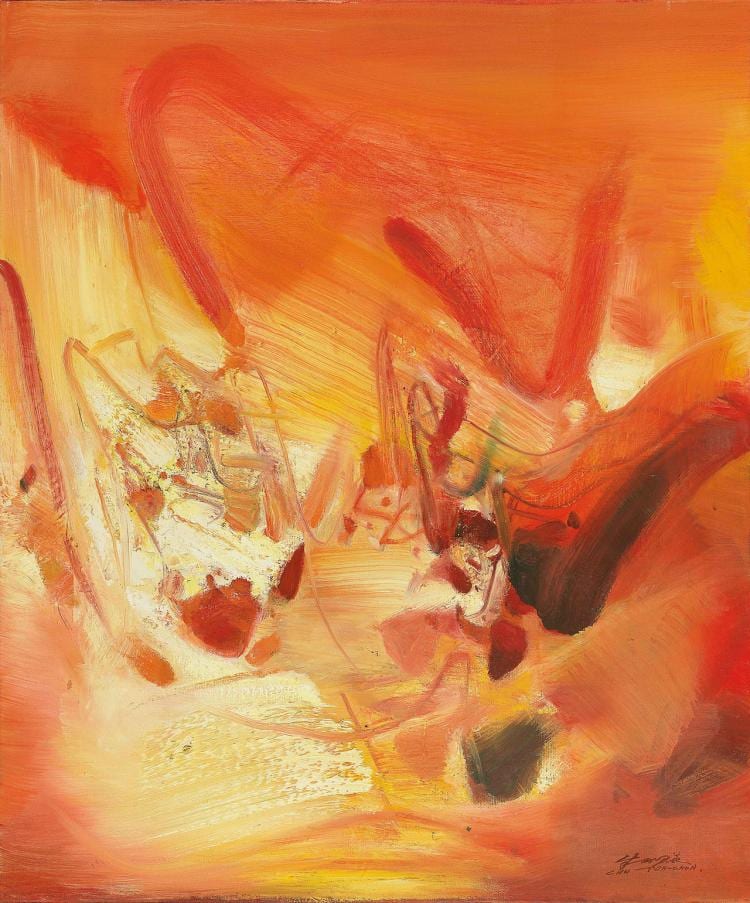
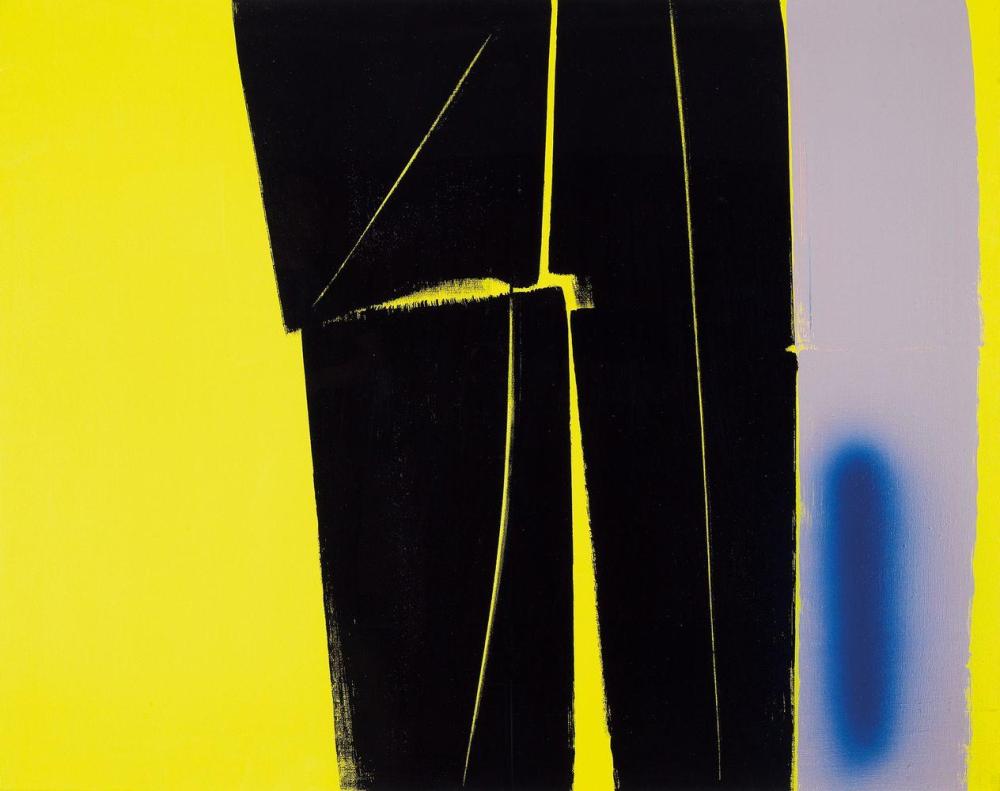
漢斯・哈同(Hans Har tung, 1904-1989),著名的德裔旅法藝術家,其作品以抽象和表現主義見長。哈同於1924年進入德國萊比錫大學(Leipzig University)學習哲學和歷史,隨後在德勒斯登藝術學院(Fine Arts Academy of Dresden)深造,在此期間,德勒斯登國際藝術館收藏的法國及西班牙的現代藝術作品對其藝術創作產生了深遠的影響。隨後由於德國的政治環境的改變而旅居法國巴黎。在巴黎的經歷使得他接觸到了塞尚(Paul Cézanne)的作品,並對他其後的創作產生了啟發。哈同隨後師從著名藝術家及藝術理論家麥克斯 杜爾納(Max Dörner),學習繪畫技法。 法國前文化部長傑克・朗(Jack Lang)曾這樣評價哈同,「構建了我們這一時代圖像語言的重要一員」。可見其藝術生涯對於歐洲乃至世界所產生的持續的影響力。哈同的一生經歷坎坷,1932年,他試圖回到德國,但因其作品「帶有立體主義傾向」與當時的納粹德國意識形態所不容,因此被拒絕入境,隨後又因在柏林出售自己的作品而被捕,後在朋友的幫助下成功逃離納粹德國。回到法國他的抽象作品在當時並不被看好,在他加入法國外籍軍團,遭到蓋世太保秘密跟蹤,隨之被捕入獄7個月,在得知他是藝術家之後,又關入紅色房間以「折損其視力」。釋放後,卻被派到北非參加戰爭並致殘,失去了一條腿。 命途多舛的經歷終於在二戰結束後有所好轉,並且終於獲得了認可。1947年在巴黎舉辦了藝術家的首次個展,到五十年代後期,他的行動繪畫開始受到關注並獲得認可,以有節奏的筆觸和色彩刮擦被世人所熟知。在1960年,他獲得威尼斯雙年展的國際大獎。他的作品對後期美國的抽象表現主義、抒情表現主義繪畫都有著深遠的影響,從此成為「巴黎畫派」的代表性人物之一。同時作為斑點派(Tachisme)的代表人物,哈同的畫作在戰後的五十年代表現出具有書法氣質的樣貌。他一生的作品大致可以分為若干階段,創作生涯早期的作品在三十年代略顯保守,而戰後的四五十年代則逐漸表現出激進的一面,到了六十年代則採用了更加大膽的色彩運用和細膩而堅韌的筆觸線條,其密佈的線條宛如勁風,襯托在陰暗的漸變色背景之前,彷彿麥田或水藻,體現出堅韌的生命力。而七十年代之後的作品又逐漸轉入晦澀與艱深,標誌性的線條變得更加繁複,且使用了更多的黑色等暗色。 漢斯・哈同的《T1970-H40》創作於1970年,亦可以看作是其六十年代系列晚期的具有實驗性作品,也是哈同異於眾多纖細線條作品中更具突破的難得佳作。這件壓克力抽像畫的尺幅適中,一改書法留白之構圖,張力湧現,色彩豐滿。畫面中黑色與黃色的強烈對比衝突,畫面中央的黑色刷筆大開大合、簡練犀利。 義大利著名藝術史家朱利奧・卡洛・阿爾甘(Giulio Carlo Argan)曾這樣評價哈同的作品,「(哈同)所研究探討的課題,實際上是符號的起源,而不是研究符號的原始層面的意義,相反,是專門去製造並產生符號。」換句話說,這些符號的狀態更多是關於物的層面以及過程的層面。「哈同在符號與背景的關係中所定義的空間是決定和完善的行動空間,他的符號是意志和行動的符號」。也就是說,哈同通過在繪畫空間之上創造符號,來體現他的意志和行動,這對於後世的藝術創作有著現實的指導意義。 在創作方法和媒介的使用上,哈同亦是先鋒。除了本件作品使用了在當時比較罕見的噴漆技藝以外,哈同在六十年代和七十年代使用樹枝、壓克力顏料、畫刷背面、硬材質刮擦等技法,極大地豐富了繪畫的維度,不但詮釋著行動繪畫中繪畫手勢的行動的一面,也因其藝術媒介的多樣性對同時期以及後世的藝術家的創作都產生了極大的影響,包括趙無極以及大洋彼岸的美國的抽象表現主義等。通過探索並展示其精湛的抽象創作技藝,啟發了朱莉・梅雷圖(Julie Mehretu)、魯道夫・史丁格爾(Rudolf Stingel)等著名藝術家帶來啟發,成就創作之先鋒。 這件作品與同時期纖細流暢的線條不同,其粗礪而鋒利的筆觸和大塊色彩的運用頗有馬蒂斯的影響,體現出他在這件作品之上所採用的迥然不同的運筆——準確、快速、歷練、堅定。哈同的作品被眾多國際知名藝術機構展出及收藏。自從1947年在巴黎麗迪亞・孔迪(Lydia Conti)畫廊舉辦首次個展之後,相繼在歐洲和美國舉辦了展覽,包括卡塞爾文獻展(1955),法蘭西畫廊(1956),克拉文畫廊(1956),古根漢美術館(1953-1954),巴黎國立現代藝術館(1969),紐約大都會博物館(1975),巴黎市立現代藝術博物館(1980),國立臺灣美術館(1997),萊比錫美術館(2007)等。 Hans Hartung (1904-1989), a renowned German artist who lived in France, was known for his abstract and expressionist style. In 1924, Hartung enrolled in Germany's Leipzig University to study philosophy and history before continuing his education at the Fine Arts Academy of Dresden. During this period, the modern French and Spanish works at the Staatliche Kunstsammlungen Dresden exerted a profound and lasting impact on Hartung's life as an artist. Later on, the changes in Germany's political climate prompted him to move to Paris, France. When in Paris, Hartung came across the works of Paul Cézanne, which proved to be an inspiration for his subsequent creations. Hartung then studied painting techniques under Max Dörner, a famous artist and art theorist. Jack Lang, former French Minister of Culture, once described Hartung as "an important artist who constructed the visual language of our generation." Suffice to say, Hartung's artistic career has made a continuing impact on Europe, and even the entire world. The course of Hartung’s life was filled with hardship and obstacles. In 1932, he attempted to return to Germany. However, the "Cubist inclinations" of his paintings were incompatible with the ideologies of Nazi Germany, so he was denied entry into the country. Sometime later, Hartung was arrested for selling his paintings in Berlin. Eventually, he escaped Nazi Germany with the help of a friend. Back in France, Hartung's abstract works were not well-received. He then joined the French Foreign Legion, and became a target of the Gestapo's secret tailing, which resulted in Hartung being arrested and imprisoned for 7 months. When the French police learned he was a painter, they locked him in a red cell in an attempt to damage his vision. After his release, Hartung was sent to fight in North Africa and lost a leg in a battle. His tumultuous life finally began to take a turn for the better after the end of World War II, when he was finally recognized as a great artist. In 1947, the artist held his first solo exhibition in Paris. By the late 1950s, Hartung was in the public spotlight for his gestural paintings, and his artistic achievements were given due recognition. His rhythmic brushstrokes and scratches made him a household name. In 1960, he was presented the International Grand Prix for painting at the Venice Biennale. Hartung became known as one of the most important artists from the School of Paris, and his works had a huge influence on the abstract expressionism and lyrical expressionism painting style that developed subsequently in the United States. Hartung was also an iconic artist in the Tachisme movement. The paintings he produced in the 1950s after the war exhibited a calligraphic orientation. The artist's repertoire, produced over the course of his life, can be roughly divided into several stages. The paintings from the early stages of his career, produced in the 1930s, were rather conservative, while those painted in the 1940s and 1950s after World War II gradually displayed a more radical inclination. In the 1960s, his color choices became bolder, while his brushstrokes and lines became more delicate yet unfaltering. These lines, packed densely on the canvas, remind one of a strong gust; when set against a dark gradient background, they remind one of wheat in a field or a cluster of algae, telling the story of a resilient lifeforce. After the 1970s, Hartung's paintings gradually took a more cryptic and abstruse turn. The iconic lines became more complex, and black and other darker colors were used more frequently. Hans Hartung's T1970-H40 was created in 1970. This painting could be said to be the most experimental one created in the late 1960s, and a breakthrough from his many other "fine lines" paintings. This medium-size acrylic abstract painting does away with the artist's usual use of calligraphic blank spaces and instead features bold and energetic colors that saturate the entire composition. The black and yellow used in the painting create a strong contrast. The stroke ofblack paint in the center of the picture is wide and bold, yet concise and sharp, dividing the picture into two. Giulio Carlo Argan, a well-known Italian art historian, said of Hartung's paintings, "What Hartung was concerned with was actually the origin of symbols rather than the original meaning behind symbols. On the contrary, he sought to be a specialist in the creation and production of symbols." In other words, the state of these symbols is more on the level of material objects and creative processes. "The space between symbols and their background, as defined by Hartung, is a decisive and complete space of movement. Hartung's symbols are symbols of will and action." That is to say, Hartung expresses his own will and actions through the creation of symbols on his canvas. His course sets material precedence for the artworks of later generations. In terms of painting techniques and the use of media, Hartung was also ahead of his times. In addition to the use of spray paint techniques, which were rather uncommon in those days, in this painting, Hartung also employed a variety of techniques, materials, and tools in the 1960s and 1970s, such as tree branches, acrylic paint, the back of paintbrushes, and the scratching of hard materials, which greatly enriched the possibilities of painting as a medium. Not only did Hartung give his take on the "gestural" aspect of gestural painting, but the diversity of his chosen media also exerted a powerful influence on both artists of his generation and those that came later, including Zao Wou-Ki and the artists of the American abstract expressionism movement that took place across the Atlantic Ocean. By exploring and demonstrating his superb abstract painting techniques, Hartung inspired accomplished artists such as Julie Mehretu and Rudolf Stingel, who later became pioneers of their fields in their own rights. This painting is markedly different from Hartung's other paintings of the same period, which foreground delicate and flowing lines. The bold and sharp brushstrokes and color blocks are reminiscent of paintings by Henri Matisse. These characteristics point to Hartung's intentional change in his usual approach for this painting, playing up brush movement that is precise, brisk, practiced, and sure. Hartung's works have been showcased and collected by many internationally renowned art institutions. Since Hartung held his first solo exhibition in Galerie Lydia Conti, Paris, in 1947, he had gone on to hold multiple exhibitions in Europe and the United States, including being part of the Kassel Documenta in Germany (1955), and in venues such as a Galerie de France in 1956, Galerie Craven (1956), Guggenheim Museum (1953-1954), Paris Musée National d'Art Moderne (1969), The Metropolitan Museum of Art of New York City (1975), Paris Museum of Modern Art (1980), National Taiwan Museum of Fine Arts (1997), and The Museum der bildenden Künste in Leipzig, Germany, among others.