Have one like this? Check yours freeOr have an appraiser value it
Lot description
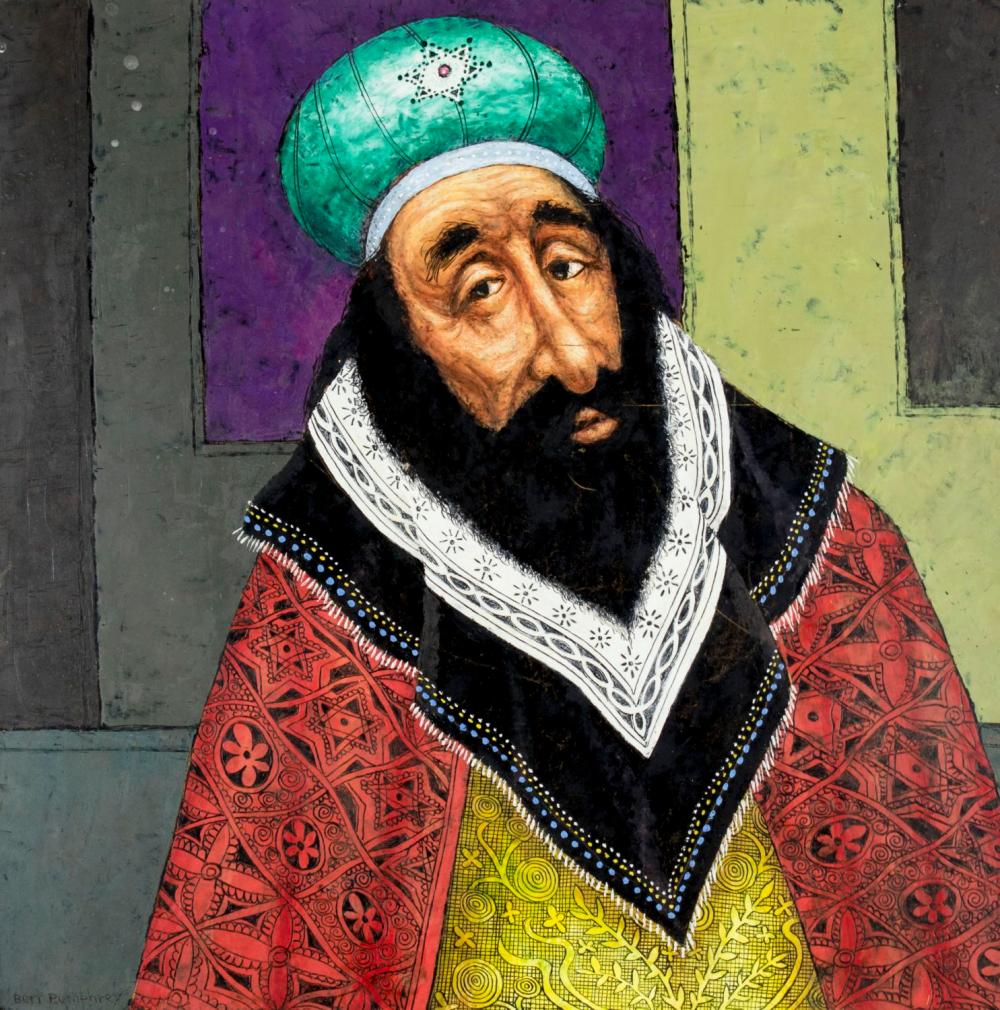
ARTIST: Bert Pumphrey (California, 1916 - 2000) NAME: Rabino de Istabul MEDIUM: oil on board CONDITION: Minor sctraches. No visible inpaint under UV light. Normal wear to frame. SIGHT SIZE: 20 x 20 inches / 50 x 50 cm FRAME SIZE: 21 x 21 inches / 52 x 52 cm SIGNATURE: Lower left CATEGORY: antique vintage painting SKU#: 116043 WARRANTY: 7 days returns accepted if item doesn't match description US Shipping $60 + insurance. Bert Pumphrey (California, 1916 - 2000) Bert Pumphrey was born in Salt Lake City, Utah in 1916. He somehow managed to enter the Art Institute of Chicago at age fifteen; however, his career at the school was cut short when school authorities discovered his age and expelled him. Subsequently, he received a scholarship to the University of California at Los Angeles. He had a one-man show at the Palace of the Legion of Honor in San Francisco in the late 1940s, and moved to Mexico soon afterwards, where he has lived and painted ever since. His subject matter is imaginative, not reproductive, and what he paints gives the feeling of Mexico, past and present, although never identifying with any specific locale. Since moving to and working in Mexico, he has had nine major one-man shows there and, during the 1960s, had shows in the Virgin Islands and in Philadelphia, Pennsylvania. His urban surrealist painting style is popular in Mexico and is regaining popularity in the United States. A favorite theme was his Hasidic Rabbis -- joyful, inquisitive, jumping, dancing, but always very dignified. He was represented by the Cory Galleries in San Francisco during the 1960s and 1970s. Cory Galleries represented other artists such as Leroy Neiman and Pascal Cucaro, among others. In their May, 1969 show, the entire collection of sixty-seven paintings was purchased within several hours of the opening by one collector, and the show was sold out. An artist with very definite ideas of his own, Pumphrey has almost entirely rejected the traditional square or rectangle as the basic shape for a painting. He prefers long, thin, verticals or horizontals. He rejects canvas as well -- using masonite, on which he lays eight thin coats of white gesso. Then come the rich and vibrant colors, through which the sharp edge of a palette knife may cut back to the white underpainting. To achieve sharpness of lines, he has designed his own knives. He also has turned from tradition in another way, in that he prefers to paint flat on a table, discarding the easel.