Have one like this? Check yours freeOr have an appraiser value it
Lot description
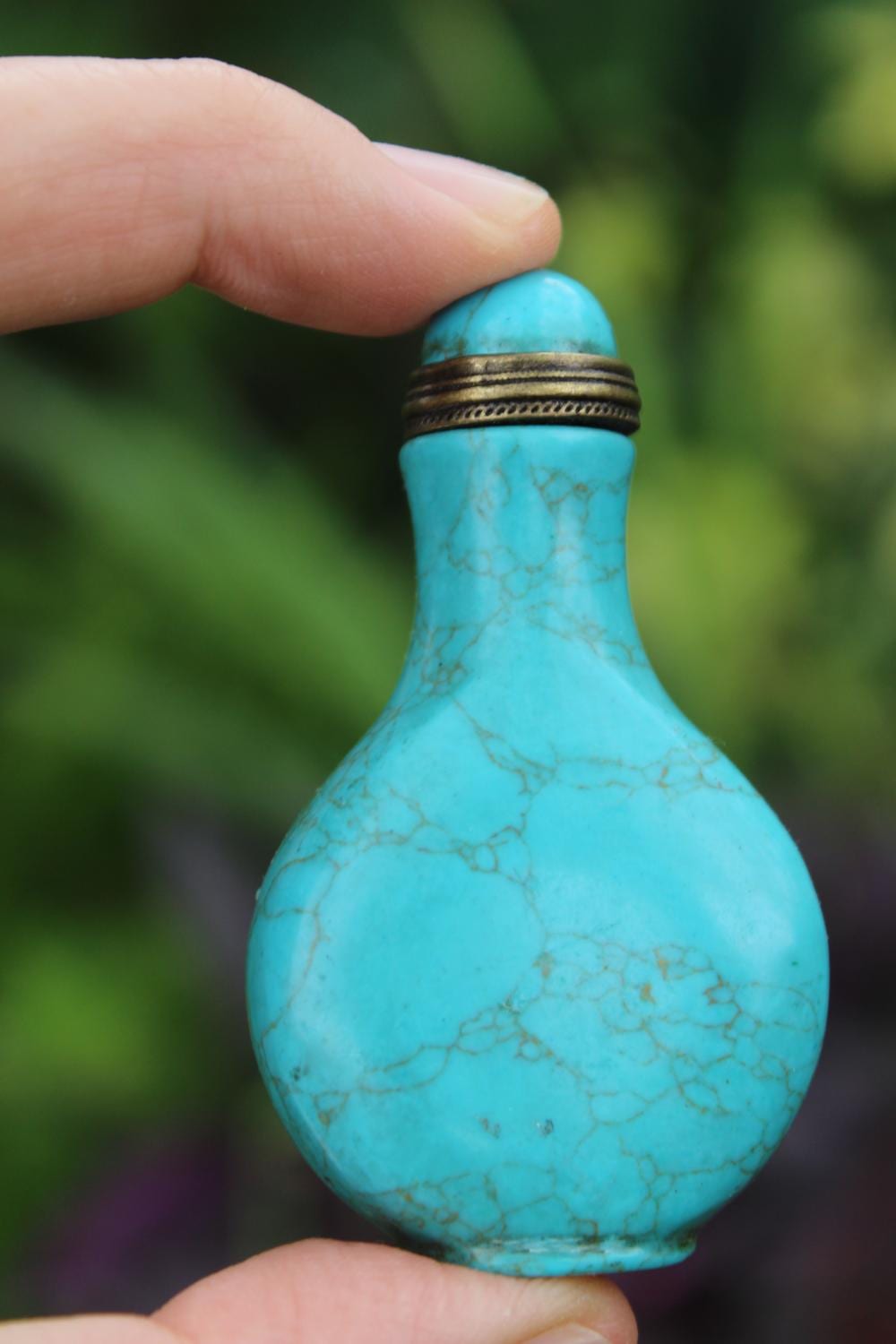
Chinese antique turquoise snuff bottle, 乾隆 Qianlong Emperor (1736-1796) period; Description: blue turquoise snuff bottle with original metal spoon connected to the turquoise cork. Era name and dates: Tenger Tetgagch: 1736–1796 Height (cork including): 2.65 in. = 68 mm; Weight: 2.0 oz. = 56 g; Condition: Used, slightly scratched, no defects; Authenticity report: genuine antique carved jade; Mohs mineral hardness test: 5.5-6.0, normal hardness for turquoise: 5.0-6.0; The Mohs scale of mineral hardness is a qualitative ordinal scale characterizing scratch resistance of various minerals through the ability of harder material to scratch softer material. Provenance: from private collection in Florida, USA; History Snuff bottles were used by the Chinese during the Qing Dynasty to contain powdered tobacco. Smoking tobacco was illegal during the Dynasty, but the use of snuff was allowed because the Chinese considered snuff to be a remedy for common illnesses such as colds, headaches and stomach disorders. Therefore, snuff was carried in a small bottle like other medicines. The snuff bottle is comparable to the snuff box used by Europeans. Tobacco was introduced to the court at Beijing some time during the mid- to late-16th century. It was originally smoked in pipes before the establishment of the Qing Dynasty. The use of snuff and snuff bottles spread through the upper class, and by the end of the 17th century it had become a part of social ritual to use snuff. This lasted through most of the 18th century. Eventually, the trend spread into the rest of the country and into every social class. It was common to offer a pinch of snuff as a way to greet friends and relatives. Snuff bottles soon became an object of beauty and a way to represent status. The highest status went to whoever had the rarest and finest snuff bottle. The peak of snuff bottle manufacture was during the 18th century. The use of snuff increased and decreased with the rise and fall of the Qing Dynasty and died away soon after the establishment of the Republic of China. However, replica snuff bottles are still being made, and can be purchased in souvenir shops, flea markets and museum gift shops. Original snuff bottles from the Qing period are a desirable target for serious collectors and museums. A good bottle has an extra quality over and above its exquisite beauty and value: that is touch. Snuff bottles were made to be held and so, as a rule, they have a pleasant tactile quality