Lot description
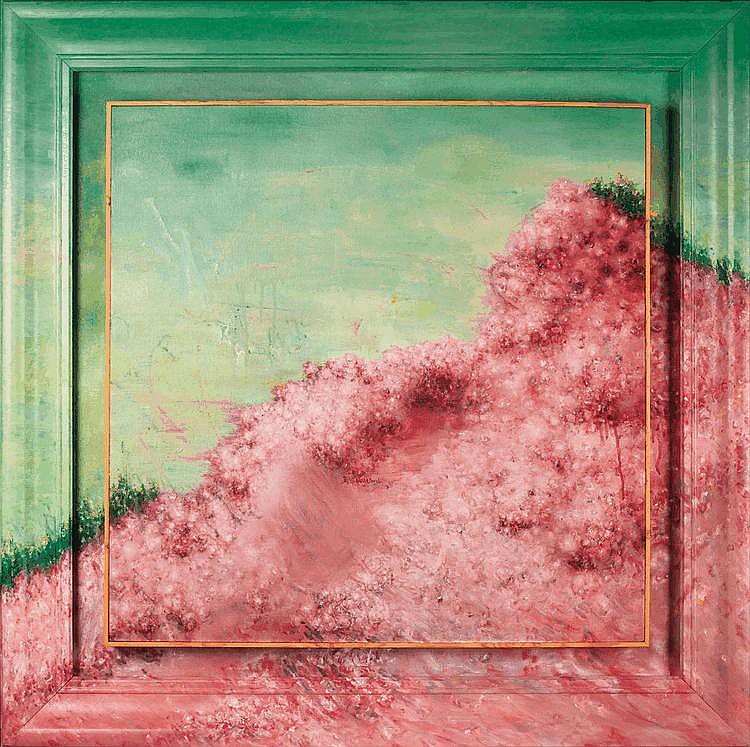
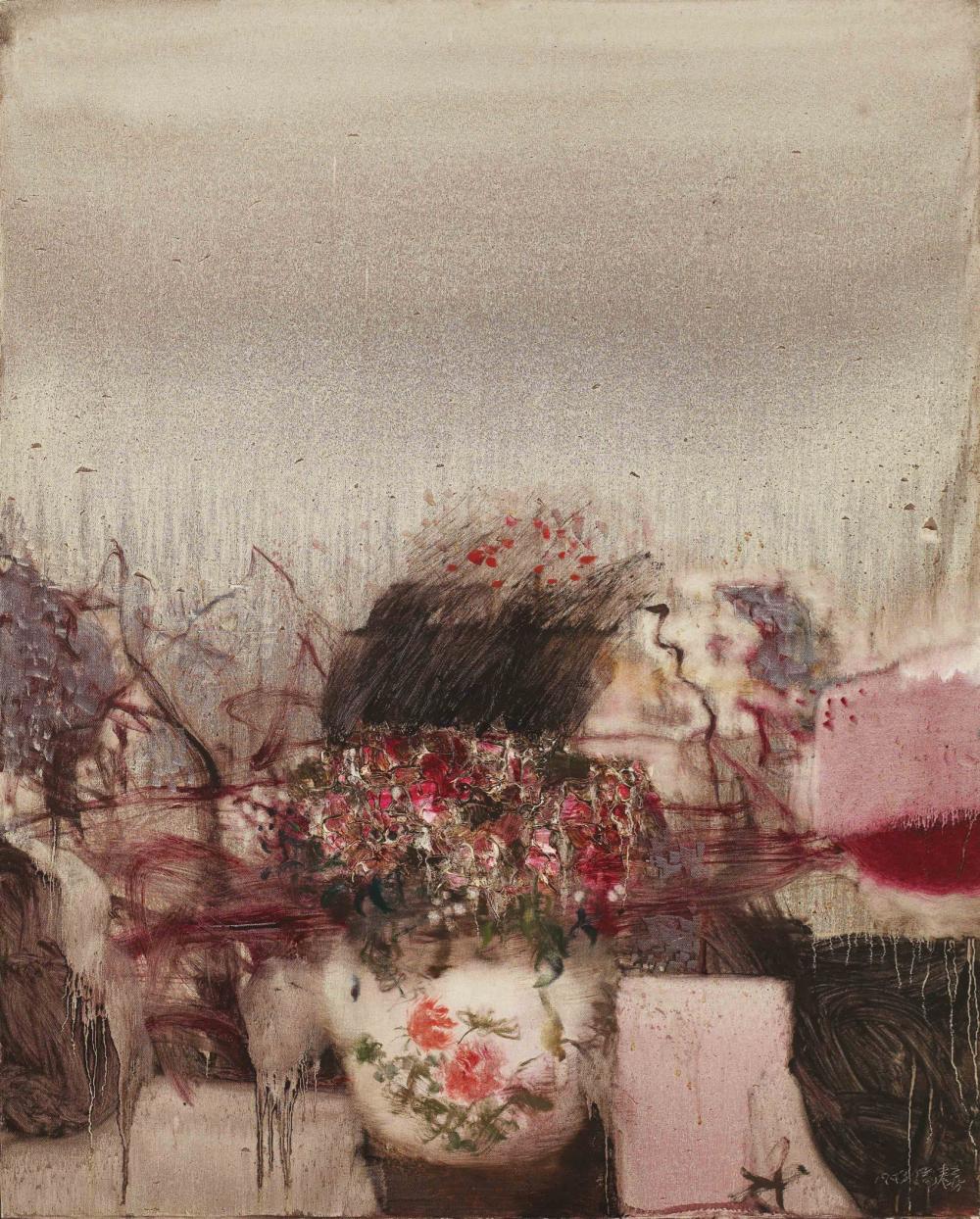
褐紅色的花 Flowers 簽名右下:1993 周春芽 簽名題識畫背:《褐紅色的花》1993 周春芽 Signed lower right Zhou Chunya in Chinese and dated 1993 Signed on the reverse Zhou Chunya in Chinese, dated 1993 and titled Flowers in Chinese 滿插瓶花罷出遊,莫將攀折為花愁。 不知燭照香薰看,何似風吹雨打休。 南宋 范成大《瓶花》 周春芽是當今少數能將中國傳統文人精神與新表現主義完美融合的代表性藝術家。才氣天成的文人雅韻,透過西方的表現方式將中國傳統繪畫語言融入其中,文人插花源自唐宋,盛行於元明,作風頗受禪宗與道教精神的影響,取材清新脫俗,格高韻勝,野趣詩意的流露。周春芽以寫意般的表現主義創作出許多色彩斑斕、鮮明經典的花卉代表系列,滿溢文人情思、內涵豐富的文化精神完全體現於周春芽東西方融合的藝術表現。 「因為我們傳統中那種神秘、敏感的東西是西方人所沒有的,這種認識對我的繪畫個性形成起了很大作用。」—— 周春芽 花卉題材一直是中國傳統文人樂於表現的內容,而在周春芽的筆下得到了重新詮釋。《褐紅色的花》繪於1993年,造型與色彩已被抽象化,色彩的堆疊、渲染、塗抹與色調交織的繪畫語言,畫面整體採用獨特的對角線式構圖,色彩明快,技法嫻熟。畫中盛開著的花朵與枝節糾纏一起,自古以來中國傳統人文花卉偏向於寫情述意、意韻清雅。周春芽承續此精神將中國繪畫傳統題材的花卉以一反古人的含蓄幽微方式表現,他用自己獨特表現形式,大膽且炙熱變幻。煙雲渲染為畫中流行之氣,渲染的背景凸顯了畫面中央的瓶花。花卉表現上豐富的細節與肌理置換有如傳統筆墨柔淡纖弱的質地,繁複錯落的體積結構改變了文人繪畫扁平的視覺特性,周春芽一直在尋求人文繪畫中的表現主義語言。 「跨越人文地理與歷史文化的超然氣息,使人們猶如進入宇宙洪荒、天地蒼茫的夢幻境界。」著名評論家殷雙喜曾如此評價周春芽,花卉在西方繪畫媒材的表現方式下綻放出燃亮的光彩,實現了中西方兩種繪畫語彙的完美融合。《褐紅色的花》中周春芽以較沉穩、內斂的色彩與其大筆觸的表現手法更是相得益彰,鮮紅色的細膩花朵反覆歌詠出典型文人畫中的主體構圖。他把水墨的意蘊成功地運用到油彩表現形式中,長期對於傳統文化的淺心研究,淋酣暢漓地於此幅作品中體現了精練過後的東方詩意。飄逸空靈,如行雲流水,如文人墨客的恬淡虛無。周春芽的藝術為淬鍊過後的西方表現主義以及東方傳統繪畫,他畫中的色彩和形體,完整地呈現了藝術家的情感經驗,他有著文人的審美,無論山石花草,周春芽揮灑自如的輕鬆恣意而又若有所思的意境。活在時代氣息下的周春芽以其獨特的藝術話語描繪當代文人傳奇,《褐紅色的花》以充滿生命盎然的延續性碧空如洗,有如簾捲玉波流,流露出他於創作中生機勃勃的生命的意識。 A vase full of flowers. Don’t you worry about the flowers being picked up. They’re better to be enjoyed with candle light and aroma. Why let them wither in strong wind and rain. Southern Song, Fan Chengda “Flowers in a vase” Zhou Chunya is one of the few iconic artists that fuses the traditional Chinese Literati art with Neo-expressionism in artworks. With his intrinsic talent and exquisiteness, Zhou infused the traditional Chinese painting elements to Western style presentation. Chinese Literati art was originated from China’s Tang and Sung dynasty, and made to its prime during Yuan and Ming dynasty. The style is heavily influenced by Zen and Taoism - fresh, refined, elegant and savor of the wild. Zhou Chunya used Neo expressionism to create various iconic series of colorful and classic flowers. Zhou’s fusion of the eastern and the western art defines the spirit of Chinese traditional literatis and connotations in a whole. “It is because the mysterious, sensitive elements in our traditions are unpossessed by westerners. Realization of this has a considerable impact on shaping the character of my paintings.”Zhou Chun-Ya Flower is a commonly admired and presented theme by Chinese literati, and the theme is redefined under Zhou Chunya’s paint brush. Flowers was created in 1993. The shapes and the colors of the flowers are abstractified with layers of colors which were dyed or painted across each other. The structure of the painting was based on an unique diagonal composition along with the sharp colors, which truly shows Zhou’s proficient skills. The lush blossoms tangling with the branches in the paint. In traditional Chinese literati arts, the artists tend to focus on expressing the flowers with literatures to show exquisite elegance. Zhou followed that tradition, but presented his own flowers with his own unique style which absolute contradicts with the old styles - bold, enthusiastic and irregular. The clouds represents the air flow as the background of the painting to focus the spotlight on the flowers in the vase. Exquisite details and texture replacements of the flowers looks as gentle as if they were drawn with traditional ink brush. The complex volume structure breaks the flat visual image of traditional literati art, which is the language of expressionism Zhou has been looking for in literati art. “The superior atmosphere beyond geographic culture and history, so enormous that brings people into a fantastic, powerful universe where earth and heaven were barely formed.” Said famous critic Yin Shuangxi on Zhou. With western art technique, Zhou’s flowers bloom with bright and lively colors, and that is the perfect combination of the eastern and western art. In Flowers, Zhou uses relatively calm and restrained colors with bold brush strokes which come together perfectly. The cardinal red color of the exquisite flowers present a typical Chinese literati composition. Zhou successfully presented the artistic conception of Chinese ink art with oil paint. Zhou has been dedicated to Chinese traditional culture. In this work, the refined oriental poetry is perfectly presented. It is elegant and ethereal like flowing clouds or traditional literi’s zen and spirit. Zhou’s art style is a combination of western expressionism and eastern ink painting after years of practice. The colors and shapes he uses represent the emotion and experience of an artist. He has the aesthetic of a literati. Zhou is able to paint mountains, rocks, flowers and plants at ease along with thoughtful artistic conception. Zhou uses his unique art talent to demonstrate the legend of modern literati. Flowers represents a life-filled continuation like blue sky and jade-green steam, and reveals Zhou’s consciousness of life.