Have one like this?
Upload a photo for a free check of what yours may be worth.
Lot description
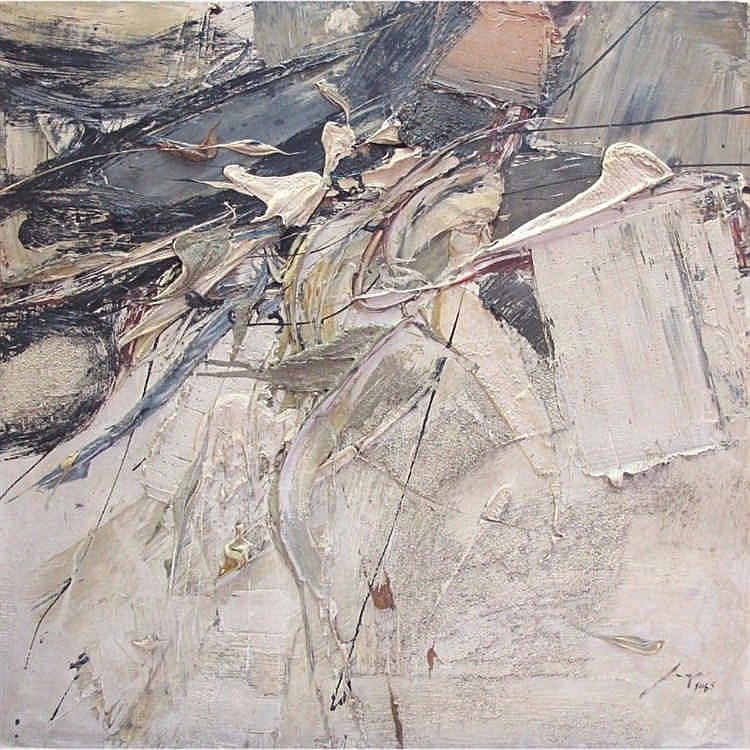
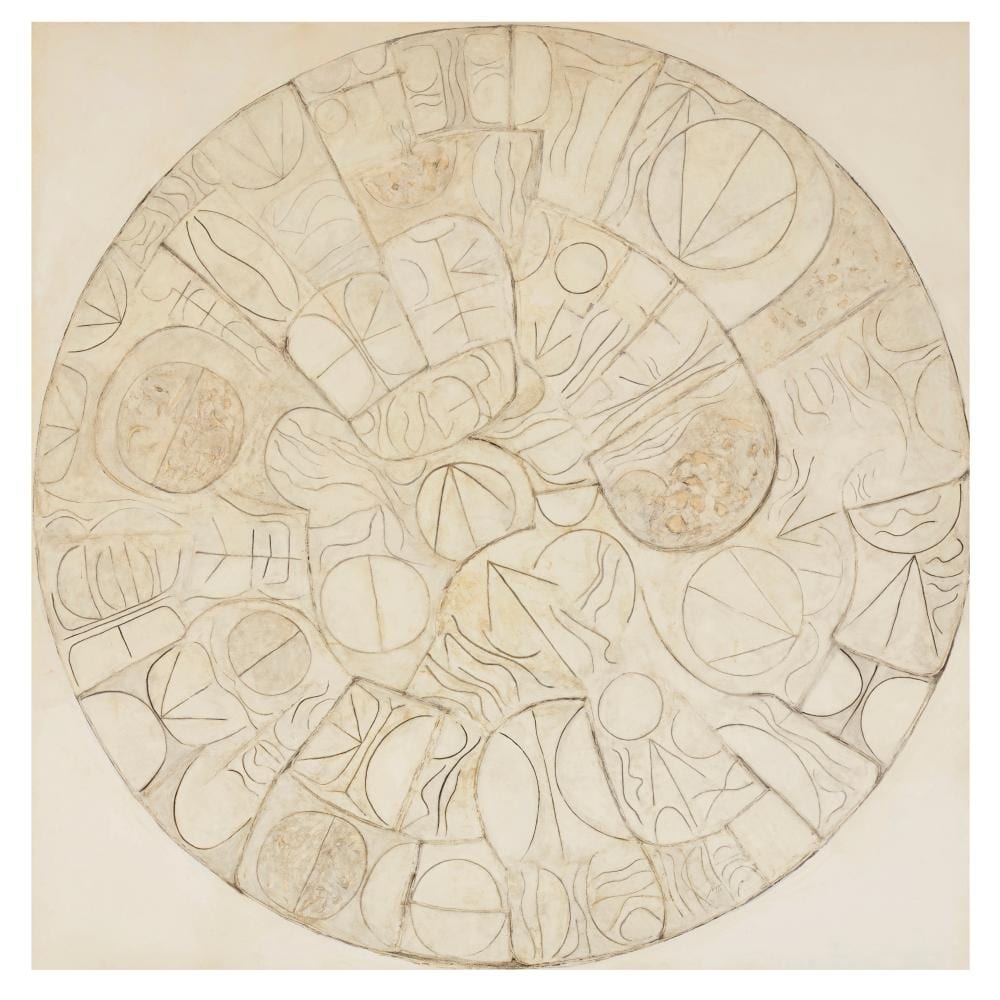
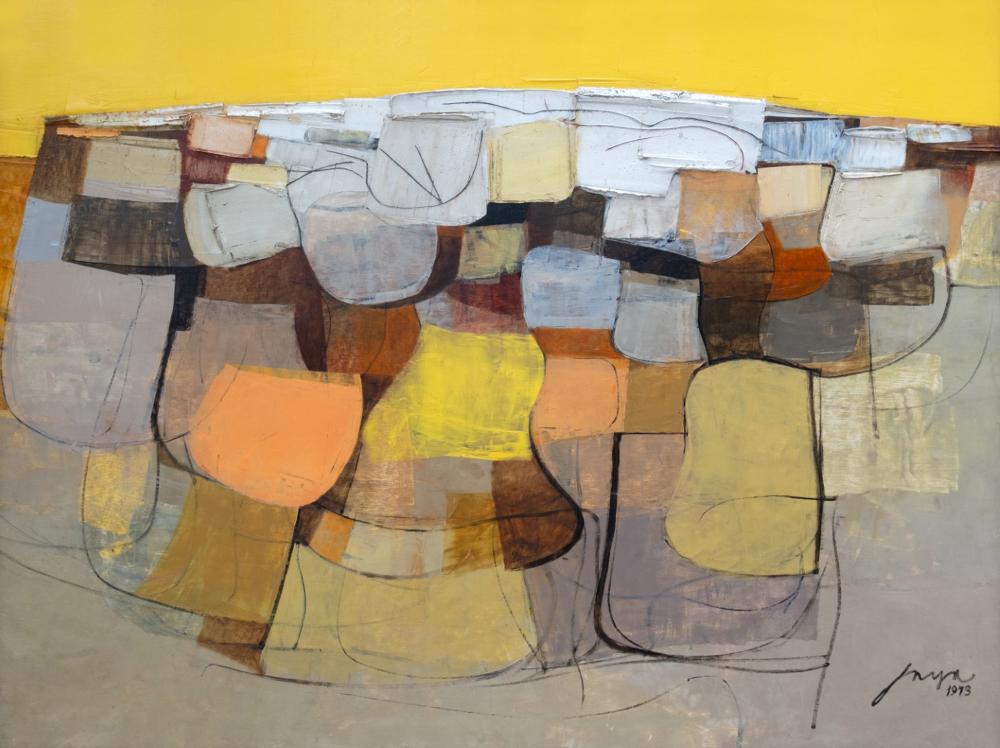
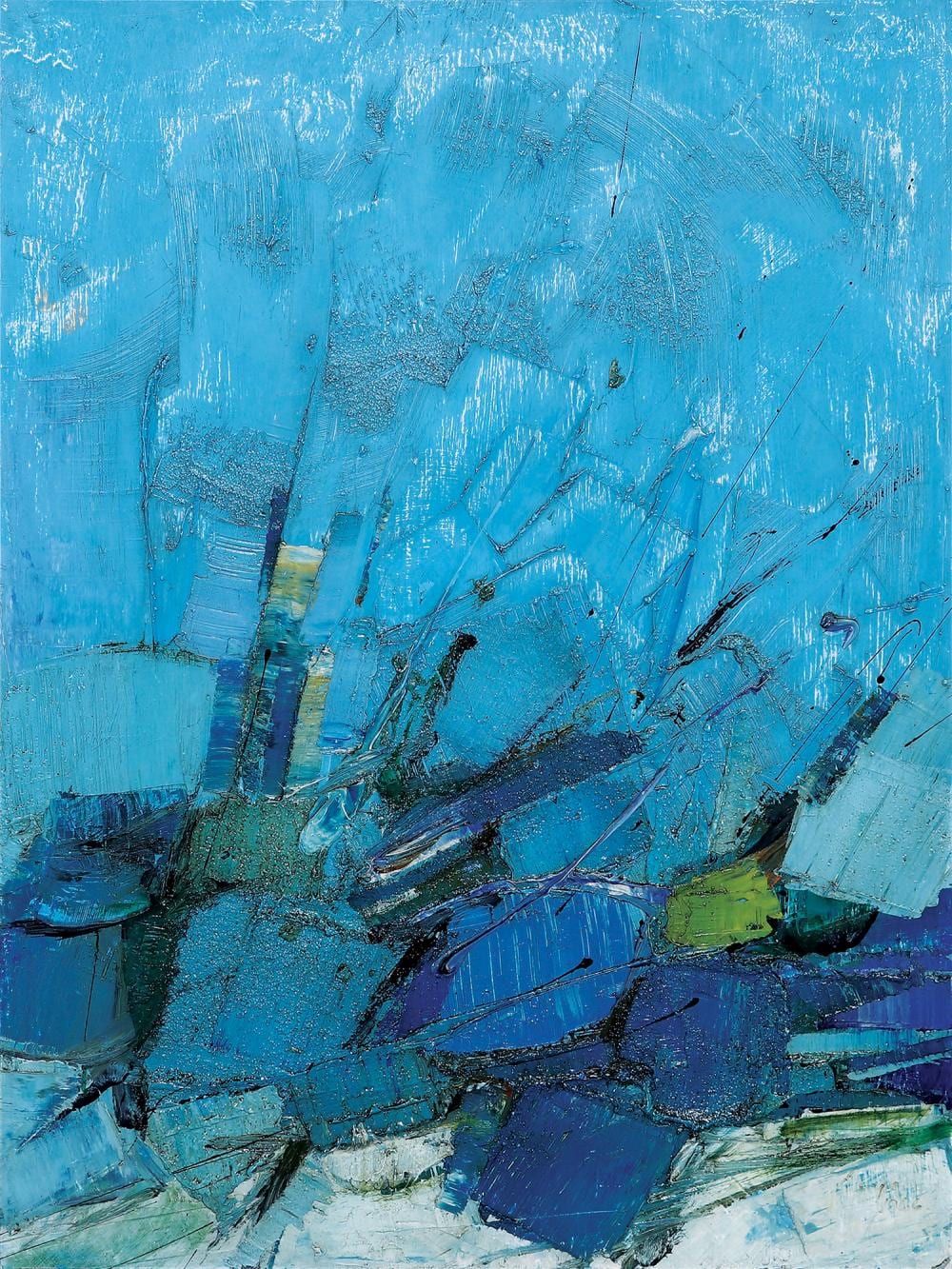
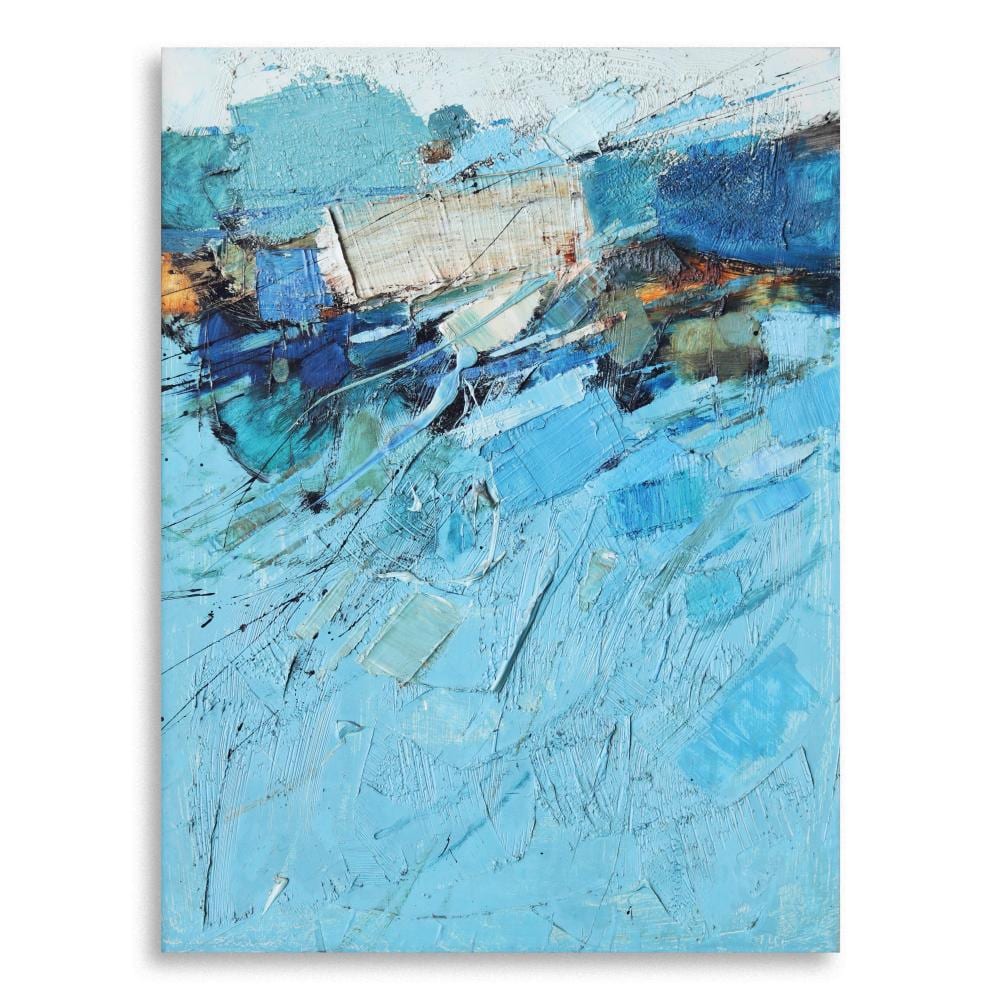
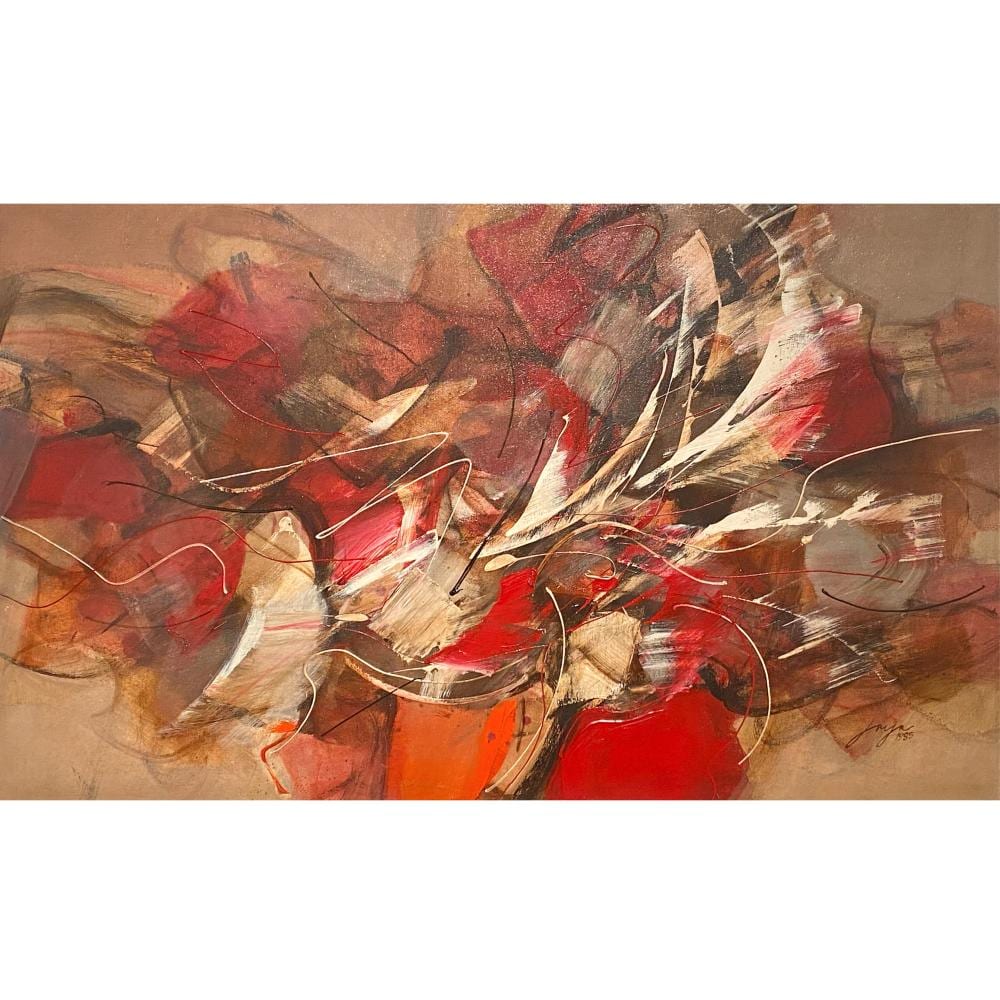
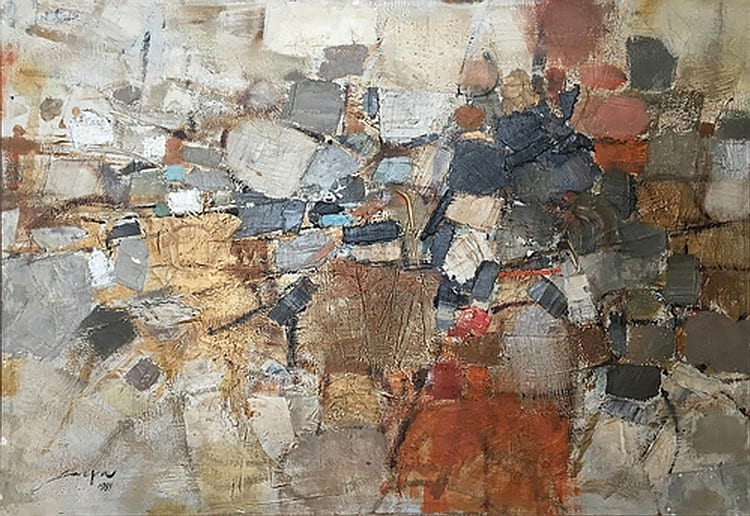
Jose Joya (1931-1995) Carnival No matter how much they were admired, the introspective abstractions by artist such as Willem de Kooning, Mark Rothko and Jackson Pollock remain difficult, making enormous demands on their audience during the midcentury even up to today. Philippine art took the risk of making the same enormous demands on its conservative audience, what with the choice of Joya to represent the Philippines in the 1964 Venice Biennale for which he had painted very large works in thick paint applied in semi- automatist manner. Art critic Eric Torres described such works as excessive not so much of statements as of states of feeling. Joya’s Venice moment represented a high peak in the rise of the modern art in the country. The works exhibited in Venice (e.g. Hills of Nikko, Granadean Arabesque, Karate Blow, Quiapo Black Nazarene festival, and others) belonged to this stylistic period which we have described elsewhere as his “exploding galaxies, with forms and shapes flying outwards as from a nuclear center, as in origins. Joya became an unofficial spokesman for abstract expressionism, helping develop the style known as gestural or abstract painting. The shift in attitude in Joya’s mid sixties works resulted in pictures governed by an unremitting determination to make every gestural passage work autonomously as paint. Joya’s path to Venice via New York started when he was awarded a Fulbright-Smile-Mundt scholarship which enabled him to pursue a Master’s Degree in Painting in 1956-57 at the Cranbrook School of Art in Michigan. The 1950s was the decade of Abstract expressionism, of adventurous art regarded by many as the most exciting produced by the West up to that time. Color by gestural color, detail by gestural detail, the work vibrates with sensitivity to observed nature. All the attributes of a classic 1960s Joya are made manifest: "dynamic spontaneity" and "quick gestures" of action painting. A theme that has occurred in the artist’s work since the 1960s is that of space exploration with its principle of velocity. In an artist’s manifesto, which he wrote for his ninth one man show at Philamlife building, he compared the act of painting to a “spontaneous outburst of passionate emotion an aftermath of an intense pictorial idea, like the passing of a tempest leaving behind trails of a terrible tumult a wild attempt to depict the onrushing tempo of the present jet age modernity.” Joya recorded his own emotional response to canvas through an expressive use of tone and surface texture the loose gestural brushstrokes underscored the kinetic act of painting. Bold brushstrokes traverse the canvas with random orientation. The traces of the paint-loaded brush are delicately visible overlapping, pools of pigment, and streaks and splatters. There are some areas of defined color shapes to stabilize and give weight to the composition. A close examination of the faintly calligraphic brushwork shows that it is similar to the Saetas of Fernando Zobel. signed and dated 1961 (lower left) oil on canvas 33” x 44” (84 cm x 112 cm) Property from the Collection of Mark and Naheed Houshmand, Europe This piece is accompanied by a certificate issued by Mrs. Josefa Joya-Baldovino confirming the authenticity of this lot