Lot description
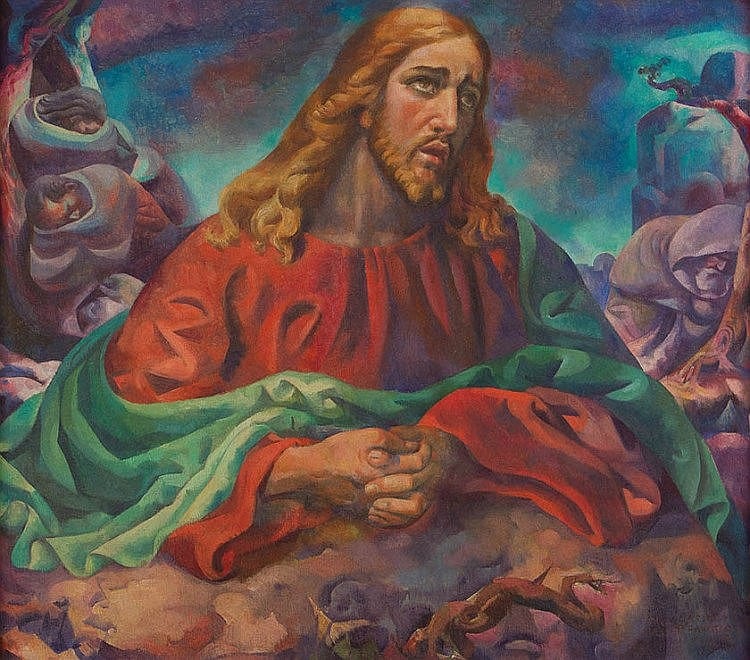
Of exceeding rarity is this jewel of a painting by National Artist Carlos “Botong” Francisco, which transposes the graphic elements of his muralist background eschewing traditional perspective through highly gestural figures. A precursor in theme to his 1960 Stations of the Cross in the collections of the Far Eastern University and formerly the Salesian community in the Philippines (now dispersed as individual paintings), Gethsemane is an exceptionally rare and highly unique work by the master of Angono. Unlike Botong’s multi-scene murals that involve animated interactions between several figures, Gethsemane focuses on the singular figure of Jesus Christ on the foreground. With superlative attention to detail and the use of dynamic silhouettes, Botong not only succeeds in conveying a narrative within his work, but he also and more importantly encapsulates intense emotion that transcends beyond the canvas and creates an affective connection to the enraptured viewer. Depicting the Agony in the Garden, Botong paints this moving and unique portrait of Christ in his final hours before the Crucifixion. This particular scene shows Him with hands clasped in prayer while looking upward to the swirling blues and crimson of the heavens. Behind Christ, as the biblical story conveys, His disciples are seen curled fast asleep, despite His call to join Him in prayer. The dramatic scene is set in a place known as the Mount of Olives, and here one sees Botong depict swirling branches of olive trees in the periphery. This highly important painting is offered by the family of its original owner, a successful businessman, patron and friend of the artist, who used it as the focus of his private devotions. It was finished two days before Christmas 1958, and is signed on the front and at the back. Since that time, the painting has not ventured outside of the family home until it was entrusted to Salcedo. The artist also designed the heavy wood frame, which features carvings of the instruments of the Passion, in keeping with the painting’s solemn subject matter.