Have one like this?
Upload a photo for a free check of what yours may be worth.
Lot description
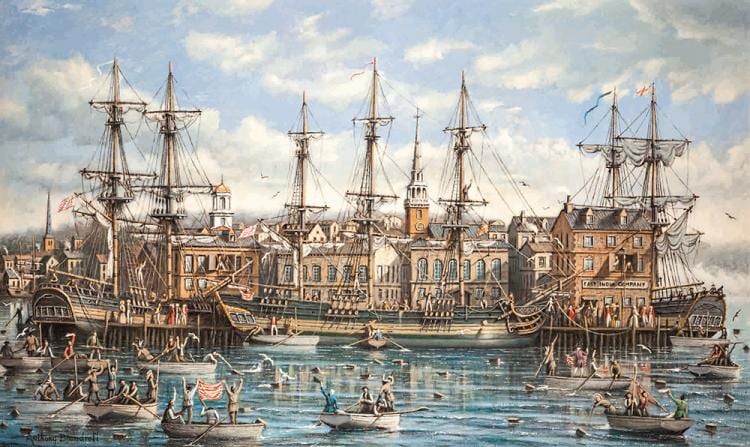
ANTHONY BRANDRETT (BRITISH, 20th-CENTURY) The Boston Tea Party -- first light 17th December, 1773 (The Morning After) oil on canvas signed 'Anthony Brandrett' (lower left) 28 x 46in. (71 x 117cm.) This interesting picture represents the culmination of several years' research, and a further two years on the easel before the artist was satisfied it represented an accurate account of this seminal event in American history. Typically the only images seen are the same few period engravings, often themselves done several years later, and often copying each other (together with their attendant inaccuracies) suggesting few, if any quality depictions survive. What is not generally recalled by artists is the inconvenient fact that the actual "Tea Party" - where the Sons of Liberty, some dressed as native Indians, ditched the cargoes of tea into the sea - took place at night making it much harder for artists to represent the scene. Using maps and period references, the waterfront, or more specifically the long-lost Griffins Wharf, has been re-constructed as accurately as possible; as has the disposition of the three East India Company ships at the centre of the action - the Dartmouth, the Eleanor, and the Beaver. The men who met on the evening of the 16th December initially did so in the Faneuil Hall (the white building on the left in the painting). That however proved too small and so they transferred to the Old South Meeting House (seen here with a steeple on the right). News of the infamous Tea Act (and the implied right for the UK government to tax the Colonies) had reached them whilst the ships were in transit and so allowed time to consider a response. Numbering up to 130, the chairman (Samuel Adams) lost control of the meeting and the men, intent on taking direct action, spent three hours tipping some 342 cases of tea over the sides of the ships. This picture shows jubilant crowds assembling early in the morning with some pushing floating tea chests under the water. The British repercussions were swift and draconian and lead directly to the War of Independence in 1776.