
How much is your wicker furniture worth?
Wicker furniture does not have one dependable price per chair or set. A labeled, complete suite, an anonymous porch chair and a damaged woven piece need different comparisons. Wicker describes a weaving technique rather than one material. Before researching a value, check:
- What the frame and weave are made from, and whether a label survives.
- Whether you have one piece or a matching set, with its measurements.
- Broken strands, loose joints, sagging seats, later paint and repairs.
- The likely sale location and collection or freight cost.
Start with the material, form and label
Wicker is a technique, not a plant. It refers to furniture woven from flexible materials such as reed, cane, willow, rattan, paper fiber or modern resin. That material is the starting point for deciding which sold pieces are worth comparing.
- Rattan: a climbing palm whose poles can form frames; cane is its outer skin.
- Reed: the inner portion of rattan, used in many decorative woven forms and more vulnerable to breaks.
- Willow: twig-like strands found in rustic woven furniture.
- Paper fiber: smooth, uniform weaving associated with Lloyd Loom construction; do not mistake it for solid cane.
- Resin: synthetic material used in contemporary outdoor furniture; an “all-weather” label is not evidence of antique manufacture.
Ornate scrolls, curlicues and fringes suggest a different research group from rectilinear Arts & Crafts-style seating, porch suites or sculptural mid-century rattan. A style resemblance alone does not establish a date or designer.
Look under seat rails, decking and back panels for paper labels, decals, stencils or plaques. Photograph the wording before cleaning. Heywood-Wakefield and Lloyd Loom names appear in wicker research, but a missing or partial label needs supporting construction and catalog evidence. The antique chair guide can help organize a description of the form.
Inspect the frame, weave and finish
Check whether the chair wobbles, joints move or the seat sags. Photograph broken strands, unraveling, missing feet, finials and trim. Rewoven areas may differ in color or texture; record them rather than assuming the entire surface is original.
Original finish, factory paint and later overpaint are different observations. Thick, drippy paint can hide repairs and worn weaving. New cushions, modern staples, replacement glass and substituted feet also belong in the description. Do not scrape or strip a surface to settle its age.
Fasteners and seat construction can help date a piece, but repairs may introduce later screws or staples. No single nail, finish pattern or material proves a manufacture date. Inspect the entire frame and compare several details together.
- Capture front, side and back views, plus underside and label photographs.
- Measure overall height, width, depth and seat height.
- Show damage beside a scale, and note any loose joints without stressing them.
- Record odors, mildew and evidence of damp storage; these affect usability and sale decisions.
Free first look
Not sure whether this wicker furniture needs an appraisal?
Upload clear photos for a preliminary category and evidence check. It is not a signed value conclusion or formal appraisal.
Check my item from a photo — freeFree. No card needed. Results usually appear within a few minutes; complex items can take longer.
Separate design appeal from the cost of moving it
Useful forms such as armchairs, settees, daybeds and porch swings may attract a different audience from bulky cabinets or fragile desks. A documented maker or catalogued model gives a buyer more to compare than an unsupported designer attribution.
Completeness matters for suites. Check whether the chairs, loveseat, ottomans and table belong together, and record mismatched upholstery or missing pieces. The amount paid for a suite cannot be treated as the price of each chair.
Shipping and fragility costs matter. Large, delicate pieces may be easier to sell locally than through a distant auction. A collection-only result and a dealer asking price with restoration or delivery included are not equivalent. For wider context, see the antique furniture value guide.
Avoid repairs that erase useful evidence
Dry cleaning is the safest first step: use a soft brush attachment on a vacuum or a soft paintbrush to remove dust from crevices. Avoid soaking fragile natural fibers. If damp cleaning is appropriate, use very little moisture and let the piece dry thoroughly with air circulation.
Oils and heavy waxes can darken surfaces or complicate later conservation. Do not attempt structural repairs, adhesive treatments or chemical cleaning on a fragile or potentially important piece without a conservator’s advice.
Full reweaving, stripping and repainting can cost more than the resale gain for common furniture. High-style or documented pieces may be better left with honest wear than aggressively refinished. For cushions, preserve any maker-stamped decking and keep removed materials or photographs that document the earlier state.
Build a like-for-like comparison
Define the filters before searching: form, material, maker if documented, approximate period, size, set contents and condition. A single porch chair does not compare directly with a furnished suite or a sculptural rattan lounge chair.
Use completed sales rather than current asking prices. Read the full catalog description and note the date, location and what is included. Auction-reported amounts may differ in their treatment of buyer’s premium; use the visible price explanation alongside the examples below.
Keep a short record of several close matches and the differences from your piece. Do not average unrelated furniture to create a confident-looking figure. If no close sale is available, the useful result is a documented gap and a better set of photographs, not an invented range.
What similar items actually sold for
Real auction sales of items like your wicker furniture. Open a sale to see the original listing.
Shown USD range: USD 100-USD 200. Median of these 4 USD examples: USD 100.
| Comparable | What sold | Auction house | Date | Lot | Source-reported amount |
|---|---|---|---|---|---|
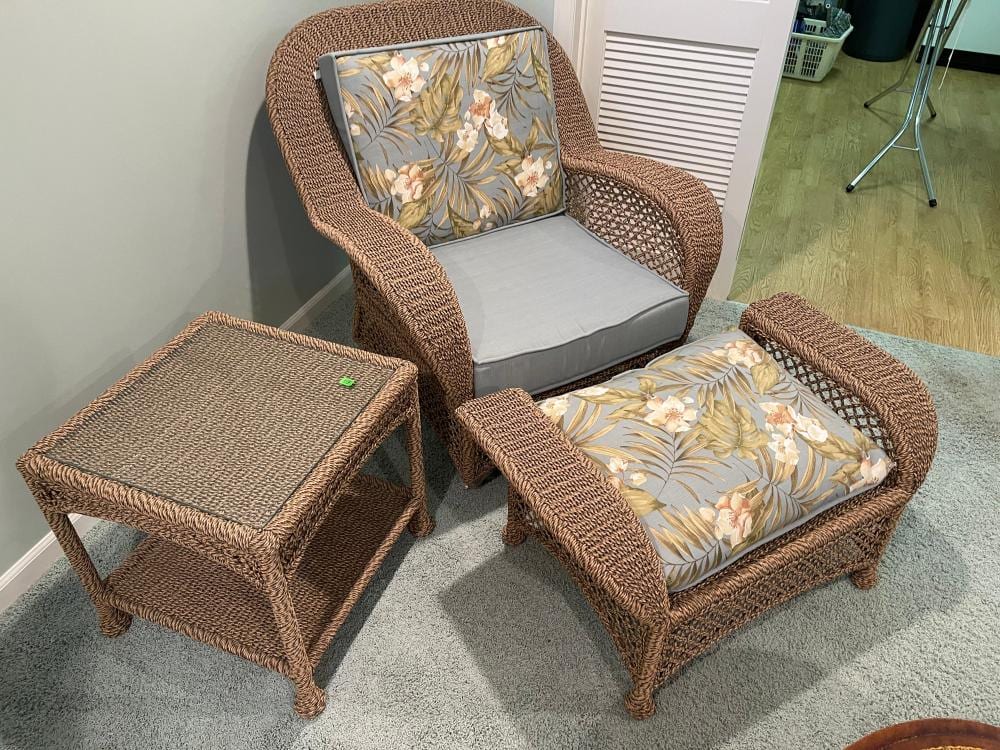 |
OVERSIXED WICKER CHAIR, OTTOMAN AND SIDE TABLE | Aether Auctions | 2021-10-17 | 140 | USD 100 |
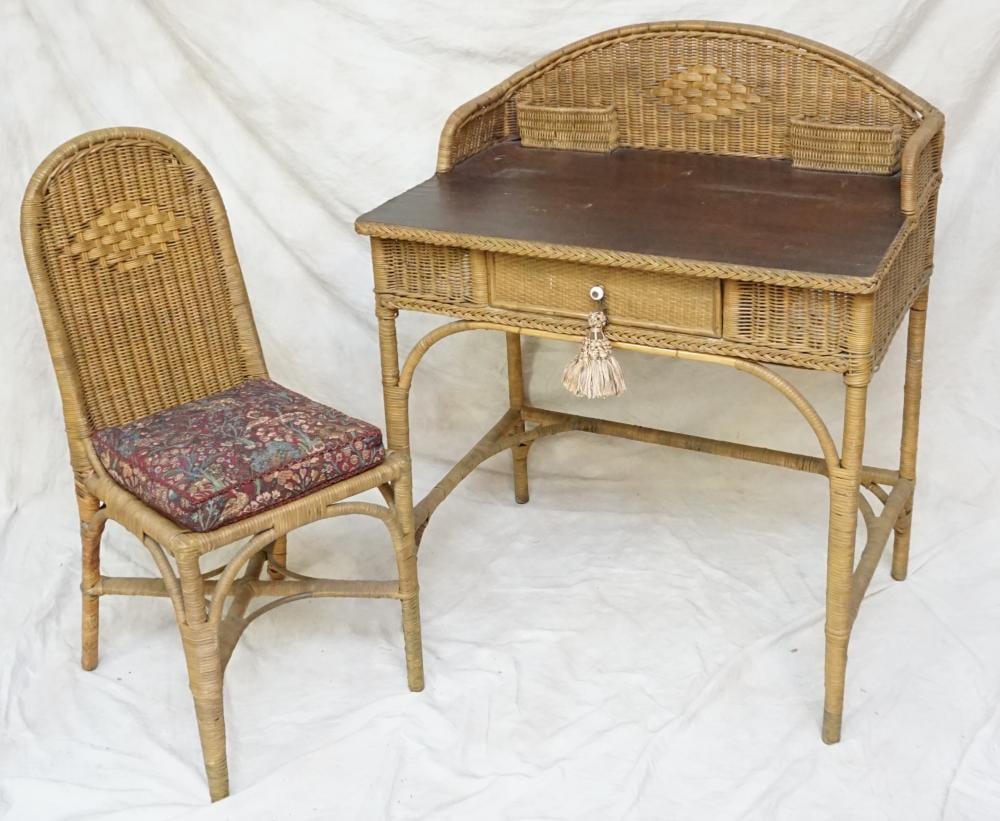 |
ART DECO WICKER DESK & CHAIR | Charleston Estate Auctions | 2019-01-27 | 201 | USD 100 |
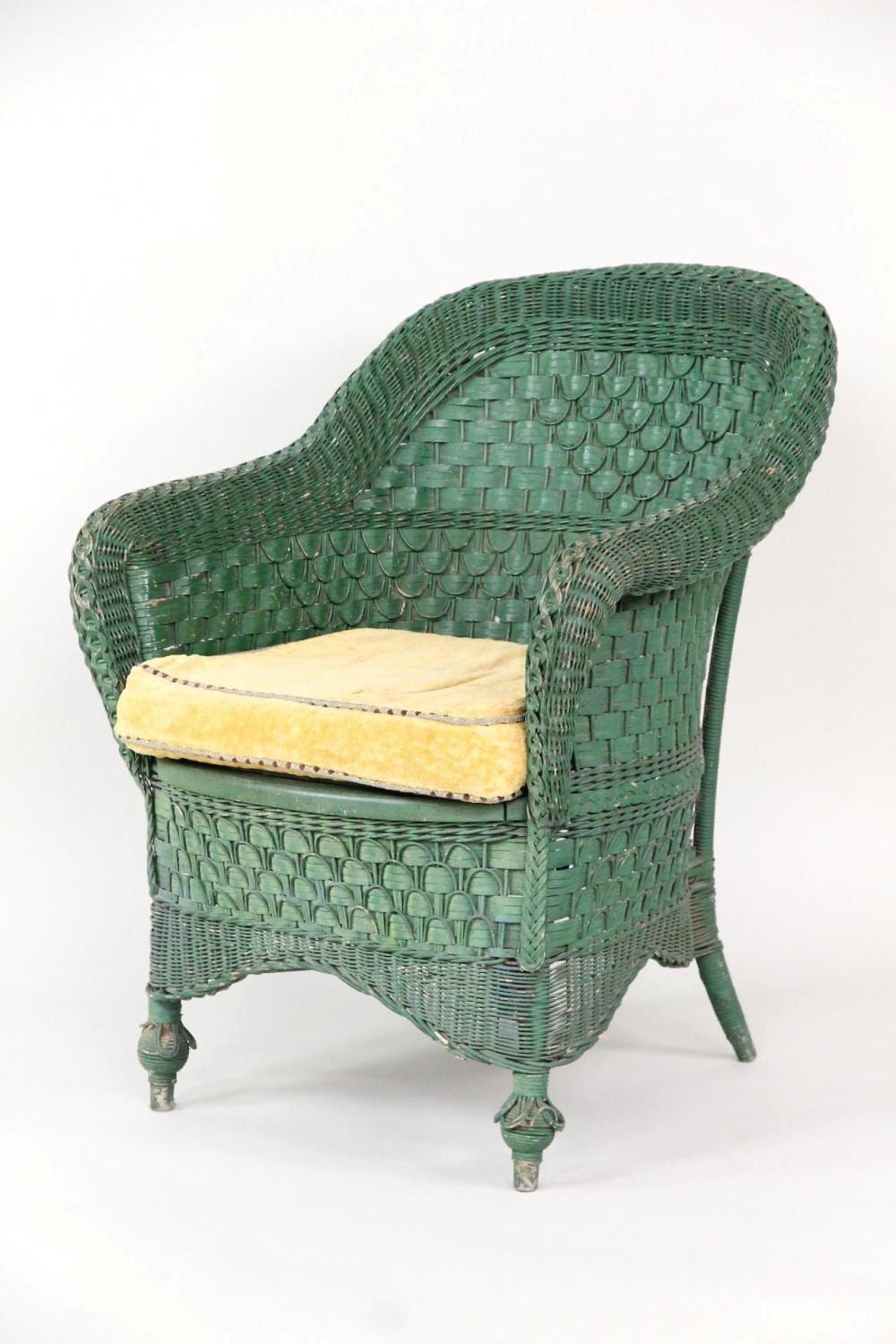 |
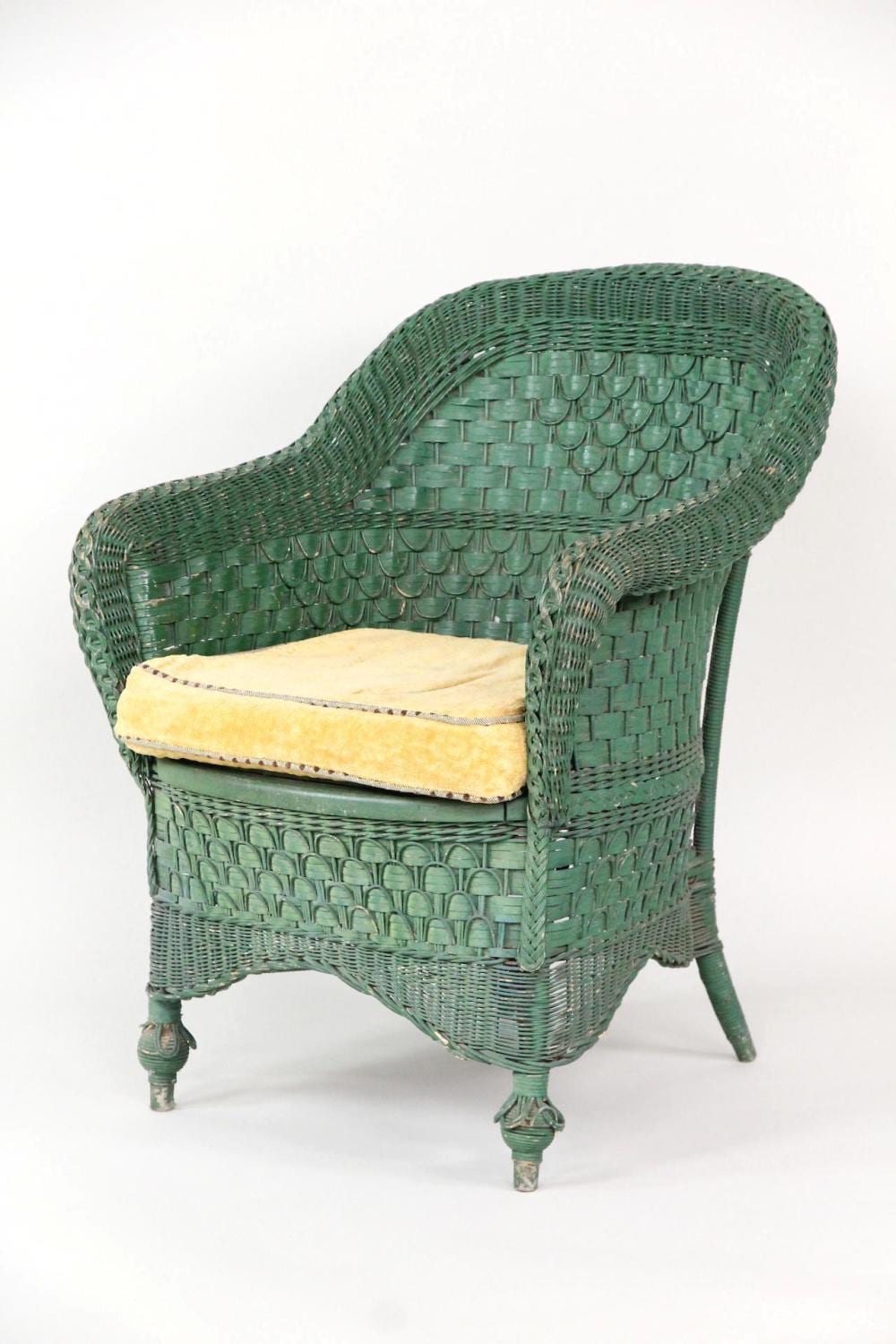
Green Wicker Chair, Yellow Cushion | Public Sale Auction House | 2026-02-21 | 606 | USD 200 |
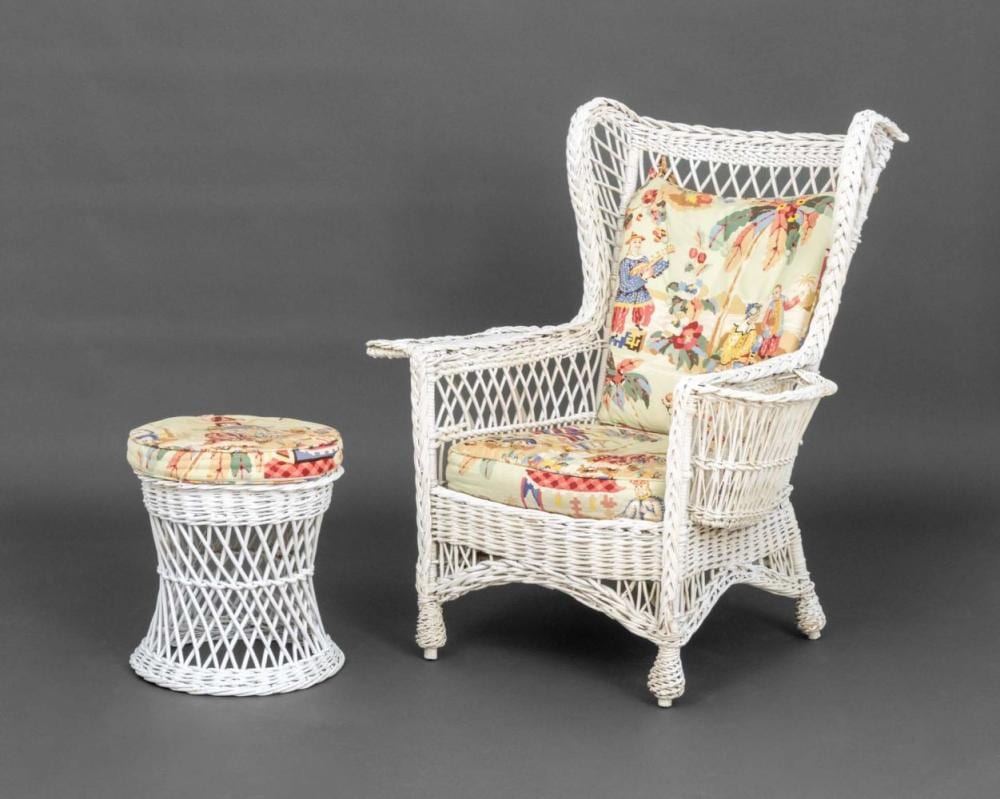 |
Brunschwig & Fils Upholstered Wicker Chair & Stool | Auctions at Showplace | 2026-06-18 | 194 | USD 100 |
How these auction records were verified
These sales are market context, not an object estimate.
Each row is tied to its lot identity, retrieval time, access result, and immutable record hash. Inspect the public comparable provenance record.
Questions readers ask
Is painted wicker worth less than unpainted wicker?
Not automatically. Original factory paint and later overpaint have different implications. Record the finish, visible repairs and maker evidence rather than stripping paint to investigate.
How can I tell whether a piece is Lloyd Loom?
Look for a surviving label and document the smooth paper-fiber weave and underlying construction. A similar surface alone does not authenticate a maker; compare the complete piece with documented examples.
Are peacock chairs valuable?
They need individual comparison. Record the size, frame, weave quality, condition and any maker evidence. A decorative shape does not by itself establish a designer attribution or price.
Does restoration pay off?
Not always. Obtain a repair estimate and compare it with realistic sold examples. Structural stabilization may improve usability, while full reweaving or refinishing may cost more than the resale gain.
What should I send for a wicker furniture appraisal?
Send clear overall and underside photographs, label details, measurements, set contents and close-ups of damage. State the purpose of the appraisal so the appropriate value basis can be discussed.
How We Research Valuation Data
Our appraisal guides are based on auction results, dealer pricing data, and professional appraiser insights. Our professional appraisal service provides paid signed reports. The Screener offers a free first look. Learn about our editorial standards.
Get a furniture appraisal
Upload full views, underside, weave, frame, paint, maker marks, repairs, cushions, and damage photos so a furniture reviewer familiar with the category can review value signals.
- Signed report with photos and market evidence
- Delivered within 24 hours of receiving your photos
- Fixed, upfront pricing
No obligation. Secure upload.
Reviewed by Appraisily Editorial Team. Editorial policy.