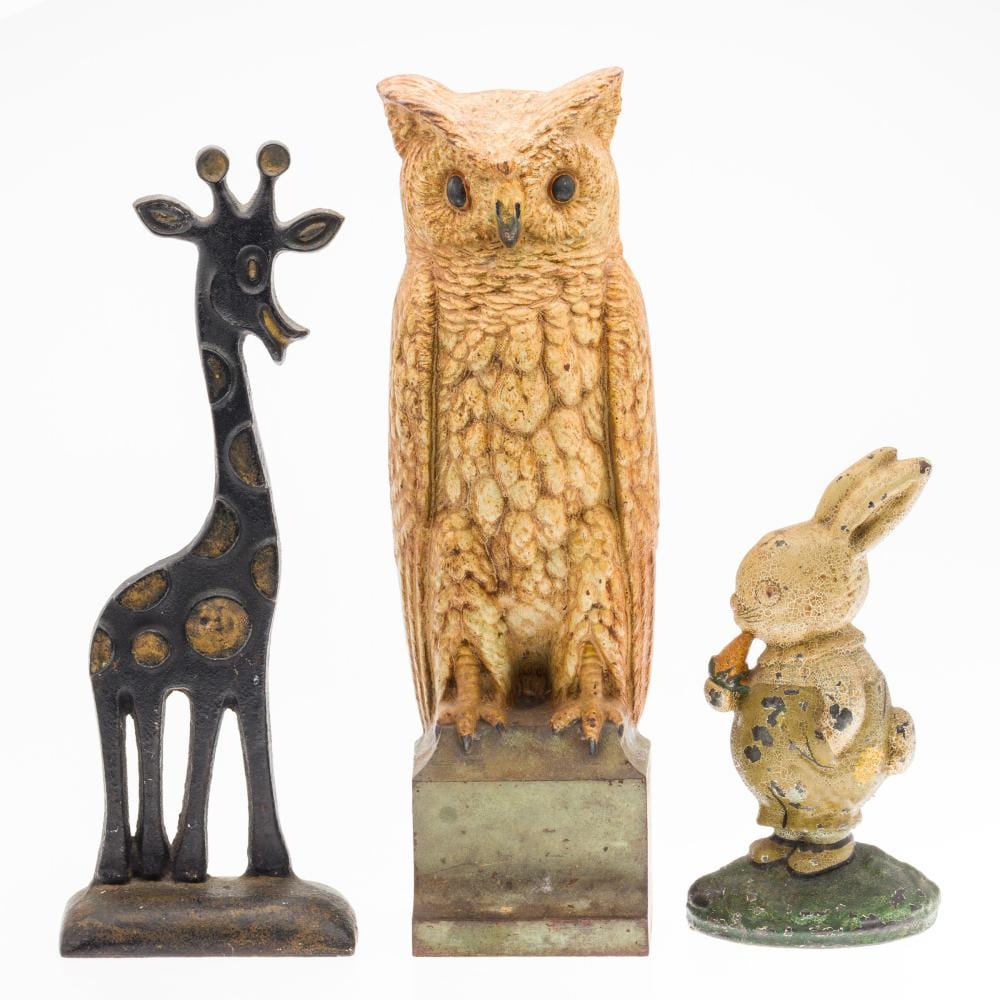
Discover Antique Cast Iron Door Stops Worth A Fortune
Antique cast iron door stops were once humble household objects. Today, the best examples—especially in untouched paint—regularly draw four and five figures at auction. For collectors and appraisers, the opportunity is real, but so are the pitfalls: reproductions abound, restoration can erase thousands in value, and maker marks are not always straightforward. This guide shows you what to look for, which subjects bring premiums, how to authenticate, and how to price these compact works of decorative art.
The Golden Age and Makers to Know
Most collectible cast iron door stops date from the late 19th century through the 1930s, with a high point between about 1910 and 1930. These were sand-cast in iron and hand-painted in polychrome finishes. Key American makers include:
- Hubley Manufacturing Company (Lancaster, Pennsylvania): The name most buyers search for. Known for superb casting detail and nuanced paint on animals, flower baskets, and figural subjects. Many bear cast numbers; some are marked “HUBLEY.”
- Bradley & Hubbard (Meriden, Connecticut): Earlier and often more architectural in form, with crisp detail and refined designs. Marked examples show “B&H” or full name.
- Albany Foundry (Albany, New York) and National Foundry (Reading, Pennsylvania): Produced strong, collectible examples—often floral or figural—with good weight and attractive colors.
- C. J. O. Judd (New Britain, Connecticut): Known for well-designed figural pieces; markings include “JUDD” or catalog numbers.
- Littco Products: 1920s–30s maker with charming animal and novelty subjects; sometimes unmarked but identifiable by casting traits.
Typical sizes range from 6 to 12 inches in height and 3 to 10 pounds, with larger statement pieces exceeding 14 inches and 12+ pounds. One-of-a-kind or low-production models—especially those in original, high-percentage paint—set the top of the market.
Subjects That Command Premiums
The subject is often the single strongest driver of value, after condition. Within the major makers, collectors consistently pay up for:
- Flower baskets and elaborate floral arrangements: High-relief baskets with multi-color shading and intact ribbon details bring serious premiums.
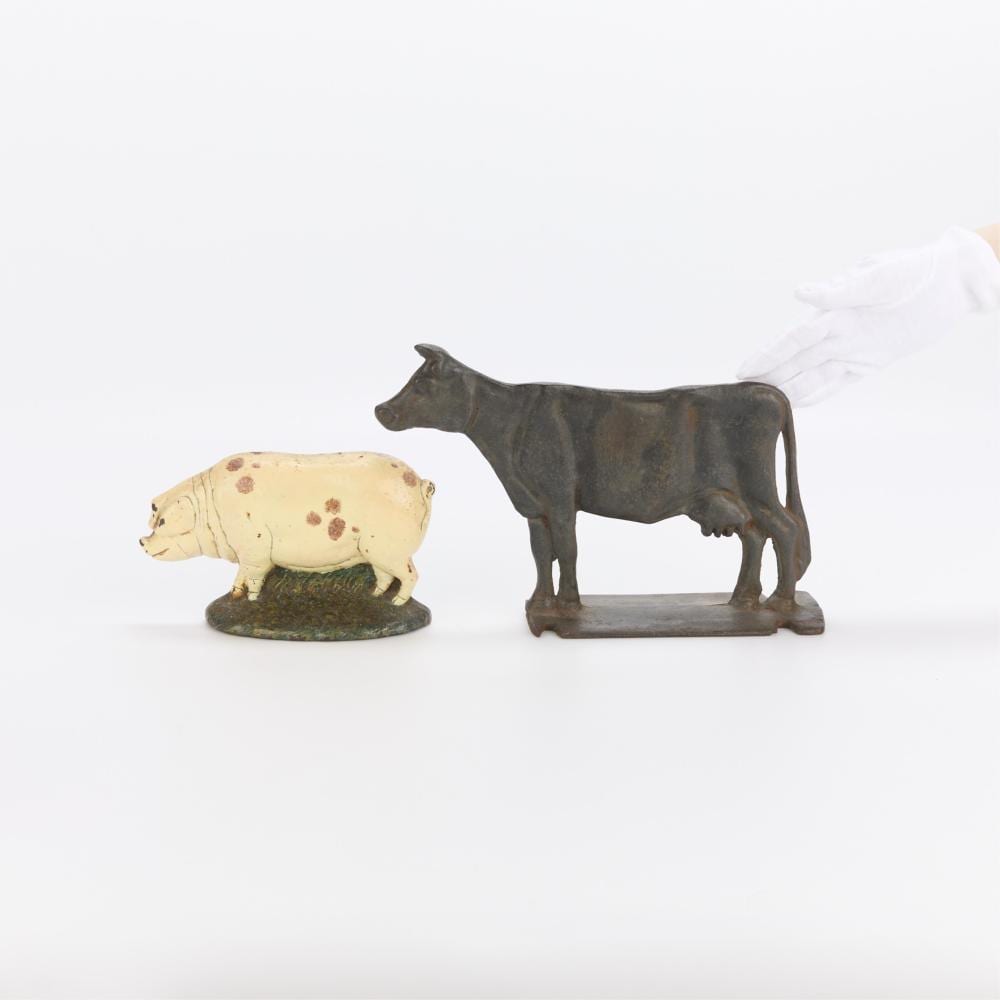
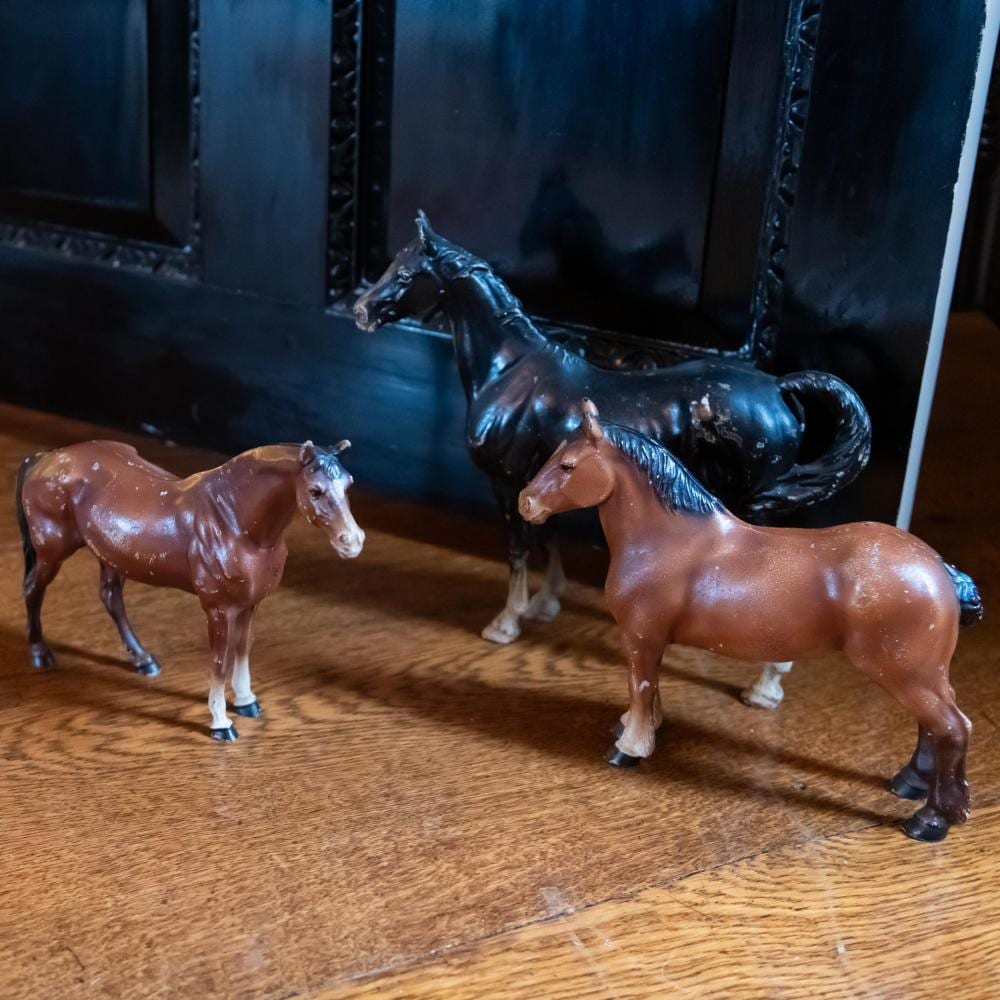
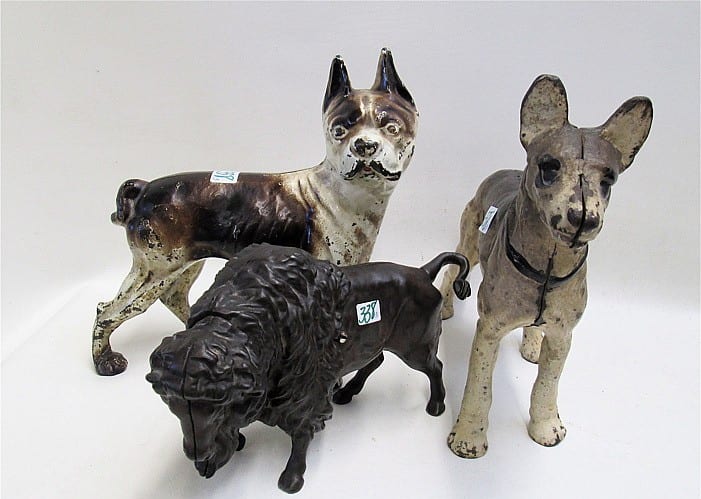
- Dogs and other animals: Boston Terriers, Scotties, Pointers, Bulldogs, Fox Terriers, and seated cats lead, especially when expressions are lively and eye detail is crisp. Standing, full-round forms typically outpace flat silhouettes.
- Female figures and fashion: 18th-century-style ladies, flappers, maidens, and Art Deco dancers attract cross-collecting interest.
- Cottages and architecture: Thatched cottages, lighthouses, and Tudor houses with textured brick or shingle patterns can surprise.
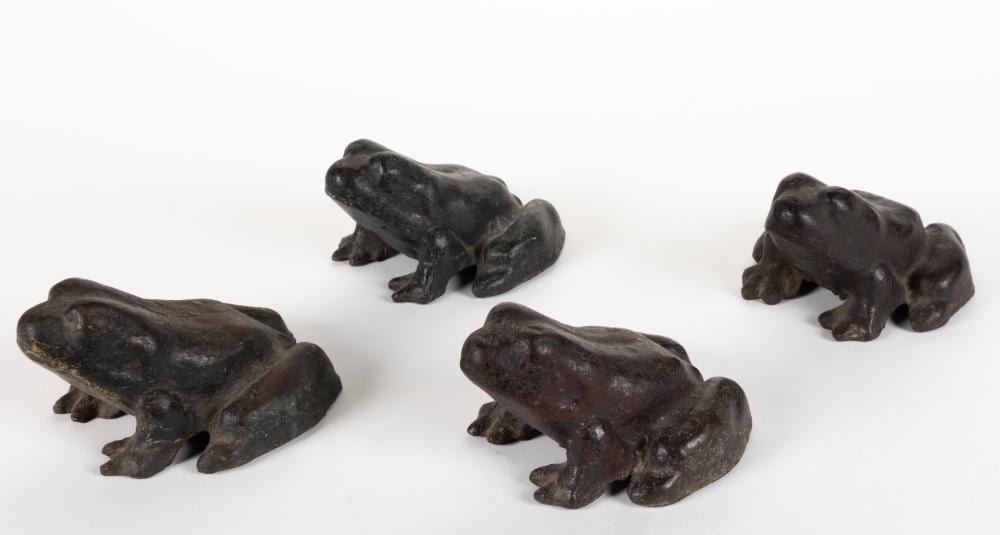
- Nautical and novelty themes: Lobsters, fish, parrots, roosters, and circus subjects are perennial favorites.
- Advertising and cataloged rarities: Any door stop associated with a period ad campaign, or one that appears rarely in maker catalogs, can exceed expectations.
Value ranges depend heavily on paint, but as a directional guide:
- Common forms in honest but worn paint: $125–$400
- Better subjects or strong paint: $800–$2,500
- Blue-chip maker/subject combinations with 80–95% original paint: $5,000–$25,000+ Auction outliers do occur when rarity, condition, and a motivated bidder pool intersect.
How to Authenticate: Construction, Paint, and Marks
Originals share a set of physical and finish characteristics that reproductions struggle to mimic. Examine the following closely.
Construction and casting:
- Sand-cast surface: Expect fine, random grain and crisp edges where detail is meant to be sharp (fur, feathers, basket weave). Overly smooth, “melted” edges usually indicate a later copy.
- Two-piece construction: Many figural examples comprise two halves joined with a single or pair of screws. Seams should be visible but neatly finished; misaligned halves can indicate a “marriage” (mismatched parts).
- Screws: Slotted screws are the period norm. Phillips-head screws appear later; their presence often signals a repair or reproduction.
- Base wear: The underside typically shows a crescent-shaped arc of honest wear from contact with floors, along with oxidation consistent with age. Perfectly smooth felt covering can be a red flag if it appears to conceal new metal.
- Weight and balance: Originals feel dense and balance well upright. Undersized or oddly light examples are suspect; however, weight alone is not definitive.
Paint and finish:
- Hand-applied polychrome: Original paint shows subtle shading, especially on floral and animal subjects. Look for brush strokes, layered colors, and careful highlights.
- Age-appropriate surface: Decades-old paint often shows micro-crazing, “alligatoring,” and scattered flakes where high points wear first. High-gloss, uniform enamel is usually modern.
- Honest oxidation at losses: Where paint flakes away, the exposed iron should show natural oxidation—not bright, raw metal throughout.
- Overpaint detection: UV light can help reveal newer paint. Pay attention to edges around chips; fresh paint will bridge over pits and fill detail.
Marks and numbers:
- Maker’s marks: “HUBLEY,” “B&H,” “JUDD,” “ALBANY,” or “NATIONAL” may appear as raised or incised text, sometimes with catalog numbers.
- Unmarked does not mean modern: Some originals were never marked. Identification relies on known patterns, scale, casting quality, and paint style.
- Beware cast-in marks on reproductions: Copycat molds sometimes include fake marks; judge the whole object, not the mark alone.
Small clues, big impact:
- Eye detail: On animals, original eyes have layered, lifelike paint with distinct pupils and highlights. Flat, dot-like eyes often come with reproductions.
- Backside quality: Turn it around. Originals usually carry consistent detail front and back; copies may be soft or unfinished in the rear.
Spotting Reproductions and Marriages
Reproductions have been made since at least the mid-20th century, with a boom from the 1970s onward. Many are decorative but not truly collectible. Red flags include:
- Too-perfect surfaces: Glassy enamel paint, uniform gloss, and absence of patina in crevices.
- Casting shortcuts: Soft detail; blurred textures; loss of undercuts; uniform machine grinding at seams.
- Incongruent hardware: Bright Phillips-head screws, modern washers, or incorrectly threaded fasteners.
- Artificial aging: Abrasion limited to easy-to-reach spots; chemically darkened metal; “rust” that rubs off on a cloth.
- Mismatched halves: Slightly different scale or detail between left and right halves, misaligned outlines, or paint tones that don’t match under magnification.
- Felt concealment: Fresh felt glued to the base to hide new iron or grinding marks.
- Wrong scale: Known models reproduced at smaller sizes or in heavier-than-expected forms.
Remember that “married” pieces—original halves from different models combined—sit in a gray zone. They are not reproductions, but they are not fully original either, and values drop significantly.
Condition, Restoration, and Value Impact
With cast iron door stops, original paint is king. Small differences in condition can translate to large price changes.
- Original paint percentage: Descriptions like “retains 80% original paint” are standard. Values rise steeply above 70–80% original paint, with high-grade examples commanding multiples of lesser survivors.
- Touch-ups and overpaint: Even careful spot in-painting reduces value. Full repaints typically relegate a piece to decorator status.
- Rust and pitting: Stable, old oxidation is acceptable. Active rust should be arrested carefully, but aggressive cleaning that polishes iron bright is disqualifying.
- Structural issues: Cracks, braze repairs, welds, replaced screws, or filled holes all penalize value. A discreet screw replacement is not fatal, but disclose it.
- Provenance and literature: Documentation to a notable collection, period catalogs, or old labels can boost buyer confidence and price.
Care and conservation:
- Cleaning: Use a dry, soft brush or microfiber to lift dust. For stubborn grime on painted surfaces, a barely damp cotton swab with pH-neutral soap, tested in an inconspicuous spot, is safer than solvents.
- Protection: A thin coat of microcrystalline wax on bare iron areas can slow oxidation. Avoid oils that can migrate into paint.
- Environment: Store and display in stable humidity with minimal direct sunlight to preserve paint.
Pricing and Appraisal Strategy
When valuing a door stop, triangulate from subject, maker, size, paint, and market comparables:
- Identify the subject precisely: “Boston Terrier, seated, full-face” is more meaningful than “dog.” Measure height and note whether the piece is flat-back or full-round.
- Maker attribution: Confirm marks where present; if unmarked, attribute by pattern, casting style, and published examples. Be cautious with attributions that rely solely on hearsay.
- Grade the paint honestly: Note original paint percentage, areas of loss, touch-up, and overpaint. Photograph in natural light to capture true color.
- Evaluate the casting: Detail sharpness, seam quality, and base wear tell you as much as a mark.
- Place it on the spectrum: Common, better, or blue-chip. Cross-check recent auction results for the same model and condition tier. Seasonality and venue can sway outcomes.
Selling strategies:
- Pair with the right venue: High-end, rare pieces thrive in specialty sales; common examples do fine in general antiques venues.
- Describe transparently: State all condition points and any known restoration. Honesty builds trust and bids.
- Ship safely: Wrap painted surfaces in acid-free tissue, then bubble wrap. Double-box heavy pieces and immobilize them within the inner box.
Rapid Evaluation Checklist
- Magnet test: Confirms iron (magnet should snap firmly); non-magnetic suggests a problem.
- Height and weight: Record measurements; compare against known examples.
- Surface and paint: Look for hand-applied shading, micro-crazing, and honest edge wear.
- Casting quality: Check sharpness of textures (fur, feathers, basket weave).
- Hardware: Prefer slotted screws; question bright modern fasteners.
- Base wear: Seek a natural wear arc; beware fresh felt that hides metal.
- Seams and halves: Ensure alignment; avoid mismatched “marriages.”
- Maker marks: Verify authenticity and placement; don’t trust marks alone.
- Restoration: Scan for overpaint under magnification and with UV light.
- Subject desirability: Rank the topic; floral baskets, desirable dogs, and standout figures rate higher.
FAQ
Q: How should I clean an antique cast iron door stop? A: Start dry: a soft brush and microfiber cloth. If needed, use a barely damp cotton swab with a drop of pH-neutral soap, testing first. Avoid solvents, abrasive pads, and polishes that can lift or gloss the original paint.
Q: Will repainting increase value? A: No. Repainting almost always lowers collector value, even if professionally done. The market prizes original paint, even with honest wear. Reserve conservation for stabilization, not cosmetic makeover.
Q: How can I store door stops to prevent rust? A: Keep them in a stable, dry environment with moderate humidity. Avoid basements and attics. Do not wrap directly in plastic; use acid-free tissue, then a breathable wrap. A thin microcrystalline wax on exposed iron helps.
Q: What are safe shipping practices for heavy door stops? A: Protect paint with tissue before bubble wrap, immobilize the object in a snug inner box, then double-box with cushioning. Mark the package “heavy” and keep it upright if the form is top-heavy.
Q: When should I insure a door stop? A: Insure any example you would struggle to replace—typically pieces valued above $1,000. For blue-chip subjects with strong original paint, consider a professional appraisal and scheduled coverage on your policy.
With careful observation and a disciplined checklist, you can separate decorator novelties from investment-grade antiques. Focus on subject, maker, crisp casting, and original paint—those traits consistently turn humble hardware into a small object worth a fortune.