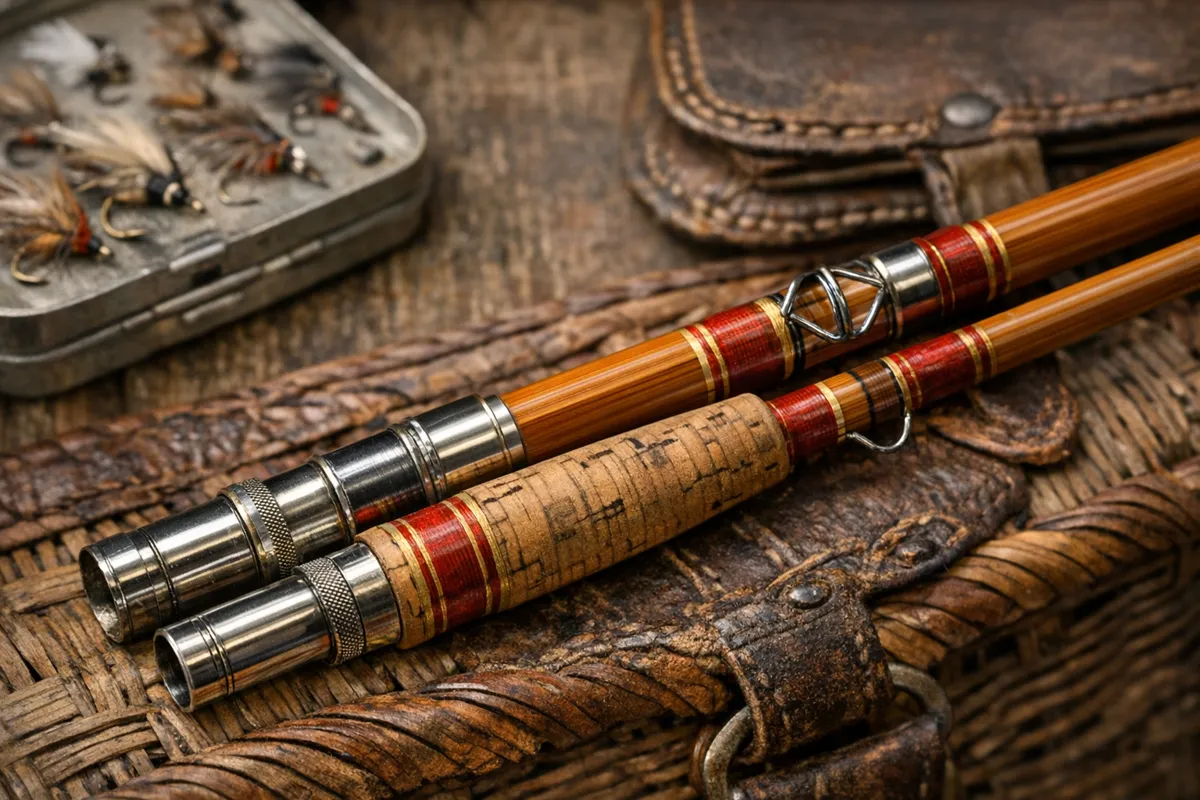
Start with the rod’s configuration
A useful bamboo fly rod identification starts with the parts you can document: the butt, middle sections, tips, ferrules, handle and reel seat. Record those before assigning a maker or date. A tube label or a familiar wrapping pattern is a clue to investigate, rather than proof that every component belongs to the same rod.
- Count every section and spare tip; record each length separately.
- Photograph the rod as found, including damaged or detached parts.
- Note any lettering exactly, without cleaning, repainting or completing missing characters.
- Keep the bag, tube, labels and paperwork with the rod.
Lay out every section before measuring
Bamboo rods are often found with loose sections and more than one tip. Lay the pieces side by side on a clean, supported surface. Separate a spare tip from a middle section before describing the rod as two-piece or three-piece. Measure each piece from end to end and record the assembled length only when the joints can be fitted safely.
- Count the working sections. Identify the butt with the grip and reel seat, then the middle and tip sections.
- Record spare tips independently. A shorter tip may have been repaired or may belong to another rod; a photograph alone cannot settle that.
- Compare the fittings. Note the position and appearance of the metal ferrules without forcing a tight or corroded joint.
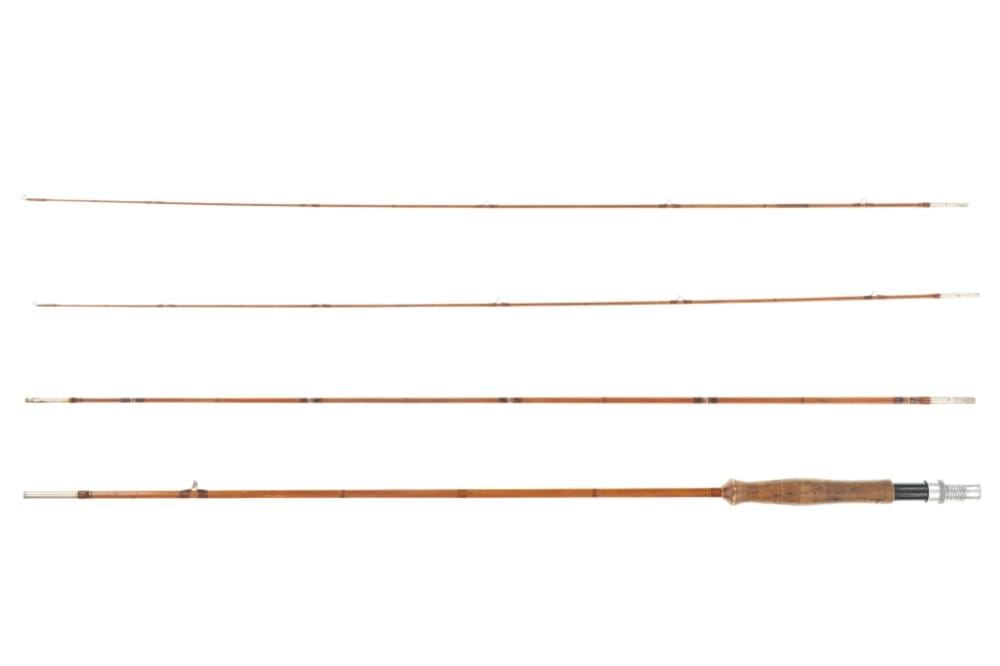
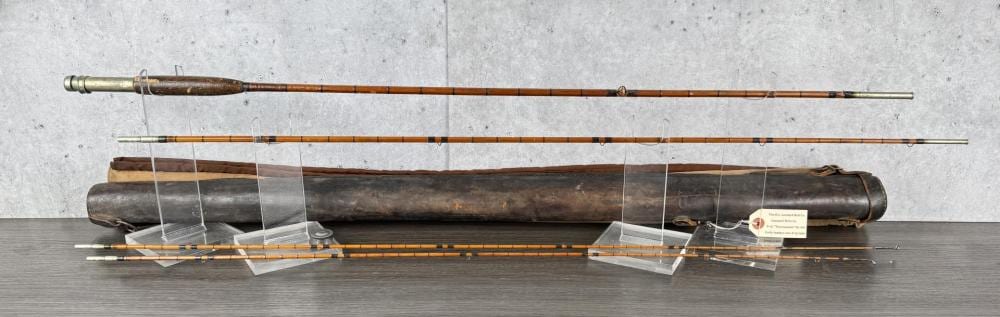
In this catalogue example, the sections are laid out separately, so their configuration is easier to document than in a photograph of an assembled rod. Use the same view for your own rod. If its purpose or type is unclear, the vintage fishing rod identification guide can help organize the next observations.
Separate hardware clues from maker attribution
Ferrules, reel seats, guides and grips provide useful comparison points. Record the grip shape, the reel-seat fitting, the number and position of guides, and the thread colors around them. Differences between sections matter: replacement wraps or hardware can make a rod look inconsistent without identifying who originally made it.
- Ferrules: document the joint profile, corrosion and any looseness; do not sand or polish a fitting to make it fit.
- Reel seat: record how it locks and the appearance of its spacer and metal fittings.
- Guides and wraps: look for missing guides, loose thread, different colors or abrupt changes in finish.
- Grip: record cracks, missing cork, filler and altered shape.
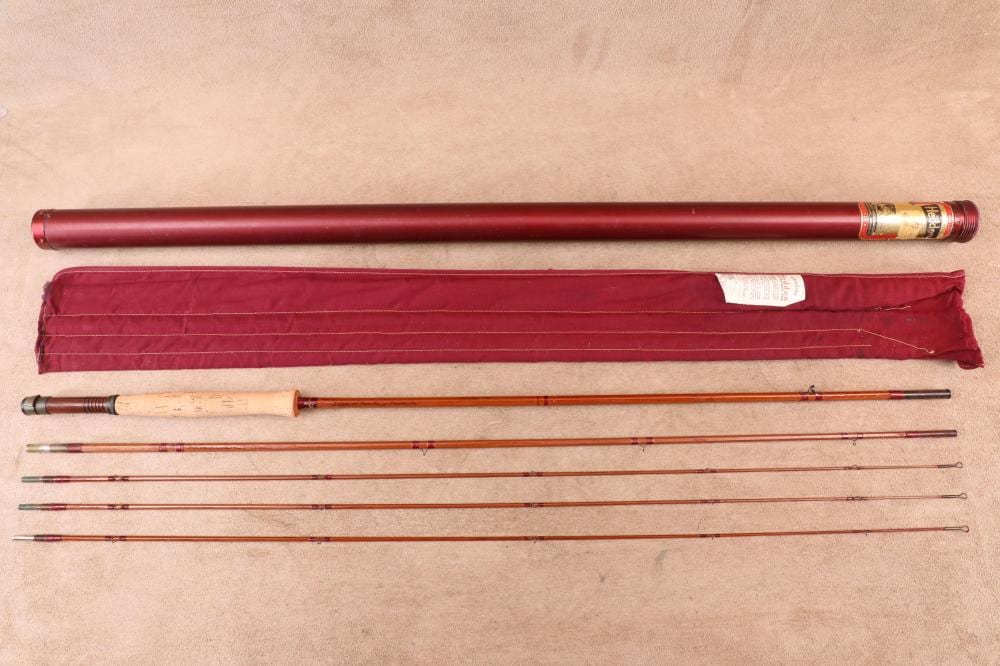
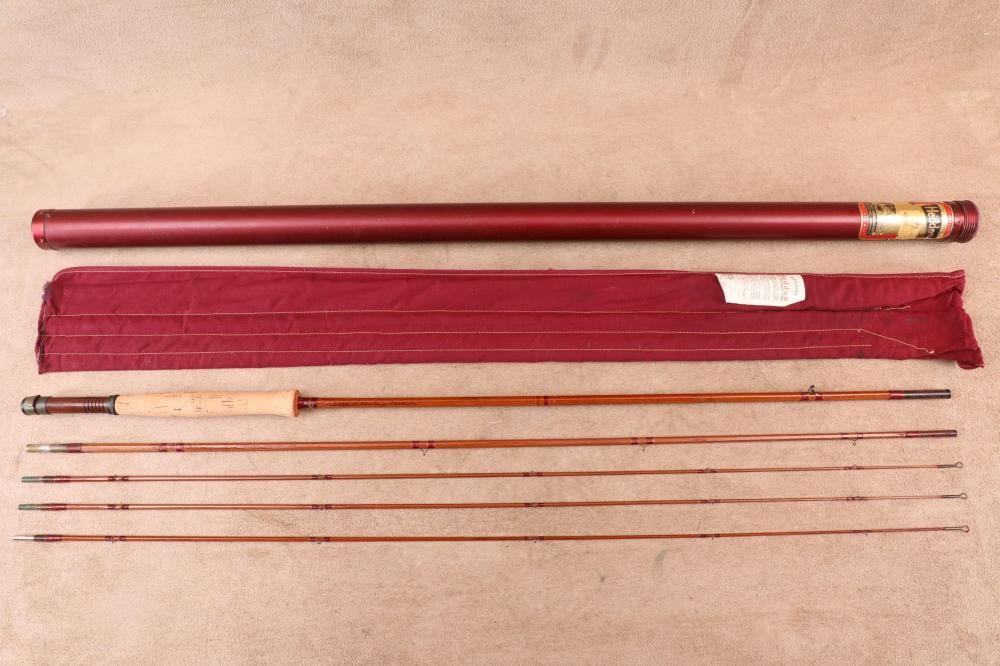
The Heddon name in this example is the auction catalogue’s attribution. The overall photograph helps compare the parts and their arrangement; it does not show a legible maker inscription. For your own rod, retain separate close photographs of any lettering and compare it with reliable maker documentation before treating the attribution as established.
Free first look
Have a bamboo rod with an uncertain identity?
Upload an overall photograph to start, with the sections and accessories visible. Add detail photographs during the Screener’s own intake.
Check my item from a photo — freeFree. No card needed. The photo upload usually takes about two minutes.
Record repairs and accessories before cleaning
Straightness, damaged bamboo, loose ferrules and missing guides are useful condition observations. Photograph a bend or suspected split from more than one angle. Avoid loading the rod to test its strength, scraping varnish or trying to free a stuck ferrule with improvised tools. Those actions can damage the rod and remove information about its current condition.
Distinguish what is present from what is original. A bag or tube found beside the rod may be relevant, but its label must agree with the rod’s configuration and documentation. Keep a record of replacement tips, refinishing or repairs even when the work looks tidy. Original receipts, correspondence and earlier photographs can help establish how the outfit changed over time.

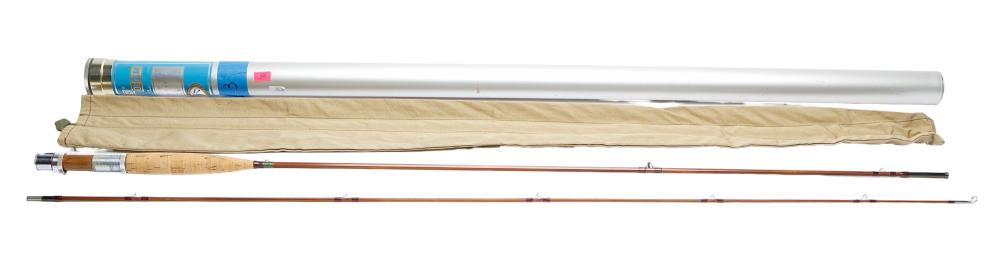
This Orvis catalogue example shows the rod together with its sleeve and tube. That is a useful accessories photograph, rather than proof of originality for an unrelated outfit. For a value-focused next step, see what to record before comparing old bamboo fishing rod values.
What similar items actually sold for
Real auction sales of items like your bamboo fly rod. Open a sale to see the original listing.
Shown USD range: USD 300-USD 900. Median of these 4 USD examples: USD 625.
| Comparable | What sold | Auction house | Date | Lot | Source-reported amount |
|---|---|---|---|---|---|
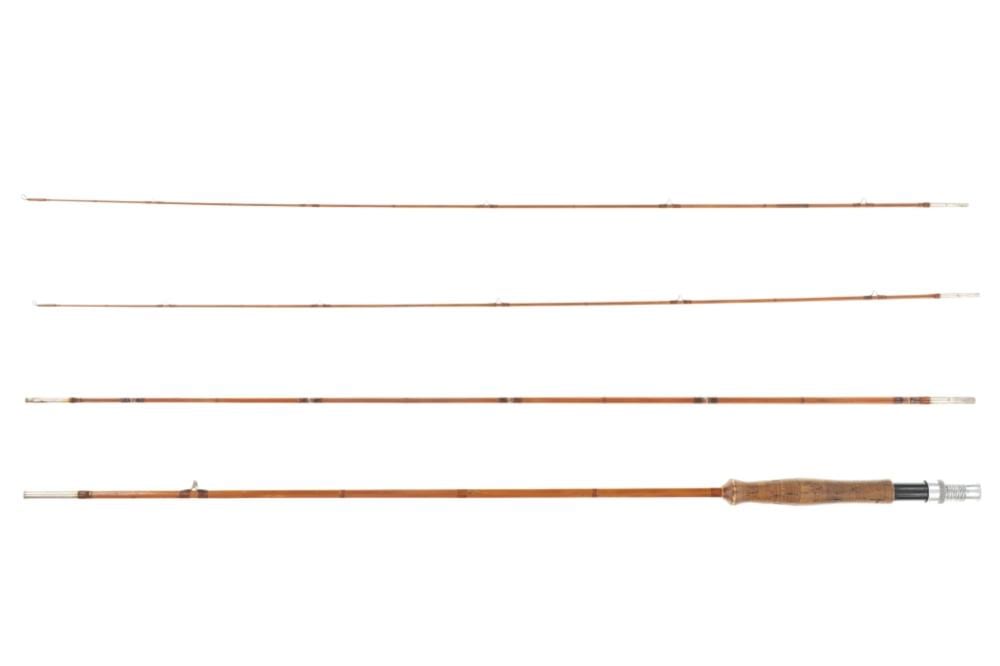 |
E.C. Powell Bamboo Fly Rod 8' 6 3/4" Three Piece | North American Auction Company | 2024-07-13 | 175 | USD 900 |
 |
H.L. Leonard Mills Tournament Bamboo Fly Rod | Davis Brothers Auction | 2025-08-07 | 179 | USD 700 |
 |
Vintage 1969 Orvis Battenkill 6'6" Impregnated Bamboo Fly Rod - Wes Jordan Era - Excellent Original Condition w/ Tube | Ace Of Estates | 2025-11-16 | 989237 | USD 300 |
 |
Vintage Early 1900s Heddon No. 20 Bill Stanleys Favorite 9' 5 3/4oz Bamboo Fly Rod In Original Tube | Lock Stock & Barrel Auctions | 2026-05-03 | 3270 | USD 550 |
How these auction records were verified
These sales are market context, not an object estimate.
Each row is tied to its lot identity, retrieval time, access result, and immutable record hash. Inspect the public comparable provenance record.
Decide whether a written appraisal will help
If a signed report would help you document this particular rod, start a written appraisal after gathering the photographs and measurements above.
Questions about an inherited bamboo rod
How can I start identifying an unmarked bamboo fly rod?
Record the number and length of every section, then photograph the ferrules, handle, reel seat, wraps and any surviving label. Hardware and construction can narrow the search, but an unmarked rod should not receive a maker attribution from resemblance alone. A catalogue, maker record or specialist comparison may still be needed.
Do two tips mean the rod is complete?
Two tips can belong to a complete outfit, but count them separately from the butt and middle sections. Compare lengths and fittings and note differences in wraps or finish. The Heddon auction example on this page was catalogued with two extra tips; that description does not establish the correct configuration for another rod.
Should I refinish or repair the rod before an appraisal?
Document its present condition first. New varnish, replacement wraps, altered grips or shortened sections can remove information needed to assess originality. Keep detached parts, photograph damage and ask an experienced rod restorer about safe handling before attempting a repair.
Can the auction examples give me a value for my rod?
They provide source-reported results for four individually identified lots, not a price range for every bamboo rod. Match the maker attribution, model, length, section and tip count, condition and accessories before using a result as a comparison. The table states the source-access and buyer’s-premium limitations.
What photographs should I prepare for a first look?
Use one overall view with all parts laid out, plus close-ups of the grip and reel seat, each ferrule, guide wraps, visible damage, labels and the bag or tube. Add measured section lengths and any ownership paperwork. Do not force a stuck joint to obtain a photograph.