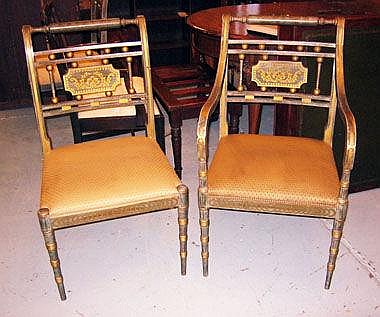
Victorian Era Solid Wood Queen Anne Style Set of Chairs: appraisal and value basics
Victorian Era Solid Wood Queen Anne Style Set of Chairs research should start with identification, condition, provenance, and item-specific market evidence. Use this guide to compare the signals that matter before paying for a formal appraisal or deciding whether to sell.
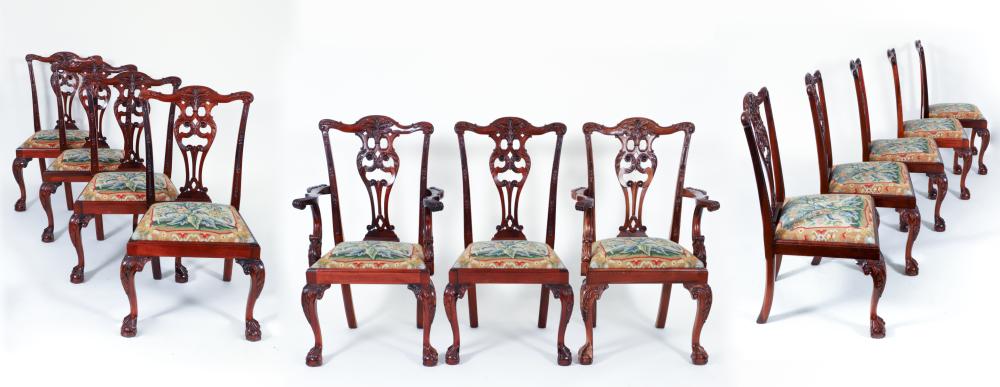
Queen Anne is a design vocabulary—cabriole legs, curving lines, and graceful backs—not a confirm of an early 1700s date. Many chair sets described as “Queen Anne style” were actually made during the Victorian era (1837–1901) or later as part of the Queen Anne Revival.
This guide focuses on the kinds of clues you can verify at home: underside construction, tool marks, fasteners, wood choice, and whether the set is truly matched. It also includes recent comparable-sale records so you can see how the market treats different quality levels.
Free instant estimate
Not sure if your item is worth appraising? Let us take a look.
Upload a photo, tell us what you know, and get a free first read. If a full appraisal makes sense, we will say so.
Free. No card needed. Takes about two minutes.
How We Research Valuation Data
Our appraisal guides are based on auction results, dealer pricing data, and professional appraiser insights. Our professional appraisal service provides paid signed reports. The Screener offers a free first look. Learn about our editorial standards.
Queen Anne vs Victorian Queen Anne Revival: what you likely have
Original Queen Anne period chairs (early 18th century) are scarce and collected as historic furniture. Victorian era sets are far more common and were made to capture the look—often with excellent craftsmanship—but with later construction methods, standardized parts, and different upholstery tastes.
If a seller claims “1700s Queen Anne,” look for a consistent 18th-century story across the whole chair: hand-forged hardware, early upholstery methods, and wear patterns that make sense. Many sets with claw-and-ball feet and curving backs are actually late 19th century.
Quick identification checklist (5 minutes)
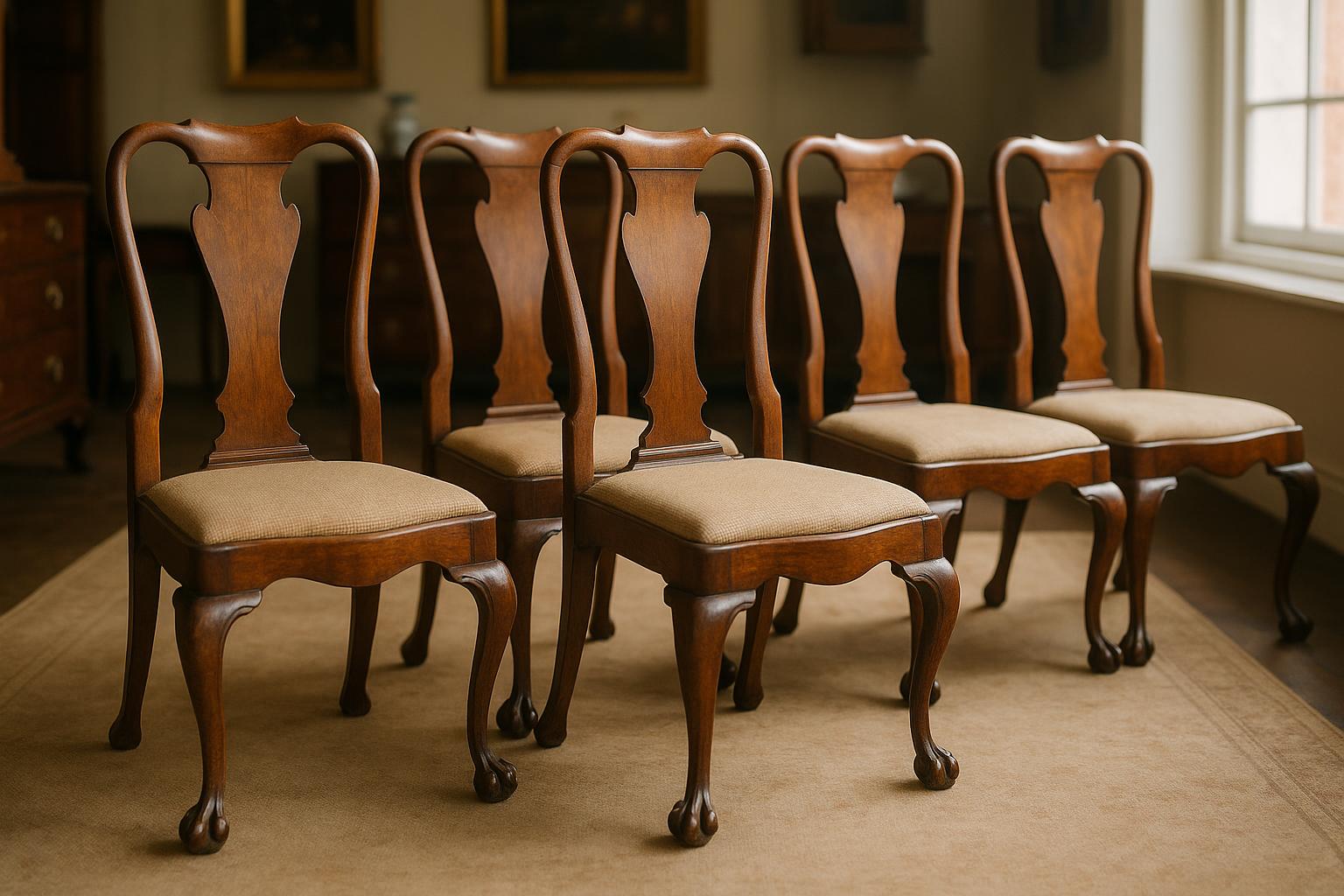
- Legs: cabriole legs with a pronounced “knee” are typical; straight legs suggest a different style.
- Feet: claw-and-ball, pad feet, or slipper feet; crisp carving generally costs more.
- Back: vase splat or spoon back forms; look for symmetry and whether backs match across the set.
- Seats: slip seats (removable) are common; cane/wicker seats can be original or later replacements.
- Stretchers: many period Queen Anne chairs lack stretchers; some revival chairs add them for strength.
- Underside: check joinery, screws/nails, and whether corner blocks are original or added later.
How to date a Queen Anne style chair set
Don’t date a chair by one feature like claw-and-ball feet. Feet can be reproduced; construction is harder to fake. Photograph the underside and look for how rails and legs meet.
- Tool marks and joints: hand-cut joints tend to look slightly irregular; perfectly uniform cuts often indicate later machine work.
- Fasteners: a mix of slotted screws is more consistent with older work than Phillips-head screws.
- Wear and oxidation: genuine age shows in protected areas (inside joints, under seat rails), not only on exposed edges.
- Matched set evidence: identical wood tone, carving style, and seat construction across all chairs matters.
Wood species and finish (what “solid wood” can mean)
“Solid wood” is a good start, but collectors pay differently for mahogany, walnut, oak, and mixed secondary woods. Victorian-era chair sets may use a premium wood on visible parts and a cheaper secondary wood where it won’t show.
- Mahogany: common for higher-quality Victorian revival chairs; look for ribbon stripe and warm depth.
- Walnut: also popular in the 19th century; can darken with age and show attractive grain.
- Oak: durable and common; often shows prominent grain; can indicate a sturdier, less delicate look.
- Finish: heavy polyurethane shine can reduce antique appeal; a softer, older finish often reads more documented.
Condition issues that move value the most
Chair sets are functional objects; condition is usually the main driver after style. Buyers often pay more for fewer repairs, even if the chairs aren’t “perfect.”
- Loose joints: wobble at the seat rails or legs; repairs should be tight and reversible when possible.
- Replaced seats: reupholstery can be fine, but mismatched seats across a set usually lowers value.
- Refinishing: aggressive sanding can round crisp carving details and hurt collectability.
- Missing chairs: a set of 4, 6, or 8 matters; incomplete sets often sell at a discount.
What is a Victorian Queen Anne style chair set worth?
Values vary by region and sales channel. In a legacy private appraisal report, a comparable Victorian-era solid wood Queen Anne style set was valued in the a value that must be established from current, topic-matched sales range for the set (retail/insurance context). Auction hammer prices can be substantially lower, especially for mixed-condition sets or less desirable woods.
As a practical rule: the more “matched” the set feels (same carving, same wood tone, same seat type, same patina), the more confident buyers become—and the more they pay.
Recent comparable-sale records (real-world pricing)
These market evidence come from public auction listings and show how wide the market can be. Use them as benchmarks, not confirms.
What these market evidence illustrate: provenance and period can raise a simple “chair pair” into the hundreds or thousands, while branded dining sets can sell cheaply at auction if demand is soft, condition is mixed, or shipping is a barrier.
How to sell a Queen Anne style chair set (best channels)
Chair sets are large and shipping is costly, so selling channel matters. Choose the option that matches your timeline and risk tolerance.
- Local sale (Facebook Marketplace / estate sale): often fastest; price for local demand and be transparent about repairs.
- Consignment: good for higher-quality sets; a shop may stage and market them but will take a commission.
- Auction: best when you have provenance or a desirable early period; expect fees and variable outcomes.
- Online marketplaces: possible, but freight and returns can be challenging; detailed condition photos are critical.
Photos to take for an accurate appraisal
- One group shot of the full set (front angle) plus an angle from the side
- One clear photo of the underside (seat rails, corner blocks, fasteners)
- Close-ups of one foot and leg carving (knee + claw/pad)
- Back splat details (front and back)
- Any labels, stamps, penciled numbers, or upholstery webbing/tacks
Search variations collectors ask
Readers researching Victorian Queen Anne style chairs often search:
- how to date Queen Anne revival dining chairs
- Victorian Queen Anne chair set value for insurance
- claw and ball foot chair identification
- how to tell if a Queen Anne chair is antique or reproduction
- mahogany Queen Anne style chairs worth anything
- how to spot replaced cane or wicker chair seats
- best way to sell antique dining chair sets locally
- what refinishing does to antique chair value
Each question is answered above (dating, materials, condition, pricing, and selling tips).
References
- The Metropolitan Museum of Art – Timeline of Art History (furniture context)
- Victoria and Albert Museum – Furniture collections
- Winterthur Museum – American decorative arts and furniture research
Wrap-up
A Victorian era solid wood Queen Anne style set of chairs can be both beautiful and valuable—especially when the set is matched, well-made, and in stable condition. The fastest path to an accurate date range is underside construction plus leg/foot details. If you’re planning to sell or insure, gather a tight photo set and compare your chairs to recent comparable-sale records, then adjust for quality and condition.