Antique Secretary Desk Value: appraisal and value basics
Antique Secretary Desk Value research should start with identification, condition, provenance, and item-specific market evidence. Use this guide to compare the signals that matter before paying for a formal appraisal or deciding whether to sell.
Antique secretary desks remain among the most elegant and functional pieces of vintage furniture, combining sophisticated craftsmanship with practical utility. These versatile pieces have graced homes for centuries, evolving from simple writing surfaces to elaborate cabinets that showcase exquisite woodworking and design sensibilities of their respective eras.
If you’ve inherited or purchased an antique secretary desk, understanding its value can be both fascinating and financially rewarding. This comprehensive guide explores the factors that influence secretary desk values, from identifying period styles to recognizing quality construction and condition issues.
What Is An Antique Secretary Desk?
Understanding Secretary Desks
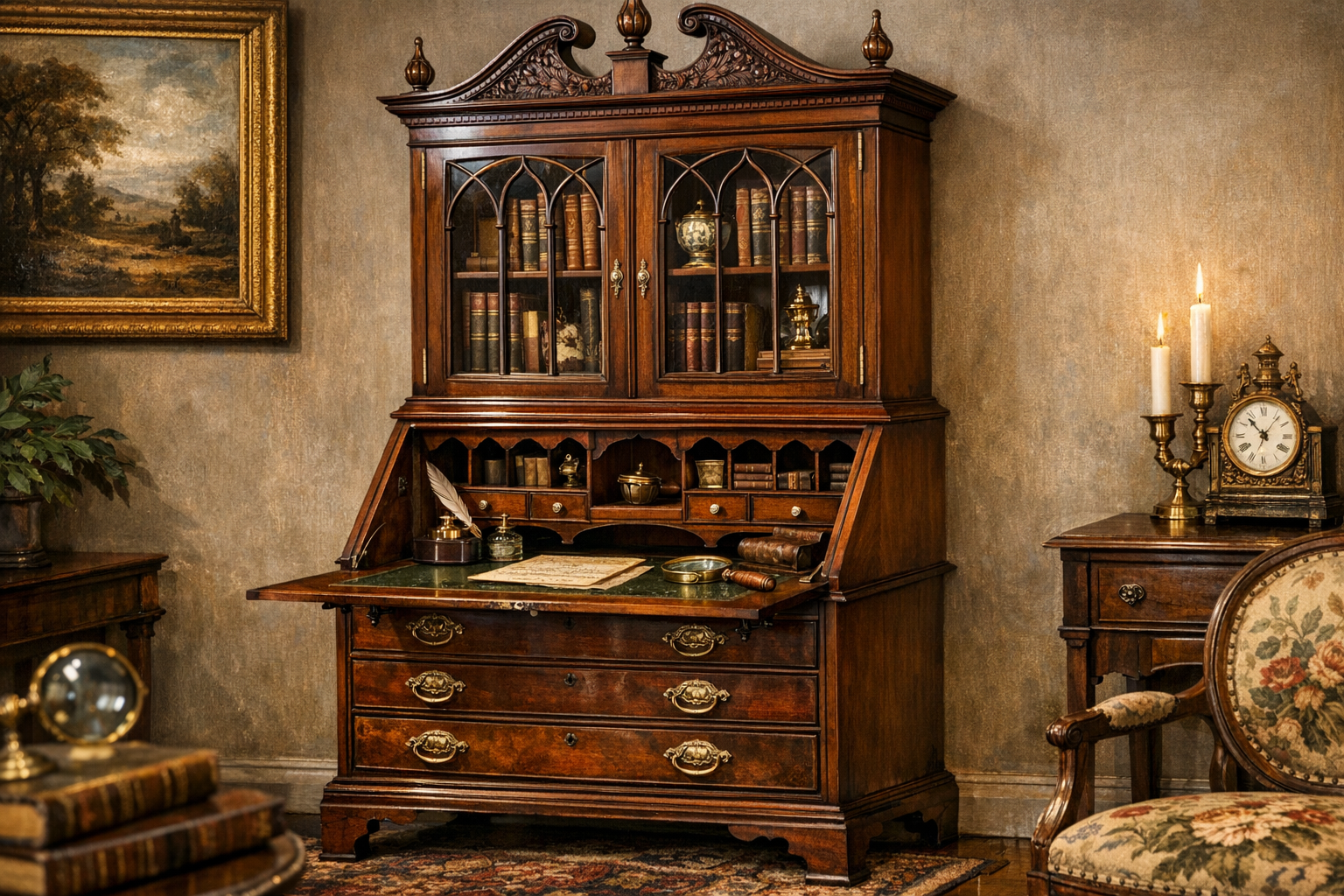
The secretary desk, also known as a escritoire or bureau, originated in the 17th century as an evolution of the writing desk. The defining feature is a hinged writing surface that folds down or pulls out to create a workspace, often revealing small drawers and compartments designed for organizing correspondence and writing implements. Most secretary desks include additional storage drawers below and frequently feature a bookcase or display cabinet above.
The term “secretary” derives from the Latin word for “writer,” reflecting its original purpose for correspondence and document management. These desks became particularly popular among the upper classes during the 18th and 19th centuries, when letter writing was an essential social skill and business necessity.
Secretary desks come in several primary variations:
- Drop-front secretary: Features a hinged writing surface that folds down to create a workspace
- Cylinder or roll-top secretary: Has a curved wooden cover that rolls or slides back to reveal the writing surface
- Secretary bookcase (secretary desk with hutch): Combines a desk with an upper cabinet for books or display items
- Secretary cabinet: Often taller and narrower with enclosed storage above and below the writing surface
Today, antique secretary desks are valued not only for their historical significance but also for their aesthetic appeal and practical functionality in modern homes.
Historical Evolution of Secretary Desks
Evolution of Secretary Desk Styles
- 1650-1700
Early Origins
Secretary desks evolved from simple writing boxes and tables in Europe, with early examples featuring basic fold-down writing surfaces and minimal storage.
- 1700-1750
Queen Anne Period
Secretary designs became more refined with graceful cabriole legs, curved lines, and shell motifs. These pieces often featured walnut veneers and simpler proportions.
- 1750-1780
Chippendale Era
Influenced by Thomas Chippendale's designs, these secretary desks featured elaborate carvings, gothic details, and Chinese-inspired elements with more ornate proportions.
- 1780-1820
Federal and Sheraton Styles
American and English designs emphasized straight lines, lighter proportions, and decorative inlays. Mahogany became the dominant wood with contrasting satinwood inlays.
- 1820-1840
Empire and Biedermeier
Heavier, more imposing designs with classical motifs dominated. American Empire pieces often featured columns, while European examples showed simpler, functional lines.
- 1840-1900
Victorian Period
Secretary desks became more elaborate with various revival styles (Gothic, Renaissance, Rococo). Mass production made these pieces more accessible to the middle class.
Factors That Determine Value
What Makes a Secretary Desk Valuable?
Age and Period
Generally, older secretary desks command higher prices, particularly those from the 18th and early 19th centuries. However, age alone doesn’t determine value—a well-preserved Victorian piece may outvalue a damaged Queen Anne example. The most valuable periods include:
- Queen Anne (1700-1750): Elegant simplicity with curved lines
- Chippendale (1750-1780): Refined carvings and Chinese influences
- Federal/Sheraton (1780-1820): Graceful proportions with delicate inlays
- Empire (1820-1840): Bold classical elements and substantial proportions
Maker and Provenance
Secretary desks crafted by renowned cabinetmakers or from prestigious workshops carry significant premiums. Look for maker’s marks, labels, or documented history:
- Signed pieces by notable makers like Thomas Chippendale, Duncan Phyfe, or Samuel McIntire
- Regional characteristics that identify specific workshops or areas
- Documented provenance linking the piece to historical figures or important collections
Materials and Construction
The quality of materials and craftsmanship significantly impacts value:
- Primary woods: Mahogany, walnut, and rosewood typically command higher prices than oak or pine
- Secondary woods: Quality pieces use different woods for structural elements versus visible surfaces
- Veneers: Fine, book-matched veneers in good condition enhance value
- Joinery: Dovetailed drawers, mortise-and-tenon joints, and other hand-crafted techniques indicate quality
- Hardware: Original brass pulls, locks, and hinges significantly increase value
Condition
Condition remains one of the most critical value factors:
- Original Finish: Secretary desks with original surface patina command significant premiums over refinished pieces
- Structural Integrity: Pieces should be sturdy with minimal repairs
- Completeness: All original elements present (hardware, shelves, interior compartments)
- Functionality: Working locks, smoothly operating drawers, and stable writing surfaces
Style and Aesthetic Appeal
Certain styles remain perennially popular and maintain higher values:
- Clean-lined Federal and Sheraton styles appeal to contemporary tastes
- Elaborately carved Renaissance Revival pieces attract collectors of Victorian furniture
- French-influenced designs with curved elements and elegant proportions
Size and Practicality
Today’s smaller living spaces often favor more compact secretary desks:
- Mid-sized secretary bookcases (approximately 36-42" wide) are most versatile for modern homes
- Very large or imposing pieces can be challenging to place, potentially limiting their market
- Slim secretary cabinets that fit in hallways or small spaces often attract premium prices
Current Market Values
What's My Secretary Desk Worth?
Antique Secretary Desk Price Ranges
Current market values as of 2024
Recent sales from auction houses and online marketplaces show how widely values range, from the top of the market to the bottom:
- A magnificent 18th century Chippendale secretary bookcase in original condition: the top of the market
- A well-maintained Victorian walnut secretary with bookcase: a solid middle tier
- Modest early 20th century secretary desk with minimal features: the most common and least expensive
According to a recent Reddit discussion on r/Antiques, a typical vintage secretary desk in good condition often brings surprisingly little at auction, though retail prices in antique shops can be significantly higher. The commenter noted that “like most older quality pieces these days, [they] sell for a song” compared to their craftsmanship and historical value.
How to Identify Valuable Secretary Desks
Identifying Quality and Originality
Examining Construction Techniques
Quality antique secretary desks exhibit distinctive construction methods:
- Dovetail Joints: Hand-cut dovetails on drawers indicate pre-1880s craftsmanship
- Wood Movement Accommodation: Quality pieces allow for seasonal wood expansion
- Secondary Woods: Examine drawer bottoms and internal structures—quality pieces use different woods for non-visible elements
- Patina: Documented aged surface with consistent wear patterns
- Hardware Mounting: Original hardware shows consistent aging with surrounding wood
Recognizing Period Features
Each period has distinctive characteristics:
- Queen Anne: Cabriole legs, shell carvings, simpler proportions
- Chippendale: More elaborate carvings, Chinese-inspired elements, ball-and-claw feet
- Federal/Sheraton: Slender tapered legs, light proportions, geometric inlays
- Empire: Bold columns, heavy proportions, brass ornaments
- Victorian: Revival styles with elaborate carving, darker finishes
Spotting Reproductions and Alterations
Be wary of these common issues:
- Married Pieces: Upper and lower sections from different pieces combined
- Added Elements: Later bookcase tops added to antique desks
- Replaced Hardware: Modern reproductions of period hardware
- Wood Inconsistencies: Different wood species or finishes indicating repairs
- Machine-Cut Dovetails: Regular, identical dovetails indicating modern construction
Antique Secretary Desk Attribution review Checklist
Check applicable items to help document attribution evidence
- Hand-cut dovetail joints on drawers
- Consistent patina and wear patterns
- Different wood species for visible vs. hidden areas
- Consistent hardware with appropriate aging
- Evidence of hand-planing on interior surfaces
- Period-appropriate dimensions and proportions
- Consistent construction techniques throughout
- Square nail or wooden peg construction
Restoration and Maintenance
Preserving Value Through Proper Care
Cleaning and Maintenance
Regular care prevents deterioration:
- Dusting: Use a soft, lint-free cloth, dusting with the grain
- Cleaning: Mild soap and water on a barely damp cloth for sticky areas, drying immediately
- Polishing: Apply paste wax sparingly 1-2 times yearly; avoid silicone-based products
- Environment: Maintain consistent humidity (roughly 40–55% relative humidity) and avoid direct sunlight
- Hardware Care: Clean brass with appropriate metal polish; avoid abrasives
When to Restore
Consider these guidelines for restoration decisions:
- Structural Issues: Address splits, loose joints, or unstable elements promptly
- Hardware: Replace only when original is missing or non-functional
- Finish: Preserve original finish whenever possible; consider conservation over refinishing
- Missing Elements: Skilled reproduction of missing pieces by a qualified restorer
Finding Qualified Restorers
Seek specialists with appropriate credentials:
- Experience: Look for restorers with specific experience in period furniture
- References: Request examples of previous secretary desk restorations
- Approach: Choose conservators who favor minimally invasive techniques
- Documentation: Ensure all work is documented for provenance records
Where to Buy and Sell Antique Secretary Desks
Navigating the Marketplace
For Buyers
Consider these sources when searching for an antique secretary desk:
- Specialized Antique Dealers: Often offer vetted, high-quality pieces with appropriate provenance, though at premium prices
- Auction Houses: From major houses like Christie’s for museum-quality pieces to regional auctions for mid-range items
- Estate Sales: Opportunities for discoveries, though requiring knowledge to assess originality
- Online Marketplaces: Sites like 1stDibs for high-end pieces or eBay and Chairish for more accessible options
- Antique Shows: Allow in-person inspection of multiple dealers’ inventory
For Sellers
When selling your secretary desk, consider these options:
- Direct Sale: Marketing through specialty websites like Chairish or 1stDibs yields higher returns but requires patience
- Consignment: Antique dealers take a commission but handle marketing and sales
- Auction Houses: Commission rates vary by house, with potential for competitive bidding on quality pieces
- Local Market: Less documentation required but typically lower prices
Setting Realistic Expectations
Market conditions significantly impact both buying and selling:
- Current trends favor cleaner designs over heavily carved Victorian pieces
- Large pieces often sell below historical values due to smaller modern living spaces
- Exceptional examples with provenance still command premium prices
- Regional preferences affect values (Colonial styles perform better in the Northeast)
Decorating with Antique Secretary Desks
Incorporating Secretary Desks in Modern Homes
Ideal Placement Options
Consider these locations for showcasing your secretary desk:
- Living Room: As a focal point against a wall or in a cozy corner
- Home Office: Functional workspace with historical character
- Entryway/Foyer: Creates an elegant first impression and convenient mail drop
- Dining Room: Alternative to traditional china cabinets for displaying collections
- Bedroom: Intimate writing desk and additional storage
Styling Approaches
Balance historical character with contemporary needs:
- Traditional Styling: Complement with period-appropriate accessories and formal arrangements
- Transitional Mix: Pair with cleaner-lined contemporary furniture for balanced contrast
- Modern Context: Use as a statement piece against minimal backgrounds
- Functional Focus: Adapt interior compartments for modern technology and storage
Practical Adaptations
Make your secretary desk work for today’s needs:
- Install discreet lighting for the writing surface and display areas
- Adapt interior compartments to accommodate laptops and charging stations
- Use archival document boxes in drawers for organized storage
- Consider custom-sized blotters or protective surfaces for the writing area
Common Questions About Antique Secretary Desk Values
Frequently Asked Questions
How old are secretary desks?
What is a secretary desk called?
Where should I place an antique secretary desk in my home?
- Living Room: A secretary desk adds warmth and character, especially in a cozy corner or against a wall as a focal point.
- Entryway or Foyer: It creates an elegant first impression while serving as a practical drop zone for mail and keys.
- Home Office: Provides a functional workspace with historical character.
- Dining Room: Can replace traditional china cabinets for displaying collections.
- Bedroom: Offers an intimate writing space and additional storage.
How can I tell if my secretary desk is valuable?
- Age: Pre-1850 pieces generally command higher prices
- Construction: Hand-cut dovetails, quality secondary woods, and evidence of hand-planning
- Maker: Any marks, labels, or signatures from known cabinetmakers
- Condition: Original finish, hardware, and minimal repairs
- Style: Clean-lined Federal or Sheraton styles typically bring higher values than Victorian
- Materials: Mahogany, walnut, or rosewood typically outvalue pine or oak
- Provenance: Documented history of ownership, especially if connected to notable individuals
Should I refinish my antique secretary desk?
Instead of refinishing, consider these alternatives:
- Conservation cleaning: Using appropriate products to remove dirt while preserving patina
- Revitalization: Applying quality furniture oils or wax to rejuvenate the existing finish
- Touch-up: Addressing specific damaged areas rather than complete refinishing
What's the difference between a secretary desk and a regular desk?
- Writing Surface: Secretary desks feature a fold-down or pull-out writing surface rather than a fixed top
- Storage Integration: Secretary desks have built-in compartments, pigeonholes, and small drawers specifically designed for writing implements and correspondence
- Compact Design: When closed, secretary desks take up less space than conventional desks
- Multifunctionality: Secretary desks often combine workspace, storage, and display functions
- Privacy: The closing mechanism allows for concealing workspace contents when not in use
External Resources for Further Research
Valuable Resources for Antique Secretary Desk Research
Antique Secretaries on eBay
Browse current listings of antique secretary desks with actual asking prices to understand the current market.
Vintage Secretary Desks on Chairish
Curated collection of higher-end antique and vintage secretary desks with detailed descriptions of period features.
Secretary Desk History on Styylish
Educational content on the evolution of secretary desks from the 17th century forward, with details on distinctive period features.
Collectors Weekly: Vintage Secretary Desks
Comprehensive collector's guide with historical information and specialized knowledge on different secretary desk styles.
Early 19th Century Secretary Desks at 1stDibs
High-end marketplace featuring museum-quality secretary desks with detailed provenance information and expert descriptions.
r/Antiques Secretary Desk Discussions
Community discussions about secretary desk values with expert opinions and real-world pricing experiences.
Conclusion
Antique secretary desks represent a fascinating intersection of historical craftsmanship, practical functionality, and aesthetic appeal. While the market for these pieces has evolved over time, quality examples continue to be sought after by collectors, interior designers, and homeowners who appreciate their unique character.
Understanding the factors that influence value—from period and maker to condition and materials—helps both buyers and sellers navigate the marketplace with confidence. Whether you’re seeking to purchase your first antique secretary desk or determine the value of a family heirloom, the knowledge of what makes these pieces special is essential.
As with many antiques, the current market often undervalues the exceptional craftsmanship and historical significance of these pieces, creating opportunities for discerning collectors to acquire beautiful furniture with centuries of stories to tell. With proper care and appreciation, an antique secretary desk can serve as both a functional workspace and a tangible connection to our shared material heritage.
What similar items actually sold for
Real auction sales of items like your secretary desk. Open a sale to see the original listing.
Shown USD range: USD 20-USD 70,000. Median of these 94 USD examples: USD 300.


How these auction records were verified
These sales are market context, not an object estimate.
Each row retains its exact source URL, lot identity, retrieval time, access result, and immutable record hash. Live source access was blocked; the exact record matched Appraisily's immutable pipeline provenance. Inspect the public comparable provenance record.
Free photo check
Not sure if your item is worth appraising? Let us take a look.
Upload a photo, tell us what you know, and get a free photo check. If a full appraisal makes sense, we will say so.
Free. No card needed. Takes about two minutes.
Get a secretary desk appraised
Upload photos of the desk, drop front, interior, hardware, drawers, wood, finish, repairs, dimensions, and condition notes.
- Signed report with photos and market context
- Delivered within 24 hours of receiving your photos
- Fixed, upfront pricing
No obligation. Secure upload.
Find a local antique or art appraiser
Ready for pricing guidance?
Start a secure online appraisal
Upload images and details. Delivered within 24 hours of receiving your photos.
Upload photos for a free first look View signed report sample