Comparable antique coffee grinders in the auction sales listed on this page sold for $55 to $409.
Antique coffee grinders have become highly sought-after collectibles, combining both historical significance and practical charm. These functional works of art reflect the evolution of coffee culture and often serve as conversation pieces in modern homes. Whether you’re a serious collector or simply curious about that old grinder in your attic, understanding what drives value in these vintage kitchen tools can help you make informed decisions about buying, selling, or appraising them.
Antique Coffee Grinder Value at a Glance
Let’s explore what makes these charming kitchen artifacts valuable and how to determine what your antique coffee grinder might be worth.
Factors That Determine Antique Coffee Grinder Value
Age and Era
Generally, the older the coffee grinder, the more valuable it tends to be. Coffee grinders from the 19th century typically command higher prices than those from the early to mid-20th century. Dating your grinder accurately is essential for proper valuation.
Manufacturer and Brand
Certain manufacturers are highly regarded for their craftsmanship and historical significance:
- Enterprise Manufacturing Company: Known for high-quality cast iron grinders, particularly valuable when in working condition
- Arcade: Their X-Ray model is highly collectible
- Peugeot: French grinders known for quality and durability
- Parker & Co: Distinctive designs from this American company are sought after
- Hobart: Commercial models from this brand can command premium prices
Condition
Condition dramatically impacts value—sometimes making a large difference in price between otherwise similar grinders. Collectors evaluate:
- Functionality of the grinding mechanism
- Original finish preservation
- Completeness (all original parts present)
- Absence of cracks, repairs, or replacements
Coffee Grinder Condition Assessment
Check applicable items to gauge your grinder's condition
- Working grinding mechanism
- Original finish intact with minimal wear
- All original components present (handle, drawer, hopper)
- No cracks, repairs or replaced parts
- Original manufacturer markings visible
- Drawer operates smoothly
Materials and Construction
The materials used in a coffee grinder’s construction significantly influence its value:
- Cast iron models: Typically command higher prices, especially those with ornate detailing
- Wooden grinders: Value depends on the type of wood, with exotic or finely carved examples being more desirable
- Porcelain grinders: Delft blue designs and hand-painted models have particular appeal
- Brass grinders: Often from European makers, these can be particularly valuable when in pristine condition
Rarity and Uniqueness
Uncommon models or those with distinctive features typically command premium prices:
- Limited production runs
- Unusual designs or mechanisms
- Special edition models
- Wall-mounted styles from certain manufacturers
Antique Coffee Grinder Price Ranges
Antique Coffee Grinder Market Values
Current price ranges based on type, age, and condition
Notable High-Value Sales
Grinders fall into broad tiers, from least to most valuable:
| Category | What puts a grinder there |
|---|---|
| Basic 20th Century Models | Common designs, moderate condition |
| Mid-range Collectible Grinders | Better brands, good condition, some age |
| Premium 19th Century Models | Well-known manufacturers, excellent condition |
| Rare/Exceptional Examples | Rare makers, museum quality, perfect working order |
How to Identify Antique Coffee Grinders
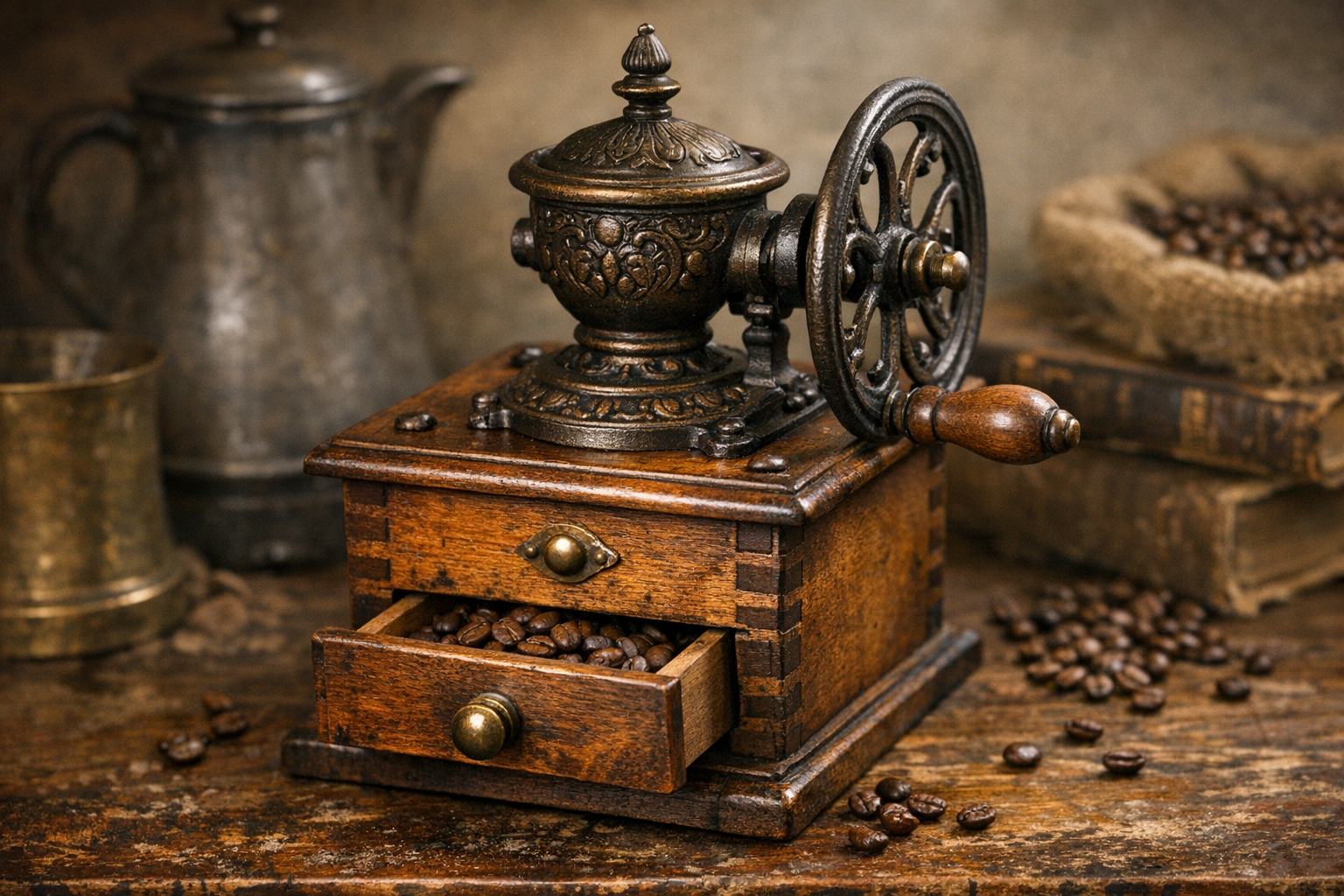
Manufacturer Marks and Patents
Most reputable manufacturers marked their products in some way:
- Check the underside or back panel for cast or stamped maker’s marks
- Look for patent dates or numbers which can help establish age
- Research any company names or logos found on the grinder
Design Styles and Time Periods
Coffee grinder designs evolved over time, providing clues to their age:
Coffee Grinder Historical Timeline
- 1750-1850
Early Box Grinders
Simple wooden box designs with metal grinding mechanisms. Often hand-crafted with dovetail joinery and minimal decoration. - 1850-1900
Cast Iron Golden Age
Cast iron became the dominant material. Wall-mounted models gained popularity alongside countertop versions. Ornate designs with company names prominently displayed. - 1900-1930
Commercial Production Era
More standardized designs emerged. Glass hoppers became common features. Art Nouveau and later Art Deco influences appeared in decorative elements. - 1930-1960
Transition Period
Manual grinders began to face competition from electric models. Streamlined designs with less ornamentation. Often featured painted finishes rather than raw materials.
Materials Analysis
Different materials provide clues about origin and age:
- Early wooden models often feature dovetail joinery and hand-carved elements
- Cast iron quality and detailing varies by manufacturer and time period
- Porcelain styles often reflect their country of origin (Delft from Netherlands, etc.)
- Brass components may show different patinas based on age and composition
Construction Details
Examine how the grinder was constructed:
- Hand-forged versus machine-made components
- Types of screws used (slotted screws are typically older)
- Quality of casting on metal parts
- Drawer construction methods
Where to Buy and Sell Antique Coffee Grinders
Online Marketplaces
- eBay: Wide selection ranging from affordable to high-end models
- 1stDibs: Specializes in premium antiques with verified dealers
- Etsy: Good source for mid-range vintage grinders
- LiveAuctioneers: Access to auction houses worldwide
Physical Locations
- Antique shops and malls
- Estate sales and auctions
- Flea markets and vintage shows
- Specialized kitchenware dealers
Collector Communities
- Coffee grinder collector clubs and forums
- Kitchen antique collecting groups
- Social media communities focused on vintage kitchenware
Tips for Buying Antique Coffee Grinders
Attribution review Considerations
Before investing in a potentially valuable antique coffee grinder:
- Research the specific model and manufacturer
- Examine for signs of reproduction (too perfect, inconsistent aging)
- Verify all components are original, not replacements
- Ask for provenance documentation when available
Condition Assessment
Thoroughly check the grinder’s condition:
- Test the grinding mechanism if possible
- Examine for hidden cracks or repairs
- Check for replacement parts that don’t match the original design
- Assess the finish for inappropriate restoration
Value for Investment
Consider these factors when evaluating price:
- Compare to similar models recently sold
- Factor in any needed restoration costs
- Consider display potential versus functional use
- Evaluate rarity in the current market
Caring for Your Antique Coffee Grinder
Cleaning and Maintenance
- Clean wooden components with minimal moisture using appropriate wood cleaners
- Remove dust and debris from metal parts without harsh chemicals
- Lightly oil moving parts with food-safe mineral oil
- Store in stable temperature and humidity conditions
Restoration Considerations
- Minimal intervention is generally preferred by collectors
- Consider professional restoration for valuable pieces
- Document any restoration work performed
- Preserve original finishes whenever possible
Display and Usage
- Protect from direct sunlight to prevent fading
- Consider whether to use functionally or keep as display only
- Create appropriate display settings that highlight craftsmanship
- Rotate moving parts occasionally if the grinder is not being used
Common Questions About Antique Coffee Grinder Values
Are antique coffee grinders good to use?
How do I clean an antique coffee grinder?
Clean carefully to preserve value:
- Disassemble components that are designed to come apart
- Use soft brushes to remove loose debris
- Wipe wooden parts with a barely damp cloth and mild wood cleaner
- Clean metal parts with a soft cloth, avoiding harsh chemicals
- For buildup in the grinding mechanism, use a stiff brush
- Apply food-grade mineral oil to moving metal parts after cleaning
- Never submerge wooden grinders in water
Avoid aggressive cleaning methods that could damage original finishes.
What makes a coffee grinder expensive?
Several factors contribute to higher prices:
- Rarity: Limited production models or those from smaller manufacturers
- Age: Generally, older grinders (19th century) command higher prices
- Condition: Working mechanisms and original finishes significantly increase value
- Brand: Prestigious manufacturers like Enterprise or Arcade have collector followings
- Historical significance: Models that represent innovations or cultural milestones
- Materials: Quality materials and craftsmanship, especially fine woods or ornate cast iron
- Provenance: Documented history of ownership or interesting backstory
The combination of these factors determines a grinder’s market value.
How much does an Enterprise coffee grinder value range?
Enterprise coffee grinders are among the most valuable collectibles in this category. Depending on the specific model, condition, and completeness:
- Basic models in fair condition: the entry point
- Good condition with working mechanism: a clear step up
- Rare models or exceptional condition: the strongest prices
The larger commercial models and those with complete original components and finishes command the highest prices. Enterprise Manufacturing Company’s reputation for quality makes their grinders particularly desirable to serious collectors.
How do you date an antique coffee grinder?
Dating methods include:
- Patent dates: Look for patent dates stamped or cast into the grinder
- Manufacturer marks: Research when the company operated or when specific logos were used
- Construction techniques: Dovetail joints, screw types, and casting methods evolved over time
- Design elements: Artistic styles like Victorian, Art Nouveau, or Art Deco help date the era
- Materials: Certain materials or finishes were popular in specific periods
- Catalog research: Compare to manufacturer catalogs from different periods
Combining multiple dating methods provides the most accurate age assessment.
Are Antique Coffee Grinders Worth Collecting?
Historical Significance
Antique coffee grinders provide tangible connections to daily life throughout different historical periods. They showcase the evolution of:
- Domestic technology and innovation
- Materials and manufacturing techniques
- Coffee culture and consumption patterns
- Design aesthetics across different eras
Decorative Appeal
Many collectors appreciate these items for their visual and decorative qualities:
- Ornate cast iron designs serve as conversation pieces
- Wooden models complement various interior design styles
- The warm patina of aged metals and woods adds character
- Their functional design showcases practical engineering aesthetics
Market Context
While collectibles should never be the core of an investment strategy, quality antique coffee grinders have shown steady appreciation over time:
- Rare models from prestigious manufacturers consistently increase in value
- Condition remains paramount in determining investment quality
- The limited supply of documented periods supports price stability
- Growing interest in coffee culture has expanded the collector base
External Resources for Antique Coffee Grinder Collectors
eBay Collectible Antique Coffee Grinders
Browse available antique coffee grinders for sale with current market prices and extensive listings of various models and conditions.
1stDibs Antique Coffee Grinder Collection
Explore premium antique coffee grinders from verified dealers, including detailed descriptions and attribution review information.
LoveToKnow: Determining Value of Antique Coffee Grinders
Comprehensive guide to understanding factors that affect antique coffee grinder valuation and identification.
Carter's Price Guide: Vintage Coffee Grinders
Research database with auction results for vintage coffee grinders, including realized prices and condition information.
LiveAuctioneers: Coffee & Spice Grinders
Live auction platform featuring antique coffee grinders from auction houses worldwide with bidding options.
Conclusion
Antique coffee grinders represent a fascinating intersection of functional design, craftsmanship, and cultural history. Whether you’re drawn to their mechanical ingenuity, artistic beauty, or historical significance, these charming artifacts continue to captivate collectors and casual enthusiasts alike.
Values range widely, from affordable entry-level models to valuable museum-quality specimens. The key factors determining worth—manufacturer, age, condition, rarity, and materials—provide a framework for assessing any vintage grinder you might encounter.
As with any collectible, education remains your best tool for making informed decisions. By understanding what makes these items valuable, you can better appreciate their worth beyond just monetary terms—as tangible connections to the rich history of coffee culture and domestic life.
Whether you’re a serious collector or simply curious about that old coffee grinder in your attic, we hope this guide has provided valuable insights into the world of antique coffee grinder valuation and collecting.
What similar items actually sold for
To help ground this guide in real market activity, here are recent example auction comps from Appraisily’s internal database. These matched sales are market context only, not an object estimate or identification, and they do not guarantee a price for your specific coffee grinder.
Shown USD range: USD 12-USD 409. Median of these 8 USD examples: USD 112.50.
| Comparable | What sold | Auction house | Date | Lot | Source-reported amount |
|---|---|---|---|---|---|
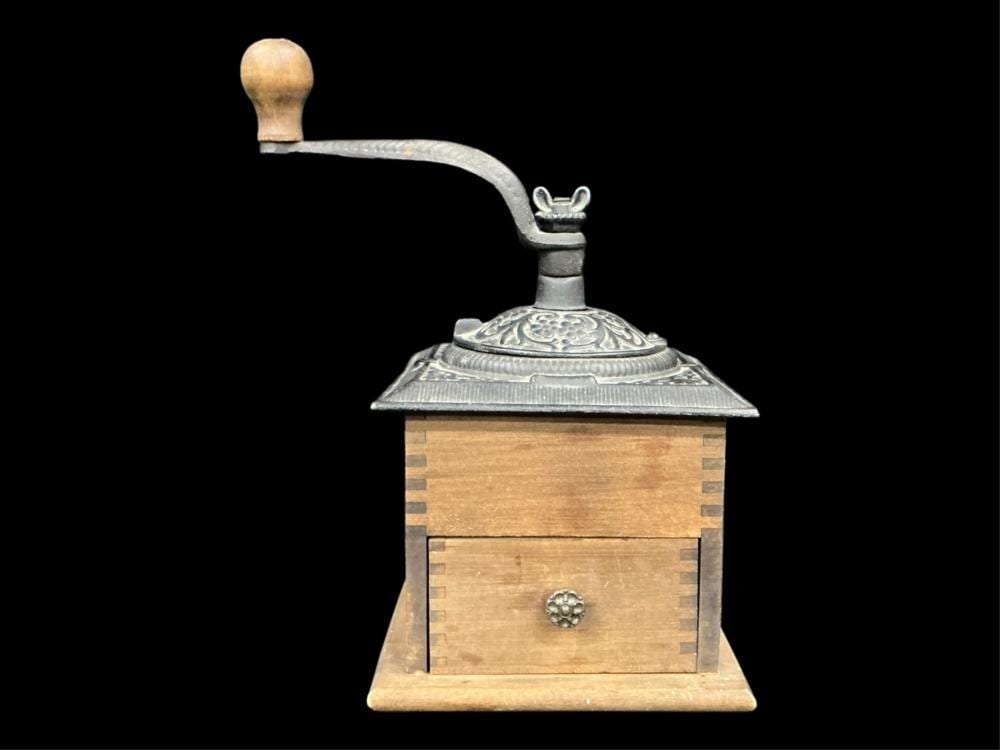 |
Vintage Coffee Grinder | Caswell Prewitt Realty, INC | 2025-12-07 | 369 | USD 55 |
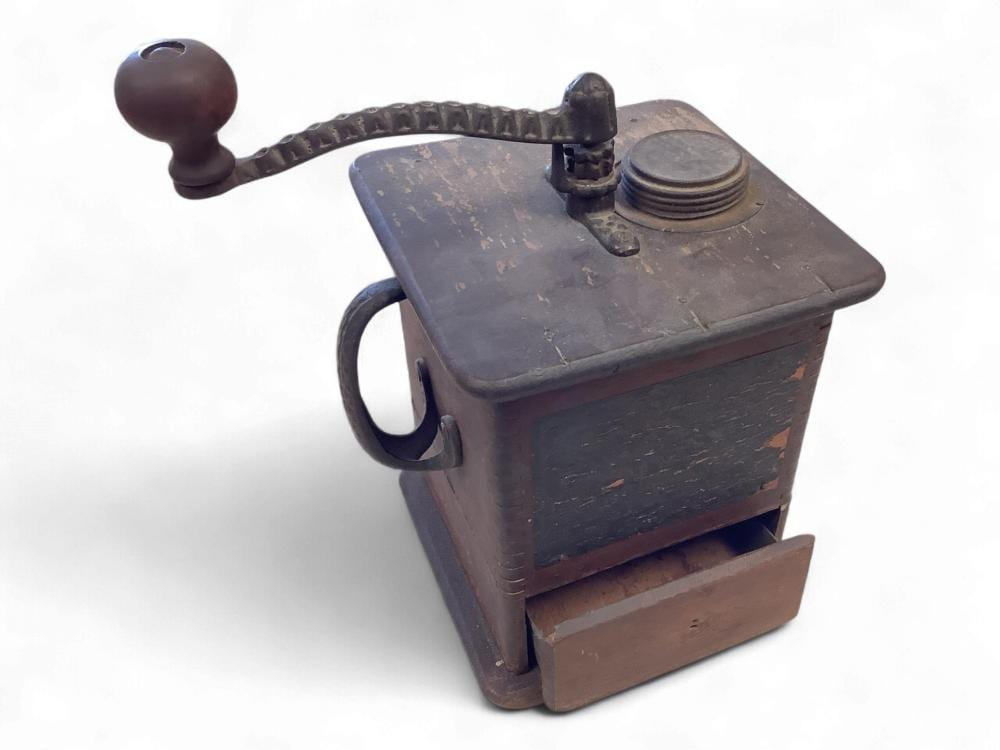 |
Antique Coffee Grinder | Apple Tree Auction Center | 2025-12-01 | 61 | USD 12 |
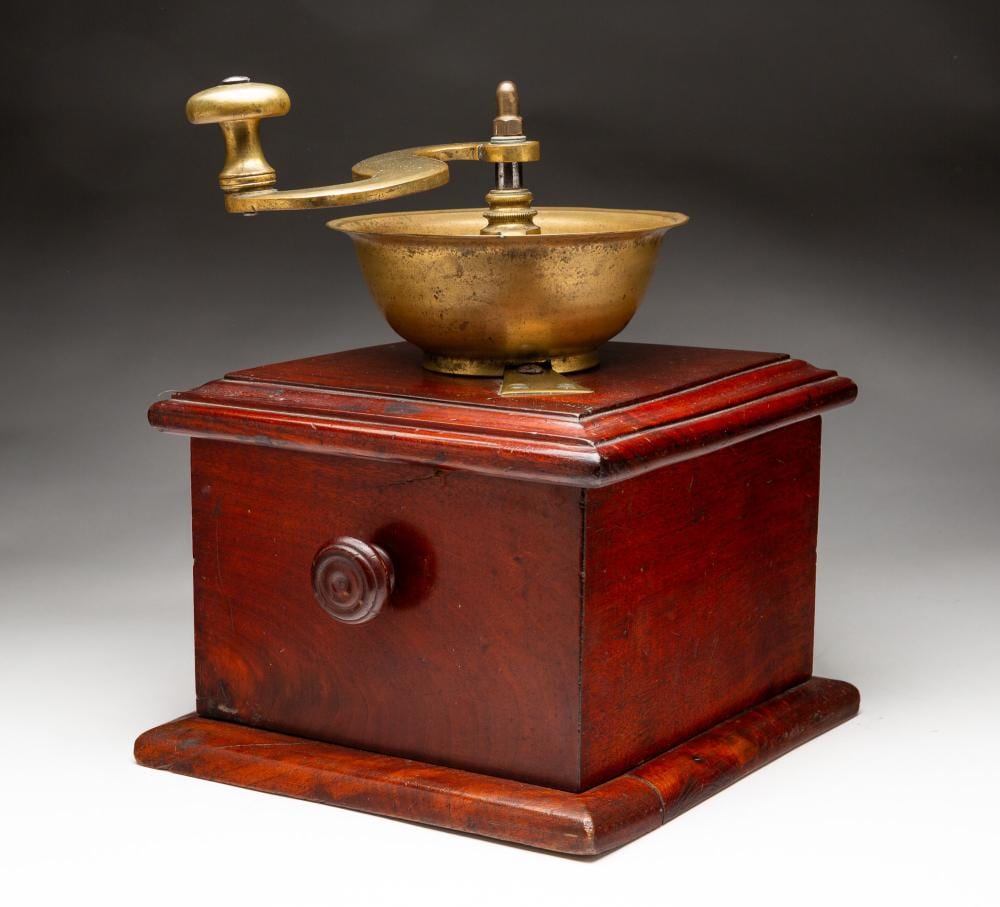 |
TABLETOP COFFEE GRINDER. | Amelia Jeffers | 2025-04-25 | 363 | USD 100 |
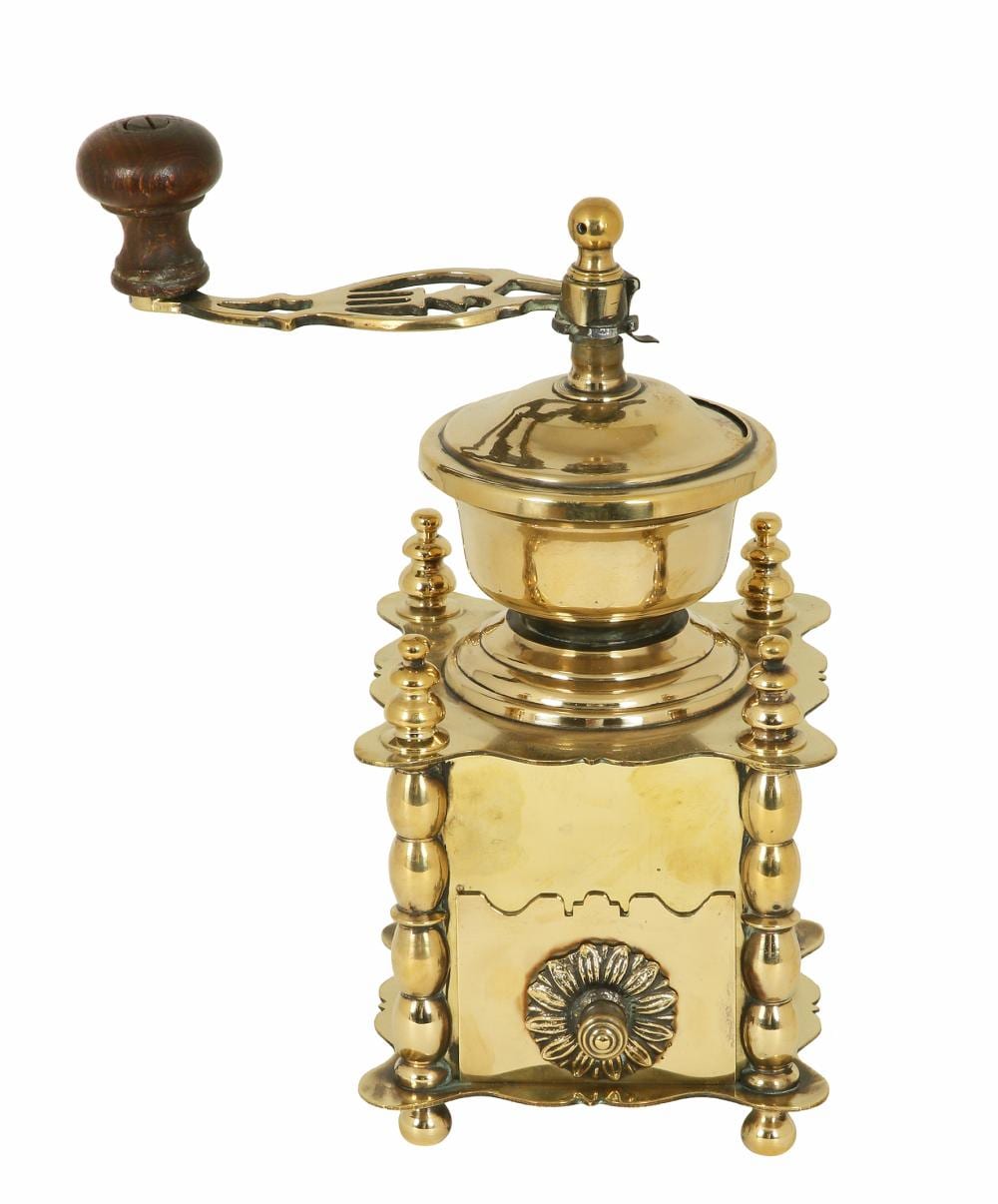 |
ANTIQUE COFFEE GRINDER | Tiroche Auction House | 2024-09-23 | 824 | USD 180 |
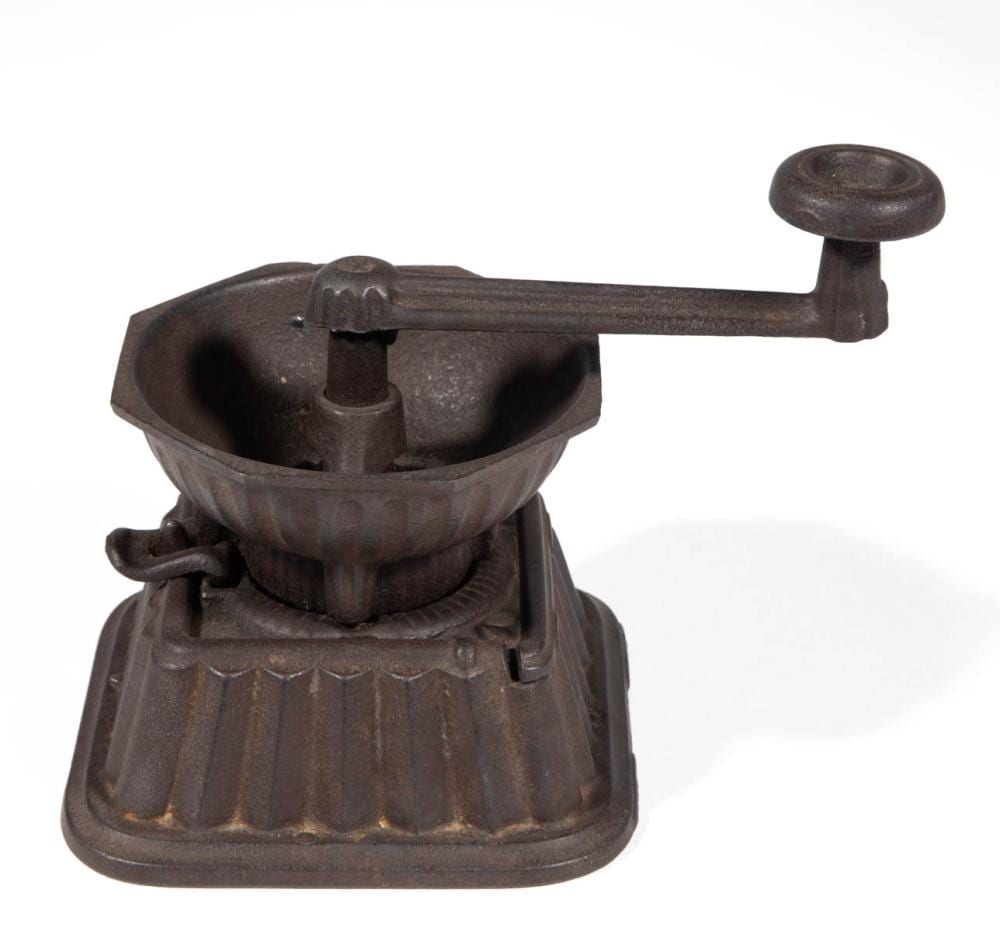 |
RUSSELL-ERWIN DIAMOND CAST-IRON TABLE-TOP BOX COFFEE MILL / GRINDER | Jeffrey S. Evans & Associates | 2020-02-29 | 1203 | USD 409 |
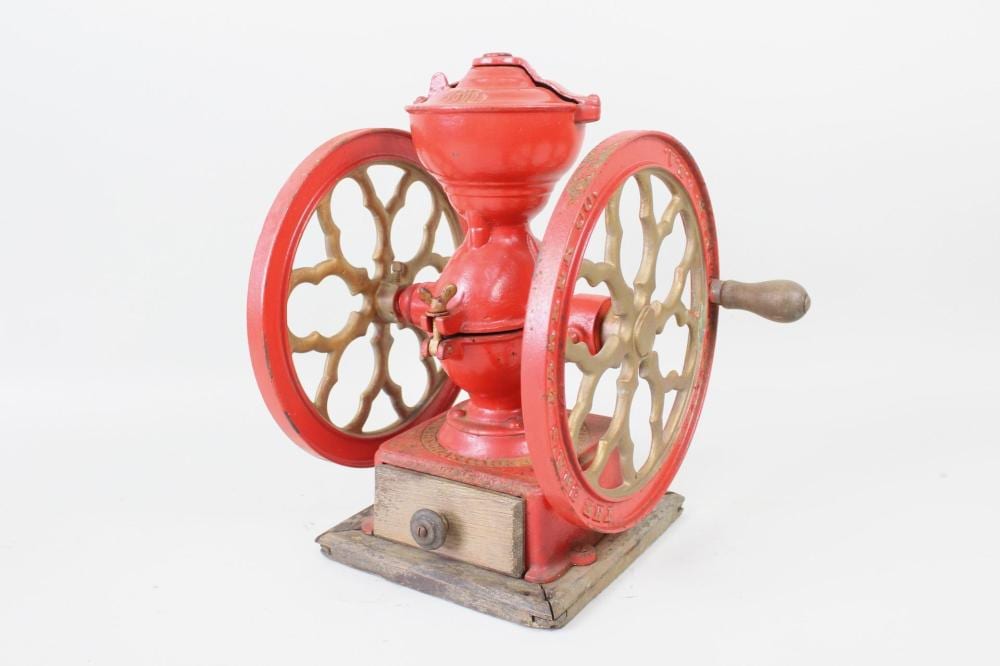 |
Cast Iron Coffee Grinder, Chas Parkers | Public Sale Auction House | 2025-02-01 | 547 | USD 200 |
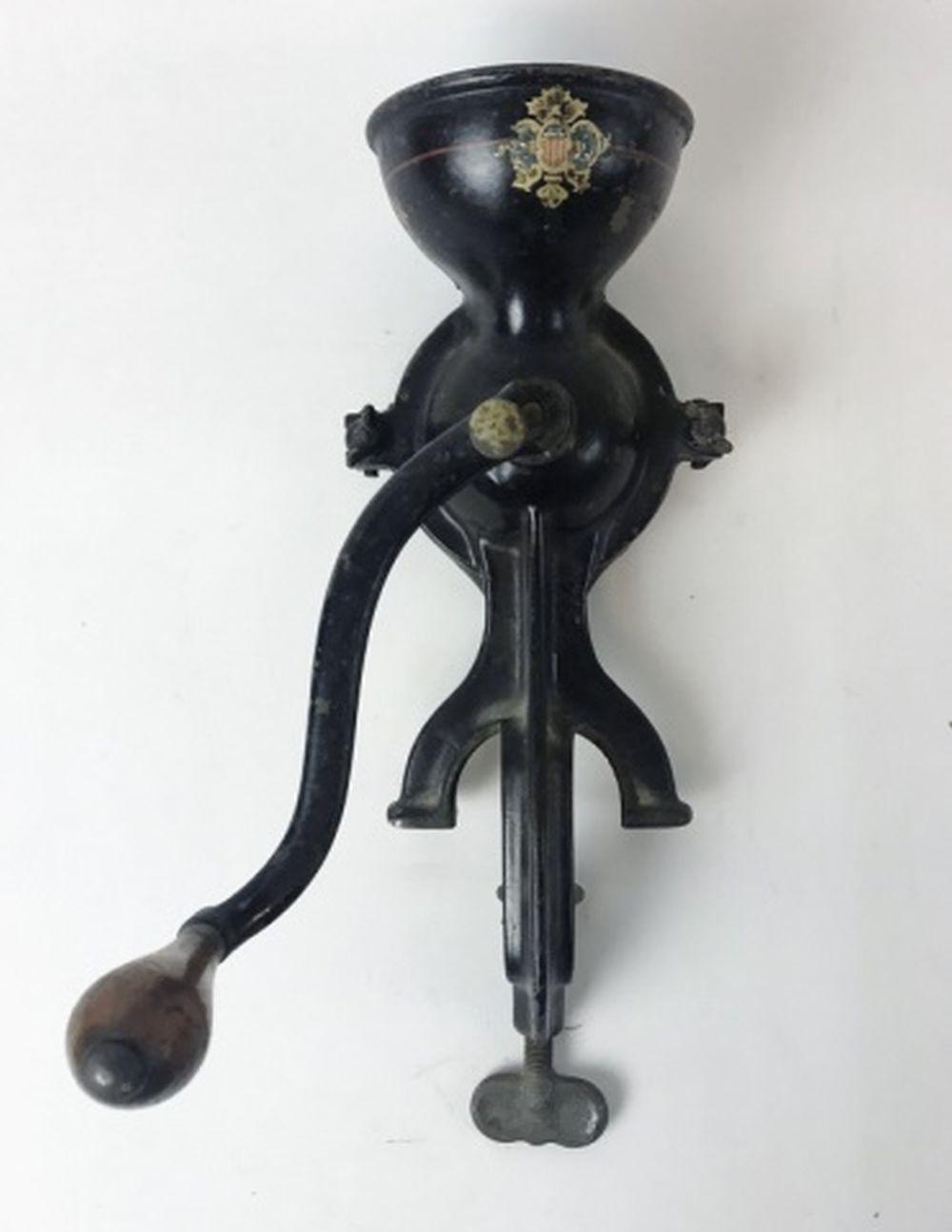 |
Antique Coffee Grinder, Enterprise No. 0 | J. James Auctioneers and Appraisers | 2021-02-06 | 91 | USD 125 |
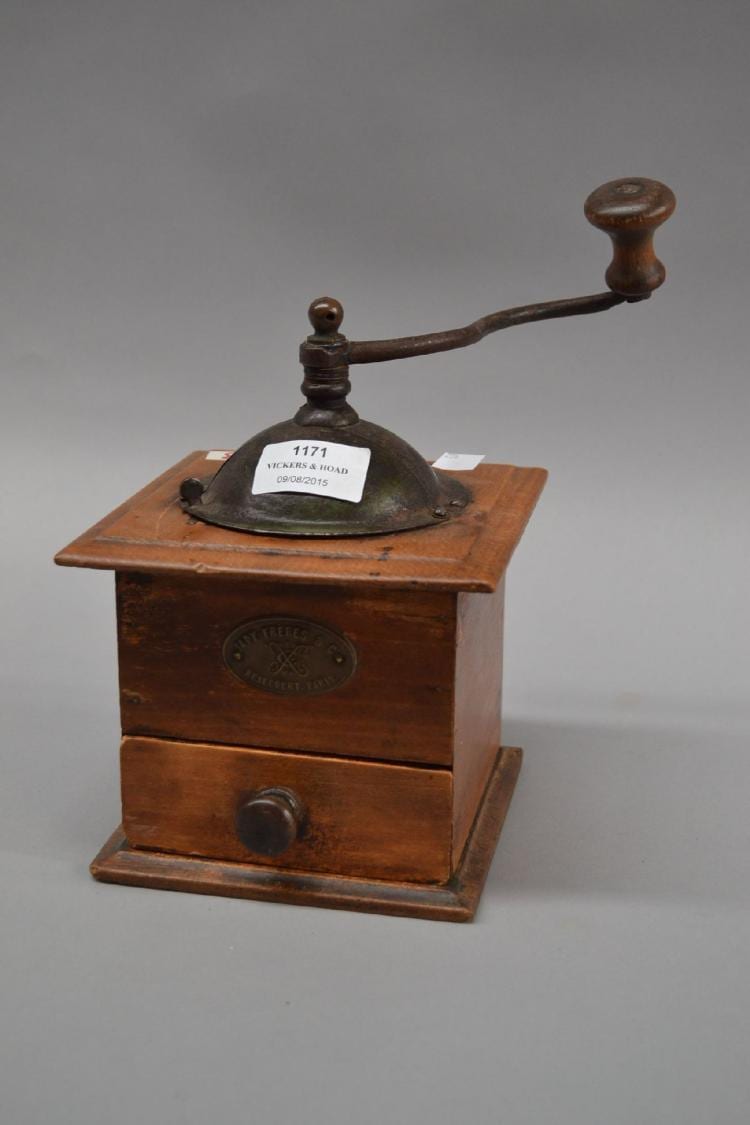 |
French Japy Freres coffee grinder | Vickers & Hoad | 2015-08-09 | 1171 | AUD 60 |
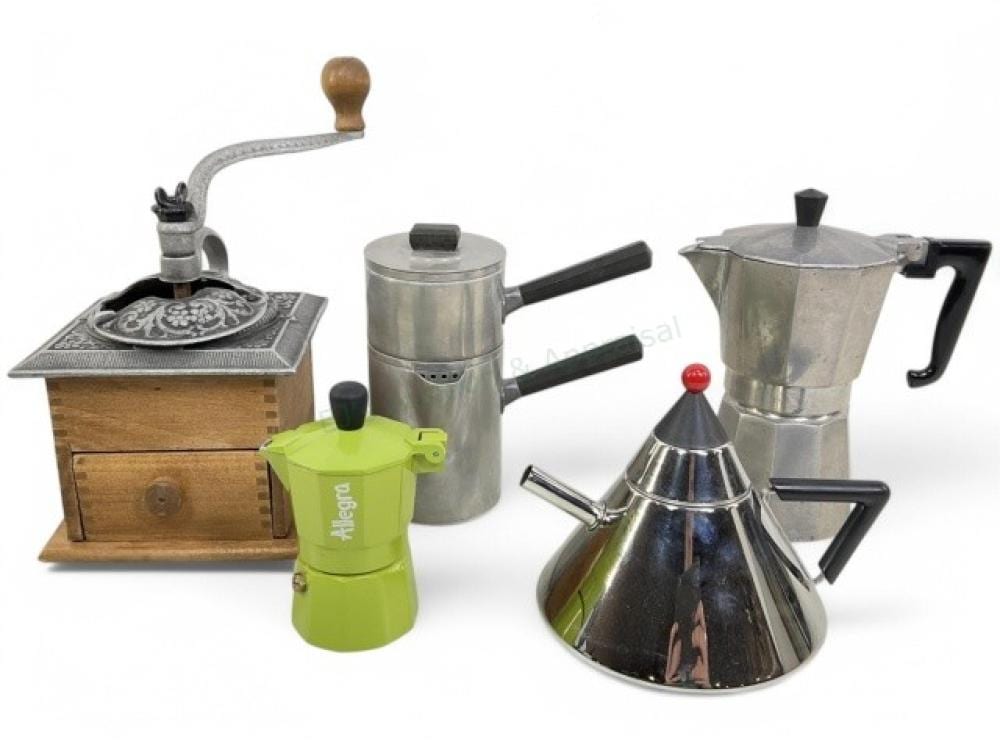 |
(5) Antique Coffee Grinder, Aluminum, Enamel | EJ'S Auction & Appraisal | 2025-04-12 | 3144 | USD 50 |
How these auction records were verified
Each row retains its exact source URL, lot identity, retrieval time, access result, and immutable record hash. Live source access was blocked; the exact record matched Appraisily's immutable pipeline provenance. Inspect the public comparable provenance record.
Free photo check
Not sure if your item is worth appraising? Let us take a look.
Upload a photo, tell us what you know, and get a free photo check. If a full appraisal makes sense, we will say so.
Free. No card needed. Takes about two minutes.
Get a coffee grinder appraised
Upload photos of the grinder, maker marks, hopper, drawer, mechanism, body material, size, condition, and repair notes.
- Signed report with photos and market context
- Delivered within 24 hours of receiving your photos
- Fixed, upfront pricing
No obligation. Secure upload.
Find a local antique or art appraiser
Ready for pricing guidance?
Start a secure online appraisal
Upload images and details. Delivered within 24 hours of receiving your photos.
Upload photos for a free first look View signed report sample