Unveiling the Worth a Collectors Guide to Determining Antique Washboard Value: appraisal and value basics
Unveiling the Worth a Collectors Guide to Determining Antique Washboard Value research should start with identification, condition, provenance, and item-specific market evidence. Use this guide to compare the signals that matter before paying for a formal appraisal or deciding whether to sell.
Antique washboard value checklist
Antique washboards moved from washrooms to walls, evolving from utilitarian tools into collectible objects with crossover appeal: country primitives, advertising, industrial design, and even folk music. Yet prices vary dramatically—from yard-sale staples to triple-digit rarities. This guide breaks down the factors that drive value, how to identify what you have, realistic price ranges, and how to care for and present your piece without killing its market appeal.
A quick primer: what is out there?
Washboard frames are typically softwood (pine) or hardwood (beech, oak, maple) with a corrugated rubbing surface set into a rectangular frame. The surface may be:
- Zinc or galvanized steel: The most common metal faces from the late 19th to mid-20th century. Often gray, with a dull sheen.
- Tin or steel (non-galvanized): Older examples may show deeper pitting and active rust.
- Brass: Warm gold tone, scarce compared to zinc; sought by decorators and collectors.
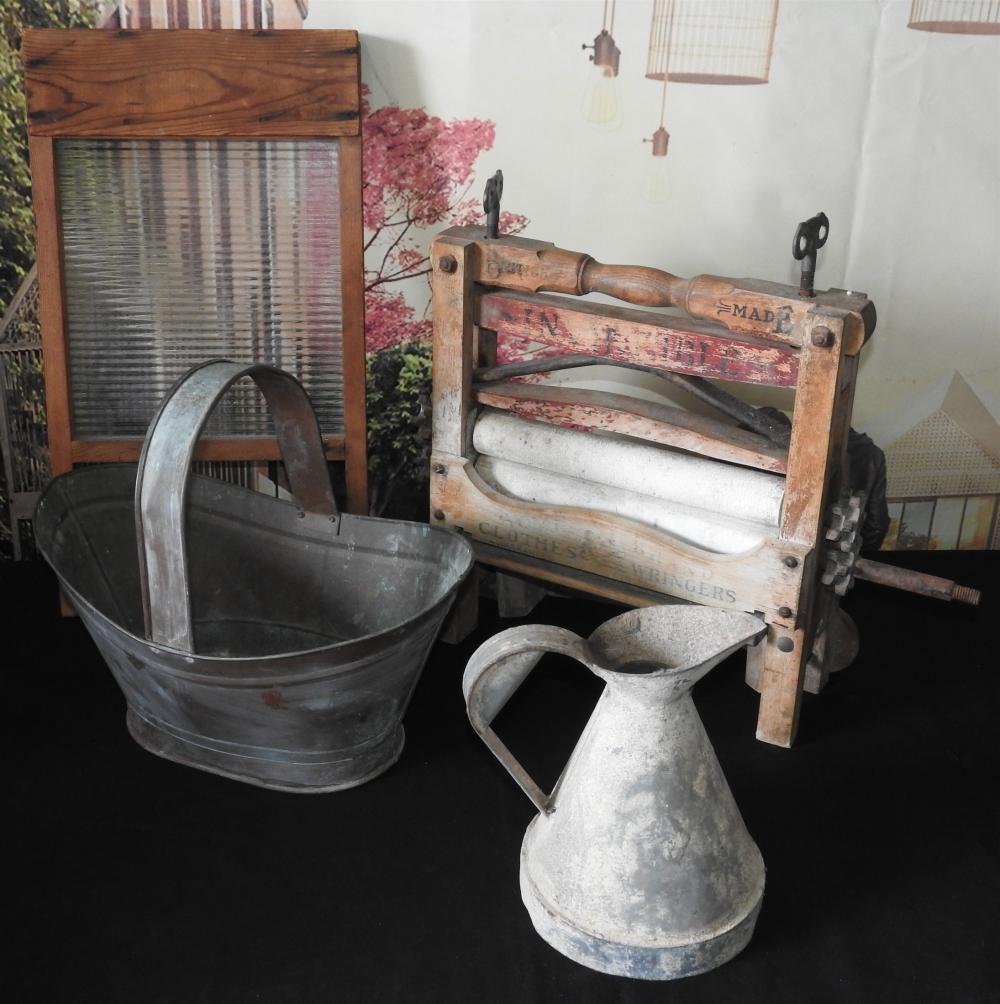
- Glass: Ribbed, translucent panels marketed as sanitary and “won’t rust,” popular from the 1910s–1940s.
- Slate or stone: Earlier 19th-century variants or regional makes; scarce in North America.
Common sizes and forms:
- Standard household: roughly 12–14 inches wide by 22–26 inches tall.
- “Handy” or sink-top: narrower and shorter, around 7–10 inches wide, marketed for lingerie or travel (e.g., DUBL HANDI by Columbus Washboard Co.).
- Jumbo or laundry-tub size: wider/heavier boards for commercial use.
- Double-surface/combo: metal on one side, glass on the other, or reversible frames.
- Miniature/salesman sample: small display pieces; collectible.
Maker and branding:
- National Washboard Co. (Chicago–Memphis) is among the most encountered U.S. names, with model numbers (e.g., No. 801) and stenciled logos.
- Columbus Washboard Company (Ohio, established in 1895) made the popular DUBL HANDI sink-size boards and continues to make new washboards today.
- Many regional producers used trade names like “Zinc King,” “Standard,” or “Universal,” often paired with bold stencils or paper labels. Store-brand boards were common.
Why collectors care:
- Graphic advertising on frames or labels
- Unusual materials (brass, glass), sizes (mini/jumbo), or forms (double-sided, travel)
- Early or regionally distinctive makes
- Great surface and original patina for display
What drives antique washboard value
The best way to price a washboard is to weigh several attributes together. Here’s how experienced appraisers rank them.
- Material
- Zinc/galvanized steel: Entry-level collectible; abundant.
- Glass: Generally brings a premium over zinc, especially with crisp branding.
- Brass: Smaller supply; strong decorator demand.
- Slate/stone or unusual materials: Scarcer; can command higher prices if documented.
- Maker and branding
- Recognizable names, clear stencils, and model numbers help value. Strong examples include National Washboard Co. boards with bold graphics and Columbus’ DUBL HANDI in clean condition.
- Trade or store brands with charismatic typography, litho labels, or quirky slogans punch above their weight.
- Advertising graphics
- High-contrast stenciling or intact paper labels add a condition-specific range depending on strength and rarity.
- Regional or bilingual ads (e.g., French/English in Canada) can lift prices.
- Age and originality
- Earlier boards (late 1800s–early 1900s) can be valuable, especially if material and branding align with period features.
- Original hardware (slotted screws, early nails), unaltered glass/metal panels, and untouched finish elevate value.
- Condition
- Wood: look for splits, warping, dryness, or rot.
- Metal: light, even oxidation is fine; deep pitting, sharp edges, or perforation reduce value.
- Glass: chips along edges, cracks, or fogging matter; intact glass is key.
- Over-cleaning, sanded graphics, or heavy varnish can slash value.
- Size and form
- Travel/sink-top and jumbo/commercial boards are scarcer than standard. Miniatures/salesman samples are especially collectible.
- Double-surface boards attract interest.
- Rarity and regionality
- Boards from short-lived local makers or with uncommon slogans can surprise at auction.
- Some country-store advertising themes outperform generic laundry claims.
- Provenance and completeness
- Remnants of original paper labels, factory tags, or store stamps help.
- Original hangers or integrated soap shelves are bonuses.
- Cross-collecting and displayability
- Strong graphics, warm patina, and proportionate form make for great wall pieces—often pushing prices beyond utilitarian examples.
- Musicians sometimes seek glass or metal boards; modifications (bells, frames, add-ons) may help or hurt, depending on buyer.
- Market temperature and venue
- Urban decorators and design-forward venues pay more for clean brass/glass examples than rural flea markets.
- Prices fluctuate; the ranges below are typical in the 2020s, not promises.
Pricing benchmarks: realistic ranges in today’s market
Use these as ballparks for un-restored, honest examples. Exceptional advertising, uncommon sizes, and mint condition can shift prices sharply upward.
Common zinc/galvanized washboards (standard size, partial or light stenciling): a value that must be established from current, topic-matched sales
Clean zinc boards with strong branding or regional ads: a value that must be established from current, topic-matched sales
Glass washboards (standard size, intact glass, clear logos): a value that must be established from current, topic-matched sales Premium examples with bold stenciling or unusual rib patterns: up to a value that must be established from current, topic-matched sales
Brass-faced washboards: a value that must be established from current, topic-matched sales Outstanding advertising or decorator-grade condition: up to a value that must be established from current, topic-matched sales
Travel/sink-top size (e.g., DUBL HANDI) with clear stamps: a value that must be established from current, topic-matched sales Early, minty, or with original retail tags: a value that must be established from current, topic-matched sales
Jumbo/commercial or double-surface forms: a value that must be established from current, topic-matched sales+ Strong advertising or scarce makers can exceed a value that must be established from current, topic-matched sales
Miniature/salesman sample washboards: a value that must be established from current, topic-matched sales+
Early 19th-century or regionally rare materials (documented slate/stone, unusual constructions): a value that must be established from current, topic-matched sales+, depending on proof of age and originality
New old stock (NOS) with intact paper tags and unblemished surfaces: a value that must be established from current, topic-matched sales skewing higher for glass or brass
Caveat: Modern Columbus boards and decor reproductions are widely available. These typically trade at new-retail or sub-retail used prices and should not be confused with antiques.
How to evaluate yours: a step-by-step approach
- Measure and note form
- Width and height; identify if sink-top, standard, jumbo, or miniature.
- Look for double-sided or combination surfaces.
- Identify material
- Metal (zinc/galvanized vs tin/steel vs brass): examine tone and oxidation. Brass is golden; zinc is gray.
- Glass: ribbed, translucent panel; check for edge chips and cracks.
- Stone/slate: dense, matte, and cold; inspect for delamination or repairs.
- Read every mark
- Stenciled names (e.g., National Washboard Co., model numbers like No. 801).
- Trade names (“Zinc King,” “DUBL HANDI”) and slogans.
- Paper remnants, store labels, or patent dates. Patent dates around 1890–1920 are common on early mass-produced boards.
- Inspect construction and hardware
- Screws: slotted heads are earlier; Phillips-head screws are generally mid-20th century or later.
- Nails: wire nails dominate after late 19th century; square nails suggest early repairs or older frames (be wary—nails can be swapped).
- Glass seat and panel fit: original set glass sits snugly; sloppy caulk or shiny modern fasteners may indicate replacement.
- Evaluate condition honestly
- Wood: look for cracks at joints, loose rails, or warp. Lift gently—frames can fail if dried out.
- Metal: check for perforations, knife-sharp ridges, or active flaking rust.
- Glass: run a fingernail along edges for chips; tiny flea-bites are acceptable, cracks are not.
- Consider originality and surface
- Faded stenciling is preferable to sanded/over-varnished wood. Over-restored boards lose character and value.
- Accept light, even wear; it confirms originality.
- Place it in a tier
- Tier 1 (decorator/entry): common zinc, partial stencil, good display: a value that must be established from current, topic-matched sales.
- Tier 2 (collectible): glass or branded zinc/brass in clean shape: a value that must be established from current, topic-matched sales.
- Tier 3 (desirable): strong advertising, uncommon size/form, excellent condition: a value that must be established from current, topic-matched sales.
- Tier 4 (scarce/exceptional): rare material/form, mint branding, or documented provenance: a value that must be established from current, topic-matched sales.
Practical checklist: 5-minute value estimate
- Measure: note width/height and form (sink-top/standard/jumbo/mini).
- Material: zinc, glass, brass, or other? Confirm by look and feel.
- Branding: record all stencils/labels, maker, model numbers.
- Condition snapshot: chips (glass), rust perforation (metal), cracks/warp (wood), over-finish?
- Originality cues: slotted vs Phillips screws, replaced panel or frame parts?
- X-factor: strong advertising, unusual size/form, regional slogans?
- Tier and range: place into Tier 1–4 above for a quick valuation bracket.
Care, cleaning, and display without harming value
- Dry clean first: use a soft brush or microfiber to lift dust.
- Metal faces: if needed, a light pass with 0000 steel wool and a few drops of light oil can stabilize superficial oxidation on zinc or steel; stop if the surface brightens unevenly or removes patina. Brass can be gently wiped, but avoid polishing to a mirror finish—collectors prefer mellow tone.
- Glass faces: wipe with a barely damp cloth; avoid soaking the wood frame.
- Wood frames: do not sand. A thin application of a conservation-grade microcrystalline wax can feed dry wood and enhance legibility without glossing.
- Avoid water and harsh cleaners; moisture can swell joints and lift graphics.
- Display: hang from the frame, not by the panel; use padded hooks. Keep out of direct sun to preserve stenciling and labels.
- Storage: vertical, with supports that don’t press on the panel; stable humidity to prevent warp.
Spotting reproductions and over-restorations
- Too-perfect graphics: high-contrast, modern-font stencils on freshly cut wood with no edge wear are suspect. New boards often mimic vintage slogans.
- Modern fasteners: shiny Phillips screws and staples are a sign of recent manufacture or repairs.
- Barcodes or modern country-of-origin stickers: contemporary decor, not antique.
- Faux patina: uniformly darkened wood with sanded “wear spots” and no grime in crevices is a red flag.
- Replacement panels: bright, ripple-free glass or perfectly shiny metal paired with a heavily worn frame suggests swapped parts; value accordingly.
Note: Columbus Washboard Company still produces new washboards, including DUBL HANDI models. These are quality items but not antiques; their value follows contemporary retail, not collector pricing for early examples.
When to seek a formal appraisal
- You suspect an early 19th-century example (e.g., stone/slate or hand-worked frames).
- You have an exceptional advertising board in unusually fine condition.
- There is documented provenance (store ledger, family history, or factory paperwork).
- You’re insuring a collection or planning to sell a group at once.
A written appraisal can establish replacement value and provide authoritative descriptions for insurance or estate purposes.
FAQ
Q: How can I tell how old my washboard is? A: Combine clues: maker/model marks, patent dates, material, and hardware. Slotted screws and crisper, early stenciling often indicate pre-1940 production. Glass panels surge in popularity after the 1910s. Documentation or period catalogs help narrow dates further.
Q: Should I remove rust or polish the metal? A: Stabilize, don’t strip. Lightly reduce active rust with 0000 steel wool and oil, then wipe dry. Avoid aggressive sanding, wire wheels, or bright polishing, which lowers value by erasing original surface.
Q: Are musician-modified boards worth more? A: It depends. Add-ons (bells, frames, thimble wear) can interest performers but may deter antique purists. Clean, unmodified boards with great graphics are usually more broadly valuable.
Q: My board looks old but has very sharp, clean stencil edges. Is it a reproduction? A: Possibly. Look for modern staples/screws, fresh wood smell, barcodes, or contemporary country-of-origin stickers. Uniform “factory” distressing with no dirt in joints is another giveaway.
Q: What’s the most valuable type? A: Scarce forms (miniature/salesman samples, jumbo commercial), brass or glass with exceptional advertising, and early or regionally rare boards in excellent, original condition tend to bring the highest prices.
Bottom line: Value comes from a stack of specifics—material, maker, advertising, condition, and rarity—plus honest surfaces that show age without abuse. Use the checklist to bracket your piece, compare to the ranges, and lean on professional appraisal for outliers. Whether you’re buying for display or building a focused collection, the best examples pair punchy graphics with original, well-preserved parts.