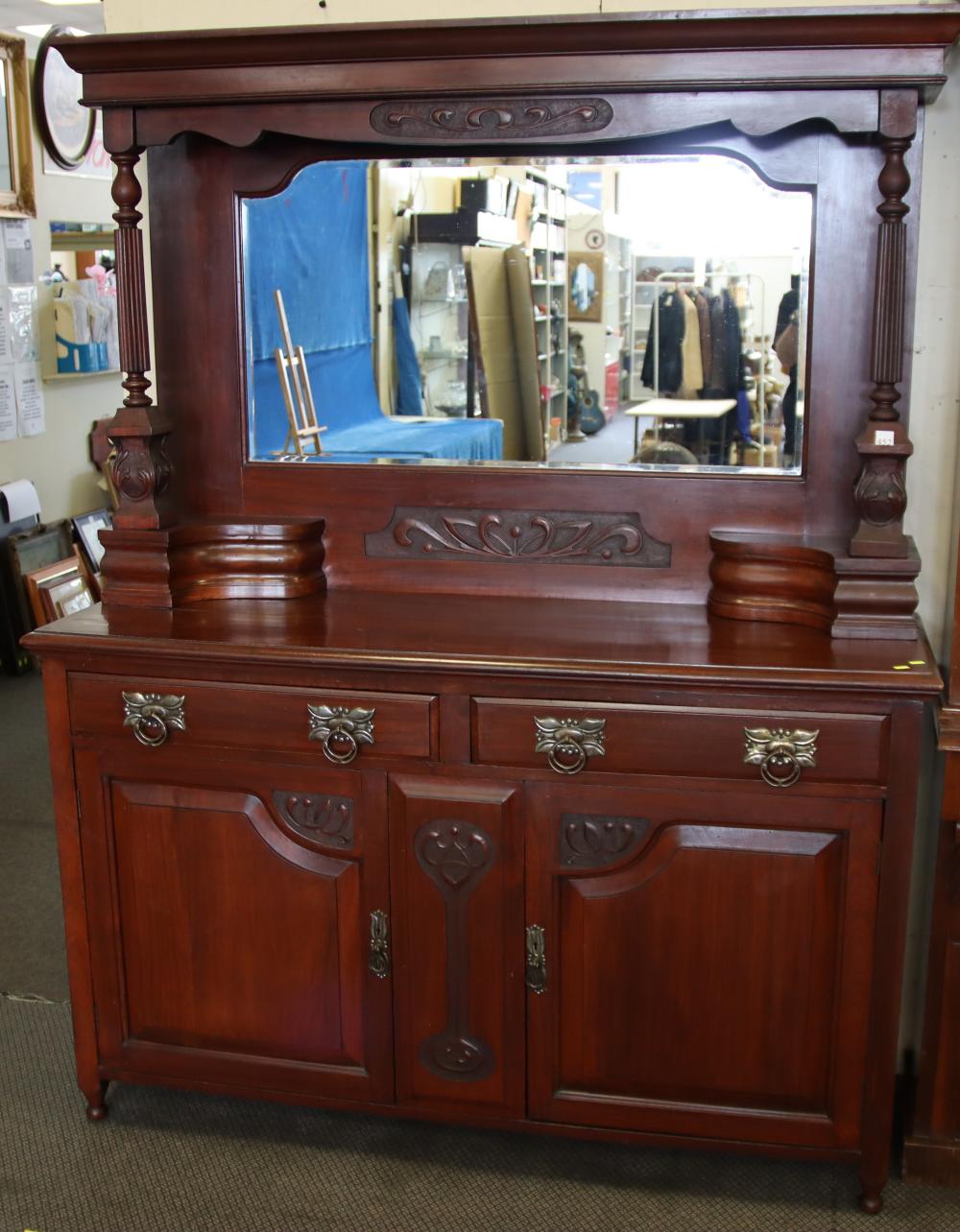
Unlocking the Worth of Your Treasured Heirloom How to Determine the Value of an Antique Sideboard with Mirror: appraisal and value basics
Unlocking the Worth of Your Treasured Heirloom How to Determine the Value of an Antique Sideboard with Mirror research should start with identification, condition, provenance, and item-specific market evidence. Use this guide to compare the signals that matter before paying for a formal appraisal or deciding whether to sell.
Antique sideboard with mirror appraisal checklist
Antique sideboards with mirrors—often called buffets with mirrored backs, mirrored sideboards, or backboards—command attention in a room and on the market. They were the showpieces of late 19th- and early 20th-century dining rooms, delivering storage, display, and a reflective flourish designed to amplify candlelight or gaslight. Determining their value requires more than a quick glance at size and wood. The best results come from an ordered process: identify the era and maker, verify materials and construction, grade condition and originality, and then triangulate fair market value with market evidence relevant to your region and the piece’s style.
Below, you’ll find a clear, step-by-step framework tailored to the mirrored sideboard specifically, including what details appraisers notice first, common pitfalls, and how restoration choices affect value.
What You’re Looking At: Styles, Eras, And Forms
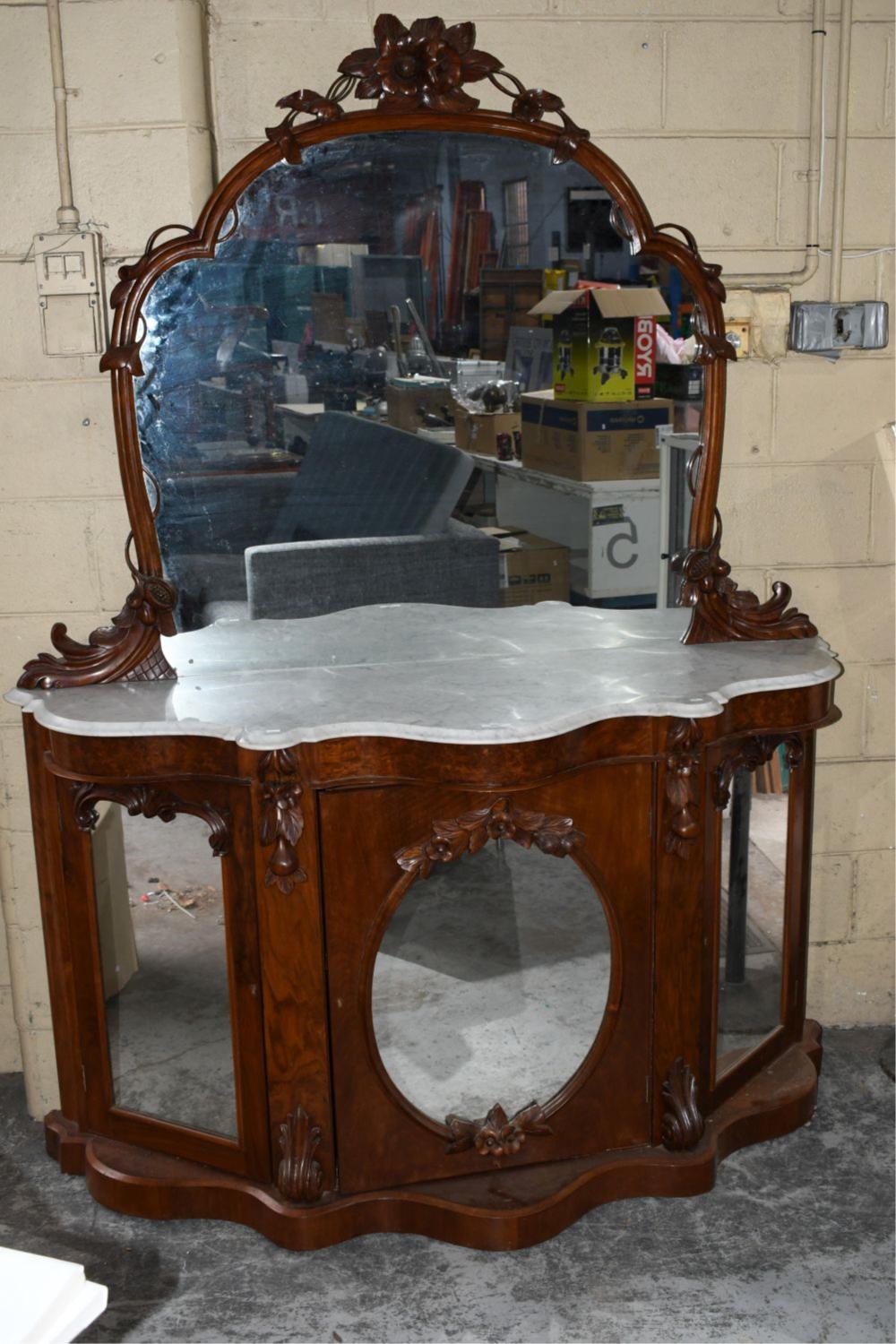
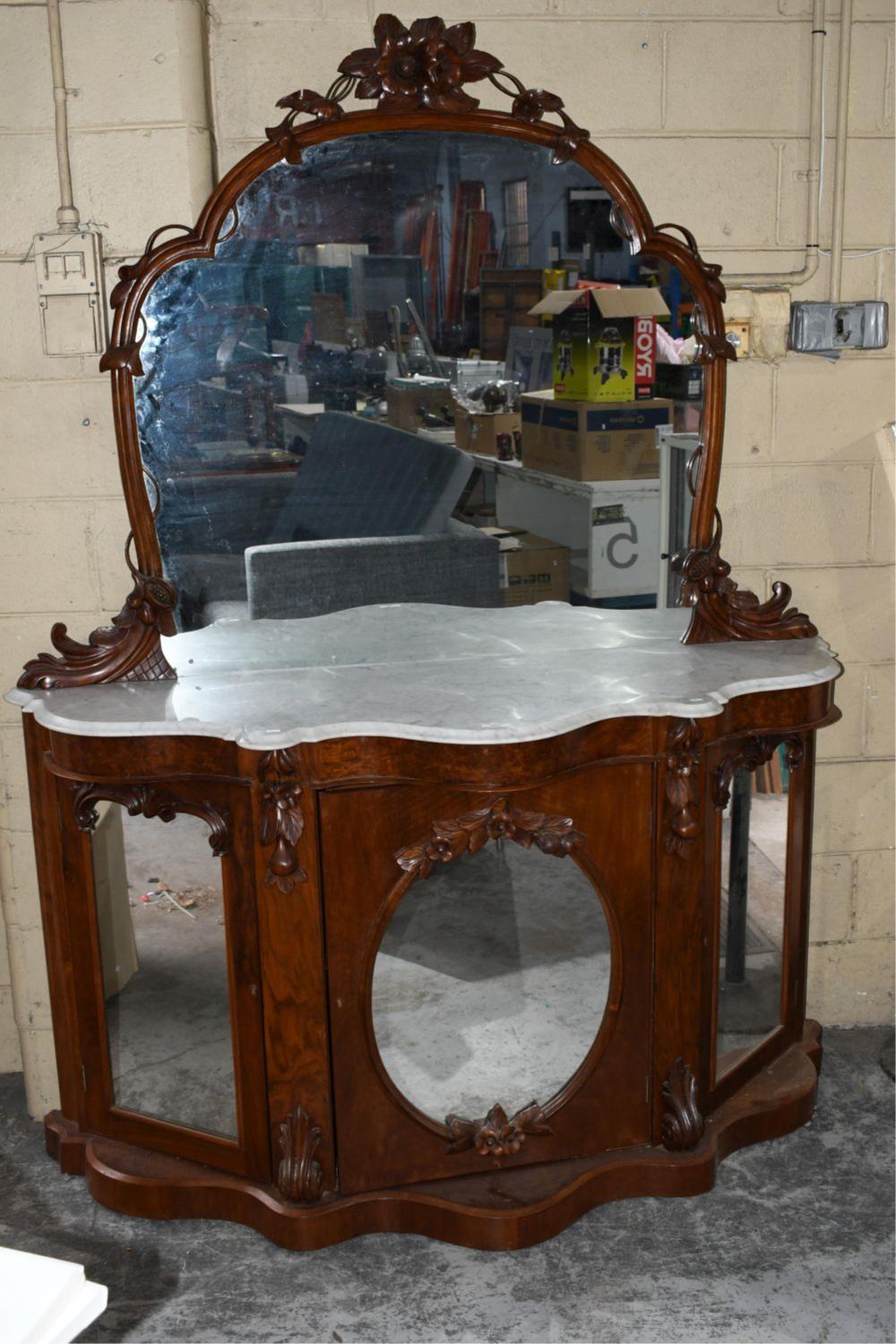
While sideboards existed long before mirrors, the high mirrored “backboard” or “gallery” is usually a late Victorian to early 20th-century feature. Understanding the stylistic vocabulary helps you date and price accurately:
- High Victorian (circa 1870–1890): Often exuberant, with carved crests, cabochons, figural heads, turned galleries, and burl veneers. Woods include walnut, mahogany, and ebonized finishes. Marble tops appear on some.
- Eastlake/Aesthetic (circa 1870s–1880s): Geometric incising, rectilinear profiles, brass hardware, and sometimes ebonized highlights. Less curvaceous than high Victorian.
- Edwardian (circa 1901–1910): Lighter, more restrained. Beveled mirrors, satinwood or mahogany veneers, stringing, and oval or shield motifs. Often with elegant tapered legs on smaller buffet forms.
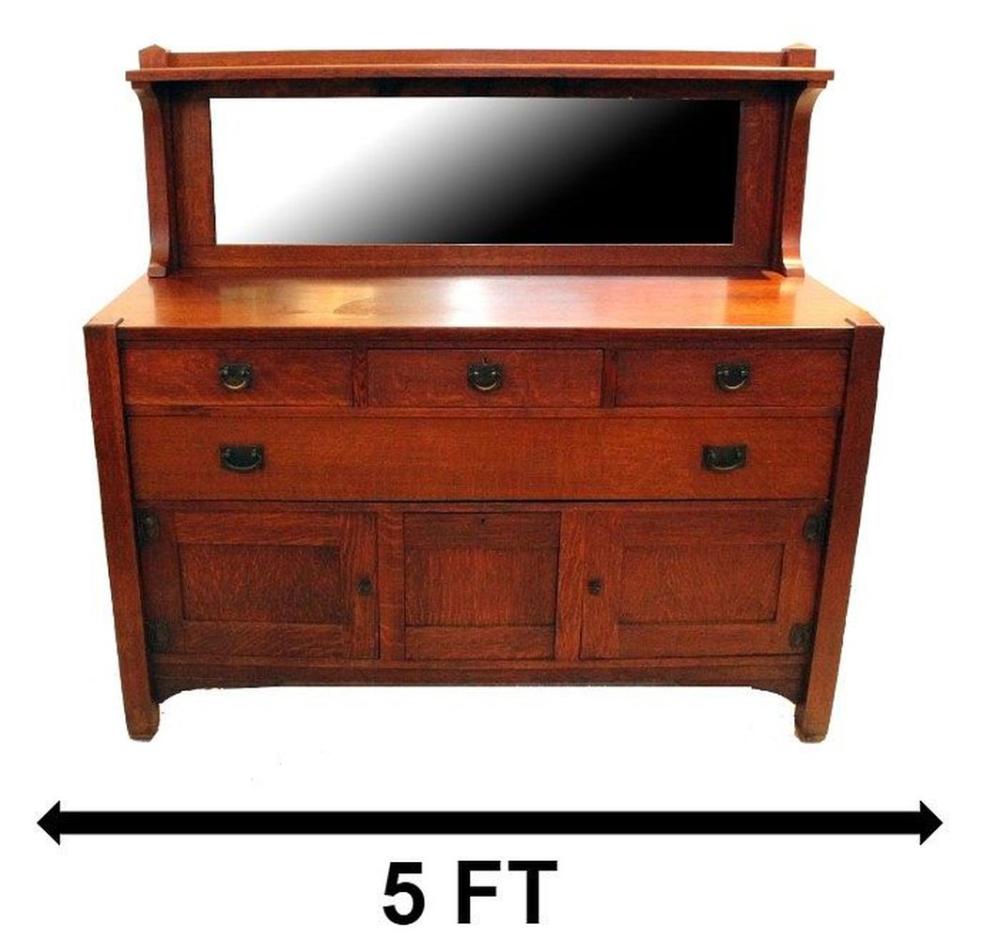
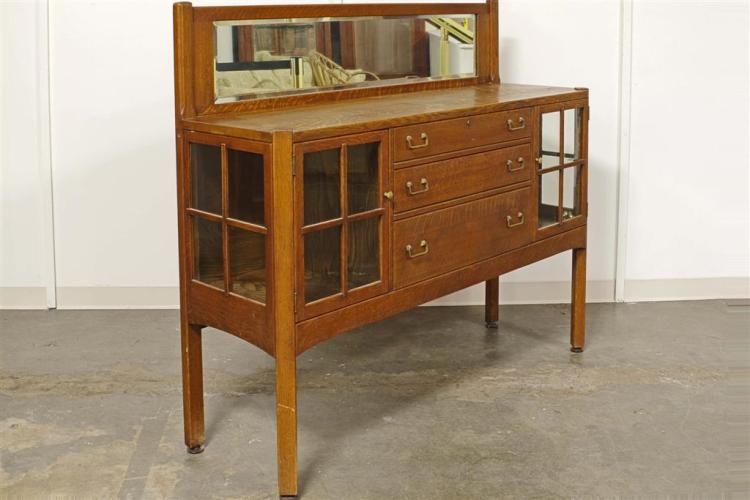
- Arts & Crafts (circa 1890–1915): Simpler construction, visible pegs, light carving, quartersawn oak, exposed joinery. Stands out with honest materials and minimal ornament.
- Art Nouveau (circa 1895–1910): Flowing lines, botanical carvings, organic pediments. Less common in English-speaking markets but notable in Continental pieces.
- Early Art Deco (circa 1920s–1930s): Streamlined, stepped forms, bookmatched veneers, nickel-plated hardware, and large mirrors with minimal carving.
Regional nuances matter. In Britain, you’ll see names like Maple & Co., Waring & Gillow, and Shapland & Petter (often “S&P”). In the U.S., oak “tiger” or quartersawn examples with heavily carved backs proliferated; makers of high-style carved examples include firms such as R. J. Horner and other New York cabinet shops. In Australia and New Zealand, kauri or silky oak and marble-topped backboards are fairly common.
The form also affects value. Monumental, fully integrated backboards with multiple shelves, beveled mirrors, and deep storage base cabinets sit at one end; smaller buffets with a modest mirror splashback sit at the other. High-style, better-than-average carving and veneers typically raise value—if condition and originality align.
Dating And Identifying: Wood, Joinery, Hardware, And Glass
Accurate identification starts with the materials and how they were worked. Appraisers read construction as a timeline:
- Primary woods: Walnut dominates many late Victorian English pieces; mahogany and Cuban mahogany appear in better-quality examples. Quartersawn (tiger) oak is prevalent for Edwardian and American late 19th-century pieces. Satinwood, rosewood veneers, and exotic inlays signal higher style but check for later re-veneer.
- Secondary woods: Inside drawers and unseen panels, you’ll often find pine or poplar in British and American examples; deal in European. Consistency with the period matters—MDF or plywood indicates later alterations.
- Veneer thickness: Thick, hand-laid veneer with visible saw kerf marks is earlier and better. Very thin, machine-cut veneer is later; lifting, bubbling, and sand-through will affect value.
- Joinery: Hand-cut dovetails (irregular pin sizes, slight variation) suggest early to mid-19th century, though careful handwork persisted. Tight, uniform machine dovetails become widespread from the 1870s onward. Mortise-and-tenon frames and drawer bottoms running front-to-back (earlier) versus side-to-side (later) are clues.
- Tool marks: Straight saw kerfs and plane chatter vs. uniform machine milling helps place production era.
- Screws and fasteners: Hand-forged screws (pre-1840s) are rare on mirrored sideboards. Machine-made slotted screws are standard. Phillips screws are mid-20th century; their presence may indicate later repairs.
- Hardware: Brass pulls with cast backs and crisp detail are better than flimsy stamped replacements. Look for maker or retailer stamps on hardware backs, but remember replacements are common and can mislead.
- Mirror glass: Earlier plates may be mercury-backed; more commonly you’ll see silvered glass with aging “foxing” (speckling) and edge haze. Beveled edges indicate quality. Perfectly clear, modern float glass suggests a replacement. A replaced mirror isn’t fatal but affects price.
Don’t overlook marks and labels. Paper retailer labels inside drawers, impressed maker’s stamps, or stencil numbers on the backboards can confirm origin. Branded names like “Maple & Co.” or “Waring & Gillow” add confidence. However, labels migrate; make sure the label’s fasteners, oxidation, and imprint match age and the hole pattern underneath.
Condition And Originality: What Adds Or Subtracts
Collectors pay for originality, patina, and integrity. Decorative buyers pay for presence and usability. Balancing those audiences yields the most realistic valuation.
Key factors that move the needle:
- Surface and finish: Original shellac or French polish with honest wear is preferred to a heavy, glossy modern polyurethane. Gentle cleaning and wax conservation typically help; full strip-and-refinish can reduce collector appeal by a condition-specific range but may improve decorative retail saleability.
- Veneer and carving: Missing veneer, poorly matched patches, or softened carving details from aggressive sanding lower value. Crisp carving and complete moldings help.
- Structural stability: Sagging shelves, loose pediments, separated carcass joints, and cracked marble tops are red flags. Sound structure with minor age movement is normal.
- Mirror originality: An original beveled mirror with light foxing is attractive to collectors. Severe silvering loss or a plate shattered and replaced with modern glass reduces value, often a condition-specific range depending on rarity and overall quality.
- Hardware integrity: Original locks with working keys, matched pulls, and undisturbed escutcheons add. Substitute pulls with fresh holes or misaligned impressions detract.
- Completeness: Missing crest pieces, finials, shelves, or marble inserts are value hits. Replacements in correct timber and period style lessen the penalty but should be disclosed.
- Odor and use: Persistent mustiness, smoke, or animal odors can impede sale. Clean interiors and smoothly running drawers reassure buyers.
Photographing in good light, with close-ups of joints, hinge screws, drawer sides, the back of the mirror panel, and base underside, helps you or an appraiser grade condition objectively.
Market Reality: Value Types, Size, Region, And Demand
Not all “value” is the same. Define the purpose:
- Fair Market Value (FMV): The price between willing buyer and seller in an open market, with neither under compulsion. Used for estate division, charitable contribution, and general appraisal.
- Retail Replacement Value (RRV): What it would cost to buy a similar piece from a dealer in a reasonable amount of time. Higher than FMV; used for insurance.
- Liquidation/wholesale: Quick-sale value to a trade buyer or at a general estate auction. Lower than FMV.
Victorian and Edwardian “brown furniture” went through a prolonged downturn in many markets, though quality and Arts & Crafts pieces have fared better, and regional tastes vary. Size is critical: monumental backboards over 7 feet wide can be hard to place in smaller homes, suppressing price despite grandeur. Conversely, mid-sized examples in a manageable 54–72 inch range often move more readily.
Approximate ranges, assuming average to good condition and depending on region:
- Late Victorian/Edwardian oak sideboard with mirrored back: auction FMV a value that must be established from current, topic-matched sales; retail a value that must be established from current, topic-matched sales.
- High-style carved walnut or mahogany with elaborate crest and beveled mirror by a known maker: auction FMV a value that must be established from current, topic-matched sales+; retail a value that must be established from current, topic-matched sales+, with exceptional, documented examples higher.
- Arts & Crafts quartersawn oak with restrained mirror gallery: auction FMV a value that must be established from current, topic-matched sales; retail a value that must be established from current, topic-matched sales higher for recognized workshops.
These ranges hinge on condition, maker attribution, and locality. Strong urban markets with active interior designers and limited inventory can outperform rural general auctions. Provenance tied to a notable household or invoice paperwork can add a premium.
Researching Comparables And Setting An Estimate
A credible estimate comes from triangulating market evidence, not wishful thinking. Use a structured approach:
- Define your piece precisely: “Edwardian quartersawn oak sideboard with beveled mirrored back, c. 1905, likely British, satinwood banding, original brass hardware, 66 inches wide.”
- Gather comparable results from the last 24–36 months: regional auction catalogs, specialty furniture sales, dealer sold archives, and appraiser databases. Match style, wood, size, and condition.
- Adjust for differences: Reduce comparison prices for losses (replaced mirror, veneer damages) or increase for maker attribution, superior carving, or smaller, decorator-friendly scale.
- Control for venue: A hammer price in a rural mixed estate sale may be a condition-specific range of a specialized antiques auction for the same piece. Dealer retail can be 2–3× auction FMV.
- Apply a range, not a single number: Offer low-mid-high figures with reasoning. Example: “FMV a value that must be established from current, topic-matched sales given original beveled glass, minor veneer loss to base, and recent regional results.”
If insurance is your goal, identify a current retail replacement: find a dealer offering a very similar piece and note their asking price, then adjust if your example is superior or inferior.
When To Restore, Conserve, Or Leave As-Is
Restoration decisions affect value and marketability:
- Conserve (best for collectors): Clean, wax, and stabilize. Address loose joints, replace missing veneer with period timber, and keep original finish wherever possible. Leave mild foxing in mirrors.
- Restore selectively (best for mixed audience): French polish touch-ups, color-matched veneer repairs, reattach pediment finials, and re-silver badly deteriorated mirrors only if aesthetics are severely compromised. Disclose work.
- Refinish fully (best for usability/decorative markets): When the surface is beyond feasible conservation—heavy water stains, alligatoring beyond repair, blackened shellac—proper professional refinishing can help sellability. Expect reduced interest from purists, but improved appeal to interior buyers.
Avoid common pitfalls: over-sanding edges (rounding profiles), replacing old screws with bright Phillips heads, and slathering polyurethane over shellac. For mirrors, consider re-silvering the original plate rather than substituting modern glass if the plate is flat and intact.
Practical Checklist: Valuing An Antique Sideboard With Mirror
- Identify style and era (Victorian? Edwardian? Arts & Crafts?).
- Confirm woods (primary and secondary) and veneer quality.
- Inspect joinery (dovetails, mortise-and-tenon, drawer bottoms).
- Check hardware originality and function; look for maker/retailer marks.
- Assess the mirror: original vs. replaced, beveled or not, degree of foxing.
- Verify completeness: crests, finials, shelves, marble inserts, keys.
- Grade finish: original shellac/polish vs. later refinish; note patina.
- Photograph problem areas: veneer lifts, splits, staining, repairs.
- Measure scale (width, height); note whether the backboard detaches for moving.
- Research market evidence from the last 2–3 years; adjust for venue and condition.
- State purpose of value (FMV vs. insurance) and present a realistic range.
Short FAQ
Q: Is foxing on the mirror good or bad for value? A: Light, even foxing on an original beveled plate is acceptable and can support originality. Heavy, distracting silver loss that obscures reflection will reduce value unless re-silvered carefully.
Q: Does refinishing always lower the price? A: For collectors, a full refinish typically reduces desirability and price versus a well-preserved original surface. For decorative retail, a professional, sympathetic refinish can improve saleability and sometimes price. The key is quality and disclosure.
Q: How much does a replaced mirror affect value? A: Expect a a condition-specific range reduction versus a comparable example with its original, beveled mirror, assuming the replacement is cut correctly and installed neatly. The impact is greater on high-style, maker-attributed pieces.
Q: What size sells best? A: Mid-sized sideboards (roughly 54–72 inches wide) with detachable backs tend to sell faster because they fit modern homes. Very large, monumental backboards can be slower to move, even when spectacular.
Q: How can I tell if a maker’s label is documented to the piece? A: Check oxidation, fasteners, and imprint shadowing. A period label should show age consistent with surrounding wood; screw holes should align with unbroken patina. Mismatched hole patterns or bright, modern fasteners suggest a later addition.
By working methodically—identify, document, grade condition, and compare—you’ll turn a handsome but opaque heirloom into a well-understood asset. Whether you plan to insure, keep, or sell, a clear narrative about what it is, why it matters, and where it sits in today’s market will unlock the true worth of your treasured mirrored sideboard.