What is an antique National cash register worth?
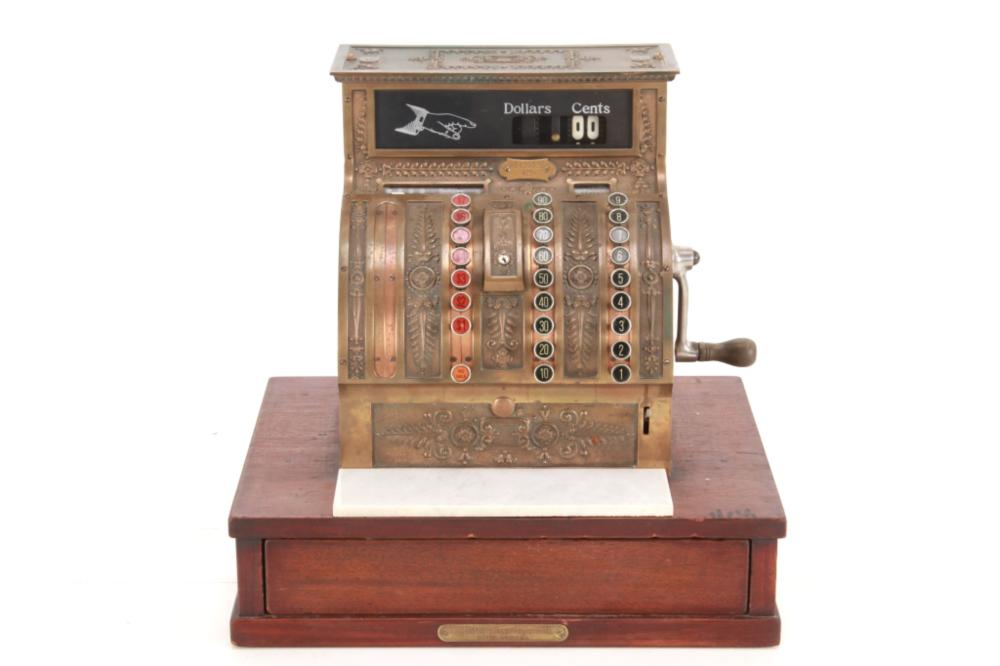
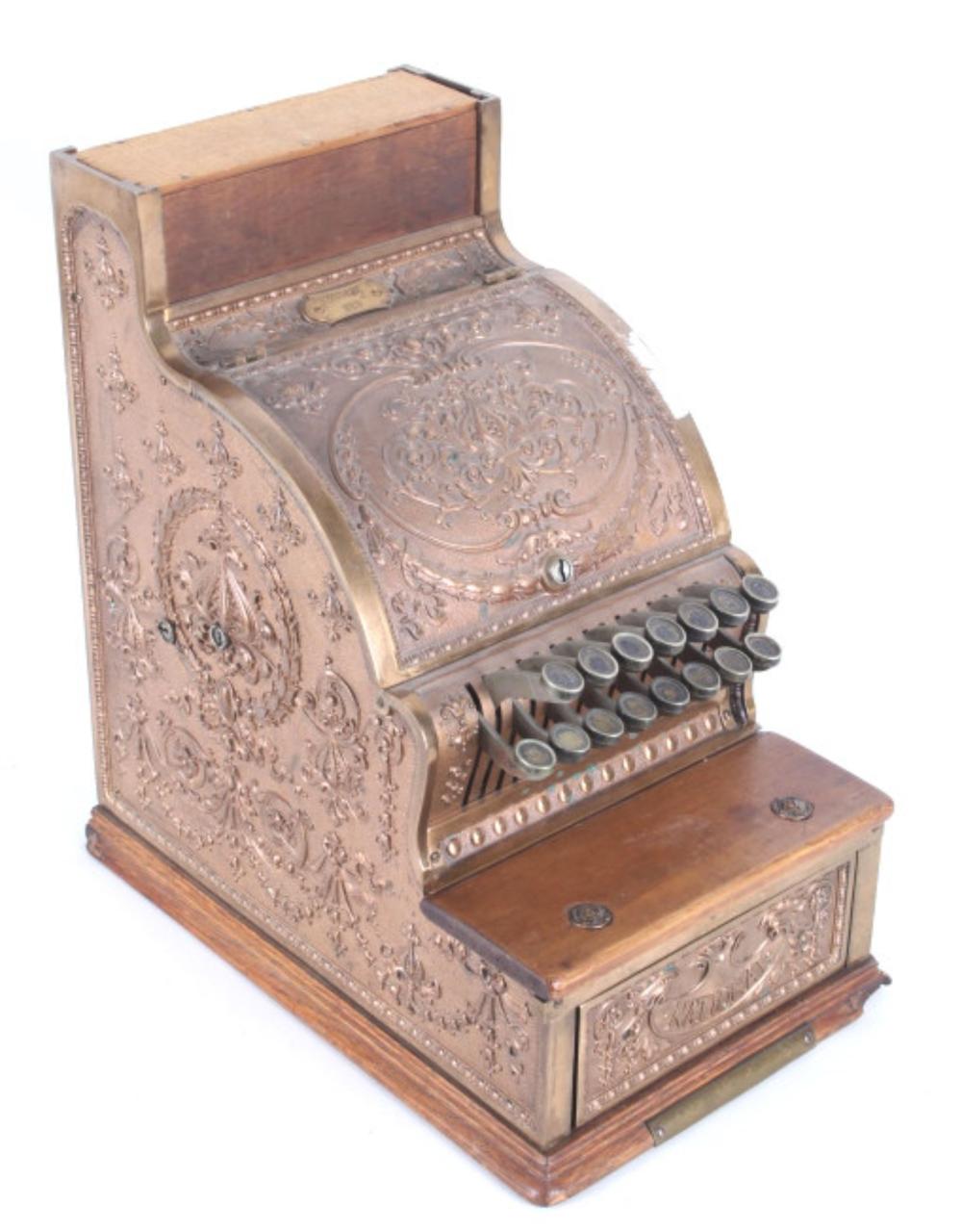
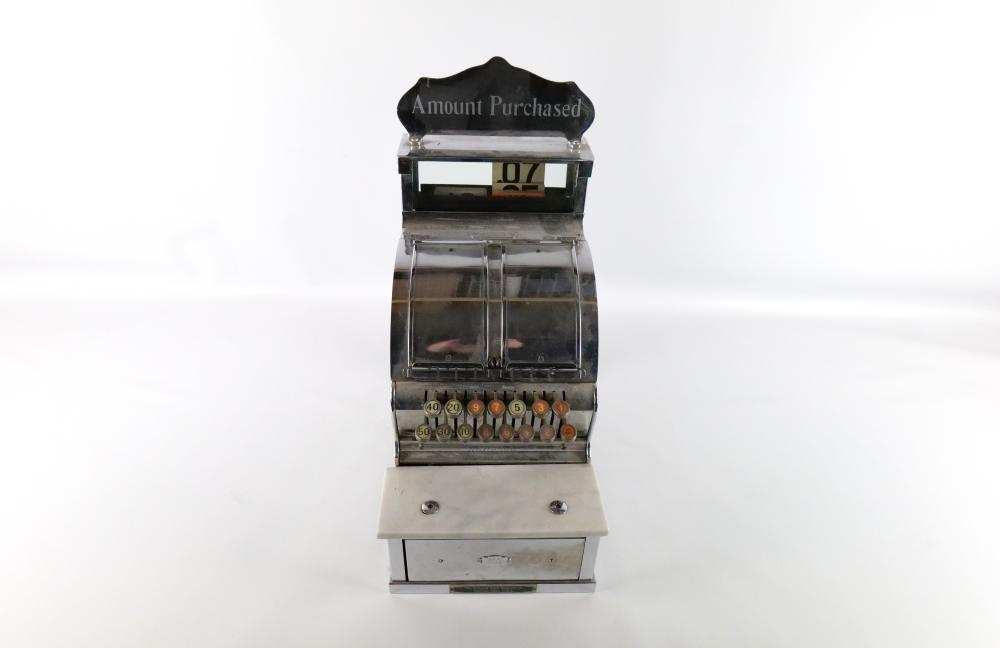
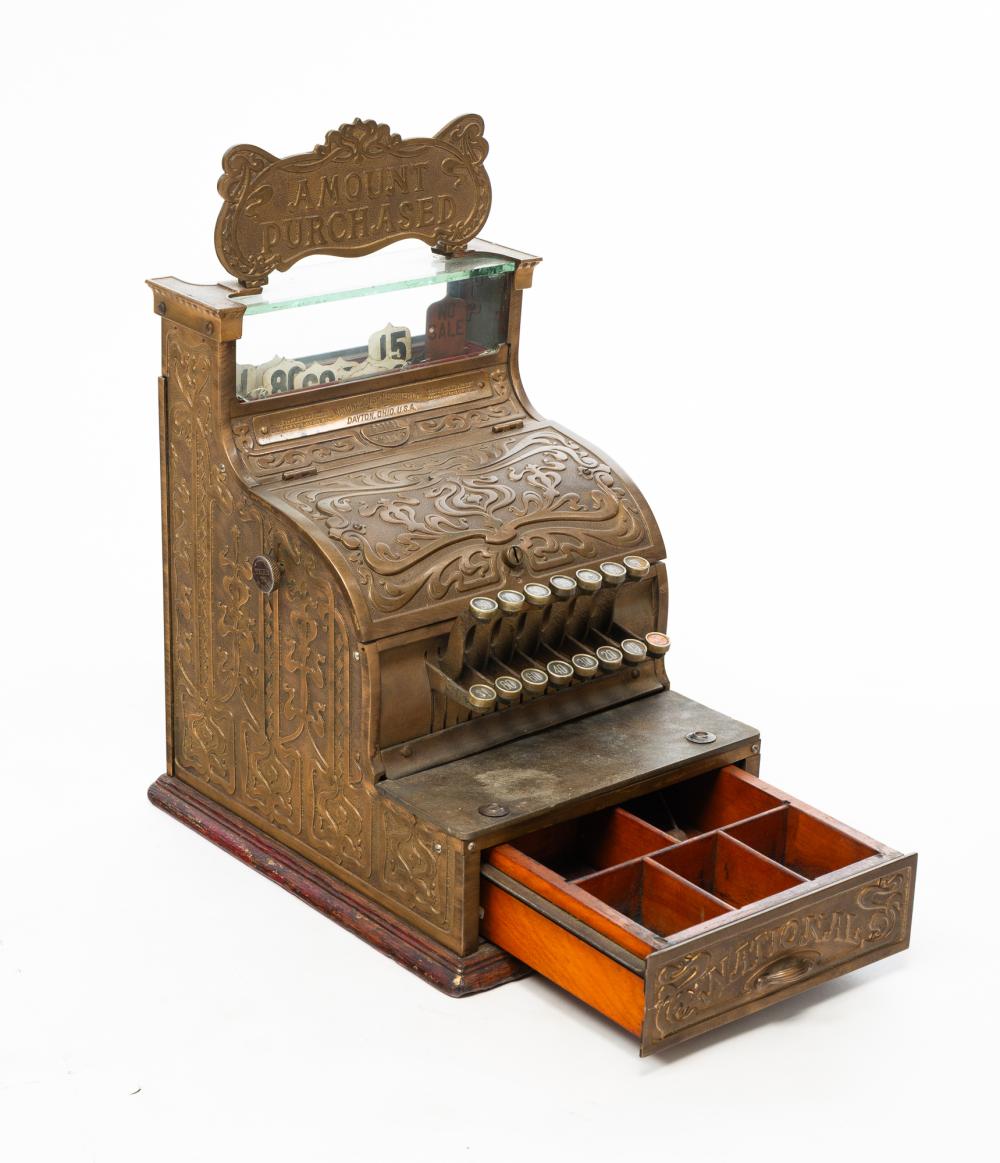
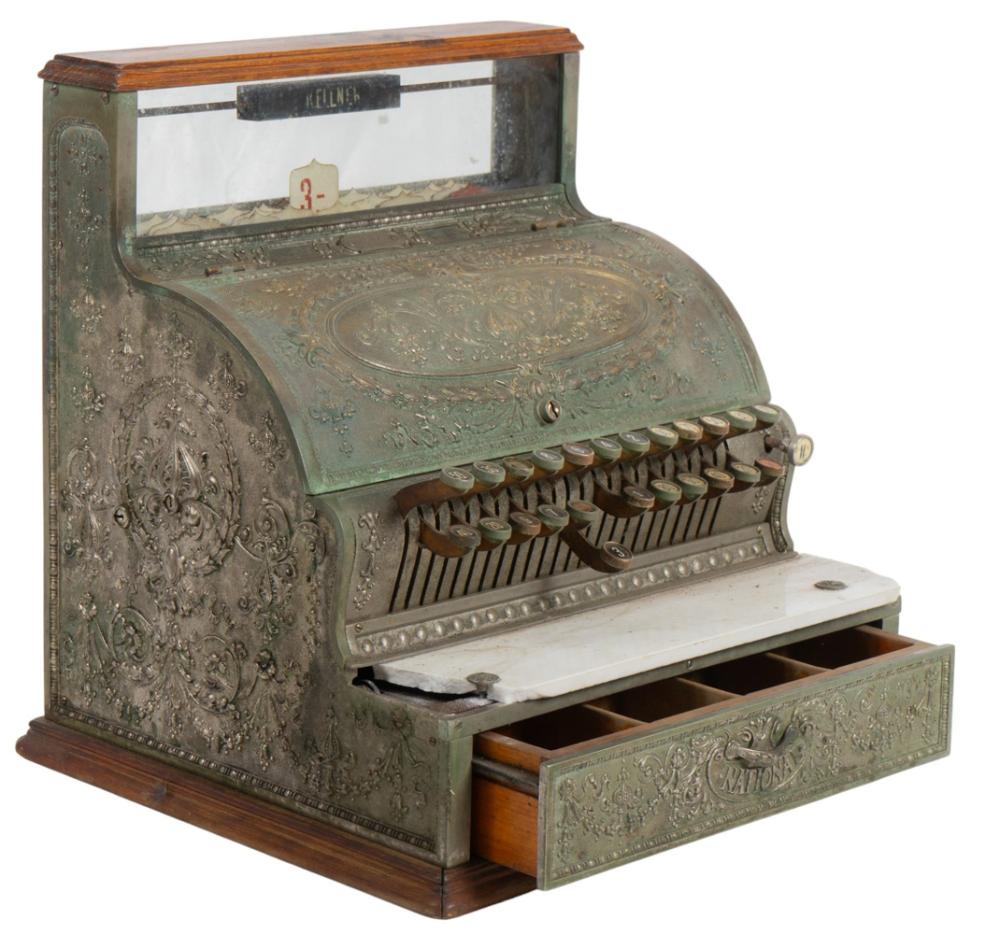
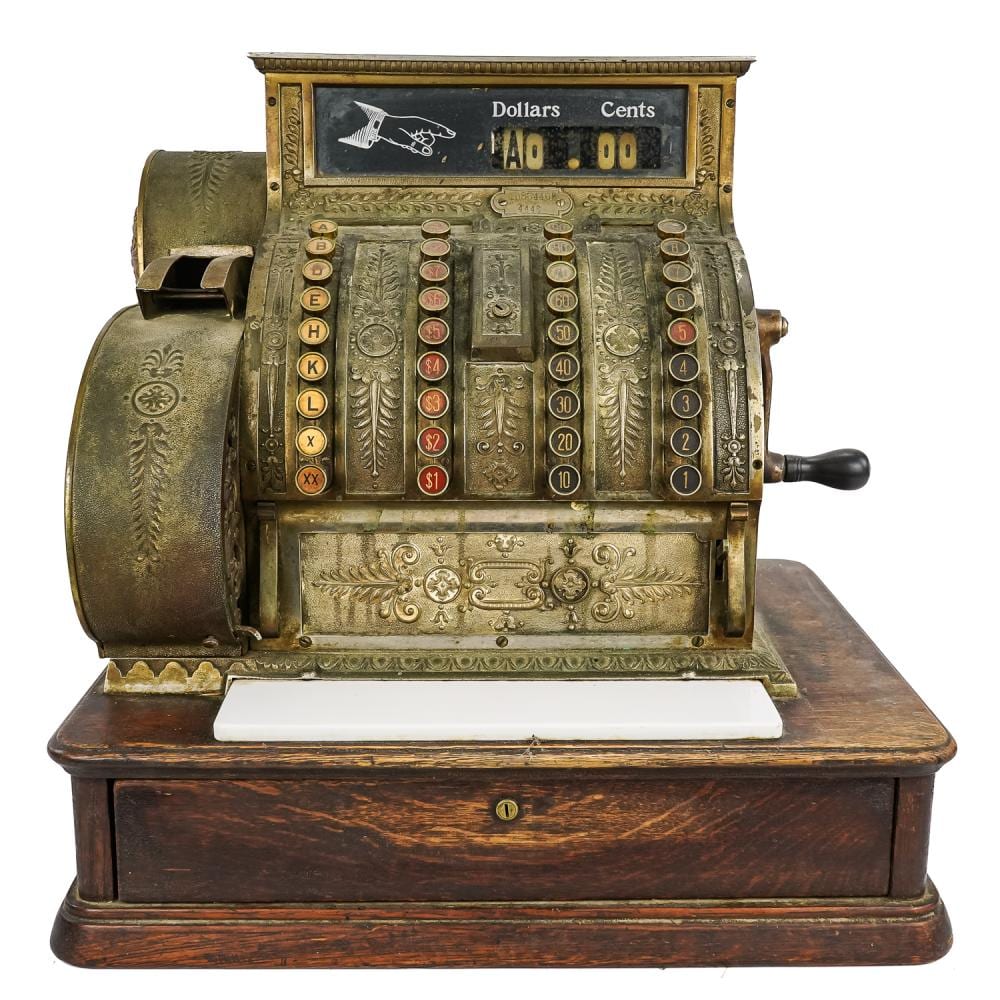
The five recorded National cash register sales in the table below range from $250 to $750, with a median of $375; a 1913 brass Model 313 and a Model 415 from about 1927 are at the upper end. To value yours, date it first: the serial number is on a small metal plate, often under the lid, behind the cash drawer or inside a service door. Then check what moves the price. Scarcer configurations such as multi-drawer or hotel registers bring more than small countertop models. Original lacquer, oxidized copper or nickel finish beats polished brass. The top sign, the marble slab and smooth working keys all count.
Four steps to value a National register
Antique National Cash Registers (NCR) are among the most iconic artifacts of turn‑of‑the‑century retail. Their sculptural brass cases, ornate scrollwork, and satisfying ring appeal to both collectors and decorators, but desirability alone doesn’t set value. To appraise your register confidently, you need to identify its model and features, date it correctly, evaluate originality and condition, and reference solid market comparables.
National Cash Register history in brief
The National Cash Register Company, founded in Dayton, Ohio in the 1880s, shaped retail technology worldwide. Early models were made of wood with cast-iron or metal elements; by the 1890s–1910s, ornate cast-brass cases with floral and scroll motifs became NCR’s hallmark. Later models introduced nickel plating, “antique copper” (oxidized) finishes, and more streamlined patterns before the company transitioned into modern steel registers and electronic machines mid‑20th century.
Key takeaways:
- The most collected period is circa 1895–1915, when cast-brass cases with engraved or embossed patterns dominated.
- NCR used “Class” and “Model” designations to specify configuration (keys, printer, currency, etc.).
- Common small brass countertop registers are plentiful; specialized or large-capacity machines are scarcer and can be significantly more valuable.
Identify the model, class and keys
Value starts with correct identification. National built thousands of variations tailored to store types (cigar, candy, bar, hotel, general store). Document these elements:
- Data/ID plates: Look for a small metal plate riveted to the frame—often revealed when you pull out the drawer, lift the top cover, or open a service door. Plates typically include “The National Cash Register Co.,” a serial number, and sometimes “Class” and “Model.” Photograph this tag clearly.
- Number of keys and denominations: Count the amount keys and note increments (1¢, 5¢, 10¢, etc.). A 1‑cent increment “penny” machine implies use in candy or cigar stores and may have many narrow keys; 5‑cent or 10‑cent increments were common in general retail and bars.
- Indicators and signs: Note if it has glass “amount” indicators, a “No Sale” flag, and a top sign. Original cast or etched top signs reading “This Registers The Amount Of Purchase” add both charm and value; signage specific to a trade (e.g., “Bar Department”) can be a premium.
- Printer vs non-printer: Some models print receipts; others simply display the amount. Printer mechanisms, if intact and functioning, add desirability.
- Finish and casework: Determine if the case is solid brass (often with an original lacquer), nickel- or chrome-plated, or oxidized copper. Earlier wood-cased registers exist and are prized when complete and original.
- Drawer and trim: Many brass NCRs include a white marble or glass slab near the receipt well and a decorative drawer front. Missing marble/stone slabs, cracked glass, or replacement drawer fronts affect value.
- Locks and keys: Original locks and operating keys matter for completeness; replacements exist but originality is preferred.
- Common examples: The small countertop “313” is among the most frequently encountered models; it’s a good reference point when gathering market evidence for typical sizes and configurations.
Record all features with clear photos from multiple angles, including mechanism views if accessible. If you can’t match the plate and features to a model, you can upload photos of the plate, keys and case for a free check.
Date a National cash register by serial number
Dating supports valuation by locating your register in NCR’s manufacturing timeline.
- Serial number: The serial is your most direct dating tool. On many machines it appears on a small brass/steel plate under the lid, behind/under the cash drawer, or on the frame inside a service door. With that number, owners and appraisers consult published serial charts and factory references to estimate a production year.
- Patent dates and inscriptions: Cast or stamped patent dates provide “not earlier than” markers. A last patent date on the case or mechanism offers a time floor.
- Pattern and ornament: Early ornate patterns with deep relief scrolls are generally pre‑1915. Later brass cases can be simpler, and plated finishes become more common by the mid‑ to late‑1910s.
- Finish clues: Original copper-oxide (dark “antique” finish) and factory nickel plating appear later than bright brass lacquer. Caution: many registers have been polished back to bright brass, obscuring original plating history.
- Functional evolution: Printers, subtotal features, and more sophisticated indicators often arrived on later models. Cross-reference features with the serial date to ensure plausibility.
If your serial number and features don’t align (for example, a late serial but very early case pattern), you might be looking at a machine assembled from parts—possible, and something the market discounts.
Condition grades for NCR registers
Two similar models can differ in value severalfold based on originality and condition. Appraisers consider:
- Original finish vs. polished: Many brass NCRs left the factory with a protective lacquer over a satin-to-bright finish. Decades later, owners often stripped lacquer and polished the brass to a mirror shine, sometimes adding modern clearcoat. While shiny sells decoratively, collectors often pay a premium for untouched original lacquer or original oxidized/nickel finishes. Over‑polishing softens details and can reduce value.
- Completeness: Check for all glass panels, the marble or glass slab, top sign, drawer insert, bell, paper spindles, printer parts, indicator glass and cards, and lock covers. Missing components are value deductions; hard‑to‑find parts (e.g., printer gears, certain top signs) matter more.
- Mechanical function: Does it reset, ring, and advance indicators smoothly? Does the printer (if present) feed paper and print? Frozen, jammed, or partially functional machines are worth less, although specialists can repair them.
- Case integrity: Look for cracks in castings (especially around hinges and high-stress corners), broken filigree, stripped screws, or replaced fasteners. Hairline cracks in bronze/brass reduce value; repairs should be noted.
- Keytops and labels: Original celluloid or porcelain keytops are desirable. Yellowed celluloid is normal; replacements should be sympathetic to period style.
- Wood base and drawer: Warping, splits, or replaced wood diminish originality.
- Grading approach: Many appraisers use a practical scale—Poor (parts machine), Fair (complete but nonworking with issues), Good (working with some replaced parts/finish), Very Good (largely original, working), Excellent (original finish, complete, crisp), and Restored (professionally rebuilt, documented).
Document any restoration work and keep replaced parts; provenance of professional restoration can support higher pricing.
National cash register prices and what drives them
While values vary by region and market cycles, these general drivers apply:
- Desirability of configuration:
- Rarer: multi-drawer or multi-till registers, alphabetic/hotel registers, unusual currencies, specialized trade models, and very large key-banks.
- Common: small countertop brass non-printer models with 5¢/10¢ increments.
- Originality of finish and completeness:
- Premium: original lacquered brass, untouched oxidized copper, or factory nickel with crisp detail; original top sign and marble present.
- Discounts: polished cases with softened detail, missing top signs or marble, replaced indicator cards, nonmatching parts.
- Aesthetics and pattern: Highly ornate cases with deep relief and clean detail face outperform plainer late-brass patterns, all else equal.
- Working condition: Smooth operation and functional printer/indicators add liquidity and value.
- Provenance: Documented store history, original purchase paperwork, or period photographs can add interest and sometimes price.
Price ranges (broad guidance, assuming retail/private sale, not wholesale):
- Common small brass countertops (e.g., class analogous to the popular 313) in polished, working condition: often mid-hundreds to low four figures.
- The same, but largely original finish with top sign, marble, and crisp detail: generally higher; strong examples can push further.
- Larger, more complex or specialized models (multi-drawer, hotel/alphabetic, unusual currency): can reach several thousand dollars when complete and functional.
- Exceptional, early, or rare configurations in outstanding original condition: can go substantially higher; museum-grade pieces are outliers.
Remember: venue matters. A decorator-oriented venue may pay up for shiny presentation, while a collector-oriented auction prizes untouched originality.
Compare past sales and choose where to sell
After identification and condition grading, anchor your estimate with comparables:
- Match like to like: Same or very similar class/model, finish, number of keys, printer/no printer, and presence of top sign/marble. Size and weight affect buyer pool and shipping costs, which your market evidence should reflect.
- Use completed sales: Active listings are asking prices; realized prices are your benchmark. Note the date (markets change), the venue, and condition details in the cataloging or description. For more examples, see recorded National Cash Register sales.
- Adjust for restoration and originality: A professionally restored showpiece may not be a valid comp for an un-restored but complete example. Conversely, a parts machine is not a comp for a working register.
- Geographic and logistics effects: Local pickup only suppresses price; national exposure with professional freight broadens the buyer pool.
Selling options:
- Specialist dealers: Faster, lower hassle, but wholesale pricing.
- Regional and specialty auctions: Good exposure; fees apply. Strong cataloging and photography matter.
- Private sale/marketplaces: Max control and potentially higher net, but you’ll handle inquiries, packing, and fraud prevention. Insist on secure payment and plan for freight.
When in doubt, a written appraisal from a specialist—especially for insurance or estate purposes—can be wise.
Cleaning, moving and caring for a register
These machines are heavy and delicate at the same time. Preserve value with careful stewardship:
- Moving: Remove the drawer and any loose internal parts before lifting. Use two people for most brass registers; large models can exceed 150–200 lbs. Protect filigree and glass.
- Cleaning: Dust with soft brushes; clean brass gently with pH-neutral soap and water on a damp microfiber cloth, then dry. Avoid abrasive polishes if original finish remains. For polished brass, use conservation-grade metal polishes sparingly and avoid cutting into detail.
- Protective coatings: Many collectors prefer microcrystalline wax on bare or polished brass instead of modern spray clearcoats, which can yellow and are difficult to reverse.
- Wood care: Humidity control prevents splitting and warping. Wax or appropriate conservation treatments preserve patina.
- Mechanism: Light machine oil on pivots and sliding surfaces—sparingly. If it’s gummy, have a specialist service the mechanism rather than forcing levers.
Preserve any period paperwork, keys, and small parts in labeled bags; provenance matters.
Checklist for valuing a National cash register
- Photograph the data plate, serial number, and overall machine (all sides, mechanism, drawer, top sign).
- Record configuration: keys and increments, printer/no printer, indicators, top sign, marble, finish.
- Date it with the serial number and feature cross-checks; confirm consistency.
- Assess originality: finish (original lacquer/nickel/oxide vs polished), glass, marble, keytops, locks, signage.
- Test functionality: keys, reset, indicators, bell, drawer, printer feed/print.
- Note issues: cracks, missing parts, replacements, nonmatching components.
- Build market evidence: match model, finish, completeness, and venue; adjust for restoration.
- Decide strategy: specialist dealer, auction, or private sale; plan shipping logistics and costs.
FAQ
Q: Where do I find the serial number on my NCR register? A: Most have a small metal plate with the serial on the frame—often visible when you pull the drawer, lift the top cover, or open a service door. It may also be stamped into the mechanism. Photograph it for reference.
Q: Should I polish my brass cash register? A: If it retains original lacquer or an original oxidized/nickel finish, don’t polish—original surfaces are prized. If it’s already bare brass, a careful hand polish and microcrystalline wax can improve appearance, but avoid aggressive abrasives that soften detail.
Q: Are missing top signs or marble slabs a big deal? A: Yes. Original top signs and marble/stone slabs contribute visual completeness and value. Replacements exist, but originals command a premium.
Q: My register doesn’t work. Is it still valuable? A: Complete nonworking registers still have value, especially rare models or original finishes. That said, smooth operation increases buyer confidence. A professional service can pay off for mid‑to‑high tier pieces.
Q: How can I ship a heavy NCR safely? A: Remove the drawer and loose parts, immobilize the mechanism with padding, protect glass and filigree, and double‑box or crate. For large models, use blanket‑wrap freight. Photograph packing for insurance.