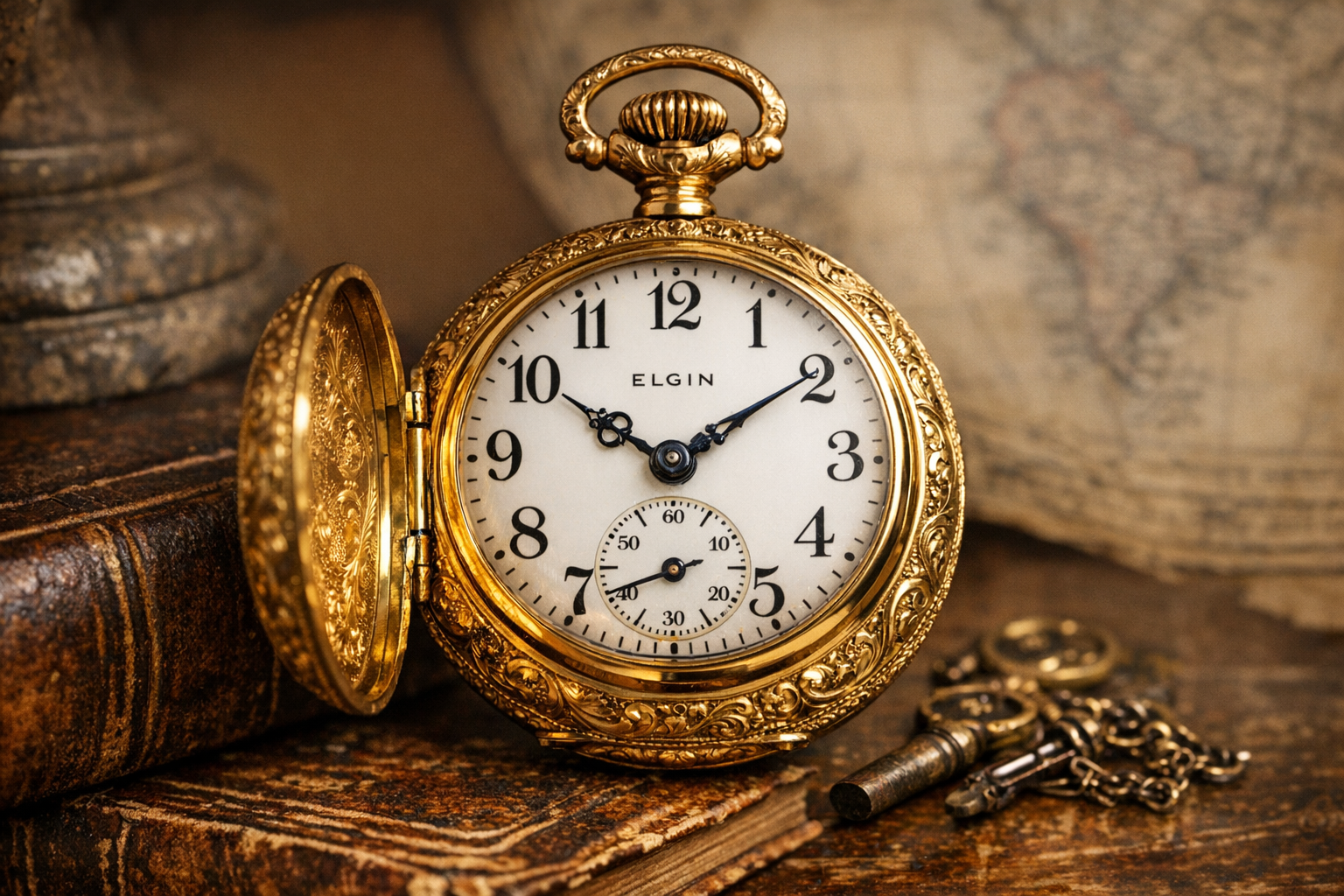
Unlocking the Timeless Treasure Determining the Value of Your Vintage Pocket Watches: appraisal and value basics
Unlocking the Timeless Treasure Determining the Value of Your Vintage Pocket Watches research should start with identification, condition, provenance, and item-specific market evidence. Use this guide to compare the signals that matter before paying for a formal appraisal or deciding whether to sell.
Vintage pocket watches value checklist
For collectors and appraisers, pocket watches sit at the crossroads of engineering, design, and social history. Their value is never about one detail; it’s about how maker, movement, case, condition, originality, provenance, and market demand come together. This guide shows you how to read those signals accurately and turn them into a confident valuation.
Identify What You Have: Movement, Case, Size, and Style
Before discussing price, document the watch—carefully.
Handle with care
- Do not force the crown if it resists.
- If the case back sticks, stop; scratching the case or cracking the crystal will hurt value.
- Photograph the dial, movement, inside case back, and any numbers you see.
Movement (the mechanism)
- Maker: On American watches it’s usually engraved on the movement plates (e.g., Waltham, Elgin, Hamilton, Illinois, E. Howard). Swiss and English examples may read Patek Philippe, Vacheron & Constantin, Longines, Omega, Dent, Frodsham, etc.
- Serial number: Usually on the movement plates or bridges, not the dial side. This dates and identifies the grade for many brands. Note that movement serials and case serials are unrelated.
- Jewel count: Common uplevel counts are 15, 17, 19, 21, 23. True jeweled bearings reduce friction; some lower-grade watches exaggerate jewel counts.
- Adjustments: Wording like “Adjusted,” “Adjusted 3/5 Positions,” “Temperature,” “Isochronism” indicates higher precision and quality.
- Setting type: Lever-set (often railroad-grade) vs pendant-set. Lever-set movements require pulling out a small lever near the dial rim to set the time.
- Complications: Repeater slides, chronograph pushers, calendars, up/down indicators, split-seconds.
Case (the housing)
- Material markings: Solid gold usually marked 14K/18K or numeric fineness (0.585/0.750); silver may be “Sterling,” “0.925,” or “Coin” (0.900). Gold-filled/rolled-gold often reads “GF,” “G.F.,” “Warranted 10/20/25 Years,” or “Rolled Gold Plate.” Nickel/brass cases may be unmarked or marked “Nickel” or “Base Metal.”
- Hallmarks: European cases often carry assay symbols plus fineness numerals. U.S. cases rely on karat/fineness text and maker logos (e.g., Keystone, Crescent, Fahys, Dueber).
- Case maker vs movement maker: It’s normal for American watches to have different case and movement makers. For high-end Swiss watches, case and movement are often both by the brand or specified casemakers.
- Dust cover: A hinged inner cover (cuvette) may carry inscriptions, presentation text, or additional marks.
Size and style
- American sizes: 18s (large), 16s (standard railroad), 12s (dressy), 0s/6s (small, often ladies’).
- European sizes: Measured in lignes or mm; focus on case diameter.
- Styles: Open-face (no lid), hunter (spring lid over dial), half-hunter (lid with viewing window). Open-face railroad watches typically have the pendant at 12 o’clock.
Dial and hands
- Enamel dials: Check for hairlines, edge chips, and repairs. Double-sunk dials signal quality in many American watches.
- Variants: Montgomery minute track, 24-hour markings, fancy or colored enamel, retailer signatures (e.g., Tiffany & Co.) can move the needle.
- Hands: Originals in matching style (spade, whip, Breguet) are preferable.
The Six Pillars of Value
- Maker and Grade
- Certain makers carry persistent collector demand: among American brands, Hamilton (e.g., 992/992B, 950/950B), Illinois (Bunn Special), Waltham (Riverside, Vanguard), Elgin (Veritas), and E. Howard. Among Swiss/English, Patek Philippe, Vacheron & Constantin, Audemars Piguet, Longines, Omega, Breguet, Dent, and Frodsham.
- Within each maker, specific grades (factory-defined quality tiers) matter more than model names alone.
- Movement Engineering
- Jewel count and placement (with cap jewels on escape and balance), fine regulation (micrometric regulators), and adjustments (positions/temperature/isochronism) all add value.
- High finishing (anglage, Geneva stripes, gold jewel settings, screwed chatons) signals top grade.
- Complications—chronograph, repeater, calendar, split-seconds—boost value but raise servicing costs.
- Case Material and Originality
- Solid gold/silver cases add intrinsic value; gold-filled adds aesthetic but little melt value.
- Original, period-correct cases are preferable. A railroad movement recased into a hunter case, or a Swiss movement in an off-period case, often lowers value.
- Crisp engine-turning (guilloché) and intact engraving are positives; heavy polishing erases detail and value.
- Condition
- Dial: Hairlines and chips reduce value, especially near numerals or signature.
- Hands/crystal: Correct-style hands and a clear crystal matter; modern acrylic replacements are acceptable if period-correct.
- Movement: Clean plates, sharp screw heads, intact jewel settings, minimal rust. Running strong and keeping time improves saleability but does not replace a proper service history.
- Case: Tight hinges, smooth crown action, minimal dents. Look for extra case-screw marks that can signal recasing.
- Rarity and Desirability
- Low production runs, special-order dials, private labels by notable retailers, early key-wind or chronometer-grade pieces, and unusual sizes or finishes enhance desirability.
- Collector interest fluctuates: U.S. railroad watches, fine Swiss complications, and decorated Art Nouveau/Art Deco examples tend to stay strong.
- Provenance and Presentation
- Boxes, papers, retailer-signed dials, presentation inscriptions, and documented ownership can add considerably—especially for prestigious makers or historic contexts.
- Military or scientific use markings (e.g., deck watches, observatory-certified pieces) often carry a premium.
Categories That Command Premiums
Railroad-grade American watches
- Typically 16s (earlier also 18s), open-face, lever-set, 17+ jewels, adjusted to 5 or more positions and temperature/isochronism, bold Arabic numerals, plain dials for legibility.
- Notable models include Hamilton 992/992B/950/950B, Illinois Bunn Special, Waltham Vanguard, Elgin Veritas variants.
Complications
- Repeaters (quarter, half-quarter, minute), chronographs, rattrapante (split-seconds), perpetual calendars, and alarm pocket watches draw strong interest.
- Complexity raises service costs; buyers factor this into price.
Early and technical milestones
- Key-wind/key-set watches, fusee movements, pivoted-detent chronometer escapements, and precision deck watches.
- Pair-cased English verge or lever escapements in silver remain collectible; high-grade chronometer makers command multiples of “average” pieces.
Decorative and jewelled cases
- Enamel painting, niello work, carved and chased gold, and engine-turned guilloché are art objects in their own right. Condition is critical—chips or losses steeply reduce value.
Retailer-signed and special-order dials
- Names like Tiffany & Co., Cartier, and prominent regional jewelers can add a premium, provided originality is verified.
Condition, Originality, and Common Pitfalls
Redials and replacements
- Reprinted dials or mismatched hands lower value. Enamel is difficult to restore invisibly; “too perfect” can be a red flag unless provenance supports it.
Recasing and “marriages”
- Movement and case swapped at some point? Extra case-screw scars, misaligned lever slots, or an era-inappropriate case style suggest non-original pairing. Collector value usually suffers.
“Swiss fakes” for the American market
- Late-19th-century imports with American-sounding names, inflated jewel claims, and decorative but low-grade movements are common. They can be attractive curios but rarely command high prices.
Over-polishing and re-engraving
- Thinned covers, softened edges, and erased engine-turning indicate loss of material. Original patina often reads better to collectors than a mirror shine.
DIY risk
- Forcing stuck case backs, removing hands/dials without the right tools, or attempting to weigh a gold case by pulling the movement can cause irreversible harm. When in doubt, leave it to a professional.
Market Reality: Where Prices Land and Why
Channels and net outcomes
- Auction: Transparent comps and global reach; seller fees apply; results vary with cataloging and audience.
- Specialist dealers: Curation, faster sale, and authentication support; expect dealer margin.
- Private sale: Highest potential net if you have the network; also the most work and risk.
Comparable methodology
- Match maker, grade, jewel count, adjustments, case material, dial variant, and condition. One missing factor can halve or double a price.
Melt floor vs collector value
- Solid gold cases carry an intrinsic “floor” tied to fineness and weight, less refining fees. Collector value sits above that floor if the movement, originality, and condition justify it.
- Do not scrap historically significant or complicated pieces; their collector value usually far exceeds metal value.
Typical ballpark ranges (broad, condition-sensitive)
- Common 12-size, 7–15 jewel, gold-filled American watches: modest value; pristine examples can do better.
- Solid 14k/18k dress pocket watches by quality Swiss or American makers: mid to high hundreds into low thousands depending on maker and weight.
- Railroad-grade 16-size (17–23 jewel) by Hamilton/Illinois/Waltham/Elgin: mid hundreds to low thousands; top grades and exceptional condition go higher.
- Minute repeaters, split-seconds chronographs, and high-prestige makers (Patek Philippe, Vacheron & Constantin): thousands to five figures+ depending on specification, originality, and condition.
Timing and geography
- Market interest ebbs and flows. Strong cataloging, accurate descriptions, and high-quality photographs consistently improve outcomes.
Quick Appraisal Checklist
- Identify the movement maker and grade; note the movement serial number.
- Record jewel count and any “Adjusted” markings (positions/temperature/isochronism).
- Confirm setting type (lever vs pendant) and escapement notes if present.
- Document case material marks (14K/18K, 0.585/0.750, Sterling/925, GF/rolled gold), case maker, and any hallmarks.
- Determine style and size (open-face/hunter; American size or mm).
- Inspect dial for hairlines, chips, and originality; note signature and special variants.
- Check hands and crystal for period-correct style and condition.
- Look for extra case-screw marks, misaligned lever slots, or other signs of recasing.
- Test gently: does it wind and run? If resistance feels wrong, stop.
- Note complications (repeater slide, chronograph buttons) and test only if you know how.
- Photograph movement, dial, and case interior clearly; retain any boxes/papers.
- Compare to recent, well-documented sales of the same maker, grade, case metal, and condition.
FAQ
Q: How can I tell if my case is solid gold or gold-filled? A: Look for fineness marks: 14K/18K or 0.585/0.750 usually indicate solid gold. Terms like “GF,” “G.F.,” “Rolled Gold Plate,” or “Warranted 20 Years” indicate gold-filled. When uncertain, have a jeweler verify; avoid scratch tests on finished surfaces.
Q: Should I service a pocket watch before selling? A: If it runs poorly or not at all, factor in that a routine service can be significant—especially for repeaters/chronographs. Buyers may prefer to service to their standards. For high-end pieces, a recent service with documentation is a plus; for entry-level watches, selling “as found” can be reasonable.
Q: Do inscriptions reduce value? A: Not always. Generic initials can be neutral or slightly negative on dress watches; historic presentations, military marks, or notable names can add value—especially if documentation accompanies them.
Q: Is winding it safe? A: If the crown turns smoothly and the hands set without force, a gentle wind is fine. If it resists or grinding is felt, stop. Never oil through the case; contamination is costly to correct.
Q: Where do I find accurate date and grade information? A: Use the movement serial number and consult authoritative brand references and published serial lists. Be cautious: case serials rarely date the watch, and online summaries can be incomplete.


