
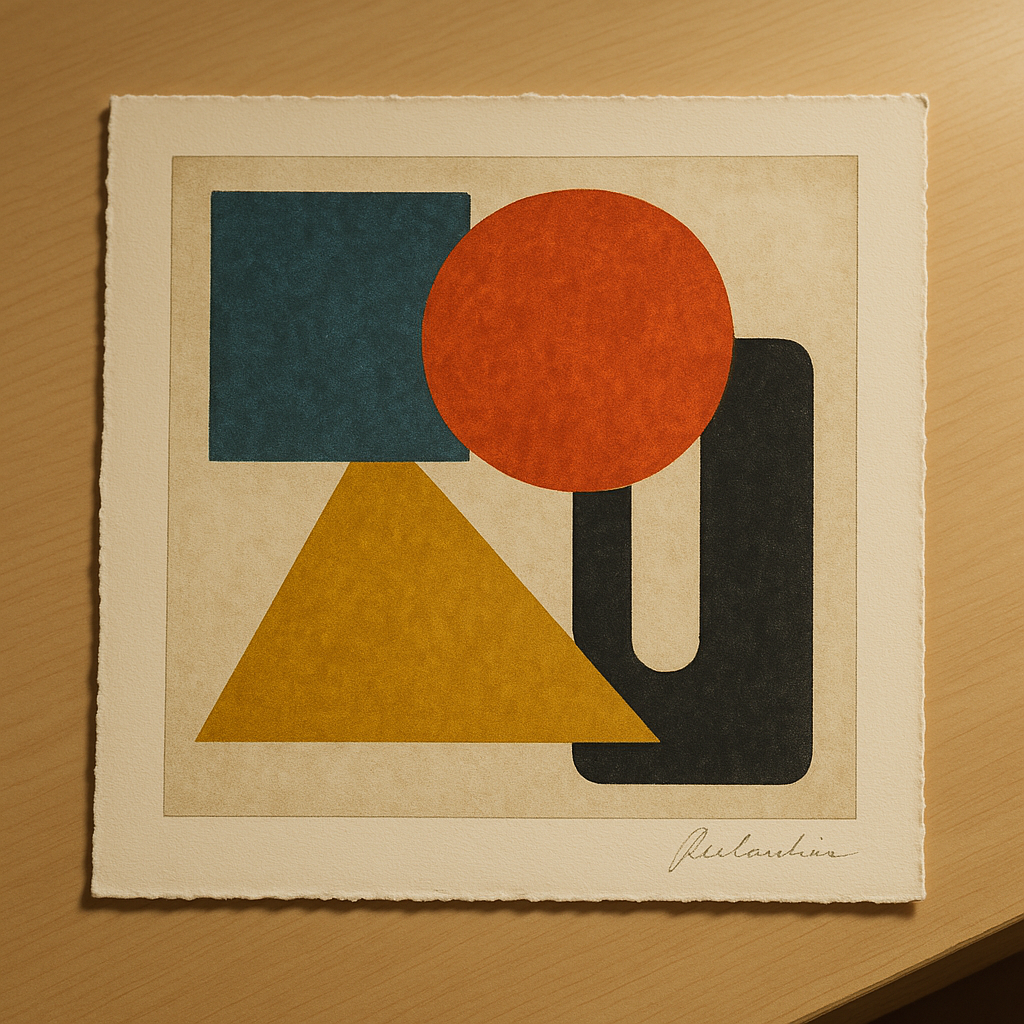
Signed mid-century lithograph appraisal basics
Start with signature medium, edition marks, print process, paper, margin condition, provenance, and recent sales for comparable signed lithographs.
This page was migrated from a short legacy note that read: “18in x 18in midcentury lithograph. No idea any other info. Signed in pencil on bottom right. Unclear what bottom left insignia is.” If that sounds like your situation, you’re in the right place.
Signed prints are tricky because a pencil signature can appear on everything from an original artist-pulled edition to a decorative reproduction with a “printed” signature. Your goal is to confirm the print type first, then identify the artist, then estimate value based on edition size, condition, and demand.
If you’re just trying to ballpark value: unknown-but-attractive mid-century lithographs often trade in the $30–$200 range; scarce editions by collected artists can climb into hundreds or thousands once the signature and edition are confirmed.
Print review
Get the right appraisal for your situation
Tell us what you have and what you’re trying to do (sell, insure, donate, or learn the market). We’ll store your intake securely and match the file with the right print specialist.
Secure upload. Matched with the right specialist. Checkout only if you decide to proceed.
How We Research Valuation Data
Our appraisal guides are based on auction results, dealer pricing data, and professional appraiser insights. We may earn a commission when you use our free professional appraisal service. Learn about our editorial standards.
Five quick checks (10 minutes, no special tools)
Before you chase the artist’s name, confirm the basics. These five checks solve most “signed lithograph” mysteries.
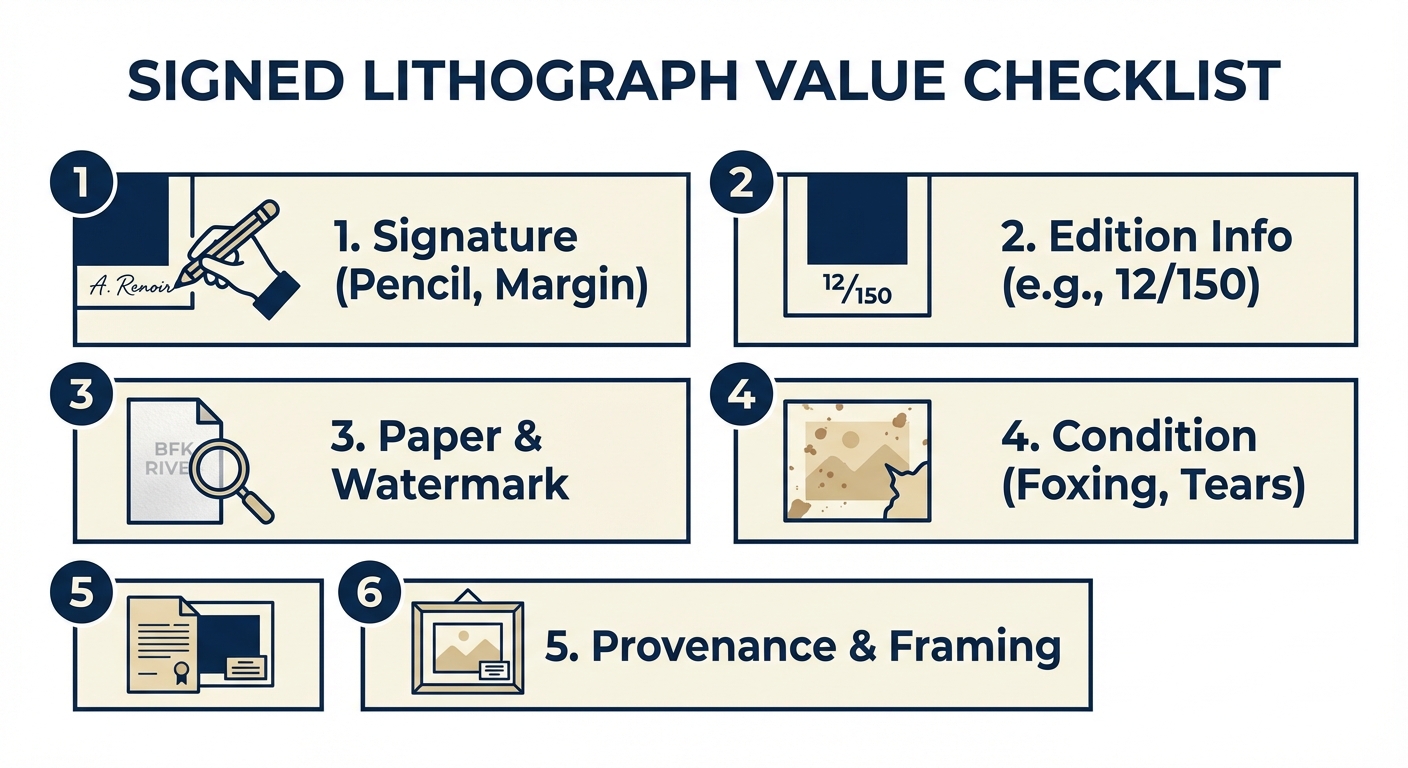
- Signature medium: pencil (raised graphite) vs ink/printed (flat).
- Edition info: look for a fraction like 12/150, plus a title and sometimes a date.
- Paper and margins: higher-quality prints usually have generous margins and heavier paper.
- Print surface: under bright light, look for texture, plate tone, and evidence of hand-printing.
- Provenance clues: gallery label, framer label, receipts, or a pencil inscription can matter.
Note: We couldn’t find relevant auction comps in our database for this topic right now. If you’re valuing a specific item, try searching by maker/model/material and we’ll expand coverage over time.
What similar items actually sold for
To help ground this guide in real market activity, here are recent example auction comps from Appraisily’s internal database. These are educational comparables (not a guarantee of price for your specific item).
| Image | Description | Auction house | Date | Lot | Reported price realized |
|---|---|---|---|---|---|
| No relevant auction comps found for this topic right now. | |||||
Disclosure: prices are shown as reported by auction houses and are provided for appraisal context. Learn more in our editorial policy.
Need help reading the signature?
Upload full-front, signature, edition, paper edge, and back photos. Appraisily can give a first read on whether the print is identifiable enough for a written appraisal.
How to read the pencil signature (and the bottom-left “insignia”)
Many editioned prints follow a convention: signature bottom right, edition number bottom left, and sometimes title centered under the image.
Bottom right: the artist signature
- A true pencil signature will usually show slight shine and texture, and tiny skips where the pencil crossed paper tooth.
- Some artists use a stylized signature or monogram that can look like an emblem.
Bottom left: edition number, monogram, or printer mark
What you described as an “insignia” on the left is commonly one of these:
- Edition fraction (e.g., 12/150).
- Monogram (artist initials).
- Blindstamp (an embossed seal) from a publisher or print workshop.
- Plate signature (printed as part of the image).
Is it a real lithograph or a reproduction?
“Lithograph” gets used loosely. Many framed décor prints are offset reproductions. Practical checks you can do at home:
- Zoom in (phone camera): offset prints often show regular dot patterns; lithography looks more organic.
- Look for plate tone: a faint rectangular tone around the image area can be a good sign.
- Check the signature: hand pencil usually sits on top of the paper; printed signatures look flat.
Edition numbers, proofs, and what they mean
- 12/150: print number 12 in an edition of 150.
- AP (Artist Proof): outside the numbered edition.
- HC (Hors Commerce): “not for sale” proofs.
Condition checklist (what changes value most)
- Foxing (brown spotting) and overall toning/yellowing.
- Mat burn (a darker “window” from an old mat).
- Creases, dents, tears, or water tide lines.
- Trimming: reduced margins usually hurts collector value.
How to identify the artist when the signature is hard to read
- Photograph the signature straight-on with raking light.
- Reverse image search the artwork (crop to the image area).
- Check margins for blindstamps and the back for framer/gallery labels.
Photo checklist (what appraisers actually need)
Print IDs succeed or fail on photo quality. If you want a confident artist match, aim for a “catalog-style” set:
- Full front, straight-on (no glare, no angle).
- Signature close-up (bottom right margin) with raking light.
- Bottom-left close-up (edition number/insignia/blindstamp).
- Paper edge/margins (shows deckle, toning, trimming, mat burn).
- Back/verso (labels, stamps, tape, paper backing).
Selling & insurance notes (quick wins)
- Don’t clean with erasers or solvents; conservators treat paper safely when value warrants it.
- Frame costs aren’t value: collectors primarily pay for the print, not retail framing labor.
- Disclose condition clearly (foxing, toning, creases). It avoids returns and chargebacks.
- Ship flat when possible: protect corners, prevent flex, and insure for realistic replacement value.
Value ranges (what appraisers typically see)
- Decorative unknown mid-century lithograph: often $30–$200.
- Known regional artist, medium edition: often $200–$900.
- Collected artist / scarce edition / provenance: can exceed $1,000+.
Search variations collectors ask
Readers often Google:
- how to identify a pencil signature on a lithograph
- what does 12/150 mean on a print
- lithograph vs giclée vs offset reproduction differences
- how to find an artist from an unreadable signature
- mid-century lithograph value without artist name
- what is a blindstamp on an art print
- how to tell if a signature on a print is printed
- best photos to send for a print appraisal
Each question is answered in the identification and value guide above.
References & practical resources
- MoMA Collection search (compare artists)
- The Met Collection search (prints)
- Comparable sales search (once artist is known)
Wrap-up
For an 18×18 mid-century signed lithograph, the fastest path to value is: confirm the signature is truly hand-signed, find any edition markings or blindstamps, photograph the print properly (front + signature + margins + back), and then research or appraise with that full evidence set.