
Rookwood Pottery Value Guide: Marks, Glaze and Condition
Evaluate Rookwood pottery by documenting marks, date codes, artist initials, glaze type, form, decoration, size, condition, repairs, and provenance.
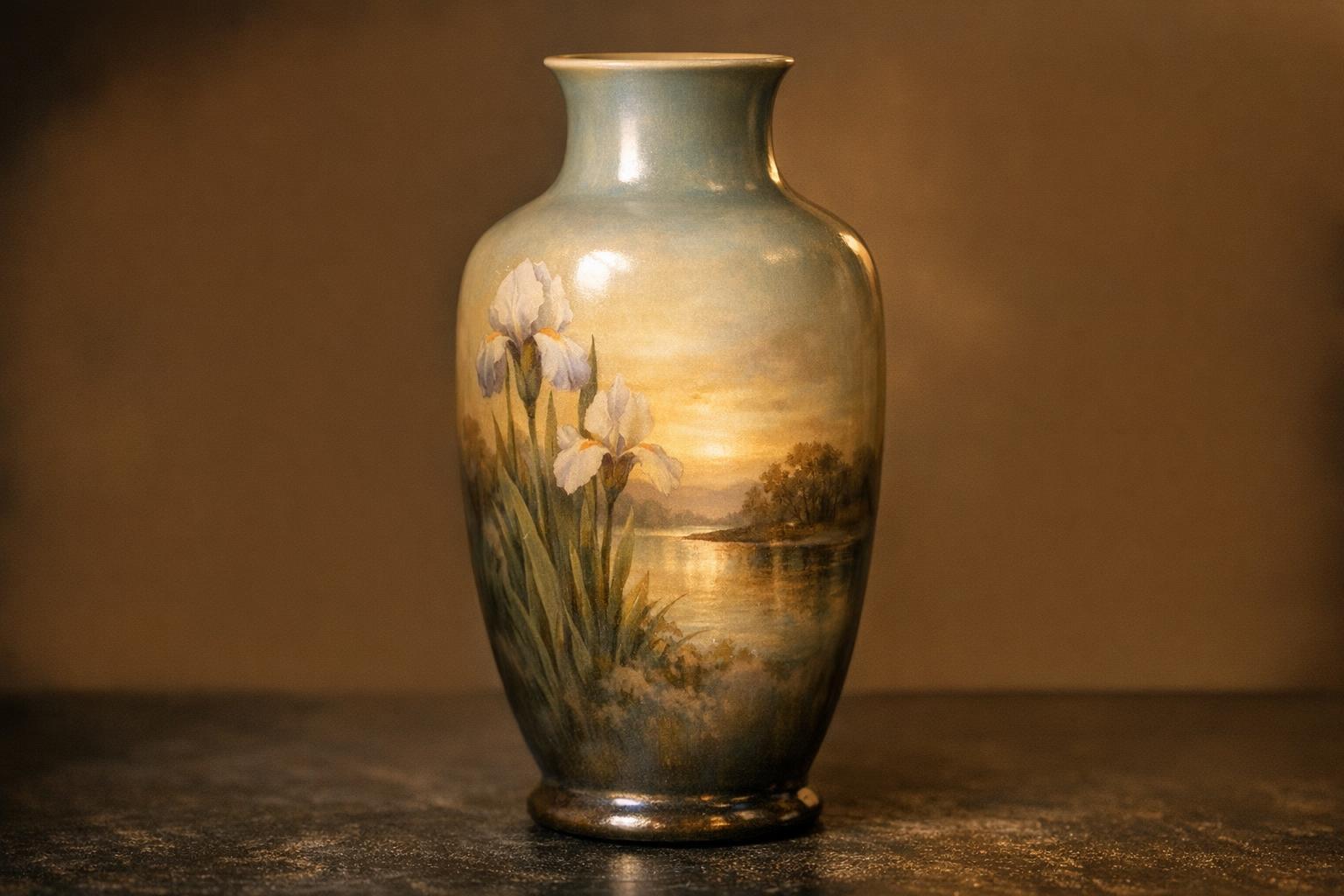
If you have a piece of Rookwood pottery, its value could be anywhere from the price of a thrift-store find to a five-figure auction result. The difference comes down to a handful of identifiable features — and knowing what to look for is the first step toward an accurate valuation.
Founded in Cincinnati in 1880 by Maria Longworth Nichols Storer, Rookwood Pottery grew into America's most celebrated art pottery manufacturer. Over its 61-year run (and subsequent revivals), the company produced tens of thousands of unique shapes and glaze formulations. That variety is exactly what makes valuation both fascinating and tricky: two pieces that look similar on a shelf can differ in value by a factor of 100 or more.
In this guide, we analyze recent auction results, break down each value driver, and show you how to read the marks on the bottom of your piece to estimate what a collector would actually pay — not what a dealer hopes to list it for.
What's in this guide
Recent Rookwood pottery auction results
The most reliable way to understand what Rookwood pottery is worth is to look at what buyers have actually paid at auction — not retail asking prices or insurance estimates. Below are ten recent realized sales from major auction houses, all sourced from Appraisily's auction database.
What similar items actually sold for
To help ground this guide in real market activity, here are recent example auction comps from Appraisily’s internal database. These are educational comparables (not a guarantee of price for your specific item).
Shown USD range: USD 250-USD 1,200. Median of these 5 USD examples: USD 550.
| Image | Description | Auction house | Date | Lot | Reported price realized |
|---|---|---|---|---|---|
|
(10) Pieces of Rookwood Pottery | Sarasota Estate Auction | 2025-06-07 | 366 | USD 700 |
|
(13) Rookwood Pottery Ceramic Pieces | Sarasota Estate Auction | 2025-06-07 | 367 | USD 1,200 |
|
ROOKWOOD POTTERY CO. 1883 EARTHENWARE PINE TREE VASE | Converse Auctions | 2024-02-16 | 149 | USD 290 |
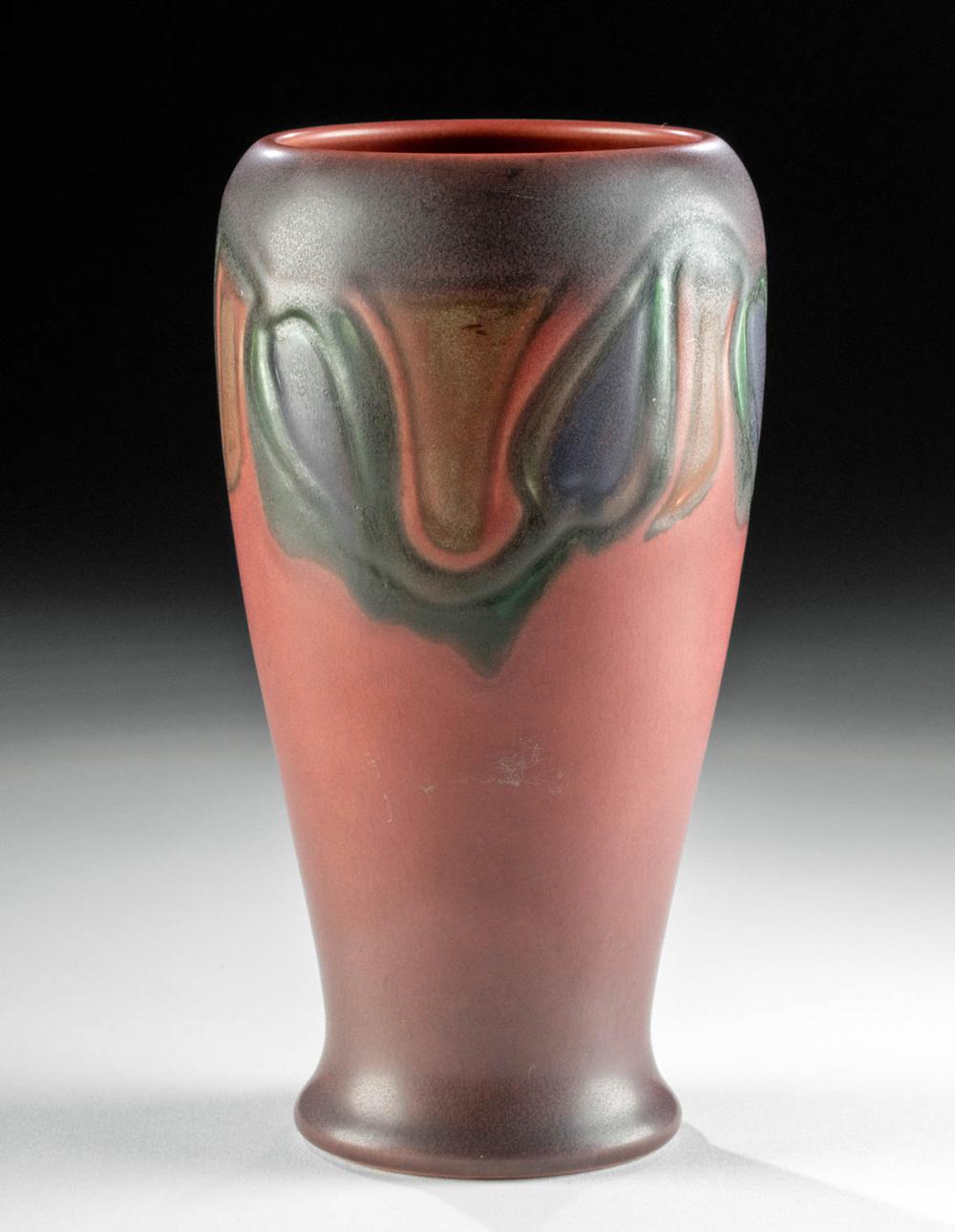 |
Signed Elizabeth Lincoln Rookwood Pottery Vase (1920) | Artemis Gallery | 2022-10-13 | 114 | USD 250 |
|
Signed Fred Rothenbusch Rookwood Pottery Vase (1905) | Artemis Gallery | 2022-05-19 | 144 | USD 550 |
Disclosure: prices are shown as reported by auction houses and are provided for appraisal context. Learn more in our editorial policy.
These results reflect hammer prices and do not include buyer's premiums, which typically add 20–28% to the final cost. Data sourced from Invaluable, Toomey & Co., Artemis Gallery, Rago Arts, and other auction partners.
A few patterns stand out immediately: multi-lot groups of common Rookwood pieces fetch a few hundred to $1,200, while individually signed pieces by known decorators like Fred Rothenbusch and Charles S. Todd command $500–$1,800 even for modest vases. A rare trial vase by William P. McDonald reached $1,800, and a piece attributed to founder Maria Longworth Nichols Storer sold for $2,200 — demonstrating how artist attribution can multiply values on otherwise similar forms.
At the very top of the market, a 1900 Black Iris glaze vase by Kitaro Shirayamadani holds the auction record at $305,000–$350,000 (Cincinnati Art Galleries, 2004), and a 16-inch Vellum glaze landscape vase by Frederick Rothenbusch achieved $195,000 on eBay in 2018. These exceptional results underscore that Rookwood is not just a collectible brand — it is a platform for individual artists whose work commands its own market.
Reading Rookwood date marks and artist ciphers
Every genuine Rookwood piece carries a date mark on its base. The company used a flame logo system that is one of the most reliable dating tools in American art pottery. Understanding this system is your first step toward a value estimate.
The flame system
- 1880–1885: Early pieces may show "RP" monograms or "ROOKWOOD POTTERY / 1881" oval marks with no flames.
- 1886–1900: One flame added per year (e.g., six flames = 1891).
- 1901–1911: Roman numerals replaced flames for some lines (I = 1901, II = 1902, etc.).
- 1912–1939: A single letter replaced the numeral (A = 1912, B = 1913, etc., skipping some letters).
- 1940 onward: Two-digit year stamps were used.
An "X" mark appearing alone or with other symbols typically denotes an imperfect or second-quality piece — these sell at a noticeable discount to first-quality examples.
Artist ciphers
Beneath or beside the date mark, many Rookwood pieces carry an individual artist's cipher — usually initials or a small monogram. These ciphers are critical for valuation. A piece decorated by Kitaro Shirayamadani, Sara Sax, Frederick Rothenbusch, or Matthew Daly can be worth 10 to 100 times more than an unsigned production piece of similar age and form.
Cipher identification is not always straightforward. Some decorators used multiple cipher styles across their careers, and a few ciphers remain unattributed. Resources like WorthPoint's Rookwood mark dictionary and reference books by Barbara Roberts can help, but when in doubt, a professional appraisal is the most reliable path.
Rookwood glaze types and their value premiums
The glaze on a Rookwood piece is often the single biggest determinant of value after artist attribution. Rookwood experimented with hundreds of glaze formulations over its history, but a handful of named lines dominate the high-end market.
Standard Glaze (1880–1930s)
The original Rookwood finish: a rich, dark, transparent glaze applied over underglaze painted decoration. Standard Glaze pieces form the backbone of the market. Unsigned production ware typically sells for $200–$800, while artist-signed examples range from $1,000 to $10,000+ depending on the decorator and quality of the painted scene.
Vellum Glaze (1904–1930s)
Vellum produces a soft, matte, almost impressionistic finish that gives painted scenes a dreamy quality. Frederick Rothenbusch is particularly associated with Vellum landscapes. A 1909 Scenic Vellum vase by Edward Diers sold for $2,295 in a recent auction, and a 1911 Vellum vase by Rothenbusch realized $1,995. Larger, more elaborate Vellum pieces by top artists have reached $20,000–$50,000.
Tiger Eye Glaze (1900–1910s)
Created by accident and notoriously difficult to control, Tiger Eye produces a streaky, chatoyant surface of amber, gold, and brown that resembles the gemstone it is named after. Because successful firings were rare and the glaze was short-lived, Tiger Eye pieces command significant premiums. An A.R. Valentien Tiger Eye vase that won a gold medal at the 1904 World's Fair sold for $24,000 in 2010.
Black Iris Glaze (1899–1900s)
Black Iris is the holy grail of Rookwood glazes. Developed for the 1900 Paris Exposition, it produces an almost-black iridescent surface with subtle blue undertones. Kitaro Shirayamadani's iris-decorated Black Iris pieces hold the all-time auction records. Only a small number were ever produced, and when one appears at auction, serious collectors compete aggressively.
French Red Glaze (1920s–1930s)
Developed in the 1920s and closely associated with decorator Sara Sax, French Red features a deep, matte red surface often paired with Art Deco geometric or stylized floral motifs. A 1922 French Red vase by Sara Sax sold for $10,625 at Toomey & Co. in 2021. Well-preserved French Red pieces in bold Art Deco designs are increasingly sought after.
Other notable glazes
Sea Green, Cameo, Ivory, and Scenic lines each have their own collector base. Scenic Vellum pieces — particularly those depicting Japanese-inspired landscapes — are especially collectible. Production Ware from the 1930s–1940s, often unsigned and mold-made, is the most affordable entry point, with many pieces selling for $100–$500.
Key value drivers for Rookwood pottery
Beyond date marks and glaze, several factors combine to determine what a collector will actually pay. Understanding these drivers will help you assess any piece more accurately.
| Value driver | What to look for | Impact on value |
|---|---|---|
| Artist attribution | Cipher or signature on the base; known decorator (Shirayamadani, Rothenbusch, Sax, Daly, Valentien) | Unsigned: $100–$800. Signed by top artist: $5,000–$50,000+ |
| Production method | Wheel-thrown one-of-a-kind vs. mold-made production ware | Wheel-thrown commands 3×–10× mold-made prices |
| Glaze type | Black Iris, Tiger Eye, Vellum, French Red, Standard, Production | Black Iris/Tiger Eye: +5× to 10× base. Vellum: +2× to 5×. Standard: base value |
| Age / era | Flame count or letter mark; 1880–1900 early, 1901–1920 golden age, 1921–1941 later | Early pieces (pre-1900) by known artists command the highest premiums |
| Condition | Chips, crazing, hairline cracks, repairs, lamp conversions | Damage typically reduces value 40–50%; lamp drilling can reduce 60–80% |
| Size and form | Larger vases, unusual shapes, bookends, tiles, and scenic forms | Large decorative vases and rare forms (trials, experimental glazes) fetch premiums |
| Provenance | Exhibition history, original receipts, collection pedigree | World's Fair medals or documented exhibition history can double or triple values |
The interplay of these factors is multiplicative, not additive. A pre-1900, wheel-thrown, artist-signed Vellum vase in mint condition is not worth "a bit more" than a 1930s unsigned production vase — it is worth 50 to 100 times as much. That is why identification matters so much.
How condition affects Rookwood pottery prices
Condition is the great equalizer. A piece that would otherwise be worth $10,000 can drop to $4,000 or less with the right kind of damage. Collectors of Rookwood are particularly exacting about condition because the glazes and painted decoration are so integral to the aesthetic.
| Condition grade | What to look for | Value adjustment |
|---|---|---|
| Mint / Excellent | No chips, no crazing, original finish intact, no repairs | Full estimated value (0% deduction) |
| Very Good | Light crazing visible under certain angles, no chips or cracks | −15% to −25% |
| Good | Visible crazing, minor rim chip, or small glaze frit | −30% to −40% |
| Fair | Visible hairline crack, larger chip, or old repair | −40% to −60% |
| Poor | Drilled for lamp, significant restoration, reassembled from fragments | −60% to −80% |
A concrete example: a 1927 Shirayamadani "Black Opal" vase was appraised at $8,000–$10,000 in original condition. After being drilled and converted to a lamp, its value dropped to approximately $5,000 — a 40–50% reduction on a piece that was already in the five-figure range. For more common pieces, the same damage can render a piece nearly unsalable to serious collectors.
Rookwood pottery price ranges by era and type
Here is a practical summary of what collectors are actually paying across the main Rookwood categories, based on recent auction data and published price guides.
| Category | Typical era | Auction price range | Notes |
|---|---|---|---|
| Production Ware (unsigned) | 1930s–1940s | $100–$500 | Mold-made, glazed-only; common at estate sales and thrift stores |
| Standard Glaze (signed) | 1890s–1920s | $1,000–$10,000 | Artist-signed with painted decoration; value scales with artist reputation |
| Vellum Glaze (signed) | 1904–1930s | $2,000–$20,000 | Landscapes by Rothenbusch and Diers are particularly sought after |
| Tiger Eye Glaze | 1900–1910s | $5,000–$50,000 | Rare accidental glaze; Valentien examples are the most collectible |
| French Red Glaze (signed) | 1920s–1930s | $1,000–$10,625 | Sara Sax examples lead the market; Art Deco designs are increasingly popular |
| Black Iris Glaze | 1899–1900s | $50,000–$350,000 | Shirayamadani iris-decorated pieces hold the all-time records; exceedingly rare |
| Scenic / Special exhibition pieces | 1890s–1910s | $10,000–$50,000 | World's Fair medals or documented provenance can push values higher |
| Trial / experimental glazes | Various | $1,500–$10,000+ | One-of-a-kind test pieces; a William P. McDonald trial vase sold $1,800 in 2023 |
These ranges reflect hammer prices at auction. Retail prices in galleries and shops may be 30–100% higher. Insurance replacement values — which many online calculators conflate with market value — can be higher still. When we say "what collectors actually pay," we mean auction hammer prices, which represent the truest market signal.
How to sell Rookwood pottery and what to expect
Once you have a sense of your piece's value, the next question is how to convert it into cash. The channel you choose will significantly affect your net return.
Auction houses
Specialist pottery and decorative arts auctions (Toomey & Co., Rago Arts, Cincinnati Art Galleries, Artemis Gallery) attract serious Rookwood collectors and tend to produce the highest prices for artist-signed or rare-glaze pieces. Expect seller commissions of 10–20% of the hammer price, plus possible cataloging and photography fees. The advantage is exposure to motivated buyers who understand the material.
Online marketplaces
eBay, Etsy, and Ruby Lane are viable for Production Ware and modest Standard Glaze pieces in the $100–$2,000 range. You will reach more casual buyers, and prices tend to track the lower end of auction results. eBay's 2018 $195,000 Rookwood sale was an outlier, not the norm for the platform.
Estate sale companies
If you are selling a collection or an entire estate, a reputable estate sale company can handle the entire process. Prices at estate sales tend to be below auction — buyers expect a deal — but the convenience is significant. For individual high-value pieces, this is rarely the optimal channel.
Dealer consignment
Antique pottery dealers may accept pieces on consignment, typically taking 20–40% of the sale price. This works well for mid-range pieces ($500–$5,000) where you want expert handling and marketing but do not want to manage an auction submission yourself.
Red flag: be wary of any buyer or service offering an immediate cash quote without seeing clear photographs of both the piece and its base marks. A responsible valuation requires examination of the artist cipher, glaze condition, and any damage — none of which can be assessed sight unseen.
When to get a professional Rookwood pottery appraisal
While the guidance in this article will help you form an initial estimate, several situations warrant a formal, USPAP-compliant appraisal from a qualified specialist:
- Insurance coverage: You need documented replacement value for a rider on your homeowner's policy.
- Estate settlement: An executor requires fair market value for tax or distribution purposes.
- Charitable donation: The IRS requires a qualified appraisal for non-cash contributions over $5,000.
- Potential high value: Your piece bears a recognizable artist cipher, a rare glaze (Black Iris, Tiger Eye), or exhibition provenance.
- Sale preparation: You want to set a realistic reserve for auction or understand the piece's market before listing.
A professional appraisal for Rookwood pottery typically costs $150–$500 per item or hour, depending on the appraiser's credentials and the complexity of the assignment. For a piece that could be worth five or six figures, this is a small investment relative to the risk of mispricing.
Free instant estimate
Not sure if your item is worth appraising? Let us take a look.
Upload a photo, tell us what you know, and get a free first read. If a full appraisal makes sense, we will say so.
Free. No card needed. Takes about two minutes.
Know what your Rookwood is worth
Whether it is a thrift-store find or a family heirloom, a professional appraisal gives you the documentation you need for insurance, sale, or donation — backed by a qualified specialist.
- ✓ Written appraisal report
- ✓ Insurance-ready documentation
- ✓ Specialist matching by category
Free intake · Expert review · Under 24 hours
References and sourcing
Auction comps in this article are sourced from Appraisily's valuer-agent database, which aggregates realized prices from Invaluable, Toomey & Co. Auctioneers, Artemis Gallery, Rago Arts, Sarasota Estate Auction, and other partners. Comps are refreshed regularly to reflect current market conditions.
Additional reference sources include published price guides, museum collection records for the Cincinnati Art Museum, and historical documentation of Rookwood Pottery's production periods and glaze formulations. For our full editorial standards and review process, see our Editorial Policy.
Search variations collectors ask
Readers often Google these questions — each one is addressed in the valuation guide above:
- How much is Rookwood pottery worth at auction today?
- How to read Rookwood pottery date marks and flames
- What is the most valuable Rookwood pottery glaze?
- Rookwood pottery artist ciphers and who they belong to
- How to tell if Rookwood pottery is authentic or reproduction
- What does crazing do to Rookwood pottery value?
- Rookwood pottery price guide for insurance appraisal
- Where to sell Rookwood pottery for the best price
- Is unsigned Rookwood production ware worth anything?
- Rookwood Black Iris vase auction record price
Each question is answered in the valuation guide above.
Choose your next step
Use the path that matches the decision you need to make about the item.
Not sure it is worth appraising?
Start with a lower-friction screen to understand the likely category, evidence, and next step.
Upload photos for a free first lookWant proof before paying?
See how a signed report documents photos, comparable evidence, condition notes, and value conclusions.
View signed report sampleNeed a signed report?
Use this for insurance, estate, donation, resale, or documented value decisions.
Need documentation now? Start signed appraisalNeed local or specialist help?
Compare directory options when the work needs in-person review or a specialist near you.
Find local art specialistsSee what the report looks like
Sample reports show how photos, comparable evidence, condition notes, and a value conclusion are documented.