11 Pottery Marks That Deserve a Closer Look at Estate Sales: appraisal and value basics
11 Pottery Marks That Deserve a Closer Look at Estate Sales research should start with identification, condition, provenance, and recent comparable sales. Use this guide to compare the signals that matter before paying for a formal appraisal or deciding whether to sell.

Quick answer
Read the mark, but never read the mark alone
If you find a pottery piece at an estate sale, the right mark can move it from “nice decor” into “worth a closer look.” The mistake most people make is treating a stamp, signature, or sticker like a verdict. On ceramics, value comes from the whole object: clay, glaze, form, wear, and whether the mark fits the body.
This roundup focuses on impressed, painted, incised, stamped, and sticker marks that collectors and appraisers actually check first. The examples below show how a mark can support value — and why a suspiciously clean mark can be a warning instead of a win.
- Start with the foot ring and base, not the front.
- Match the mark to the body and the age wear.
- Use auction comps to confirm whether the line is collectible.
Comparable sales (examples)
These real auction lots show why pottery marks are never just decorative details. A printed backstamp, an impressed factory seal, or a studio signature can all support value when the form, glaze, and wear agree. The table below includes ten examples pulled from Appraisily’s internal auction database.
| Thumbnail | Lot / title | House | Date | Lot | Realized | Mark clue |
|---|---|---|---|---|---|---|
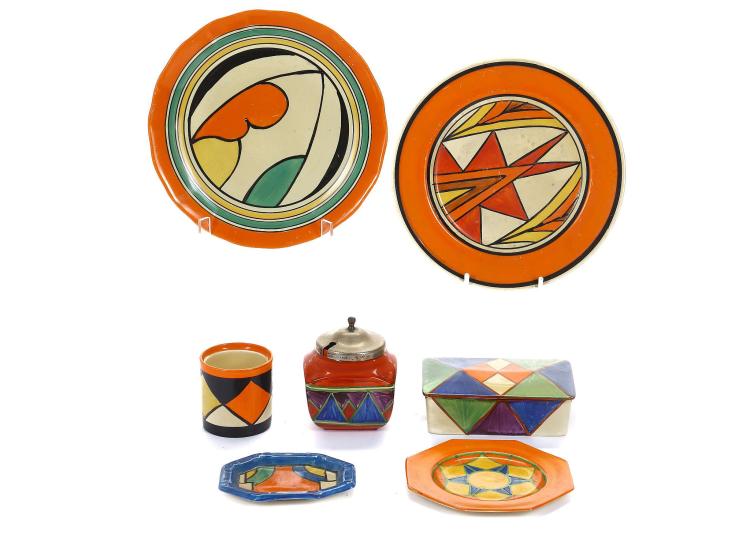
|
CLARICE CLIFF COLLECTION OF GEOMETRIC PATTERN ITEMS, consisting of two plates, two side…
Printed Bizarre marks and a Newport Pottery stamp show how a backstamp can strengthen a known line.
|
Chiswick Auctions | Jan 16, 2018 | 75 | £687 | Impressed seal or chop |
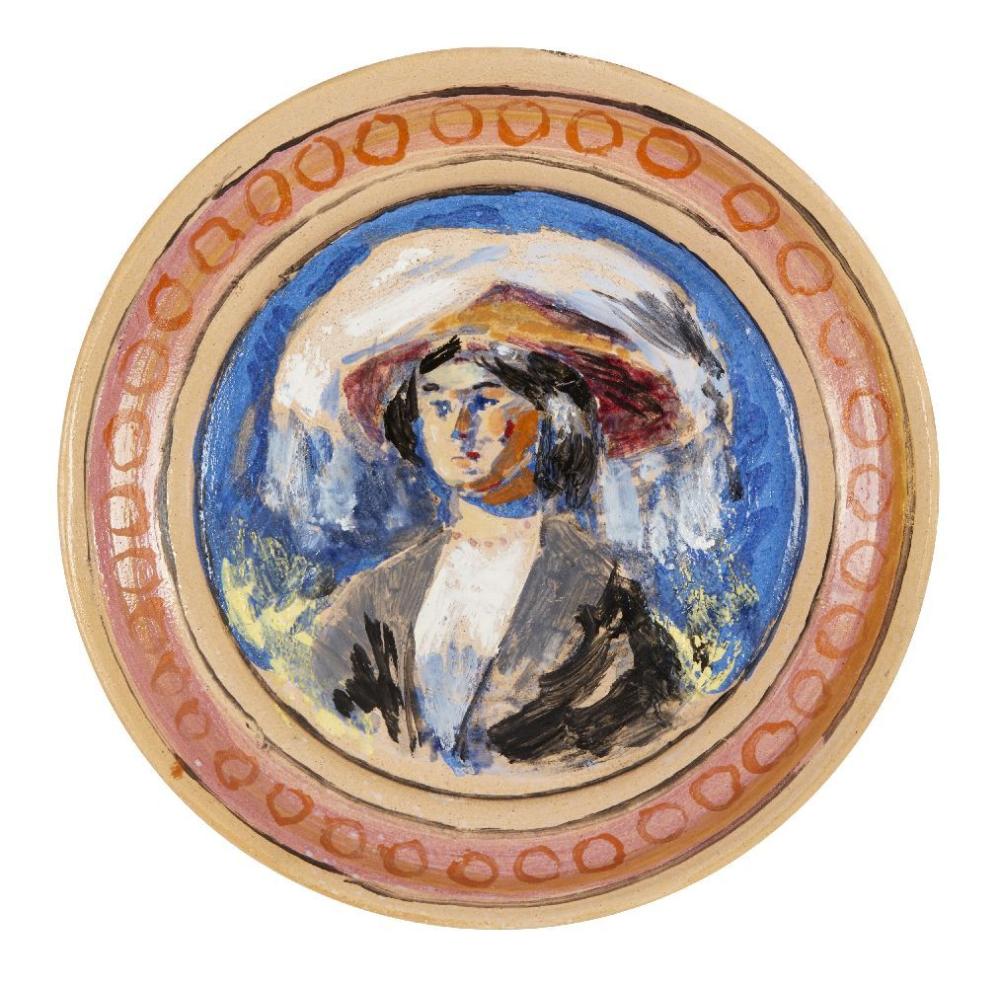
|
Quentin Bell (1910-1996) a ceramic portrait plate Signed on the back Quentin Bell, Fulham…
A signed back and impressed Fulham Pottery marks reinforce the studio context more than the signature alone.
|
Roseberys | Jun 25, 2019 | 119 | £580 | Sticker label or foil tag |
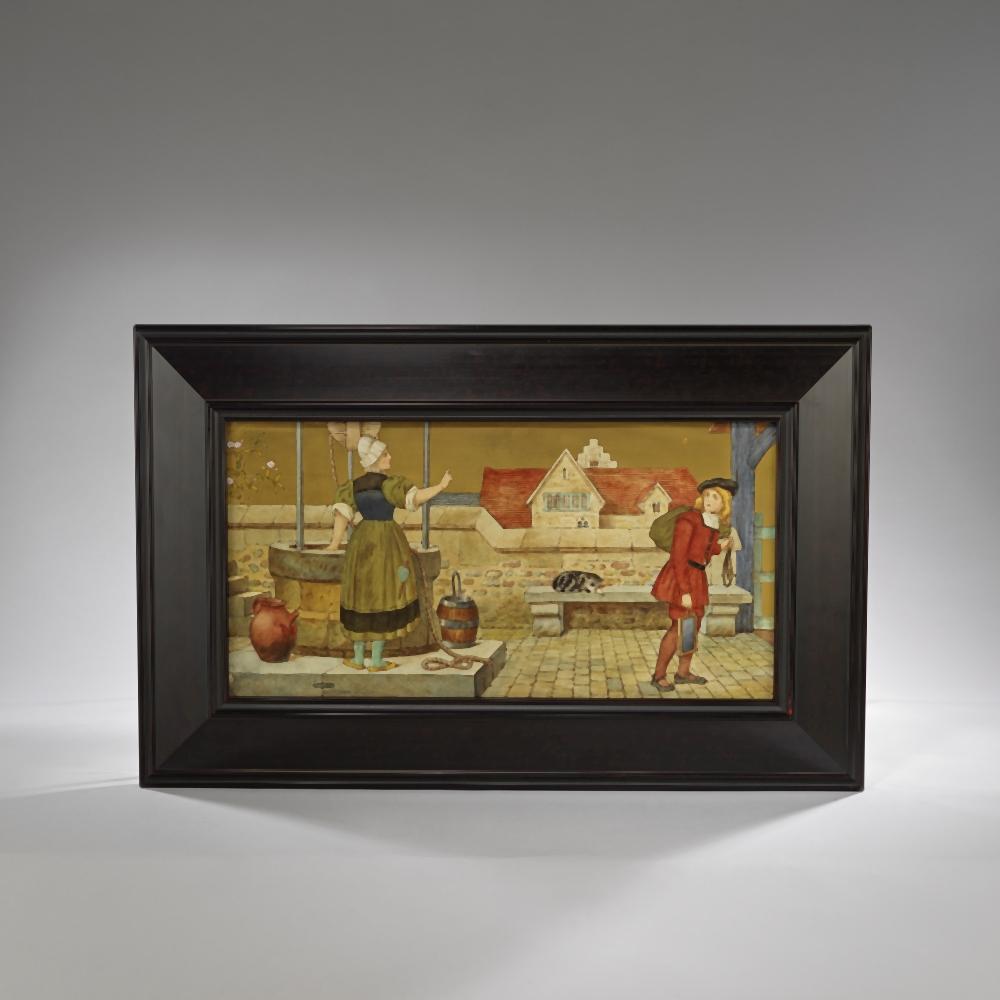
|
HENRY STACY MARKS (1829-1898) FOR MINTONS ART-POTTERY STUDIO KENSINGTON GORE (1871-1875)…
The studio association and maker wording are the clue; the mark has to fit the age and surface wear.
|
Bonhams | Dec 5, 2023 | 6 | £1,000 | Edition number or batch code |
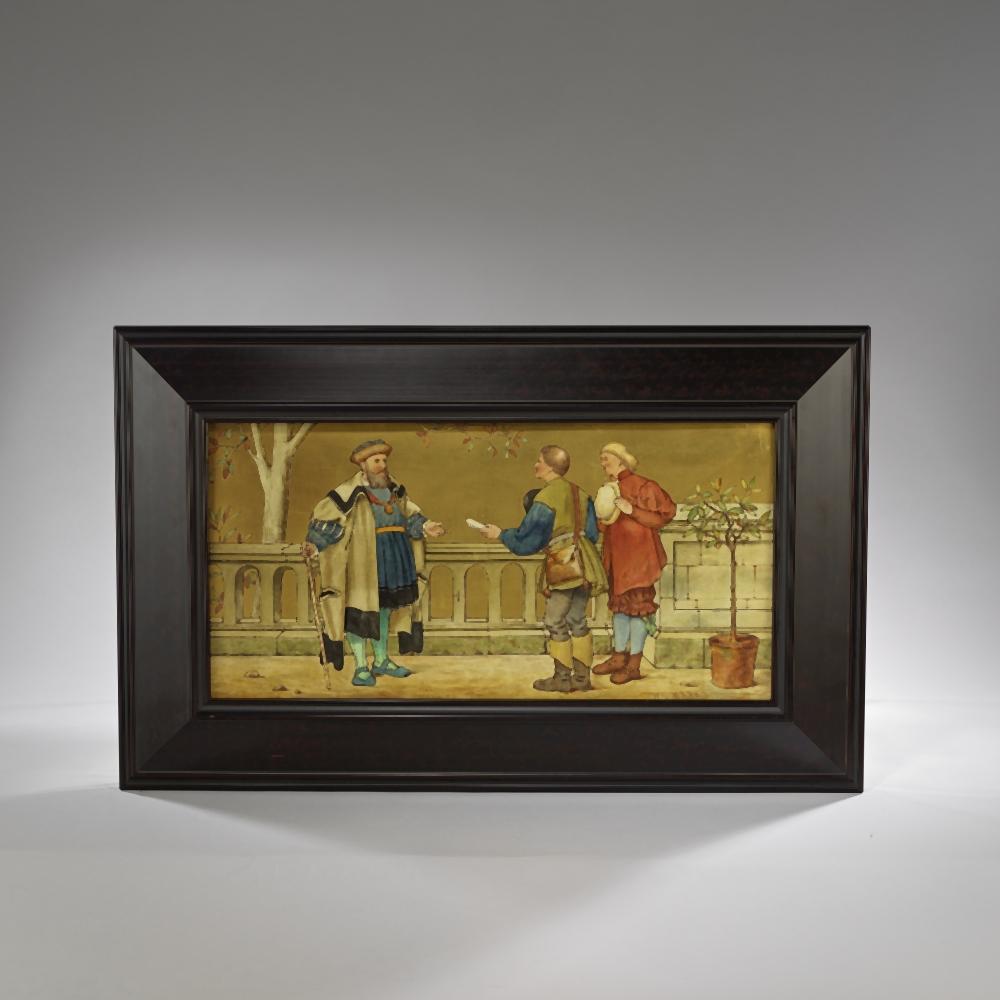
|
HENRY STACY MARKS (1829-1898) FOR MINTONS ART-POTTERY STUDIO KENSINGTON GORE (1871-1875)…
The studio association and maker wording are the clue; the mark has to fit the age and surface wear.
|
Bonhams | Dec 5, 2023 | 9 | £1,000 | Country-of-origin or import mark |
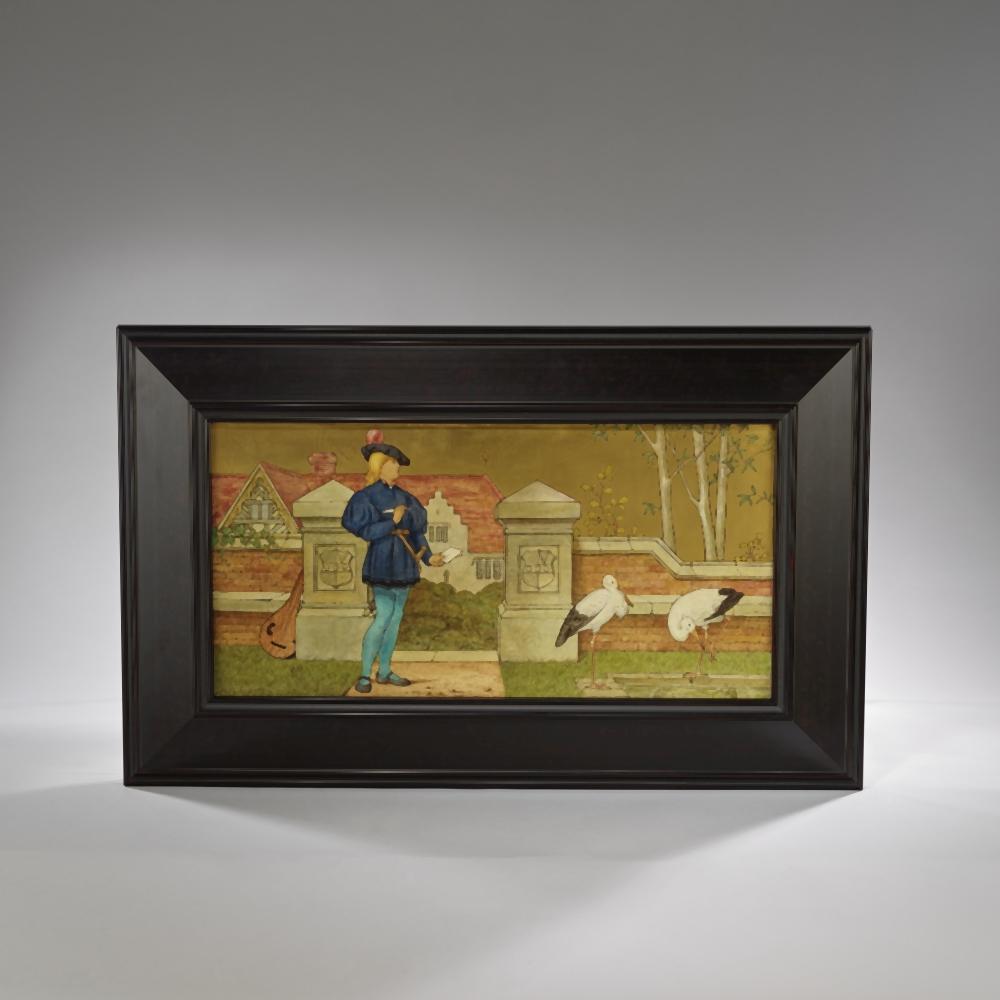
|
HENRY STACY MARKS (1829-1898) FOR MINTONS ART-POTTERY STUDIO KENSINGTON GORE (1871-1875)…
The studio association and maker wording are the clue; the mark has to fit the age and surface wear.
|
Bonhams | Dec 5, 2023 | 7 | £1,100 | Registry or pattern number |
A good mark can help explain the market, but the market still asks: does the body, glaze, and wear match the story? In the Clarice Cliff lot, for example, a printed Bizarre mark and a Newport Pottery stamp reinforce the line. In the Ladi Kwali mugs, impressed LK marks align with studio identity. And the Quentin Bell plate shows why a signature matters most when the backstamp and surface wear also make sense.
Check whether your pottery mark is worth appraising
Use the free screener to share base photos, mark closeups, condition notes, and your goal before paying for a written report.
Free first read
Share your pottery mark details before you pay
Upload the base photo, describe the mark, and tell us whether you want to sell, insure, or simply understand what you found. We use those clues to suggest the right next step.
Private review. Free instant estimate first. Checkout only if you decide to proceed.
The 11 pottery marks that deserve a closer look
Use the list below as a field guide while you turn the piece over. The goal is not to guess the maker from one clue, but to stack clues until the story becomes believable. If a mark looks exciting but the clay, glaze, and wear feel wrong, slow down. If a mark looks modest but the form is right, you may have found the better piece.
-
Impressed factory seals and chops
Impressed marks are pressed into soft clay before firing, so they should feel integrated with the body rather than sitting on top of it. On a good example, the edges soften naturally with age, but the form of the letters or symbols still remains readable. That is why impressed LK marks on Ladi Kwali mugs matter: the mark sits where it should, and the surface wear makes sense for the age of the piece.
At estate sales, the danger is a modern impression added to an older pot. Check whether the compression of the clay, foot-ring wear, and glaze coverage around the mark all belong to the same firing story.
-
Painted underglaze marks
Painted marks can be quick, expressive, and surprisingly reliable when the brushwork matches the studio style. They can also be easy to fake, because a few strokes of paint are easier to add than an impressed seal. In the Clarice Cliff examples, printed and painted identification works because the mark belongs to a known production language, not because the mark is pretty.
Look for consistency in line weight, glaze reaction, and placement. A painted mark that floats above the wear pattern or looks too fresh against a cracked base deserves skepticism.
-
Incised and cut marks in the foot ring
Incised marks are scratched or cut into the clay, often by hand, and they can be especially useful on studio pottery and experimental wares. Side light is your friend here. Raking light reveals whether the cut edges are softened by age or sharply re-cut after the fact. The cut should also fit the rest of the hand-made surface, not fight it.
If the vessel is supposed to be from a high-fire studio but the incised line looks shallow, mechanical, or placed in an odd location, treat the piece as unresolved until you have more evidence.
-
Stamped or transfer-printed maker marks
Stamped and transfer-printed marks are common on factory ceramics, and they often tell you more than a signature alone. The Clarice Cliff Bizarre marks and Newport Pottery stamp are good reminders that a recognizable production mark can anchor a desirable line. A neat stamp can be a plus, but it is not enough unless the rest of the object agrees.
Estate-sale buyers sometimes overpay because the stamp looks official. Remember that a stamp only proves identity when the shape, body, and decoration are also right for the period.
-
Sticker labels and foil tags
Sticker labels can point you toward a gallery, importer, studio, or retail seller, and they are worth preserving. But they are also the easiest clue to replace. A label may help you identify the line, yet it should never carry the valuation by itself. If the label claims a premium maker, check whether the clay body and finish actually belong to that maker’s known output.
The safest approach is to photograph the sticker before anything else. Then compare the vessel’s shape, glaze, and foot wear with authenticated examples rather than with the label text alone.
-
Signature plus studio backstamp
Some of the strongest pottery finds combine a hand signature with a studio or factory mark. The Quentin Bell plate is a good example: the signed back and Fulham Pottery impressed marks reinforce each other. That matters because a signature without the right backstamp can be a weak claim, while a matching pair of marks can make the attribution much more persuasive.
Check whether the signature sits naturally on the base and whether the studio mark uses the right typography, depth, and placement for the maker’s period.
-
Edition numbers and batch codes
Edition numbers are common on art pottery and limited-run pieces, but they do not automatically make an object valuable. They do, however, help you tie a piece to a documented series. If the numbering system is consistent with a known studio practice, it can lift a piece from “decorative ceramic” to “documented collectible.”
Watch for numbers that look too uniform, too modern, or too clean for the surface. A convincing edition mark should live in the same physical world as the rest of the base.
-
Country-of-origin and import marks
Country marks sound mundane, but they can reveal when and where a piece entered the market. They are especially helpful when a line was exported under a retailer or importer rather than sold under the maker’s strongest name. Sometimes the import mark is the bridge that helps you date the object correctly. Sometimes it simply explains why the mark looks less glamorous than the object deserves.
If the country mark does not match the style of the pottery, be cautious. A later-added mark can be a clue, but it can also be a distraction.
-
Registry, patent, and pattern numbers
Number systems can unlock identity when words are missing. Registry and pattern marks may not look flashy, but they can connect a pot to a shape, series, or production run. They also help you compare the object against catalogs and past auction results. When a number appears with a known maker, it can be the difference between a guess and a usable attribution.
Numbers should feel original to the surface. Fresh scratching, paint that floats over wear, or a number that ignores the rest of the base layout should trigger more research.
-
Partial marks hidden under glaze or wear
Not every important mark is obvious. Some are partly hidden by glaze pooling, kiln soot, shelf wear, or heavy base grime. That is why a quick wipe and a glance are not enough. Use light, tilt the piece, and look for repeated clues: a faint impression, a color break, a ghosted stamp, or a mark that appears only from one angle.
Partial marks are valuable because they often belong to pieces that have circulated for decades. But they also punish sloppy assumptions. A half-visible mark can be a real clue or a random abrasion.
-
Marks that look too new, too neat, or too convenient
Sometimes the best clue is the warning itself. If a mark looks crisp on a heavily worn base, if the lettering style feels off, or if the placement ignores the shape of the foot ring, slow down immediately. That is where reproduction marks, replacement labels, and later additions hide. A good estate-sale find often earns trust by failing these tests less than you expect.
The rule is simple: if the mark is exciting but the object is not convincing, believe the object first.
Visual cues collectors compare in the field
These editorial illustrations are designed to show the kinds of surfaces that matter when you turn a piece over at an estate sale. They are not tied to a single lot; they are reference visuals for reading the base, the mark, and the wear pattern together.


What actually changes the value
A pottery mark is only one piece of the value puzzle. Collectors pay more when the mark supports a known maker, a desirable form, a documented series, or a rare glaze. They pay less when a mark looks official but the pot itself feels ordinary. That is why the best estate-sale decisions usually come from a stack of clues rather than a single stamp.
- Maker and line: A documented studio, factory, or designer line usually matters more than the mark’s visual drama.
- Form: A desirable shape can lift value even when the mark is faint, while a common shape can hold value back.
- Condition: Chips, restoration, and over-cleaning affect both collectability and confidence in the mark.
- Surface logic: Wear should move consistently across the base, body, and mark.
- Provenance: Gallery labels, receipts, and family history help, but they still need physical confirmation.
In the comps above, that logic shows up repeatedly: the Clarice Cliff lots are supported by recognizable printed marks; the Ladi Kwali mugs work because the impressed marks, glaze, and form all belong together; and the Quentin Bell plate gains strength from the combination of signed and impressed evidence. The mark matters, but the object has to finish the sentence.
When to stop guessing and get a real appraisal
Get an appraisal when the mark seems promising, the form feels unusual, or the estate-sale price is low enough that the upside matters. That is especially true when you have a studio-pottery signature, a rare impressed mark, or a label that points to a known designer. It is also true when the mark is hard to read but the pot feels old, balanced, and well-made.
If the seller’s label and the pottery itself disagree, or if the mark looks too new for the wear, treat the item as unverified. A few minutes with the right evidence can save you from buying a reproduction or from overlooking a legitimately valuable piece.
Choose your next step
Use the path that matches the decision you need to make about the item.
Not sure it is worth appraising?
Start with a lower-friction screen to understand the likely category, evidence, and next step.
Upload photos for a free first lookWant proof before paying?
See how a signed report documents photos, comparable evidence, condition notes, and value conclusions.
View signed report sampleNeed a signed report?
Use this for insurance, estate, donation, resale, or documented value decisions.
Need documentation now? Start signed appraisalNeed local or specialist help?
Compare directory options when the work needs in-person review or a specialist near you.
Find local specialistsSee what the report looks like
Sample reports show how photos, comparable evidence, condition notes, and a value conclusion are documented.
Need a second opinion?
Turn a promising pottery mark into a defensible appraisal path
If a mark, label, or signature seems close but not conclusive, send the photos through Appraisily and let the market context do the sorting. You’ll get a cleaner next step than a guess at the sale table.
- Photo-first review of the base and mark
- Market-aware guidance for selling or insuring
- Useful next steps even when the mark is partial
Best for pottery, ceramics, and estate-sale finds that need a calmer look.
Sources and note
This article uses Appraisily’s internal auction results database for the comparable-sales table and the valuation examples. For our update and sourcing standards, see Editorial policy.
- Internal auction comps are used for education and appraisal context, not as guaranteed sale prices.
- Generated images are editorial illustrations that show reading techniques, not specific auction lots.
- When the mark and the object disagree, the object wins the argument.
Search variations collectors ask
Readers often search for the same clue in slightly different ways. These phrases match the guidance above and help you check the right part of the base.
- how to tell a real pottery mark from a later replacement
- which impressed pottery marks are worth a closer look
- do sticker labels on pottery increase estate sale value
- what does an incised mark on a ceramic base mean
- how to date pottery from a backstamp and glaze wear
- which painted pottery marks are most reliable at estate sales
- how to spot a fake maker mark on old ceramics
- when should I get a pottery appraisal after an estate sale find
Each question is answered by the mark-plus-body method used throughout this roundup.