
Appraisal and value basics for abstract cityscapes
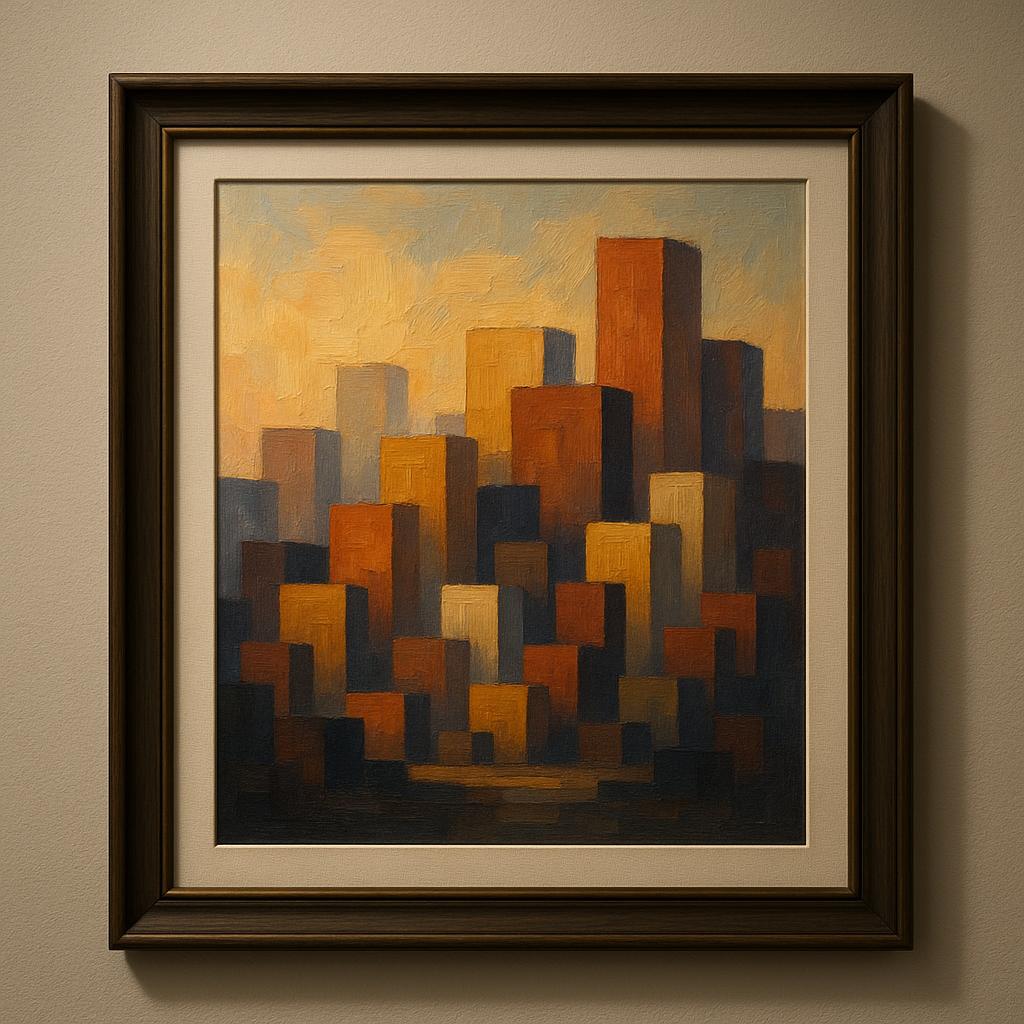
An original abstract city scene painting signed P. Guillon should be valued through object evidence first: signature, medium, support, condition, provenance, and comparable abstract-cityscape sales. Use this guide to compare the signals that matter before paying for a formal appraisal or deciding whether to sell.
An original abstract city scene can look “modern” at first glance, but the value can swing widely depending on whether it’s a one-off painting (oil/acrylic on canvas) or a signed print, whether the signature is genuine, and whether there’s any trail back to an artist, gallery, or collection.
This guide is written for the common situation: you have a painting that depicts an abstract cityscape and it’s signed “P. Guillon”, but you don’t have much provenance. The goal is to help you collect the right evidence so an appraiser (or a reputable buyer) can answer three questions: what is it? when was it made? and what is it realistically worth today?
Free first read
Check the cityscape evidence before paying for a report
Upload the front, back, signature area, paint surface, frame, labels, and condition photos. The free screener can separate decorative-market value from attribution-research value.
Start with a free screener. Use a signed report only if you need insurance, estate, donation, or sale documentation.
How We Research Valuation Data
Our appraisal guides are based on auction results, dealer pricing data, and professional appraiser insights. We may earn a commission when you use our free professional appraisal service. Learn about our editorial standards.
Step 1: photograph the painting like an appraiser
Most “mystery signatures” get solved (or ruled out) with better documentation, not better guessing. Before you clean the surface, remove the backing paper, or reframe, capture a complete photo set.
- Full front (straight-on, no glare) plus one angled shot to show brush texture.
- Signature close-up (and a second close-up under raking light if possible).
- Detail shots of the most distinctive passages (skyline shapes, palette knife ridges, drips).
- Full back including stretcher, canvas, dust cover, and hanging hardware.
- Corner/back close-ups showing staples/tacks, stretcher keys, and any labels or stamps.
- Frame details (front + back), especially if the frame has a framer label.
If you’re sending photos for a remote review, include the painting’s unframed dimensions (height × width) in inches or centimeters and note whether the signature is on top of varnish or under it.
Step 2: evaluate the “P. Guillon” signature (without assuming attribution)
A readable signature is helpful, but it’s not the same as a documented artist attribution. The name “P. Guillon” may correspond to a listed artist, a regional painter with limited records, or a signature applied to decorative work.
Use the signature as a starting point and look for consistency with the rest of the object:
- Medium match: is the signature painted in the same medium as the artwork, or written in marker on top of varnish?
- Aging match: does the signature crack/craquelure like surrounding paint, or does it look fresh and sharp?
- Placement: lower-right and lower-left are common; odd placements can still be legitimate but deserve extra scrutiny.
- Print vs painting check: inspect with a flashlight—are there real brush ridges, or only a flat printed texture?
Red flags don’t automatically mean “fake”—they often mean the object is not what it was assumed to be (for example, a signed limited edition print rather than an original oil).
Step 3: confirm the medium and support
For value, the market usually ranks works on paper (prints/drawings) differently from original paintings. Even within “painting”, oil, acrylic, and mixed media can signal different eras and different collecting audiences.
- Oil paint often shows a longer open time (soft blends) and thicker impasto; older varnish can yellow over decades.
- Acrylic tends to dry fast and can look more matte; it became common in post-war and contemporary work.
- Canvas vs board: canvas on a wooden stretcher is common; masonite/board supports can point to mid-century onward.
If you’re unsure, take a macro photo of a heavy paint ridge and a close-up of an exposed canvas edge or the back. These are the images specialists rely on.
Step 4: use the back of the painting to narrow the date range
Abstract cityscapes are painted across many decades, so style alone isn’t a reliable date tool. The reverse often gives you stronger clues.
- Fasteners: hand-cut tacks and irregular nails suggest older work; uniform staples often indicate later stretching.
- Stretcher construction: keyed stretchers are common; very uniform machine-cut stretchers often point later.
- Labels: gallery, shipping, exhibition, or framer labels can be more valuable than the signature.
- Hanging hardware: modern D-rings and braided wire are common on contemporary work.
Take photos before removing anything—original labels and old dust covers are part of the object’s history.
Step 5: condition issues that change value the most
Condition is one of the largest value multipliers for decorative modern paintings, especially when the artist is not widely catalogued. Small issues can be acceptable; structural problems can halve value.
- Paint loss/flaking: active flaking is urgent; do not transport without stabilizing.
- Tears or punctures: repairs are possible, but visible patches reduce buyer confidence.
- Varnish haze/yellowing: can mute an abstract palette; cleaning should be done by a conservator, not DIY.
- Water damage or mold: usually a major negative and requires professional assessment.
- Frame condition: a quality frame helps presentation, but avoid harsh DIY “restoration”.
Step 6: provenance that actually helps (and what doesn’t)
For an artist name that isn’t immediately recognizable, provenance is often what turns a “nice decor piece” into a confident market listing.
Strong provenance examples:
- Gallery receipt or invoice with the artist name, title, and date.
- A label on the reverse that matches a known gallery or exhibition venue.
- Photographs showing the painting in-situ in an identifiable collection over time.
Weaker signals (still worth saving, but not definitive): generic certificates without contact details, unsigned appraisals without supporting photos, or second-hand stories with no paperwork.
Value guide: what usually drives the price for signed abstract cityscapes
Without an established auction track record for the named artist, pricing typically follows a “decorative modern painting” pattern: the market rewards size, visual impact, condition, and presentation more than the signature itself.
In practice, appraisers often see three broad outcome tiers:
- Decorative resale tier: original signed modern paintings with no provenance often trade in the low hundreds, especially if the size is modest or condition is mixed.
- Strong decorative / designer tier: larger works with confident technique, a desirable palette, and clean condition can perform better, particularly when sold through a regional auction or a design-focused marketplace.
- Attribution premium tier: if “P. Guillon” can be linked to a documented artist (or a gallery/exhibition history), value can increase significantly because buyers can compare like-with-like.
The fastest way to avoid mispricing is to treat the signature as one data point and base expectations on the object evidence (size, medium, support, condition) plus any provenance you can document.