Antique Corn Sheller Value: appraisal and value basics
Antique Corn Sheller Value research should start with identification, condition, provenance, and recent comparable sales. Use this guide to compare the signals that matter before paying for a formal appraisal or deciding whether to sell.
Introduction to Antique Corn Shellers
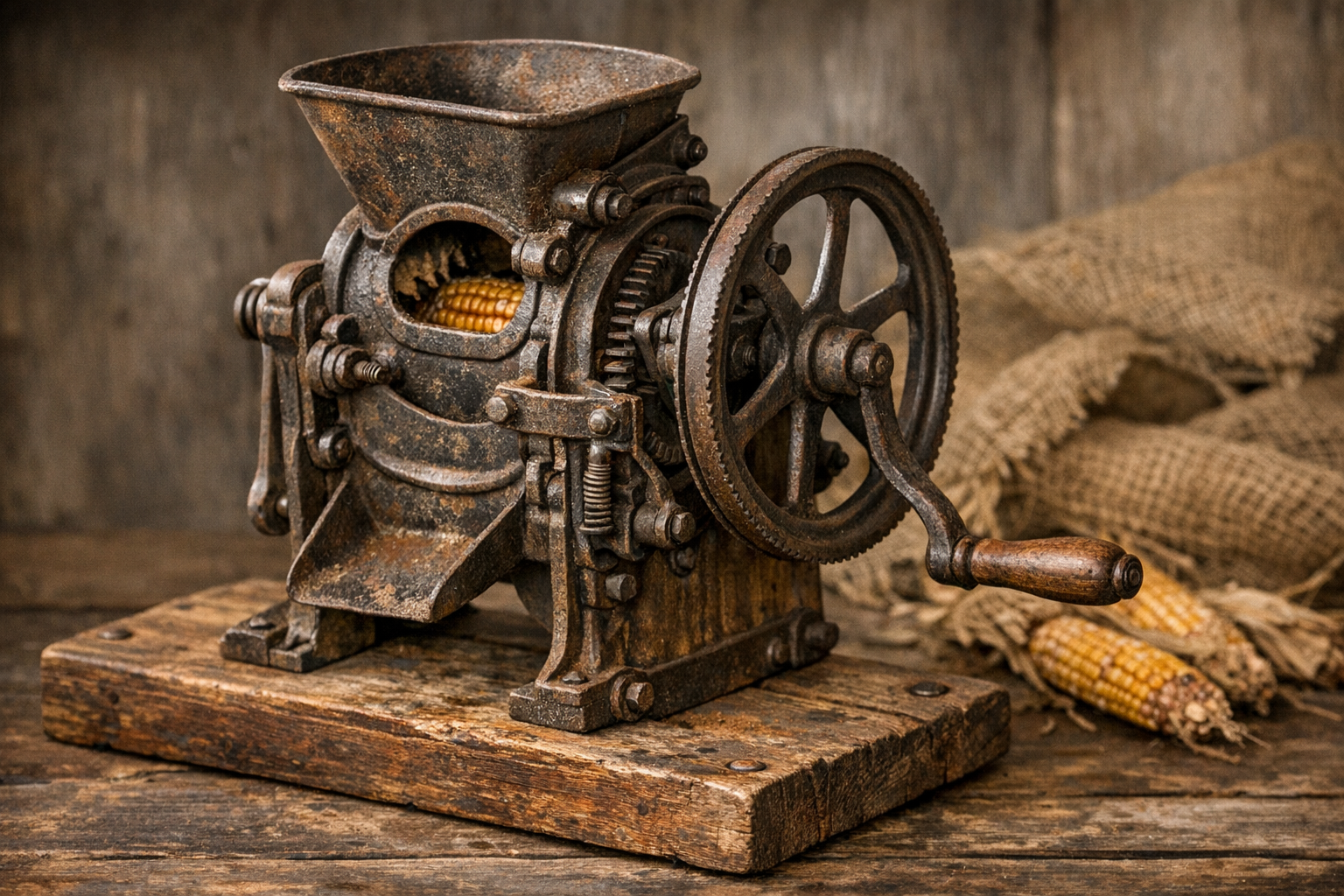
Today, these practical farming implements have found new life as sought-after collectibles, appealing to antique tool enthusiasts, agricultural history buffs, and rustic decor collectors. Whether displayed in a country home, incorporated into farmhouse-style decor, or treasured as part of an antique tool collection, corn shellers offer both historical significance and aesthetic appeal.
This comprehensive guide explores the market for antique corn shellers, including their historical development, identification tips, value ranges, and factors that influence their worth in today’s collectibles market.
Antique Corn Sheller Market Overview
The History and Evolution of Corn Shellers
Corn Sheller Historical Development
- 1839
First Mechanical Corn Sheller
The first patented mechanical corn sheller was introduced, revolutionizing farm productivity by automating the kernel removal process that had previously been done by hand.
- 1850s-1880s
Innovation and Expansion
The post-Civil War era saw rapid development of improved designs and widespread adoption of corn shellers across American farms, with numerous patents filed during this period.
- 1880s-1920s
Golden Age of Corn Shellers
This period witnessed peak production with major manufacturers like International Harvester, John Deere, and regional companies producing a variety of models from simple hand-crank designs to more elaborate mounted and powered versions.
- 1930s-1940s
Decline and Mechanization
As farm mechanization advanced with combines and larger equipment, traditional hand-operated corn shellers gradually became obsolete, marking the end of their widespread use in agriculture.
Before mechanical corn shellers, farmers removed kernels by hand using simple tools or by rubbing ears of corn against each other - a tedious and time-consuming process. The introduction of mechanical shellers dramatically increased productivity, allowing farmers to process far more corn with less effort.
Early shellers were primarily hand-cranked models, often mounted on wooden boxes to catch the kernels. As technology advanced, larger models emerged that could be powered by windmills, water wheels, and eventually gasoline engines or electric motors.
Types of Antique Corn Shellers
Hand-Cranked Box Shellers
These are the most common type of antique corn shellers found by collectors today. Key features include:
- Mounted on wooden boxes (often walnut or oak)
- Cast iron mechanisms with a hand crank
- Single-hole design where corn ears are inserted one at a time
- Typically produced from the 1860s through the early 1900s
- Examples include the “Little Giant” and many unmarked regional models
Freestanding Cast Iron Shellers
More substantial than box models, these featured:
- All-metal construction with integrated stands
- Higher output capacity
- More elaborate gearing systems
- Often branded by major manufacturers
- Examples include models by International Harvester, John Deere, and Root-Heath Manufacturing
Industrial and Farm-Scale Shellers
Larger models designed for commercial operations:
- Belt-driven mechanisms for connection to external power sources
- Multiple corn-input capacity
- Often mounted on wheels for transportation
- More rare in the collector market due to their size
- Higher values when found in complete, working condition
Major Manufacturers and Identifying Marks
Prominent Corn Sheller Manufacturers
International Harvester (IH) / McCormick-Deering
- One of the most prolific producers of agricultural equipment
- Models often feature the distinctive IH logo or “McCormick-Deering” mark
- Known for high-quality construction and consistent design
- Values typically range from $150-$325 depending on condition
John Deere
- Recognized by the iconic green paint and leaping deer logo
- Less common than some other manufacturers, commanding higher prices
- Well-documented models with verifiable production dates
- Premium values ranging from $200-$450 for complete examples
Root-Heath Manufacturing Company
- Based in Plymouth, Ohio
- Known for the “Never Fail” model of corn shellers
- Often identified by the cast name on the frame
- Mid-range collectible values from $150-$250
Tiffin Wagon Co.
- Ohio-based manufacturer known for quality farm implements
- Less common in the market, adding to their collector appeal
- Distinctive casting marks on metal components
- Higher than average values for well-preserved examples
Other Notable Manufacturers:
- Black Hawk (A.H. Patch Co.)
- Challenge (Batavia, IL)
- Ellis Keystone Agricultural Works
- Silver Manufacturing Company
- Standard (Richmond, IN)
Manufacturer Value Comparison
Average market values by major manufacturer (2023)
Tips for Identifying Your Corn Sheller
Check for Cast Markings: Examine all cast iron surfaces for impressed manufacturer names, patent dates, or model numbers
Look for Original Paint: Many manufacturers used distinctive colors (like John Deere green) that can help with identification
Examine Construction Details: The style of mounting brackets, crank design, and feed mechanism can provide clues about the maker
Patent Dates: Often cast into the metal, these provide a minimum age for the piece
Research Similar Examples: Comparing your sheller to documented examples in reference books, museums, or auction archives
Factors Affecting Antique Corn Sheller Values
Condition Assessment Checklist
Factors that contribute to higher value in antique corn shellers
- Complete mechanical components with no missing parts
- Functional operation with smooth turning mechanism
- Original paint or appropriate period finish
- Intact wooden components without significant damage
- Visible manufacturer markings or patent information
- Original mounting hardware or stand included
- Free from excessive rust or metal deterioration
- Period-appropriate repairs (if any)
Manufacturer and Rarity
The manufacturer significantly impacts value, with well-known brands like International Harvester and John Deere typically commanding higher prices than unmarked or less recognized makers. Rarer models or those from smaller regional manufacturers can sometimes bring premium prices if they have distinctive features or historical significance.
Condition and Completeness
Condition is perhaps the most critical factor affecting value. Corn shellers with:
- Complete, functioning mechanical components
- Original wooden bases or mountings
- Minimal rust or damage
- Original paint or appropriate patina
will consistently bring higher prices than incomplete or heavily damaged examples. Working condition also adds significant value, as many collectors appreciate being able to demonstrate the mechanical operation.
Originality vs. Restoration
The antique tool collecting community generally values original, unrestored condition, even with wear appropriate to the age of the piece. However, sympathetic restoration that preserves the character while making the piece presentable can sometimes enhance value. Over-restoration or inappropriate modern finishes typically decrease desirability among serious collectors.
Historical Documentation
Corn shellers with provenance, original sales receipts, or documented history of use can command premium prices, especially if connected to significant farms, historical events, or noteworthy owners.
Decorative Appeal
Some corn shellers are purchased primarily for their decorative value rather than historical significance. Those with visually interesting cast patterns, attractive proportions, or design elements that complement rustic décor often sell for higher prices to decorators and casual collectors.
Current Market Value Ranges
Value Brackets for Antique Corn Shellers
Entry-Level: $75-$125
- Unmarked or common manufacturers
- Incomplete examples missing parts
- Poor to fair condition with significant rust or damage
- Primarily decorative value rather than historical significance
Mid-Range: $125-$250
- Common manufacturers in good condition
- Complete mechanical components, may need minor repair
- Some original finish remaining
- Typical condition for most farm-found examples
Premium: $250-$400
- Well-known manufacturers like International Harvester, John Deere
- Excellent condition with working mechanism
- Strong original paint or appropriate patina
- Complete with all components and mounting hardware
Exceptional: $400-$675+
- Rare models or unusual variants
- Museum-quality condition
- Documented provenance or historical significance
- Original paint and full functionality
- Collector-grade examples from sought-after manufacturers
According to forum discussions on Smokstak, most corn shellers typically sell in the $100-$175 range, with exceptional examples reaching $200 or more. Meanwhile, some rare specimens on collector sites like PicClick have been listed as high as $675, though the average selling price according to their data is around $204.
| Category | Price | Notes |
|---|---|---|
| International Harvester / McCormick-Deering | $150-$325 | Common but consistently popular |
| John Deere | $200-$450 | Brand premium for green examples |
| Root-Heath "Never Fail" | $150-$250 | Functional with original parts |
| Tiffin Wagon Co. | $175-$300 | Less common, good collectibility |
| Black Hawk / A.H. Patch Co. | $200-$325 | Distinctive design, good recognition |
| Unmarked or Regional Makers | $75-$175 | Value based primarily on condition |
</tbody> </table>
Current marketplace listings on sites like eBay show asking prices ranging from $150 to over $500, though actual selling prices tend to be more modest for typical examples.
Where to Buy and Sell Antique Corn Shellers
Buying Opportunities
Online Marketplaces
- eBay - The largest selection, but research thoroughly and check seller ratings
- Etsy - Often features higher-end or decorative examples
- LiveAuctioneers - Online auction platform with antique farm equipment
Physical Locations
- Farm auctions and estate sales in rural areas
- Antique malls and shops in agricultural regions
- Farm equipment shows and swap meets
- Rural flea markets and roadside antique stores
Specialty Venues
- Antique tool collector meet-ups
- Agricultural museums (sometimes sell duplicate items)
- Farm history associations and collector clubs
Selling Options
If you’re looking to sell an antique corn sheller, consider these outlets:
- Online Marketplaces - eBay and Etsy allow you to reach a wide audience of collectors
- Consignment Auctions - Local auction houses in farming communities often have buyers for agricultural antiques
- Antique Dealers - May offer immediate payment, though typically at wholesale prices
- Collector Forums - Sites like Smokstak cater to antique engine and farm tool enthusiasts
- Specialty Auctions - Events like TractorHouse or MachineryTrader auctions specialize in farm equipment
External Resources for Corn Sheller Collectors
eBay Antique Corn Sheller Section
Browse current listings to get a sense of asking prices and available inventory for antique corn shellers of various types and conditions.
Smokstak Antique Engine Community
Active forum for antique engine and farm tool enthusiasts with valuable discussion threads about corn sheller identification, restoration, and values.
LiveAuctioneers Corn Sheller Results
Research historical auction results and current listings for antique corn shellers to track market trends and realized prices.
Etsy Antique Corn Sheller Market
Curated selection of higher-end antique corn shellers, often with detailed descriptions and quality photographs.
TractorHouse Auction Results
Specialized auction platform featuring farm equipment including historical corn shellers with archived results.
Hopkins Memorial Forest Museum
Educational resource with information about the historical development of corn shellers and their role in agricultural mechanization.
Tips for Collectors
Starting a Collection
Educate Yourself First: Before making significant purchases, learn about the different styles, manufacturers, and value indicators. Reference books on farm antiques and online resources can provide valuable background.
Start with Representative Examples: Begin with affordable, common models that showcase the basic design and functionality. As your knowledge grows, you can add more specialized or rare examples.
Consider Condition vs. Price: Determine your collecting priorities - are you seeking pristine examples for display, or are you interested in the mechanical aspects and willing to accept wear?
Develop Relationships: Connect with established collectors, antique dealers specializing in agricultural items, and rural auctioneers who can alert you to upcoming opportunities.
Document Your Finds: Keep records of where you acquired each piece, what you paid, and any known history - this information adds value and context to your collection.
Restoration Considerations
Many collectors face decisions about whether and how to restore antique corn shellers:
Preservation Approach
- Clean gently without removing patina
- Stabilize any active rust with appropriate products
- Lubricate moving parts with period-appropriate oils
- Avoid aggressive cleaning or sandblasting
Sympathetic Restoration
- Replace missing parts with period-correct components
- Repair wooden bases with similar aged wood
- Touch up paint only where necessary
- Maintain the character and evidence of use
Display Restoration
- More comprehensive refinishing for decorative purposes
- Replacement of severely damaged components
- Focus on visual appeal and functionality
- May reduce value for purist collectors but enhance appeal for decorators
Remember that improper restoration can significantly diminish the value of an antique corn sheller, particularly for serious collectors who value authenticity and historical integrity.
Common Questions About Antique Corn Shellers
When was the first corn sheller made?
What are the different types of corn shellers?
-
Manual hand-cranked shellers - Compact, portable devices suitable for small farm operations, often mounted on wooden boxes to catch kernels
-
Mounted or freestanding models - Larger units with their own framework, sometimes with flywheels for more consistent operation
-
Power-driven shellers - Models designed to be connected to external power sources like windmills, water power, or later, gasoline engines
-
Industrial/commercial shellers - Large-capacity machines for commercial operations, often with conveyor systems for continuous feed
What is a corn sheller machine?
Corn shellers work through a combination of metal teeth, rollers, or studded cylinders that strip the kernels from the cob as it passes through the mechanism. Most antique models feature:
- A hopper or input area where ears of corn are fed into the machine
- A cranking mechanism (on manual models) to drive the internal components
- Toothed cylinders or wheels that grab and remove the kernels
- Separate pathways for the expelled kernels and empty cobs
How do I identify the manufacturer of my antique corn sheller?
-
Look for cast markings, company names, or logos on all metal surfaces of the machine
-
Check for patent dates, which often appear on the cast iron components
-
Note any distinctive color (like John Deere green) or design features associated with specific manufacturers
-
Examine the general design and compare it to reference images from reliable sources
-
Look underneath or inside the mechanism where markings might be less worn
What is the average value of an antique corn sheller?
- Common models in fair to good condition: $100-$175
- Well-known brands like International Harvester in good condition: $150-$325
- Rare or exceptional examples with original features: $400-$675
According to forum discussions on Smokstak, most corn shellers end up in the $100-125 range, with nicer examples bringing $125-175, and exceptional pieces occasionally reaching $200.
However, particularly rare or historically significant models can sometimes exceed these values at specialty auctions or when sold to dedicated collectors. The official JustAnswer antique evaluation of an International Harvester Corn Sheller placed its secondary retail market value at $250-325.Where is the best place to sell an antique corn sheller?
For common models:
- eBay or online marketplace listings
- Local farm auctions
- Regional antique malls
For valuable or rare examples:
- Specialized farm collectible auctions
- Direct sale to established collectors
- Antique dealer consignment
- Collector forums like Smokstak
Should I restore my antique corn sheller?
Arguments for preservation rather than restoration:
- Original condition and patina are valued by serious collectors
- Over-restoration can significantly reduce collector value
- Historical integrity is lost with modern materials or techniques
When restoration might be appropriate:
- If the piece is severely damaged or unusable
- When missing components affect the understanding of how it worked
- If your primary goal is decorative display rather than historical authenticity
If you decide to restore, consider these guidelines:
- Document the original condition thoroughly before beginning
- Use period-appropriate materials and techniques
- Preserve original parts whenever possible
- Consult restoration experts or experienced collectors before attempting significant work
Conclusion: The Enduring Appeal of Antique Corn Shellers
As practical tools that revolutionized farm productivity, these machines represent an important chapter in the mechanization of agriculture. Their transformation from everyday implements to sought-after collectibles demonstrates our ongoing fascination with the tangible artifacts of rural American heritage.
For collectors, corn shellers offer an accessible entry point into agricultural antiques, with examples available across a wide range of prices. Their manageable size, interesting mechanical operation, and decorative appeal make them versatile additions to collections focused on farm history, antique tools, or country decor.
Whether displayed in a rustic home setting, incorporated into a broader collection of agricultural antiques, or appreciated for their mechanical ingenuity, antique corn shellers continue to find new audiences who value these connections to America’s farming traditions.
As with many antique collectibles, the market for corn shellers reflects both nostalgia for rural heritage and appreciation for the craftsmanship of earlier eras. By understanding the factors that influence their value and the historical context in which they were created, today’s collectors can make informed decisions about acquiring, preserving, and potentially restoring these fascinating pieces of agricultural history.
What similar items actually sold for
To help ground this guide in real market activity, here are recent example auction comps from Appraisily’s internal database. These matched sales are market context only, not an object estimate or identification, and they do not guarantee a price for your specific corn sheller.
Shown USD range: USD 15-USD 750. Median of these 11 USD examples: USD 80.
| Comparable | What sold | Auction house | Date | Lot | Source-reported amount |
|---|---|---|---|---|---|
 |
Cast Iron Corn ShellerSource blocked; provenance matched | Farmer Auctions | 2013-10-15 | 89 | USD 25 (buyer’s-premium treatment unknown) |
 |
Garden City corn shellerSource blocked; provenance matched | Chupp Auctions & Real Estate, LLC | 2019-06-15 | 188 | USD 375 (buyer’s-premium treatment unknown) |
 |
Model John Deere Corn ShellerSource blocked; provenance matched | Air Works Consignment Auction Ltd. | 2023-02-16 | 8840 | USD 175 (buyer’s-premium treatment unknown) |
 |
1903 Blackhawk A.H. Patch Cast Iron Corn ShellerSource blocked; provenance matched | EJ'S Auction & Appraisal | 2026-05-23 | 1310 | USD 60 (buyer’s-premium treatment unknown) |
 |
Ertl John Deere Antique Corn ShellerSource blocked; provenance matched | Atlee Raber Auctioneer | 2025-11-21 | 282 | USD 40 (buyer’s-premium treatment unknown) |
 |
Ertl Antique Corn Sheller 1/8 Scale In boxSource blocked; provenance matched | Dinkys Auction Center | 2024-12-27 | 688 | USD 85 (buyer’s-premium treatment unknown) |
 |
C.S. BELL CO. (HILLSBORO, OHIO) PAINTED CAST IRON TABLETOP CORN SHELLER. 18.5"h. 17"w.Source blocked; provenance matched | Amelia Jeffers | 2026-02-19 | 304 | USD 30 (buyer’s-premium treatment unknown) |
 |
Unframed 19th Century Printed Advertising Broadside "Lafayette Iron Corn Sheller," R.M. McGrath & Co., Lafayette, Indiana, printed b...Source blocked; provenance matched | Skinner | 2010-03-18 | 1111 | USD 148 (buyer’s-premium treatment unknown) |
 |
(3) antique utensils/tools marked ‘Sparks’: iron hog scraper/candleholder 7 ½” T; iron Flared Dasher egg beater with horizonal handle (unusual); and hand-held iron hand corn sheller with wooden handles 6” T (All Good)Source blocked; provenance matched | Roan Inc. Auctioneers & Appraisers | 2024-04-28 | 160 | USD 80 (buyer’s-premium treatment unknown) |
 |
Antique c. 1880 Lot of 13 Victorian Trade Cards (J&P Coats, Hoods, Corn Sheller, Etc.)Source blocked; provenance matched | One Source Auctions | 2024-09-23 | 8 | USD 15 (buyer’s-premium treatment unknown) |
 |
#129 Hawley corn shellerSource blocked; provenance matched | Chupp Auctions & Real Estate, LLC | 2017-12-02 | 190 | USD 750 (buyer’s-premium treatment unknown) |
How these auction records were verified
Each row retains its exact source URL, lot identity, retrieval time, access result, and immutable record hash. Live source access was blocked; the exact record matched Appraisily's immutable pipeline provenance. Inspect the public comparable provenance record.
Disclosure: prices are shown as reported by auction houses and are provided for appraisal context. Learn more in our editorial policy.
Free instant estimate
Not sure if your item is worth appraising? Let us take a look.
Upload a photo, tell us what you know, and get a free first read. If a full appraisal makes sense, we will say so.
Free. No card needed. Takes about two minutes.
Choose your next step
Use the path that matches the decision you need to make about the item.
Not sure it is worth appraising?
Start with a lower-friction screen to understand the likely category, evidence, and next step.
Upload photos for a free first lookWant proof before paying?
See how a signed report documents photos, comparable evidence, condition notes, and value conclusions.
View signed report sampleNeed a signed report?
Use this for insurance, estate, donation, resale, or documented value decisions.
Need documentation now? Start signed appraisalNeed local or specialist help?
Compare directory options when the work needs in-person review or a specialist near you.
Find local art specialistsSee what the report looks like
Sample reports show how photos, comparable evidence, condition notes, and a value conclusion are documented.
Get this corn sheller appraised
Upload photos of the full sheller, maker marks, patent dates, crank, gears, wood base, paint, missing parts, repairs, and any farm history.
- Expert report with photos and comps
- Fast turnaround
- Fixed, upfront pricing
No obligation. Secure upload.
Continue your valuation journey
Find the right local specialist
Compare antique and art appraisers by location and specialty in one directory.
Antique & art specialists
Browse the Antique & Art Appraisers Directory
Choose a local specialist when the assignment needs in-person inspection or a specific credential.
Machine-readable summaries
Use these machine-friendly references for AI and crawler discovery of Appraisily content.
Ready for pricing guidance?
Start a secure online appraisal
Upload images and details. Certified specialists respond within 24 hours.
Upload photos for a free first look View signed report sample