What is an old brown Lysol bottle worth?
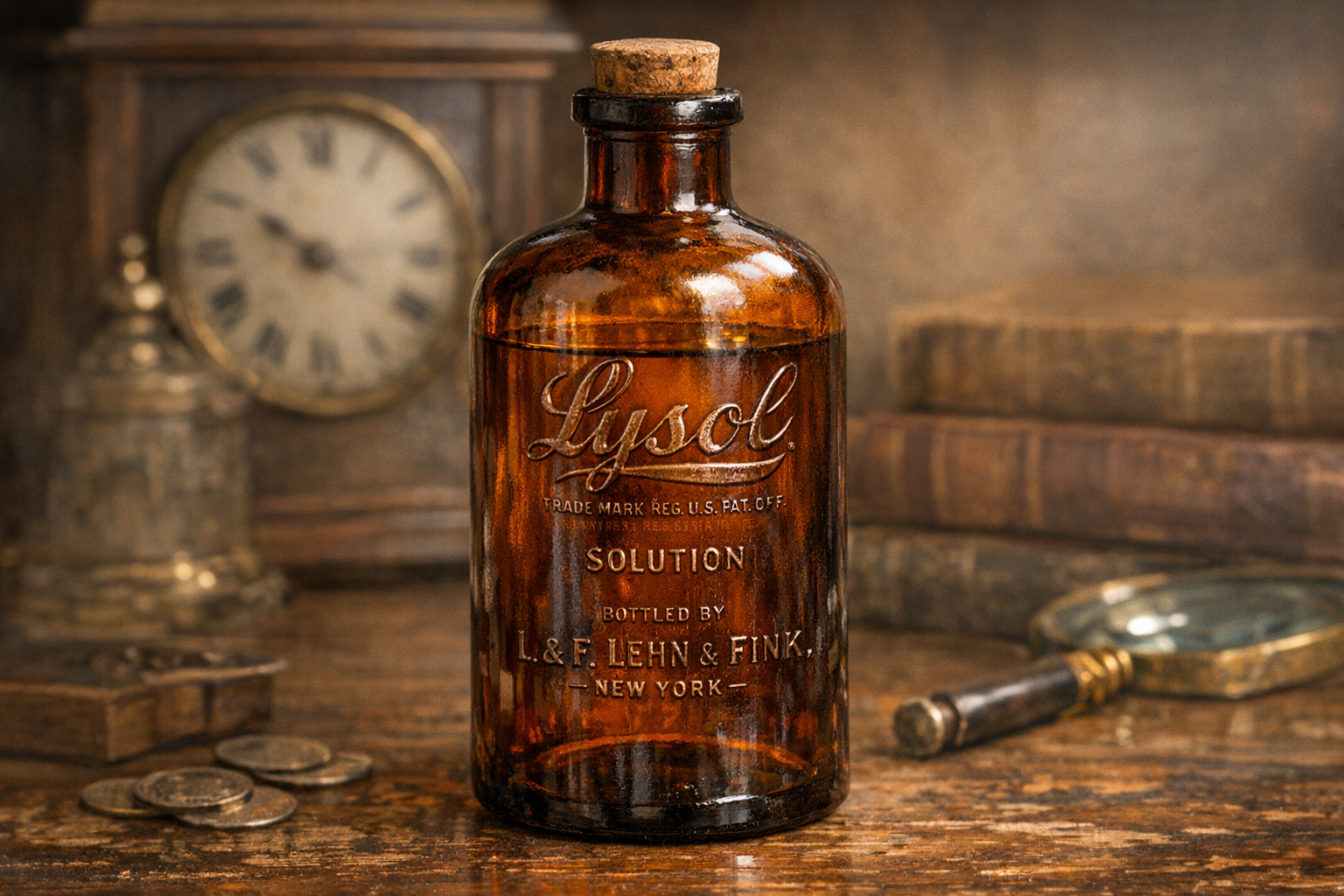
Later screw-top Lysol bottles from the 1930s–1950s are worth the least. The bottles collectors pay more for are early cork-top examples from about 1910–1920, larger 8oz sizes, and bottles that keep their original label or box. Date yours first: a cork top points to the 1910s–1930s and a screw top to the 1930s–1950s. Then look for raised “Lysol” script on the shoulder and “L & F Prod Corp” on the base or side, and check for chips, cracks and inside staining. We found no clean auction sales for this guide, so the prices below are market context, not an estimate for your bottle.
Why old Lysol bottles are brown
The iconic brown glass bottles were designed to protect the disinfectant contents from light degradation. Today, they represent an interesting intersection of utilitarian design, pharmaceutical history, and American manufacturing. As with many vintage items, their value varies significantly based on age, condition, rarity, and specific design features.
Vintage Lysol Bottle Market Overview
Depending on age, size, and condition
Most collectible manufacturing period
Indicates earlier manufacturing date
How to identify an old Lysol bottle
Key Identification Features
Most authentic vintage brown Lysol bottles share several distinguishing characteristics:
Embossed Lettering: Genuine bottles typically feature raised “Lysol” lettering in script font along the shoulder of the bottle.
Manufacturer Marks: Look for “L & F Prod Corp” (Lehn & Fink Products Corporation) and “Bloomfield, NJ” embossed on the bottle’s base or side.
Closure Types:
- Cork tops typically indicate bottles from the 1910s-1930s
- Screw tops generally date from the 1930s-1950s
Glass Color: Authentic bottles have a deep amber/brown color, intended to protect the contents from light degradation.
Size Variations: Common sizes include 2oz, 4oz, and 8oz versions, with larger bottles typically being more valuable.
How to date a Lysol bottle
Lysol bottles by era, 1910s to 1950s
- 1910-1920
Early Cork Top Era
The earliest brown Lysol bottles featured cork closures, hand-tooled tops, and simplistic raised script lettering. These earliest examples are the most valuable to collectors, often fetching $50-$250 depending on condition.
- 1920s-1930s
Transitional Period
Bottles from this era may have either cork tops or early screw caps. The embossing became more standardized, and bottles consistently showed "L & F Prod Corp" and "Bloomfield, NJ" markings. These bottles typically value between $15-$80.
- 1930s-1940s
Standardized Production
Screw caps became the norm. The script embossing remained but manufacturing became more uniform. Values range from $10-$40 for bottles from this period.
- 1940s-1950s
Late Production Period
The final era of glass Lysol bottles before plastic packaging became widespread. These later examples typically value between $5-$25.
What decides an old Lysol bottle’s value
Age and Rarity
Generally, the older the bottle, the more valuable it is. Pre-1920s Lysol bottles with cork tops are significantly rarer and command higher prices than later screw-top versions from the 1930s-1950s. If you can’t tell which era your bottle belongs to, you can upload photos of the top, the base and the embossing for a free check.
Condition Factors
Condition Assessment Checklist
Check all that apply to determine the condition of your vintage Lysol bottle
- No chips, cracks or damage to the glass
- Clear, legible embossing with minimal wear
- Original closure (cork or cap) intact
- No clouding or interior staining
- Original label present (if applicable)
- Original packaging or box included
Size and Design Elements
Larger bottles (8oz and above) typically command higher prices than smaller 2oz or 4oz versions. Unique design features or unusual embossing patterns can also increase value significantly.
Completeness
Bottles that retain their original labels, paper inserts, boxes, or accompanying marketing materials are considerably more valuable than the bottle alone.
Old Lysol bottle prices seen online
Vintage Lysol Bottle Price Ranges
Marketplace prices noted in 2024
Recent Sales Examples
- A pair of 1910-1920 cork top Lysol bottles sold on Chairish for $83
- Individual vintage Lysol bottles regularly sell on eBay for $5-$15 for common examples
- A rare 1920s Lysol bottle with original label was listed on Facebook Marketplace for $250
- Small 2oz bottles in good condition typically sell for around $5 on collector sites
Where to buy and sell old Lysol bottles
Best Places to Buy
Online Marketplaces
- eBay: The largest selection of vintage Lysol bottles with varying conditions and prices
- Etsy: Offers curated selections, often at premium prices
- Chairish: Higher-end examples, often professionally photographed and described
Physical Locations
- Antique shops and malls
- Bottle collector shows and conventions
- Estate sales and auctions
- Flea markets and yard sales
Best Places to Sell
For Maximum Profit:
- Specialized bottle collector forums and groups
- Direct sales to other collectors
- Etsy or Chairish for higher-end pieces
For Quick Sales:
- eBay auctions
- Facebook Marketplace
- Local antique dealers
For Professional Appraisal:
- Auction houses for rare or exceptional examples
- Antique bottle specialists
- Pharmacy or medical collectible dealers
Collecting Vintage Lysol Bottles
Collection Themes
Chronological Collections: Gathering examples from each decade to show the evolution of the design
Size Variations: Collecting different sizes from the smallest 2oz bottles to larger household sizes
Regional Variations: Some bottles have different embossing patterns or manufacturing locations
Complete Sets: Seeking bottles with original labels, packaging, and advertising materials
Collection Care Tips
Cleaning: Use only warm water and mild soap to clean vintage glass bottles. Avoid harsh chemicals that could damage embossing or residual labels.
Display: Keep bottles out of direct sunlight to prevent the amber glass from fading or developing a purplish tint.
Storage: Store bottles upright in a stable environment with consistent temperature and humidity.
Documentation: Keep records of purchase dates, prices, and any known provenance for each bottle in your collection.
Lysol history and the L & F Prod Corp mark
The Lysol Brand History
Lysol was first formulated in Germany in the late 19th century as a response to a cholera epidemic. The name derives from “lysol” (from the Greek “lysis” meaning to dissolve) and “ol” (from the alcohol content). It was introduced to the American market in the early 1900s by Lehn & Fink Products Corporation.
Initially marketed primarily as a household disinfectant, Lysol was promoted for a wide range of uses, from cleaning floors to questionable personal hygiene applications. The amber glass bottles protected the light-sensitive formula from degradation.
Cultural Significance
The distinctive brown Lysol bottles became a common sight in American homes throughout the early and mid-20th century. They represented the growing awareness of germ theory and the increasing emphasis on household cleanliness and disinfection that characterized the era.
The bottles themselves showcase the evolution of pharmaceutical packaging and early branded consumer products, making them important artifacts of American consumer culture.
Common Questions About Vintage Brown Lysol Bottles
How can I tell how old my brown Lysol bottle is?
- Closure type: Cork tops typically indicate bottles from 1910-1930s, while screw tops suggest 1930s-1950s
- Embossing style: Earlier bottles have more elaborate script lettering
- Manufacturer marks: Look for "L & F Prod Corp" and "Bloomfield, NJ" on the bottle
- Manufacturing techniques: Hand-tooled tops and irregular glass textures suggest earlier production
- Bottom markings: Some bottles have date codes or glass manufacturer marks on the base
Are old Lysol bottles worth anything?
- Early cork-top bottles from the 1910s-1920s can be worth $50-$250+ depending on condition
- Transitional bottles from the 1920s-1930s typically sell for $15-$80
- Later screw-top bottles from the 1930s-1950s generally range from $5-$40
How big is a typical vintage Lysol bottle?
- Small 2oz bottles (approximately 4" tall) - Most common and least valuable
- Medium 4oz bottles (approximately 5-6" tall) - Moderately common
- Large 8oz bottles (approximately 7-8" tall) - Less common and more valuable
- Rare larger sizes for commercial or institutional use
Where can I find old brown Lysol bottles for my collection?
- Online marketplaces like eBay and Etsy
- Specialty websites like Chairish and PicClick
- Antique stores and malls
- Bottle collector shows and conventions
- Estate sales and auctions
- Flea markets and yard sales
- Bottle digging sites (old dump sites, with proper permissions)
- Networking with other collectors through forums and social media groups
How should I clean my vintage Lysol bottle?
- Never use harsh chemicals or abrasives that could damage the glass or embossing
- Start with warm water and mild soap, using a soft bottle brush for the interior
- For stubborn residue, try soaking in a solution of water and denture tablets
- Be extremely careful with any remaining labels - do not scrub or soak these areas
- Rinse thoroughly with clean water
- Air dry completely before display or storage
External Resources for Lysol Bottle Collectors
Antique-Bottles.net Forum Discussion
Active forum with discussion on Lysol bottle identification, value, and collecting from experienced bottle enthusiasts.
Only Nice Things - Lysol Brown Bottles
Curated selection of vintage Lysol bottles from the 1920s-50s with detailed descriptions and professional photographs.
Chairish Antique Lysol Bottles
Marketplace featuring higher-end antique Lysol bottles with detailed information about age, condition, and provenance.
Reddit Bottle Digging Community
Active community for bottle collectors and diggers with discussions on identification, dating, and valuation of found bottles.
Clorox Company Bottle Guide
While specific to Clorox products, this manufacturer's guide offers valuable insights into dating methods for similar household product bottles.
O.Berk Antique Bottle Collector Resource Guide
Comprehensive guide to antique bottle collecting with information on identification, valuation, and preservation techniques.
Summary
Collecting, not investing
The market for vintage Lysol bottles has remained relatively stable. The rarest examples are early cork-top bottles with original labels and packaging. These bottles are primarily collected for their historical significance and aesthetic appeal rather than as pure investment vehicles.
The moderate price points make them accessible entry points for new collectors interested in pharmaceutical, advertising, or bottle collecting.
Final Thoughts
Vintage brown Lysol bottles offer a tangible connection to early 20th century American household and pharmaceutical history. Their distinctive amber glass and embossed script lettering make them attractive display pieces, while their historical context provides depth to their collectibility.
Whether you’re a dedicated bottle collector, pharmaceutical memorabilia enthusiast, or simply appreciate vintage household items, these bottles represent an accessible collecting category with moderate value and rich historical significance. As with any collectible, focus on condition, authenticity, and the rarest examples for the best long-term value.
Note: We couldn’t find relevant auction comps in our database for this topic right now. If you’re valuing a specific item, try searching by maker/model/material and we’ll expand coverage over time.
What similar items actually sold for
We did not find enough clean, topic-matched auction comps for this guide, so no sales table is shown here. Treat any prices mentioned on this page as market context only, not an estimate for your item.
Free photo check
Not sure if your antique bottle is worth appraising? Let us take a look.
Upload a photo, tell us what you know, and get a free photo check. If a full appraisal makes sense, we will say so.
Free. No card needed. Takes about two minutes.
Get this old bottle appraised
Upload photos of the Lysol bottle, embossing, base, lip, label remains, amber glass color, size, chips, staining, and any collection history.
- Signed report with photos and market evidence
- Delivered within 24 hours of receiving your photos
- Fixed, upfront pricing
No obligation. Secure upload.
Find a local antique or art appraiser
Ready for pricing guidance?
Start a secure online appraisal
Upload images and details. Delivered within 24 hours of receiving your photos.
Upload photos for a free first look View signed report sample