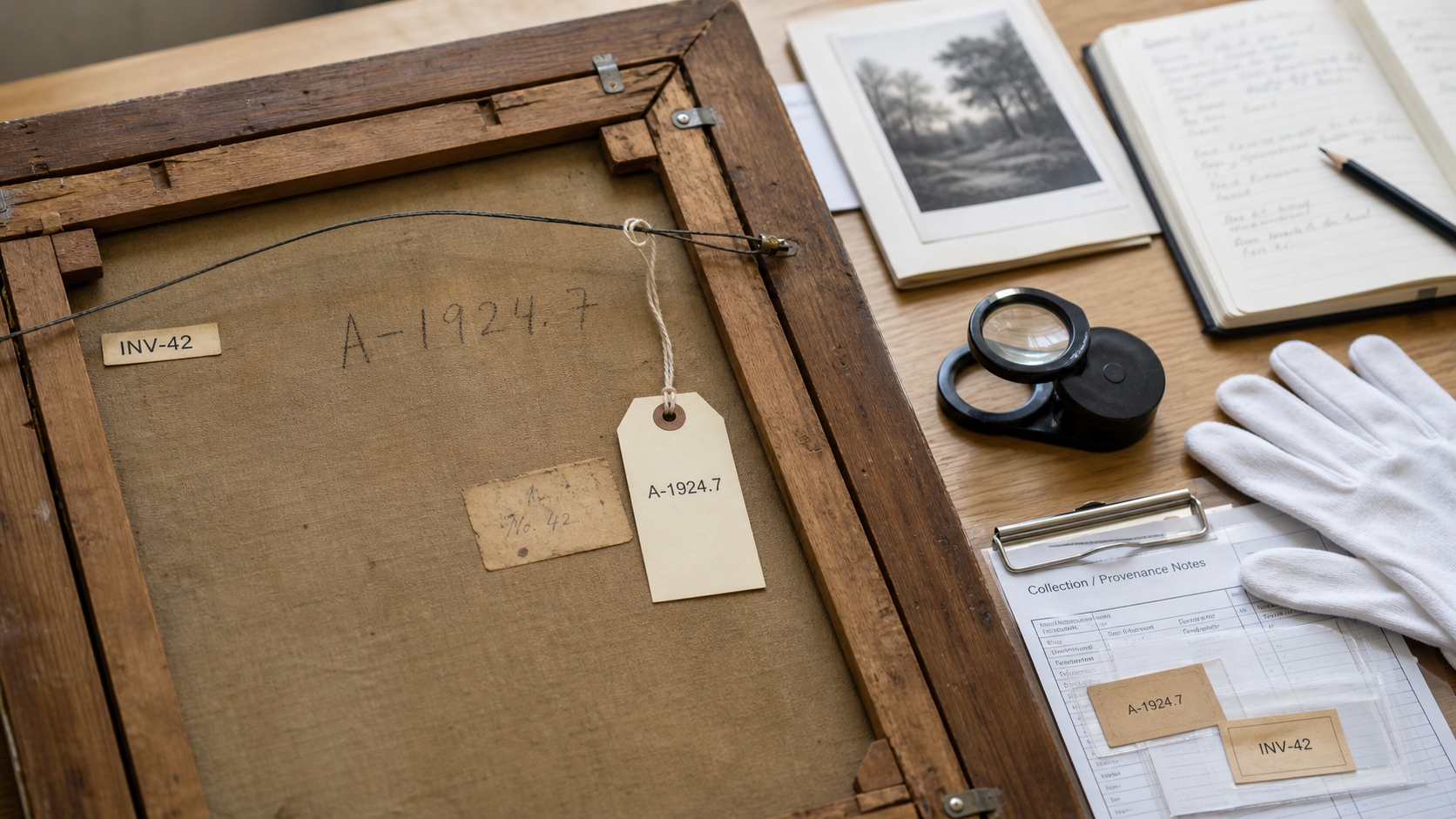
Object identifier appraisal record basics
Object identifier appraisal records help connect a physical item to photos, measurements, marks, condition notes, provenance documents, and market evidence. A code, label, barcode, inventory number, or old file name is useful only when it is tied to verifiable records.
Appraisers see identifiers in auction exports, dealer databases, museum labels, conservation invoices, estate spreadsheets, photo file names, and handwritten receipts. The identifier is not proof of authenticity by itself. It is a key that helps you find and organize evidence.
This guide uses the Object ID approach: document what the object is, how it looks, where identifying marks appear, and which records support the item history. The goal is a clean crosswalk from number to object to evidence.
Free first read
Check whether the identifier supports the appraisal file
Upload the object, labels, inscriptions, back or underside, old receipts, appraisals, auction records, and condition photos. The free screener can flag whether the number is useful evidence or just an internal code.
Start with a free screener. Use a signed report only if you need insurance, estate, donation, or sale documentation.
How We Research Valuation Data
Our appraisal guides are based on auction results, dealer pricing data, documented standards, and professional appraiser insights. We may earn a commission when you use our professional appraisal service. Learn about our editorial standards.
What to record for each object identifier
A useful appraisal record captures both the code and the evidence around it. Record the identifier exactly as it appears, including capitalization, spaces, dashes, slashes, and handwritten ambiguity. Then document where the identifier appears and which source supplied it.
- Photographs: full object, front/back or top/underside, close-ups of labels, inscriptions, stamps, tags, and condition issues.
- Object description: type, title, maker or attribution, materials, dimensions, date or period, subject, edition, and distinguishing features.
- Identifier location: frame back, stretcher, underside, base, tag, box, receipt, conservation label, auction lot page, or file name.
- Source document: invoice, appraisal, consignment agreement, catalogue, conservation report, insurance schedule, or estate inventory.
- Confidence note: direct match, likely match, related record, or unresolved conflict.
Build a crosswalk, not a single-number story
One object can carry many numbers: a collector inventory number, an auction lot number, a dealer stock code, a conservation job number, a shipping label, and your own file ID. A crosswalk ties those numbers to the same physical object without pretending they all mean the same thing.
The crosswalk should explain which number came from which source, when it was used, and what it proves. A conservation job number may prove treatment history. An auction lot number may prove sale history. A museum accession number may prove collection history. None of them automatically proves authorship or age.
Note: We couldn’t find relevant auction comps in our database for this topic right now. If you’re valuing a specific item, try searching by maker/model/material and we’ll expand coverage over time.
What similar items actually sold for
To help ground this guide in real market activity, here are recent example auction comps from Appraisily’s internal database. These are educational comparables (not a guarantee of price for your specific item).
| Image | Description | Auction house | Date | Lot | Reported price realized |
|---|---|---|---|---|---|
| No relevant auction comps found for this topic right now. | |||||
Disclosure: prices are shown as reported by auction houses and are provided for appraisal context. Learn more in our editorial policy.
How to interpret identifier patterns safely
Some identifiers contain dates, department prefixes, sequence numbers, or checksum-like endings. Pattern analysis can tell you where to search next, but it should not become the conclusion. Treat every decode as a lead until a source document confirms it.
- Date-like segments: ask for intake logs, consignment records, or file folders from that period.
- Department prefixes: ask the source whether the prefix maps to art, jewelry, furniture, silver, books, or another department.
- Image file names: keep original filenames because they may connect to an export, lot folder, or CMS record.
- Conflicting numbers: pause and investigate; mismatched dimensions, titles, or materials may mean a swapped frame, copied label, or unrelated file.
How to cite identifiers in an appraisal report
Put identifiers in the object description and repeat them in an appendix. Distinguish source IDs from your internal file number. A clean format might read: "Dealer inventory number: GNY-17-134; conservation job number: CL-2022-015; Appraisily file ID: AP-2026-0412."
In the valuation section, use identifiers to show that each comparable sale, prior receipt, or conservation note is tied to the same object or to a comparable object of the same maker, period, material, and condition tier.
Search variations collectors ask
Readers often Google:
- how to use object identifiers in an appraisal report
- does an inventory number prove authenticity
- what photos are needed for Object ID records
- how to document provenance labels and old appraisal numbers
- auction lot number vs dealer inventory number
- how to build an appraisal evidence crosswalk
- condition report job number in appraisal file
- Object ID checklist for antiques and art
Each question maps to the record, crosswalk, and reporting sections above.