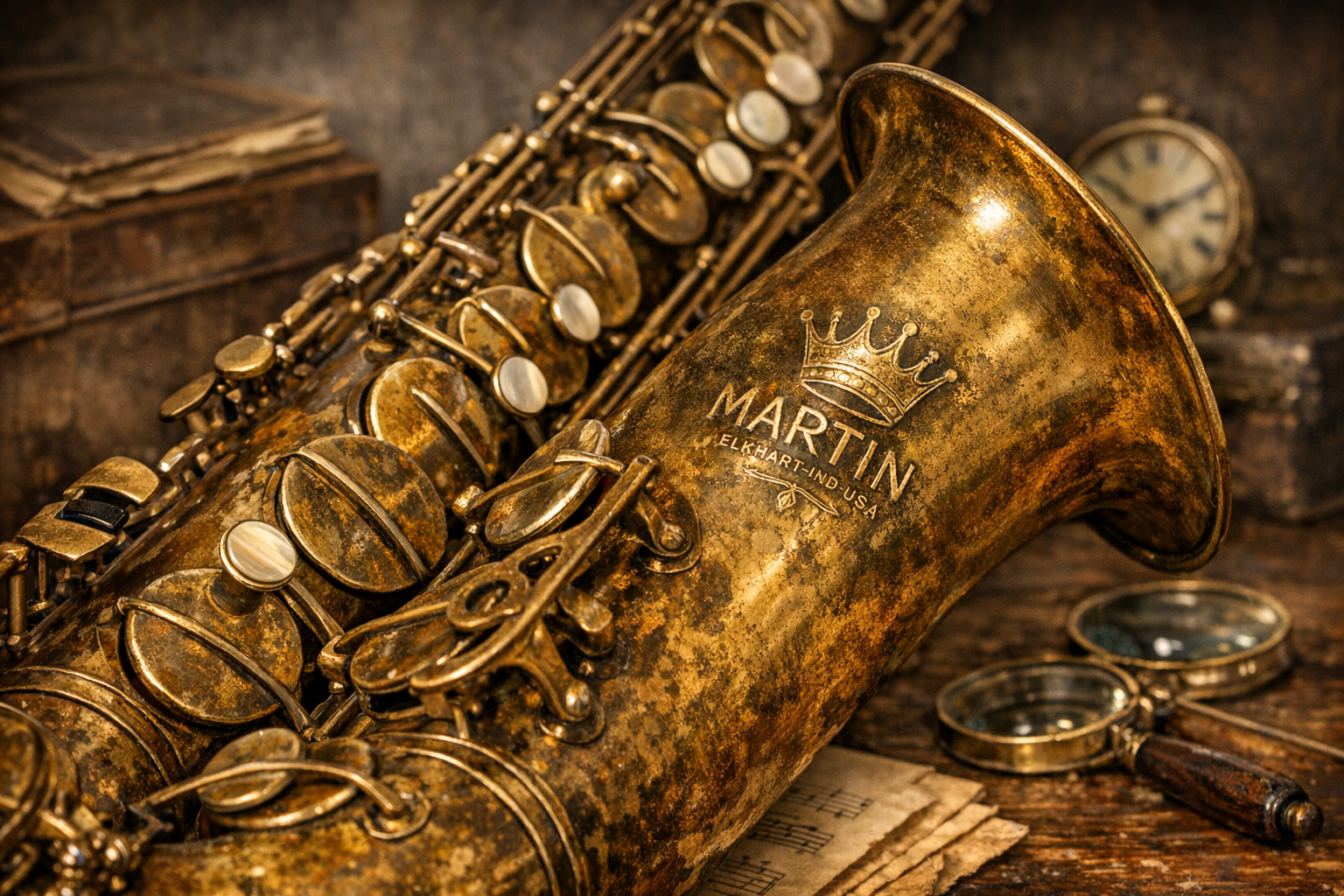
What martin saxophone actually sell for
A common example is a different sale from a high-end named piece.
Typical sales. Martin alto saxophone with original case sold for $100.
Martin Saxophone sold for $300.
c. 1950 Esquire Alto Saxophone w/ Case, Martin Freres Mouthpiece, Etc. sold for $450.
High-value outlier. The Martin Tenor Saxophone & Clarinet sold for $1,100.
Photograph maker marks, model, condition, and completeness before treating any one sale as yours.
What similar items actually sold for
To help ground this guide in real market activity, here are recent example auction comps from Appraisily’s internal database. These matched sales are market context only, not an object estimate or identification, and they do not guarantee a price for your specific martin saxophone.
Shown USD range: USD 100-USD 1,100. Median of these 4 USD examples: USD 375.
| Comparable | What sold | Auction house | Date | Lot | Source-reported amount |
|---|---|---|---|---|---|
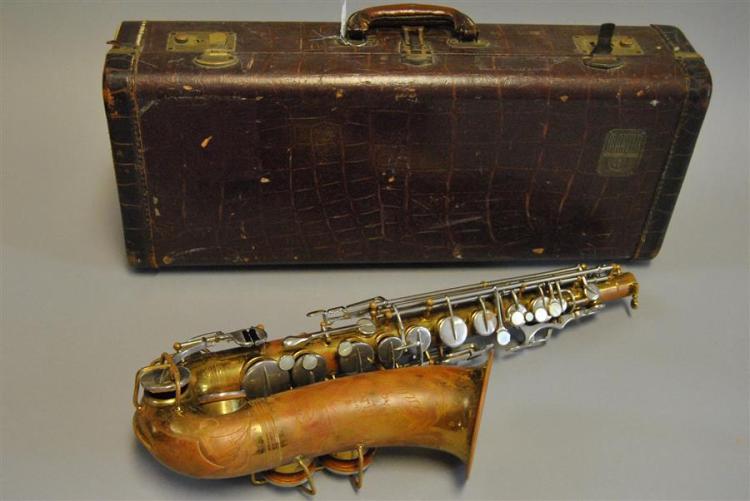 |
Martin alto saxophone with original caseSource blocked; provenance matched | Link Auction Galleries | 2017-04-21 | 1120 | USD 100 (buyer’s-premium treatment unknown) |
| No auction photo supplied | Vintage Martin SaxophoneSource blocked; provenance matched | Bodnar's Auction Sales | 2022-02-09 | 222 | USD 300 (buyer’s-premium treatment unknown) |
| No auction photo supplied | Vintage c. 1950 Esquire Alto Saxophone w/ Case, Martin Freres Mouthpiece, Etc.Source blocked; provenance matched | One Source Auctions | 2026-03-16 | 197 | USD 450 (buyer’s-premium treatment unknown) |
| No auction photo supplied | The Martin Tenor Saxophone & ClarinetSource blocked; provenance matched | Nest Egg Auctions | 2018-09-15 | 205 | USD 1,100 (buyer’s-premium treatment unknown) |
How these auction records were verified
Each row retains its exact source URL, lot identity, retrieval time, access result, and immutable record hash. Live source access was blocked; the exact record matched Appraisily's immutable pipeline provenance. Inspect the public comparable provenance record.
Disclosure: prices are shown as reported by auction houses and are provided for appraisal context. Learn more in our editorial policy.
Introduction to Martin Saxophones
In this comprehensive guide, we’ll explore what determines the value of a Martin saxophone in today’s market, from identifying different models to understanding the factors that affect pricing. Whether you’re looking to buy, sell, or simply appraise a Martin saxophone, this article will provide you with the knowledge needed to make informed decisions.
Martin Saxophone Market Snapshot
Period when Martin saxophones were originally manufactured
Current market price range for most Martin saxophone models
Particularly those with "Lion & Crown" engraving
The History of Martin Saxophones
Martin Saxophone Historical Timeline
- 1908
Company Founding
The Martin Band Instrument Company began producing instruments in Elkhart, Indiana. - 1920s
Handcraft Era
Introduction of the Handcraft series saxophones, still sought after for their warm vintage tone. - 1930s
Pre-War Models
Introduction of “The Martin” branded instruments with improved keywork and tone. - 1940s
Committee Series Debut
The legendary Committee series saxophones introduced, later becoming the most collectible Martin models. - 1950s
Golden Era
Peak production period for Martin saxophones with the Committee II and III models. - 1960s
Decline Period
Quality began to decline as the company faced financial difficulties. - 1971
Acquisition by Leblanc
The Martin brand was acquired by the Leblanc Corporation. - 2007
Brand Discontinued
After Leblanc’s acquisition by Conn-Selmer in 2004, the Martin brand was discontinued.
This timeline shows why certain era Martin saxophones—particularly those from the 1940s and 1950s—command the highest prices. The Committee models from this “golden era” are especially prized for their superior craftsmanship and distinctive sound.
Martin Saxophone Models and Their Values
Martin Saxophone Model Value Ranges
Current market values based on good playing condition (2024)
The Committee Series: Martin’s Most Valuable Saxophones
The Committee series represents Martin’s professional-grade instruments and typically commands the highest prices in today’s market. Key points about Committee saxophones:
- Committee I: First generation with distinctive underslung octave key
- Committee II: Considered the pinnacle of Martin saxophone design, with improved keywork and the coveted “Lion & Crown” engraving on some models
- Committee III: Later models with some design modifications but still excellent quality
The Martin Handcraft Series
The Handcraft series represents Martin’s early saxophone designs from the 1920s. While these don’t typically reach the values of Committee models, they have their own distinct collector market:
The Indiana and Student Models
Martin also produced more affordable student and intermediate instruments under names like “The Indiana” and “Medalist”:
- These models offer good value for players seeking the Martin sound at a lower price point
As one Reddit user noted regarding The Indiana by Martin, these can be “a good choice if you’re a player that needs a nice horn on a budget.”
Identifying Your Martin Saxophone
Serial Numbers and Dating
Serial numbers are the most reliable way to determine when your Martin saxophone was manufactured:
- Serial numbers are typically located on the back of the saxophone body
- Martin serial numbers follow a consistent progression that can be used to determine production year
- Resources like Cafe Saxophone’s Martin serial number thread provide detailed dating information
Here’s a simplified guide to Martin saxophone serial number ranges:
Martin Saxophone Serial Number Guide
Approximate production dates based on serial number ranges
</tbody> </table>
Model Identification Features
Several design elements can help identify specific Martin saxophone models:
Committee Models
- Distinctive underslung octave key on Committee I
- “The Martin Committee” engraving on the bell
- Special “Lion & Crown” engraving on some premium Committee II models
- More modern keywork compared to earlier models
Handcraft Series
- “Martin Handcraft” engraving on bell
- Simpler keywork design
- Often featuring “low pitch” engraving on early models
- More vintage-style tone holes and mechanisms
The Indiana/Student Models
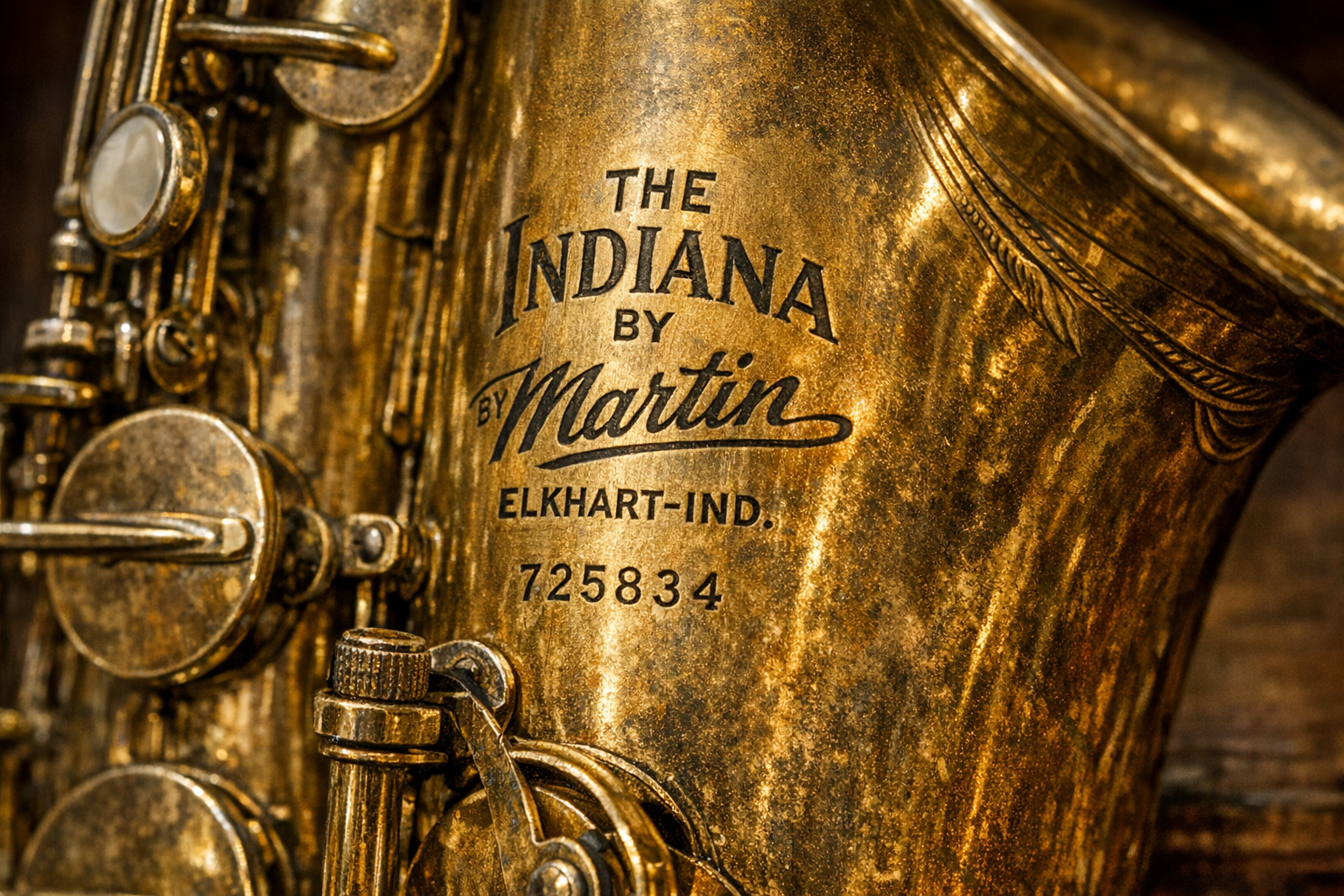
- “The Indiana by Martin” bell engraving
- Simpler keywork and finish
- Fewer engraving details
- More basic case and accessories
According to Vintage Band Instruments, specific details like the engraving style and keywork design can significantly impact a saxophone’s value, with original cases and accessories adding additional value.
Martin Saxophone Identification Checklist
Use this checklist to help identify your Martin saxophone model
- Check the serial number on the back of the body
- Identify the specific bell engraving
- Note the octave key design (underslung or traditional)
- Look for special engravings like the 'Lion & Crown'
- Check the finish (lacquer, silver, etc.)
- Identify any unique keywork features
- Note if the original case is present
Factors That Affect Martin Saxophone Value
Condition
Condition is perhaps the single most important factor in determining a Martin saxophone’s value:
Playing Condition: A saxophone that needs mechanical work or has playability issues will be worth significantly less than one in excellent playing condition.
Original Lacquer: Saxophones with most of their original finish intact command higher prices than those with significant wear or that have been relacquered.
Dents and Damage: Even small dents or dings can reduce value significantly, while major damage like bent keys or body damage can reduce value by 50% or more.
Previous Repairs: Quality repairs by respected technicians won’t necessarily decrease value, but poor repair work can significantly impact worth.
Completeness and Originality
The originality and completeness of a Martin saxophone also significantly impacts its value:
Original Parts: Saxophones with all original parts are more valuable than those with replacement parts.
Modifications: Period-correct modifications may not drastically affect value, but modern modifications often reduce collector interest.
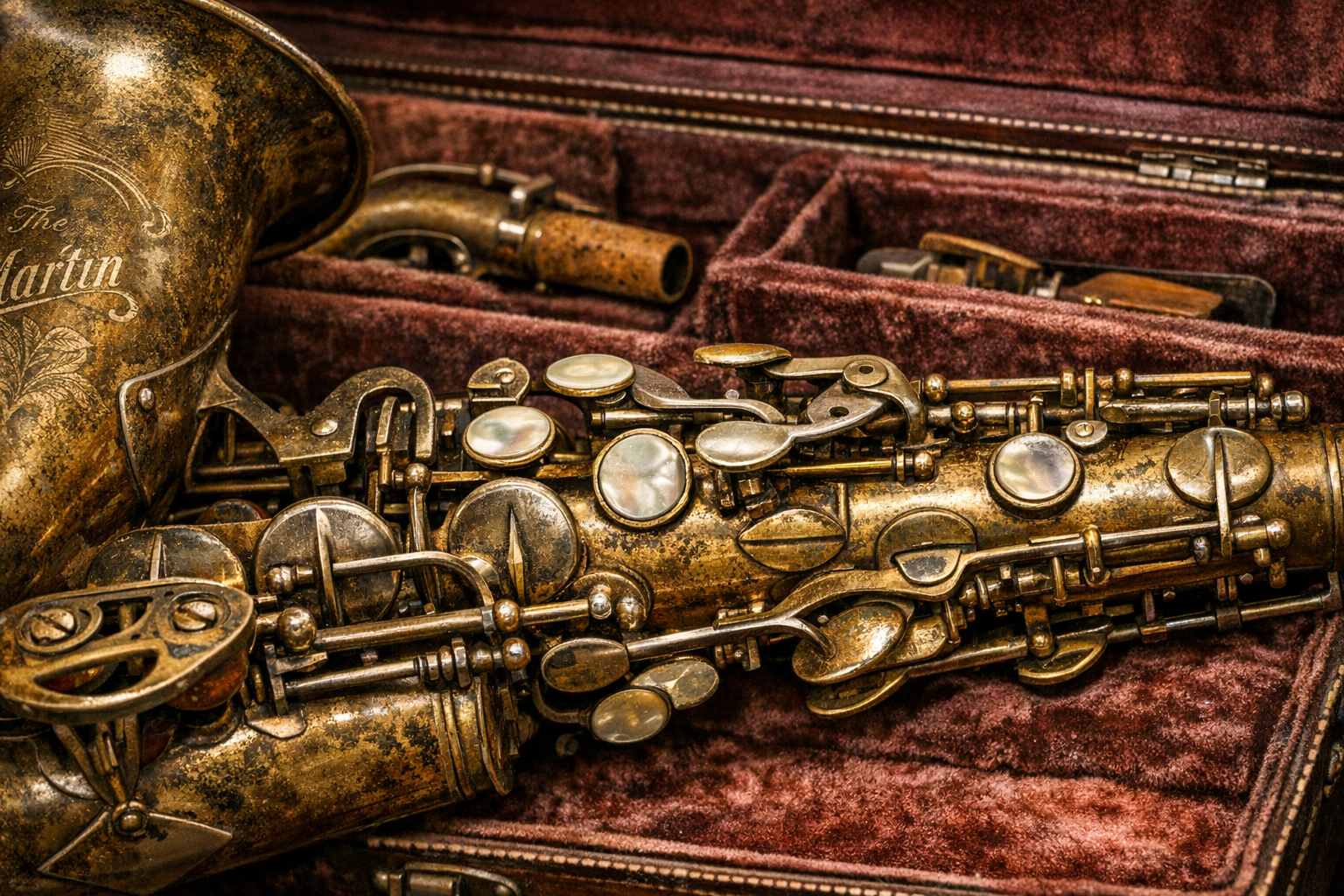
Complete Accessories: Original cases, mouthpieces, and accessories can add 10-20% to the value.
Documentation: Original receipts, warranty cards, or documented provenance can increase value for collector-grade instruments.
Rarity and Desirability
Some Martin saxophone features and configurations are particularly rare or desirable:
Lion & Crown Engraving: Committee II models with the special “Lion & Crown” engraving can command 20-30% higher prices.
Unusual Finishes: Silver-plated or gold-washed examples are rarer and often more valuable.
Low Serial Numbers: Early production examples of specific models are often more desirable to collectors.
Baritone Saxophones: Martin baritones are rarer than altos or tenors and typically command higher prices.
According to listings on Saxquest, special engravings and unique features can significantly increase a saxophone’s value to collectors.
Condition Impact on Martin Saxophone Value
Original lacquer, perfect mechanics, no dents or repairs
Some wear, minor repairs, good playability
Significant wear, missing parts, major repairs needed
Recent Martin Saxophone Sales Data
eBay and Online Marketplace Data
Based on recent eBay listings and online sales, here’s a snapshot of actual Martin saxophone transactions:
Recent Martin Saxophone Sales (2023-2024)
Actual transaction data from online marketplaces
| Category | Price | Notes |
|---|---|---|
| 100,000-140,000 | 1930s | Early "The Martin" models |
| 140,000-160,000 | Early-Mid 1940s | Early Committee models |
| 160,000-180,000 | Late 1940s | Committee models, peak era |
| 180,000-200,000 | Early 1950s | Committee II and III models |
| 200,000-220,000 | Mid-Late 1950s | Later Committee models, some quality variation |
| 220,000+ | 1960s | Final Martin production era |
</tbody> </table>
This data confirms that Committee models, particularly tenors, remain the most valuable Martin saxophones, while student models and instruments needing restoration work command significantly lower prices.
As verified by eBay listings, condition and model specifics create significant price variability even within the same model line.
Where to Buy and Sell Martin Saxophones
Online Marketplaces
eBay: The largest marketplace for vintage saxophones, with a wide range of Martin models available. Offers buyer protection but may require careful verification of condition claims.
Reverb: Music-focused marketplace with knowledgeable sellers and detailed listings. Often has higher-end Martin models listed by professional dealers.
Facebook Marketplace and Groups: Saxophone collector groups often have Martin saxophones for sale, sometimes at better prices than commercial sites.
Specialty Dealers
Saxquest: Specializes in vintage saxophones including Martin models, with professional restoration services and detailed descriptions.
Vintage Band Instruments: Offers carefully restored Martin saxophones with accurate descriptions and fair pricing.
PM Woodwind: Known for high-quality vintage saxophone offerings including premium Martin models.
Forums and Classified Listings
Sax on the Web: Active classified section with many Martin saxophones listed by knowledgeable collectors.
Cafe Saxophone: Forum with dedicated saxophone marketplace section, good for finding rarer Martin models.
Reddit r/saxophone: Occasionally has Martin saxophones for sale or trade from community members.
Martin Saxophone Buying & Selling Resources
eBay Martin Saxophones
The largest online marketplace for vintage Martin saxophones with protection for buyers and sellers.
Saxquest Vintage Saxophones
Specialty dealer offering professionally restored Martin saxophones with detailed descriptions.
Sax on the Web Forum
Active saxophone community with classified listings and valuable information on Martin saxophone values.
Cafe Saxophone Forum
Discussion forum with marketplace section and threads about Martin saxophone history and values.
Vintage Band Instruments
Specialty dealer offering restored Martin saxophones with detailed descriptions and fair prices.
Reddit r/saxophone
Community with discussions about Martin saxophone values and occasional marketplace posts.
Tips for Evaluating a Martin Saxophone Before Purchase
Physical Inspection Checklist
When examining a Martin saxophone in person, pay special attention to:
Martin Saxophone Pre-Purchase Inspection
Use this checklist when evaluating a Martin saxophone before buying
- Check all keys for smooth operation without sticking or binding
- Verify that all pads seal properly without leaks
- Examine tone holes for damage, pulling, or previous repairs
- Look for dents, dings, or repairs to the body
- Check for evidence of relacquering or finish touch-ups
- Verify that the neck fits properly and cork is in good condition
- Test intonation across the full range
- Inspect for serial number consistency on all parts
- Check for engraving clarity and detail
Remote Purchase Considerations
If buying a Martin saxophone online without playing it first:
Request Additional Photos: Ask for detailed photos of the serial number, engraving, pads, and any areas of concern.
Ask About Playability Issues: Get specific information about any known mechanical issues, leaks, or intonation problems.
Verify Return Policy: Ensure the seller offers a return window to allow professional inspection after receipt.
Get a Professional Opinion: If possible, have an experienced repair technician review photos before purchase.
Check Seller Reputation: Verify feedback scores and previous sales of similar instruments.
As noted in discussions about Martin saxophone values, getting input from experienced players or technicians can help prevent buying an overpriced or problematic instrument.
Investment Potential of Martin Saxophones
Historical Value Trends
Looking at Martin saxophone pricing over the past decades:
Committee Series: Has shown steady appreciation of approximately 4-6% annually over the past 20 years, with premium examples appreciating faster.
Handcraft Models: More modest appreciation of 2-4% annually, with collector-grade examples performing better.
Student Models: Minimal appreciation beyond inflation for most examples.
Current Investment Outlook
Factors that suggest Martin saxophones may be good investments:
Limited Supply: As a discontinued brand with no new production, the supply of quality Martin saxophones continues to diminish.
Growing Collector Interest: Increasing recognition of Martin’s historical importance has expanded the collector base.
Jazz Heritage: Martin’s association with influential jazz saxophonists enhances their desirability among musicians and collectors.
Committee Premium: Particularly for Committee II models with the Lion & Crown engraving, which continue to appreciate faster than other variants.
According to discussions on Cafe Saxophone, while not as widely collected as certain Selmer models, Martin Committee saxophones have shown consistent appreciation due to their historical significance and distinctive sound characteristics.
Restoration Considerations and Value Impact
When Restoration Makes Financial Sense
Not all Martin saxophones are worth the investment of a full restoration:
Committee Models: Generally worth comprehensive restoration due to their higher value ceiling.
Rare Variants: Models with special engraving or unusual features may justify higher restoration investments.
Complete Originals: Saxophones with all original parts and minimal previous repairs are better restoration candidates.
Student Models: Often not financially viable for extensive restoration unless of sentimental value.
Value Impact of Different Restoration Approaches
Different restoration approaches have varying impacts on value:
Mechanical Restoration Only: Restoring playability while preserving original finish typically maximizes value.
Full Relacquer: Generally reduces collector value by 20-40%, though may improve appeal to players.
Pad Replacement: Necessary for playability and doesn’t typically reduce value when done properly.
Dent Removal: Generally improves value as long as the technique doesn’t damage the original finish.
Keywork Replating: Can improve appearance but may reduce value if original plating had historical significance.
As noted in various saxophone forum discussions, the goal should be to restore playability while preserving as much original character as possible for maximum value retention.
Frequently Asked Questions About Martin Saxophone Values
Are Martin saxophones any good?
Yes, Martin saxophones, especially the Committee series from the 1940s-1950s, are highly regarded by professional musicians and collectors. They are known for their solid construction, comfortable ergonomics, and distinctive warm sound. As noted in discussions on Cafe Saxophone, “They are really solid, well-made saxes, especially the ones from the mid-40s to the mid-50s. I find them much more comfortable to play than any Conn tenor.”
Many jazz saxophonists have preferred Martin saxophones for their full, warm tone characteristics and reliable mechanics. The Committee models in particular remain sought after by professional players despite being vintage instruments.
How do I find out how much my saxophone is worth?
To determine the value of your Martin saxophone:
- Identify the specific model using the serial number and physical characteristics
- Assess the condition accurately, noting any damage or missing parts
- Research recent sales of comparable instruments on sites like eBay, Reverb, and specialty forums
- Consider getting a professional appraisal from a vintage instrument dealer or repair technician
You can also post detailed photos and information on saxophone forums like Sax on the Web or Cafe Saxophone to get input from experienced collectors and players. For the most accurate valuation, include the serial number, clear photos of the engraving, and details about any damage or previous repairs.
Are old saxophones worth money?
Yes, many vintage saxophones, including Martin models, can be quite valuable. However, value varies significantly based on:
- Brand and model (professional models worth more than student instruments)
- Era of manufacture (with certain “golden eras” commanding premiums)
- Condition (playing condition instruments worth substantially more)
- Rarity and historical significance
- Special features or engraving
As with most collectibles, pristine condition examples with original cases and accessories command the highest prices from collectors.
Does Martin still make saxophones?
No, Martin no longer produces saxophones. The Martin Band Instrument Company manufactured saxophones from 1908 through the 1960s. The brand was acquired by the Leblanc Corporation in 1971, and after Leblanc was acquired by Conn-Selmer in 2004, the Martin brand was discontinued entirely in 2007.
This limited production period is one factor that makes vintage Martin saxophones collectible. All Martin saxophones on the market today are vintage instruments, with the newest examples being over 50 years old. The finite supply of these instruments contributes to their collectibility and investment potential.
What is the most valuable Martin saxophone model?
The Martin Committee II tenor saxophones from the late 1940s through mid-1950s are generally considered the most valuable Martin models, particularly those featuring the special “Lion & Crown” engraving. These instruments were produced during Martin’s peak quality period and are highly sought after by both collectors and professional players.
How can I tell which Martin saxophone model I have?
To identify your Martin saxophone model:
Check the serial number: Located on the back of the body, this helps determine the production year.
Look at the bell engraving: Different models have distinct engravings:
- “Martin Handcraft” indicates earlier models
- “The Martin” is found on mid-period instruments
- “The Martin Committee” appears on professional Committee models
- “The Indiana by Martin” identifies student models
Observe key features:
- Committee I models have an underslung octave key
- Committee II often features more elaborate engraving
- Handcraft models have simpler keywork and design
Look for special engravings: The “Lion & Crown” engraving indicates a premium Committee II model.
For the most accurate identification, you can post clear photos on saxophone forums like Sax on the Web or consult with a vintage saxophone specialist.
What affects the value of a Martin saxophone?
Several key factors influence Martin saxophone values:
Model: Committee series commands the highest prices, followed by standard “The Martin” models, with student instruments like “The Indiana” valued lowest.
Condition: Playing condition, amount of original finish, dent-free bodies, and properly functioning keywork significantly impact value.
Originality: Instruments with all original parts, no repairs, and original cases/accessories command premium prices.
Engraving: Special engravings like the “Lion & Crown” can increase value by 20-30%.
Production Era: Instruments from the mid-1940s through mid-1950s (serial numbers approximately 160,000-190,000) are generally most valuable.
Finish: Original lacquer examples are worth more than relacquered instruments, while rare silver-plated models can command premium prices.
Documentation: Provenance, original receipts, or connection to notable musicians can enhance value.
The greatest value impact comes from condition and originality, with pristine examples often worth twice as much as heavily worn or modified instruments.
Conclusion: The Enduring Value of Martin Saxophones
For collectors and investors, the limited supply of these vintage instruments, combined with growing appreciation for their historical importance, suggests continued stable value and modest appreciation potential. For players, Martin saxophones offer a distinctive voice and playing experience that many find preferable to modern alternatives, often at more accessible prices than other premium vintage brands.
Whether you’re considering buying your first Martin saxophone, selling one you’ve owned for years, or simply curious about the value of a family heirloom, understanding the factors that determine Martin saxophone values will help you make informed decisions in this specialized market.
Additional Resources
Sax on the Web Forum
Active discussion forum with extensive information on Martin saxophone values and identification.
Cafe Saxophone Forum
Specialized saxophone forum with threads dedicated to Martin saxophone history and valuation.
Martin Indiana Saxophones History
Detailed history and model information for Martin Indiana student saxophones.
Vintage Saxophone Value Guide
Comprehensive guide to vintage saxophone values, including Martin models.
Saxophone.org Forums
Community discussion about Martin saxophone identification and values.
Vintage Band Instruments
Dealer site with detailed descriptions and values for Martin saxophones.
Saxquest Vintage Saxophones
Specialty dealer with Martin saxophone listings and detailed descriptions.
Professional Saxophone Value Guide
General saxophone valuation guide with applicable principles for Martin models.
Free first look
Not sure whether this Martin saxophone needs an appraisal?
Photograph the whole object, maker plate, model or serial number, mechanism, accessories, finish, repairs, and working condition. The photo-based Screener can help identify the likely category and visible evidence gaps before you pay for documentation.
Upload photos for a free first lookFree. No card needed. The photo upload usually takes about two minutes.
The free first read is a separate photo-based Screener, not this educational article. Results usually appear within a few minutes; complex items can take longer. From photographs of your Martin saxophone, it returns a preliminary category or identity read, visible evidence gaps, rough comparable market signals, and whether a human appraisal looks worthwhile; it is not a signed value conclusion. Material or construction can remain uncertain without direct examination, dimensions, provenance, or complete condition details. A written appraisal is useful when your Martin saxophone needs documented specialist support for insurance, tax, an estate, authentication, litigation, or a consequential sale, but you may not need one.
Choose your next step
Use the path that matches the decision you need to make about the item.
Not sure it is worth appraising?
Start with a lower-friction screen to understand the likely category, evidence, and next step.
Upload photos for a free first lookWant proof before paying?
See how a signed report documents photos, comparable evidence, condition notes, and value conclusions.
View signed report sampleNeed a signed report?
Use this for insurance, estate, donation, resale, or documented value decisions.
Need documentation now? Start signed appraisalNeed local or specialist help?
Compare directory options when the work needs in-person review or a specialist near you.
Find local art specialistsSee what the report looks like
Sample reports show how photos, comparable evidence, condition notes, and a value conclusion are documented.
Get this Martin saxophone appraised
Upload photos of the saxophone, serial number, engraving, bell, neck, pads, case, accessories, condition issues, and playing history for a written appraisal.
- Expert report with photos and comps
- Fast turnaround
- Fixed, upfront pricing
No obligation. Secure upload.
Continue your valuation journey
Find the right local specialist
Compare antique and art appraisers by location and specialty in one directory.
Antique & art specialists
Browse the Antique & Art Appraisers Directory
Choose a local specialist when the assignment needs in-person inspection or a specific credential.
Machine-readable summaries
Use these machine-friendly references for AI and crawler discovery of Appraisily content.
Ready for pricing guidance?
Start a secure online appraisal
Upload images and details. Certified specialists respond within 24 hours.
Upload photos for a free first look View signed report sample