Understanding Lithograph Art Value
Lithographs occupy a unique position in the art world. Unlike one-of-a-kind paintings, lithographs are produced in multiples, yet they maintain their status as original artwork. This reproductive quality makes lithographs more accessible to collectors while still offering market context when chosen wisely.
The lithographic process, invented in 1796, involves drawing on stone with oil-based materials and applying ink that adheres only to the drawn areas. Modern lithographs may use metal plates instead of limestone, but the principle remains the same. The result is a high-quality print that can faithfully reproduce the artist’s intentions.
Lithograph Market Insights
Attribution review: Is Your Lithograph Original?
Key Attribution review Indicators
Artist’s Signature: Documented lithographs are often hand-signed by the artist, typically in pencil in the margin below the image. This signature dramatically increases the value compared to unsigned prints.
Edition Numbers: Limited editions are numbered (e.g., “55/100”), indicating the specific print’s position in the run and the total number produced. Lower edition numbers may command higher prices, especially for very limited runs.
Paper Quality: Original lithographs are usually printed on high-quality, acid-free paper. Examine the paper for watermarks that might indicate its origin and quality.
Plate Marks: Some lithographs show a slight indentation around the image created by the pressure of the printing process. This plate mark is a good indicator of an original print.
Justification: The “justification” refers to the artist’s approval of the print quality. Look for annotations like “E.A.” (épreuve d’artiste or artist’s proof), “H.C.” (hors commerce or not for sale), or “B.A.T.” (bon à tirer or ready to print).
Lithograph Attribution review Checklist
Use this checklist to assess the originality of your lithograph
- Hand-signed by the artist (typically in pencil)
- Edition number clearly visible (e.g., '25/100')
- High-quality, acid-free paper with visible texture
- Presence of plate mark or embossing
- Visible justification or artist's proof markings
- Clear ink impression without digital dot patterns
- Provenance documentation or certificate or opinion
Key Factors Affecting Lithograph Value
Artist Reputation
The artist’s standing in the art world is perhaps the most significant factor affecting a lithograph’s value. Prints by renowned artists like Pablo Picasso, Marc Chagall, or Salvador Dalí typically command much higher prices than those by lesser-known artists.
As art historian and appraiser Jason Williams notes, “An original lithograph by Picasso might sell for tens of thousands, while a technically similar print by a regional artist might fetch only a few hundred dollars.”
Edition Size and Rarity
The smaller the edition, the more valuable the lithograph tends to be. Very limited editions (under 50) are often more desirable to collectors than larger runs.
Rarity also comes from historical significance. Early lithographs from the 19th century can be valuable for their historical importance, even if the artist isn’t widely recognized today.
Condition
The condition of a lithograph significantly impacts its value. Collectors and investors seek prints with:
- No fading or discoloration
- No tears, creases, or water damage
- No trimming of the original margins
- No restoration or repairs
- No acid burn or foxing (brown spots)
Even minor damage can reduce a lithograph’s value by a condition-specific range. Professional conservation can help maintain value but rarely restores full worth once damage has occurred.
Provenance and Exhibition History
Documentation proving a lithograph’s history of ownership (provenance) adds substantial value. Similarly, pieces that have been featured in major exhibitions or publications carry added prestige and higher values.
Lithograph Value Ranges by Artist Tier
Current market values as of 2023
Historical Context and Market Trends
Evolution of Lithography and Market Value
- 1796
Invention of Lithography
Alois Senefelder invents lithography as a cost-effective printing method. Early examples from this period are now highly collectible museum pieces.
- 1890s-1930s
Golden Age of Stone Lithography
Art Nouveau and Art Deco commercial lithographs (posters, advertisements) from this era now command significant prices, with rare examples selling for a value that must be established from current, topic-matched sales.
- 1940s-1960s
Fine Art Lithography Renaissance
Major artists like Picasso, Matisse, and Miró embrace lithography as a fine art medium, creating limited editions that now represent some of the most valuable lithographs on the market.
- 1970s-1990s
Expansion and Commercial Growth
Lithography becomes more accessible. This period sees both valuable fine art prints and the rise of mass-produced decorative lithographs of minimal investment value.
- 2000s-Present
Digital Age and Attribution review Challenges
Market emphasizes specialist review and provenance as digital printing technologies make reproduction easier. Premium for verifiably original lithographs increases.
Current Market Trends
The lithograph market has seen several notable trends in recent years:
Increased Demand for Blue-Chip Artists: Lithographs by established master artists continue to appreciate steadily, outperforming many other art investments.
Attribution review Premium: As sophisticated reproductions become more common, verified documented lithographs command increasing premiums.
Condition Sensitivity: The market has become increasingly condition-conscious, with pristine examples selling for multiples of similar works with even minor flaws.
Themed Collections: Lithographs that fit into popular collecting themes (e.g., feminist art, civil rights era) often experience value spikes as collectors build themed portfolios.
Online Market Expansion: Digital platforms have expanded the market, making lithographs more accessible but also introducing specialist review challenges.
According to ArtPrice Index data, lithographs by major 20th-century artists have shown average annual appreciation of a condition-specific range over the past decade, making them relatively stable art investments.
Selling Your Lithograph: Options and Strategies
Major Auction Houses
For rare or valuable lithographs by notable artists, major auction houses like Christie’s, Sotheby’s, or Bonhams provide access to serious collectors and typically achieve the highest prices. However, they also charge substantial seller’s commissions (often a condition-specific range) and may only accept works above certain value thresholds.
Specialized Art Galleries
Galleries that specialize in prints and works on paper can be excellent venues for selling lithographs. They typically have established collector networks and expertise in marketing such works. Gallery commissions usually range from a condition-specific range of the sale price.
Online Platforms
Online marketplaces have revolutionized the selling process for mid-range lithographs:
- Specialized Art Platforms: Sites like Artsy, 1stDibs, and Artnet connect sellers with collectors worldwide but charge substantial fees.
- Auction Platforms: LiveAuctioneers and similar sites partner with regional auction houses to expand their reach.
- Direct Marketplaces: eBay and similar platforms offer direct access to buyers but provide less specialist review assurance, potentially leading to lower prices.
Local Auction Houses
Regional auction houses often represent a good middle ground, providing professional marketing with lower commissions than major houses. They’re particularly suitable for lithographs valued between a value that must be established from current, topic-matched sales.
Private Sales
Selling directly to collectors or through dealer networks can maximize returns by eliminating commissions, but requires more effort to find the right buyer and properly document the work.
| Category | Price | Notes |
|---|---|---|
| Master Artists (Picasso, Chagall, Miró) | a value that must be established from current, topic-matched sales+ | Signed, limited editions in excellent condition |
| Established Major Artists | a value that must be established from current, topic-matched sales | Signed works by recognized but less iconic artists |
| Mid-Career Contemporary Artists | a value that must be established from current, topic-matched sales | Limited editions with gallery representation |
| Emerging Artists | a value that must be established from current, topic-matched sales | Early career artists with growing recognition |
| Decorative Lithographs | a value that must be established from current, topic-matched sales | Commercial or unsigned works valued primarily for aesthetics |
</tbody> </table>
Professional Appraisal: When and Why
Types of Appraisals
Different situations call for different types of appraisals:
- Insurance Appraisals: Typically reflect replacement value, which is often higher than market value.
- Fair Market Value Appraisals: Used for tax purposes, donations, or estates.
- Liquidation Value Appraisals: Reflect what the item would bring in a forced sale situation.
Finding a Qualified Appraiser
Look for appraisers with relevant credentials:
- Membership in the American Society of Appraisers (ASA)
- International Society of Appraisers (ISA) certification
- Specialization in fine art prints and works on paper
Online appraisal services like Mearto provide quick preliminary valuations, while local appraisers can provide more detailed examinations and documentation. For lithographs valued over a value that must be established from current, topic-matched sales in-person appraisal is strongly recommended.
External Resources for Lithograph Research
International Fine Print Dealers Association
Professional association of fine print dealers offering education and resources on print specialist review and valuation.
Mearto Online Appraisals
Professional online appraisal service specializing in art and collectibles, including lithographs.
ArtPrice Database
Comprehensive database of art auction results including extensive records for lithograph sales.
Art Shortlist: Determining Lithograph Value
Detailed guide to lithograph valuation factors with expert insights.
AbeBooks Guide to Collecting Lithographs
Comprehensive collector's guide to understanding and valuing lithographs.
Carter's Price Guide to Vintage Lithographs
Reference database of auction results for vintage lithographs with pricing history.
Common Questions About Lithograph Values
Is lithograph art worth anything?
The key factors affecting value include:
- The artist’s reputation and market demand
- Whether it’s signed by the artist
- Edition size and number
- Condition and preservation
- Provenance and exhibition history
How do you tell if a lithograph is an original?
- Artist’s Signature: Usually hand-signed in pencil in the margin, not printed as part of the image
- Edition Numbers: Documented limited editions are numbered (e.g., "25/100")
- Paper Quality: High-quality, acid-free paper with visible texture
- Plate Marks or Embossing: Impressions in the paper from the printing process
- Ink Texture: Original lithographs have a slightly raised ink surface compared to commercial reproductions
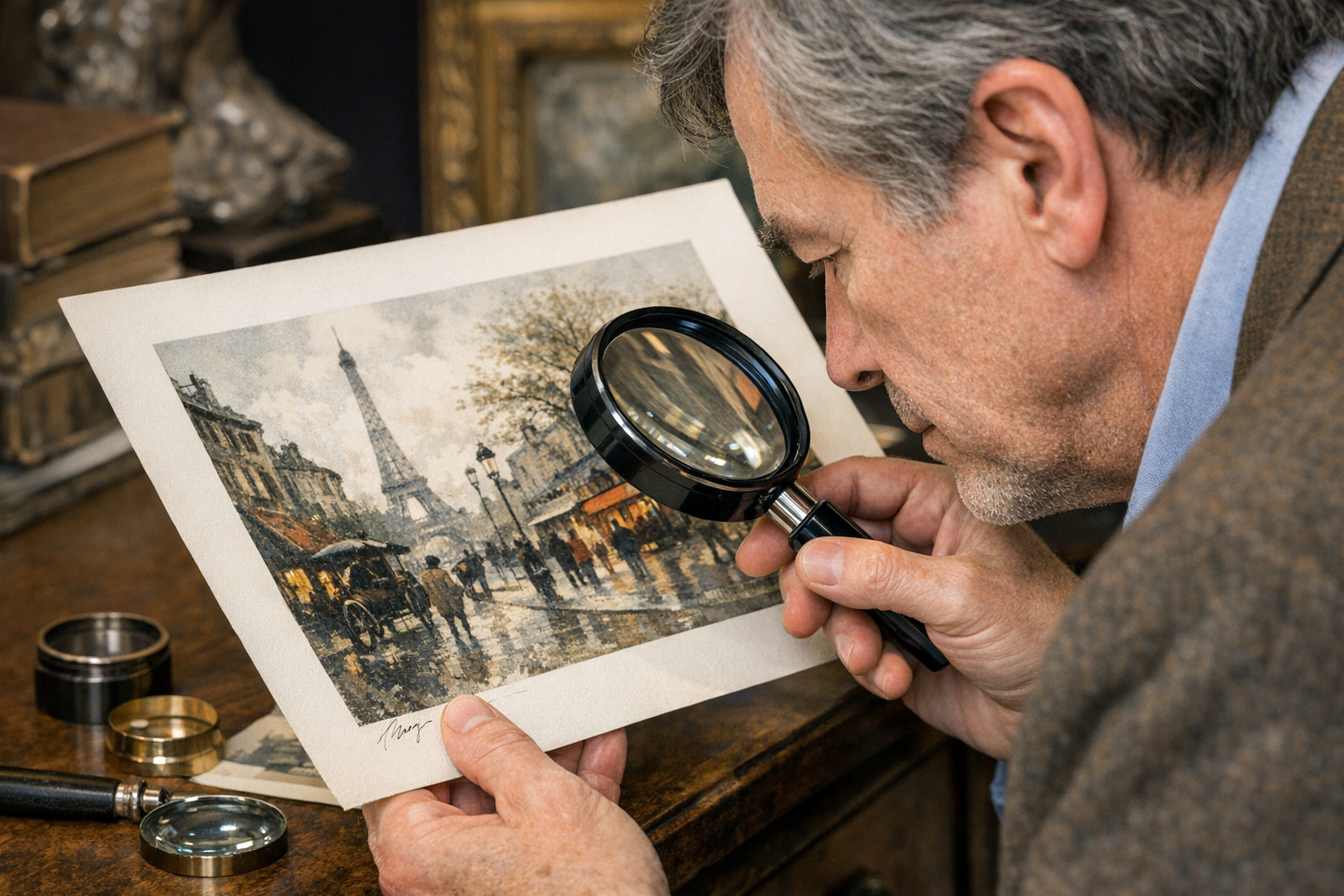
- No Dot Patterns: Examine with a magnifying glass; commercial reproductions often show regular dot patterns
- Justification Markings: Look for markings like "E.A." (artist’s proof) or "H.C." (not for sale)
How do I know if my art prints are valuable?
- Identify the Artist: Research the artist’s market standing and current auction prices
- Check Attribution review Elements: Look for signatures, edition numbers, and quality markers
- Assess Condition: Examine for any damage, fading, or discoloration
- Research Market Evidence: Check auction databases like ArtPrice or LiveAuctioneers for similar works
- Consider Edition Size: Smaller editions typically command higher prices
- Examine Provenance: Documentation of history and previous ownership adds value
- Evaluate Subject Matter: Some subjects are more desirable to collectors than others
Is a lithograph numbered?
This numbering is usually done by hand in pencil in the lower margin of the print. The numbering is an important specialist review element and affects value, with lower edition sizes generally commanding higher prices.
In addition to standard numbered editions, you might also find:
- Artist’s Proofs (marked A.P. or E.A.): Extra prints for the artist’s use
- Printer’s Proofs (marked P.P.): Test prints for quality control
- Hors Commerce (marked H.C.): "Not for sale" prints often given as gifts
- Bon à Tirer (marked B.A.T.): The "good to print" approval copy
What is a signed lithograph worth?
- Major Artists: Signed lithographs by artists like Picasso, Chagall, or Miró can sell for a market-dependent range
- Established Artists: Signed works by recognized but less famous artists typically range from a market-dependent range
- Mid-Career Artists: Signed limited editions might sell for a market-dependent range
- Emerging Artists: Typically a market-dependent range
The artist’s signature can increase a lithograph’s value by 2-5 times compared to an unsigned edition of the same work. Hand-signed works (typically in pencil) are more valuable than those with printed signatures that are part of the lithographic plate.
For investment purposes, always prioritize signed lithographs with clear provenance and specialist review.Conclusion: Making Informed Decisions
Lithograph values are determined by a complex interplay of factors including artist reputation, originality, edition size, condition, and provenance. While some lithographs are primarily decorative with modest value, others represent significant investment opportunities with strong appreciation potential.
For collectors, focus on acquiring signed, limited edition works by established artists, and always prioritize condition and proper documentation. For sellers, ensure you understand your piece’s position in the market before choosing the most appropriate sales venue.
When in doubt about value or originality, professional appraisal is a worthwhile investment, particularly for works that may have significant value. The modest cost of appraisal is typically offset by improved sales results or accurate insurance coverage.
Remember that the lithograph market, like all art markets, evolves over time. Stay informed about current trends and artist valuations to make the most of your lithographic art, whether you’re building a collection or preparing to sell.
Note: We couldn’t find relevant auction comps in our database for this topic right now. If you’re valuing a specific item, try searching by maker/model/material and we’ll expand coverage over time.
What similar items actually sold for
To help ground this guide in real market activity, here are recent example auction comps from Appraisily’s internal database. These matched sales are market context only, not an object estimate or identification, and they do not guarantee a price for your specific lithograph art.
Shown USD range: USD 250-USD 3,000. Median of these 5 USD examples: USD 2,000.
| Comparable | What sold | Auction house | Date | Lot | Source-reported amount |
|---|---|---|---|---|---|
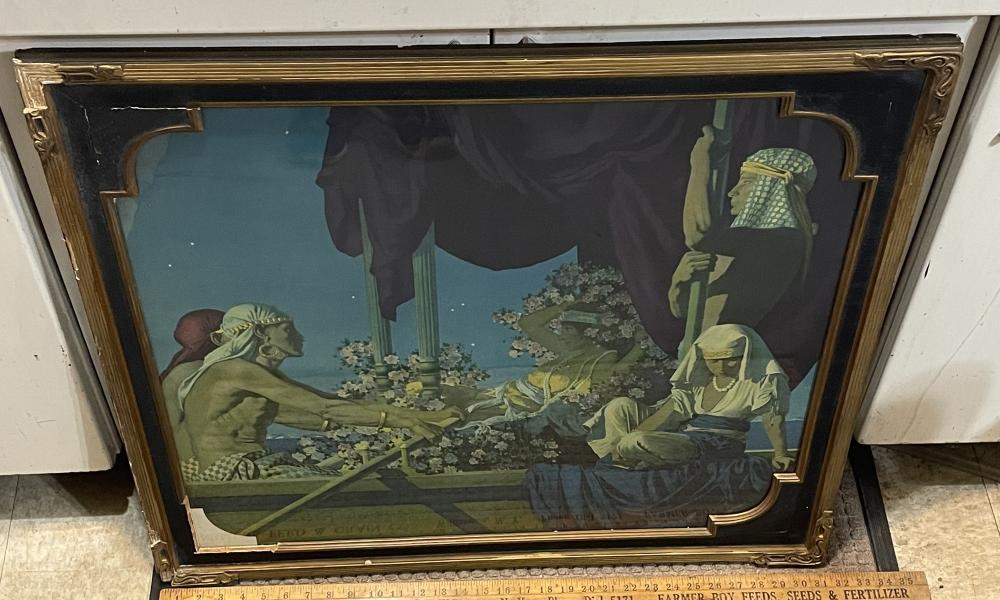 |
Antique 1917 Original Maxfield Parrish "Cleopatra" Lithograph Print in Original Art Deco Frame | One Source Auctions | 2025-03-17 | 164 | USD 250 (buyer’s-premium treatment unknown) |
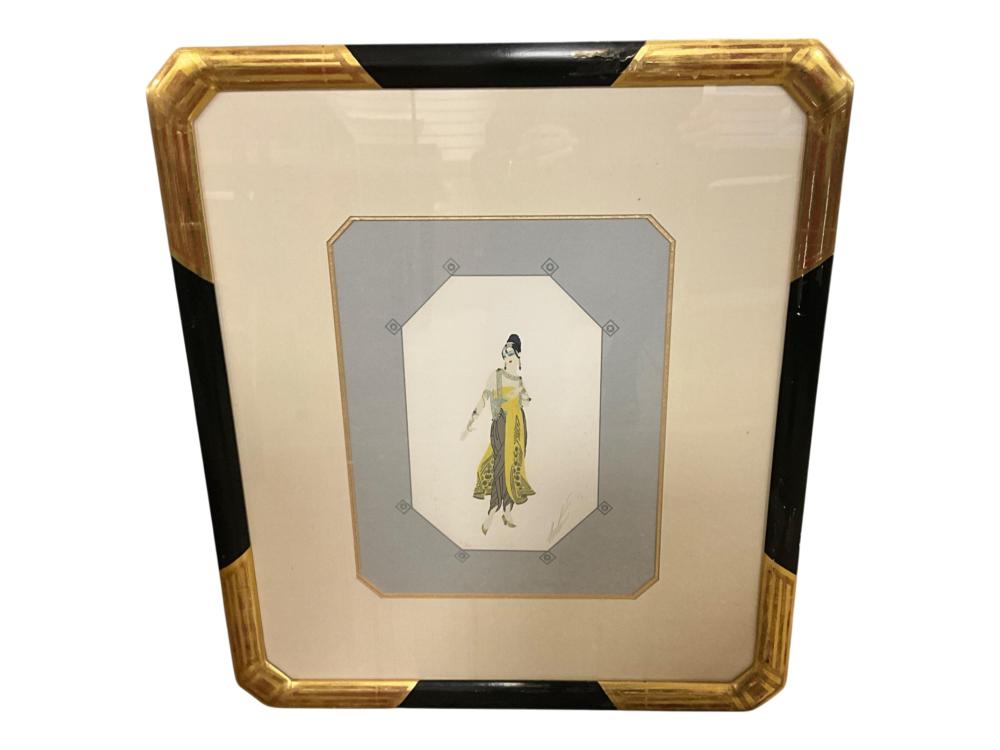 |
Limited Edition Art Deco Erte Lithograph ”Bagdad” 14 x 11 in. (35.6 x 27.9 cm.), Frame: 24 x 21 in. (61 x 53.3 cm.) | Apple Tree Auction Center | 2026-02-02 | 3323 | USD 265 (buyer’s-premium treatment unknown) |
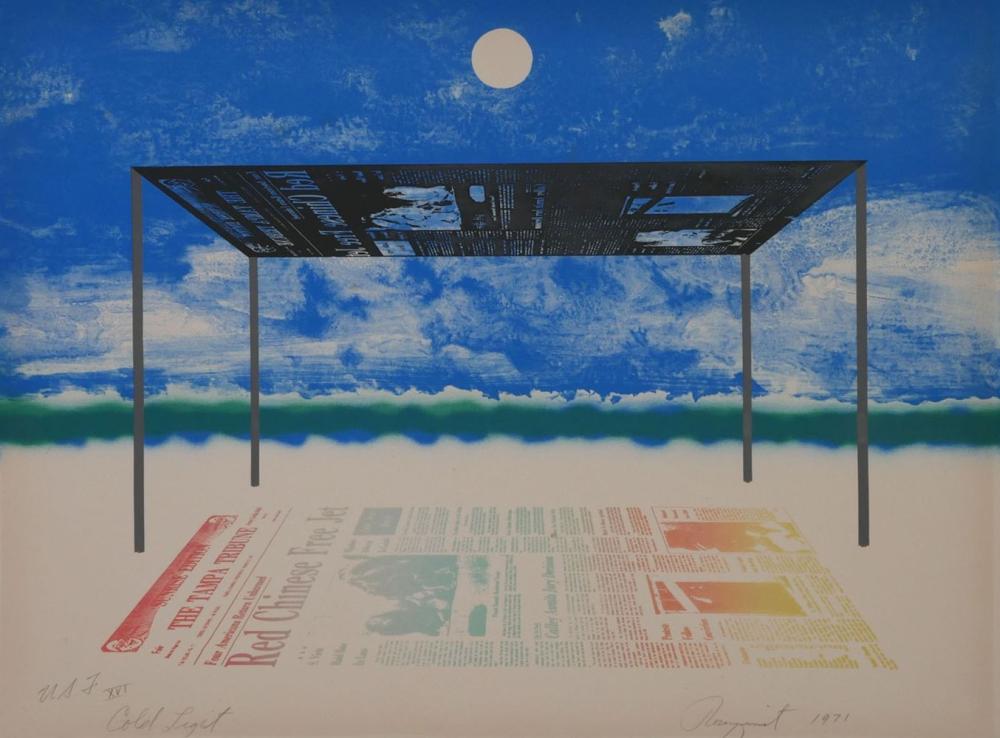 |
James Rosenquist (1933-2017) Lithograph 1971 Print | Myers Fine Art | 2023-04-30 | 335 | USD 2,000 (buyer’s-premium treatment unknown) |
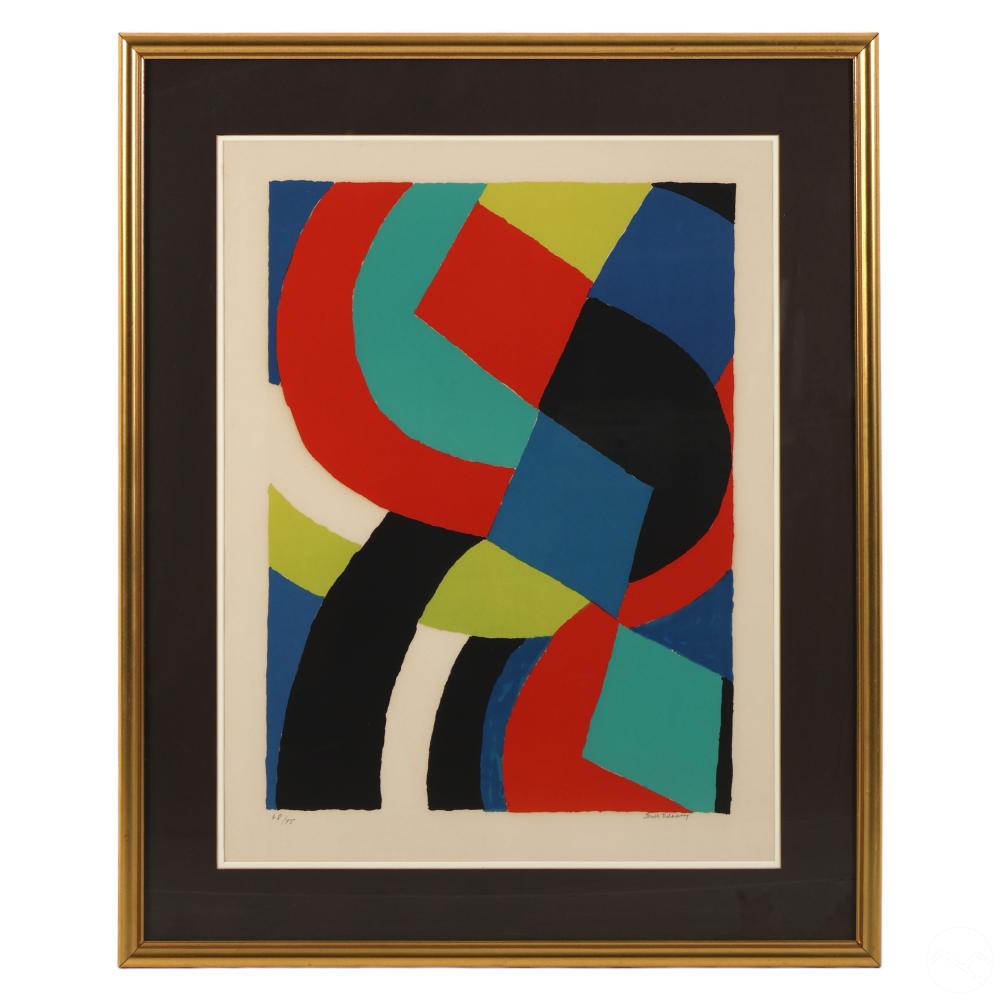 |
Sonia Delaunay 1885-1979 Lithograph Print SIGNED | Hill Auction Gallery | 2024-08-28 | 204 | USD 2,000 (buyer’s-premium treatment unknown) |
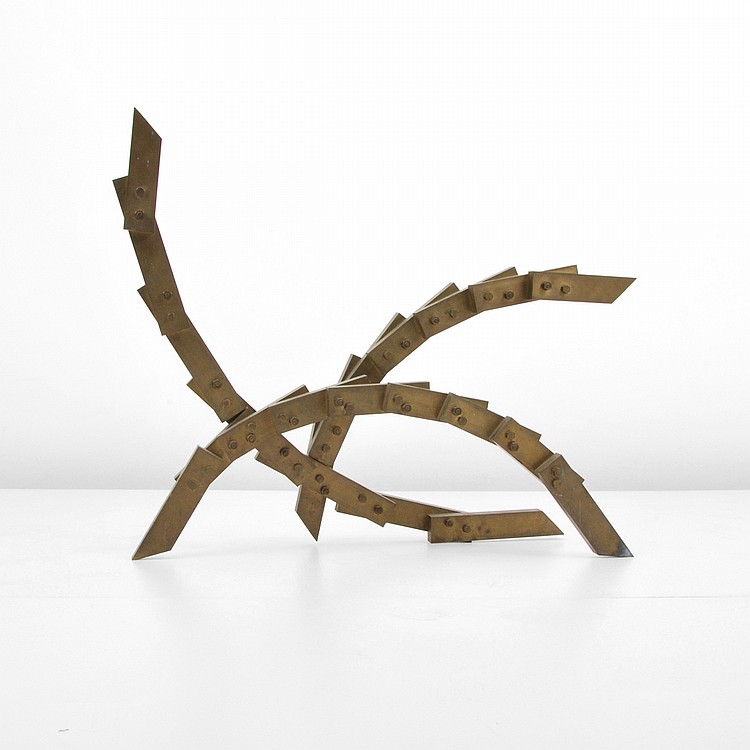 |
Large Larry Mohr Bronze Sculpture | Palm Beach Modern Auctions | 2014-01-11 | 184 | USD 3,000 (buyer’s-premium treatment unknown) |
How these auction records were verified
Each row retains its exact source URL, lot identity, retrieval time, access result, and immutable record hash. Inspect the public comparable provenance record.
Disclosure: prices are shown as reported by auction houses and are provided for appraisal context. Learn more in our editorial policy.
Free instant estimate
Not sure if your print is worth appraising? Let us take a look.
Upload a photo, tell us what you know, and get a free first read. If a full appraisal makes sense, we will say so.
Free. No card needed. Takes about two minutes.
Choose your next step
Use the path that matches the decision you need to make about the item.
Not sure it is worth appraising?
Start with a lower-friction screen to understand the likely category, evidence, and next step.
Upload photos for a free first lookWant proof before paying?
See how a signed report documents photos, comparable evidence, condition notes, and value conclusions.
View signed report sampleNeed a signed report?
Use this for insurance, estate, donation, resale, or documented value decisions.
Need documentation now? Start signed appraisalNeed local or specialist help?
Compare directory options when the work needs in-person review or a specialist near you.
Find local art specialistsSee what the report looks like
Sample reports show how photos, comparable evidence, condition notes, and a value conclusion are documented.
Get this lithograph appraised
Upload photos of the lithograph, signature, edition number, paper, margins, frame, condition issues, and provenance for a written appraisal.
- Expert report with photos and market context
- Fast turnaround
- Fixed, upfront pricing
No obligation. Secure upload.
Continue your valuation journey
Find the right local specialist
Compare antique and art appraisers by location and specialty in one directory.
Antique & art specialists
Browse the Antique & Art Appraisers Directory
Choose a local specialist when the assignment needs in-person inspection or a specific credential.
Machine-readable summaries
Use these machine-friendly references for AI and crawler discovery of Appraisily content.
Ready for pricing guidance?
Start a secure online appraisal
Upload images and details. Certified specialists respond within 24 hours.
Upload photos for a free first look View signed report sample