How to date old furniture
Dating old furniture is a process of evidence, not a single trick. Construction, hardware, wood, surface, backboards, drawer interiors, labels, and repairs should be read together.
Found an old item and want to know if it matters?
Upload photos. We identify the object, check real sales, and show the right appraisal path.
Upload photos for a free first lookStart an appraisalOne clear answer
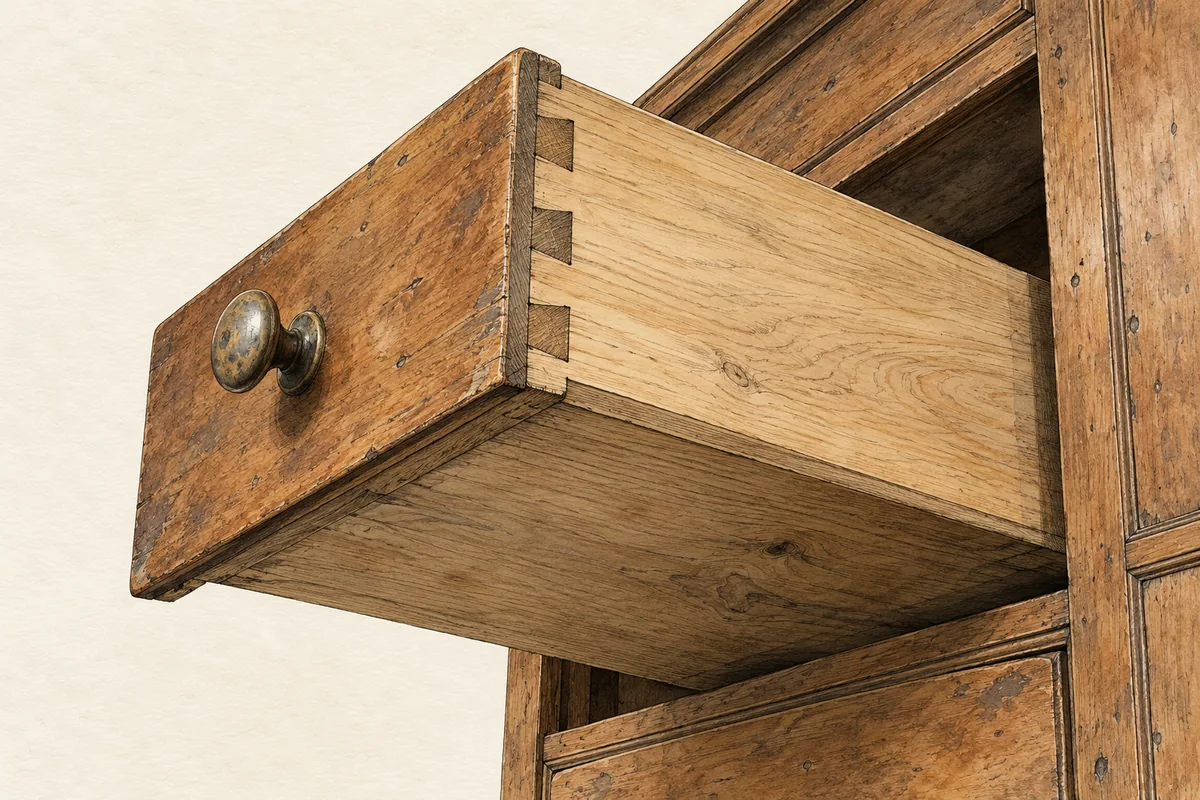
Start with the parts that are hardest to fake casually: underside, back, secondary woods, drawer bottoms, joinery, saw marks, hardware shadows, locks, and surface wear.
Auction records are market evidence, not a final appraisal. Condition, authenticity, provenance, size, completeness, repairs, logistics, and demand can materially change value.
Identification checklist
- Photograph underside, back, drawer sides, drawer bottoms, dovetails, pegs, screws, nails, locks, hinges, and hardware shadows.
- Show the surface in natural light, including wear, refinishing, paint layers, veneer, stains, and repairs.
- Measure the piece and note whether sections, drawers, shelves, leaves, or mirrors appear original.
- Keep maker labels, retailer labels, receipts, and provenance notes with the piece.
What changes the answer
- Hand construction clues need to be weighed against later repairs and revival styles.
- Original surface, hardware shadows, and secondary woods often matter as much as the visible front.
- Dating narrows the comparison set; it does not by itself establish value.
Free instant estimate
Not sure if your item is worth appraising? Let us take a look.
Upload a photo, tell us what you know, and get a free first read. If a full appraisal makes sense, we will say so.
Free. No card needed. Takes about two minutes.
Need help identifying old furniture before you change it?
Upload photos. Appraisily identifies the object, checks real sales where available, and shows the right appraisal path.
Upload photos for a free first lookStart a professional appraisalSee a sample report