
Early 20th-Century Italian Vase Value Guide
Identify and value an early 20th-century Italian vase by checking material, marks, Liberty or Art Deco style, condition, and auction comps.
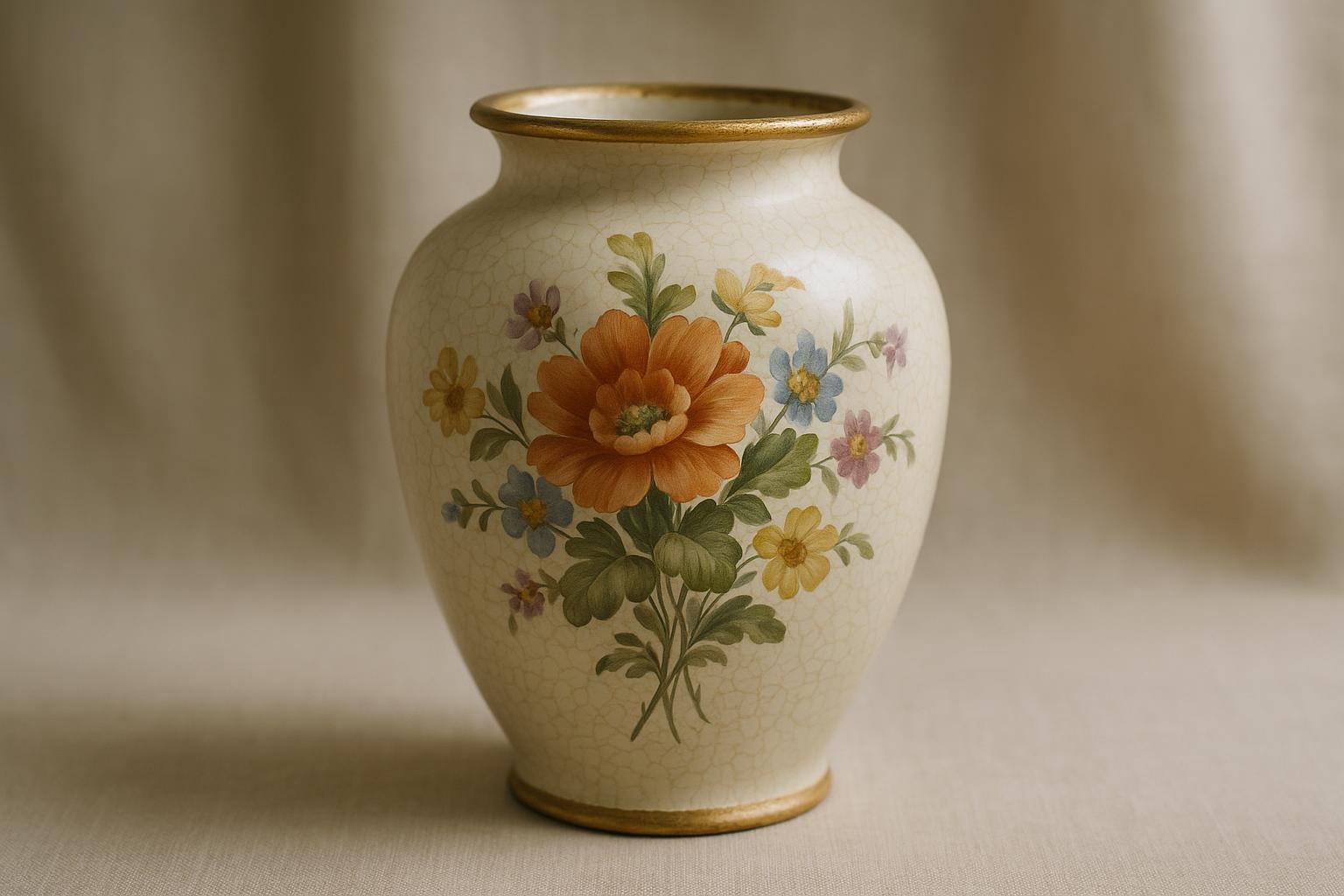
Get confident before you sell
Get a price-ready appraisal for your Italian vase
Share clear photos (full body, rim/handles, and the base/marks). Delivery timing is confirmed after the required item information is received.
Secure upload. No obligation. We never publish your photos.
Continue reading first →Many estate pieces come with the same story: “She collected important art and we were told this Italian vase has significant value.” That can be true — but with early 20th-century Italian decorative arts, attribution and condition usually determine whether you’re looking at a $75 decorator vase or a four-figure collectible.
This guide helps you identify what you have and document it the way appraisers, auction houses, and serious buyers expect. It’s written for the common scenario: a single Italian vase from the early 1900s with limited paperwork.
- Start with the base: the mark (or lack of one) is often the difference between “decorative” and “collectible.”
- Confirm material: Italian vases from this era can be ceramic/majolica, porcelain, or glass. Each market behaves differently.
- Measure and weigh: height, mouth diameter, and weight help separate mass-market from studio production.
- Note condition honestly: chips, hairlines, and repairs matter more than many owners realize.
Quick value snapshot (broad): unmarked early 20th-century Italian ceramic vases often trade in the $75–$250 range, while attributed or maker-marked examples can move into the $300–$1,600+ bracket depending on size, decoration, and rarity.
Free first read
Check material, marks, and condition before pricing it
Upload the full vase, rim, handles, base, marks, and any chips, hairlines, crazing, or restoration. The free screener can flag whether it looks decorative, attributed, or worth a signed report.
Start with a free screener. Use a signed report when you need insurance, estate, donation, resale, or formal documentation.
Step 1: identify the material (it changes the market)
“Italian vase” can mean very different things. Before you chase a maker name, confirm what the object is made from. The material and technique decide which category of buyers will care and which comps you should use.
- Ceramic / earthenware (often majolica): slightly porous body under glaze, often brightly painted, sometimes with visible crazing. Many decorative Italian vases from the early 1900s fall here.
- Porcelain: whiter, denser, and often finer painting; can have crisp gilt lines and smoother glaze. Look for translucency at thin edges (shine a light behind the rim).
- Glass: if it’s heavier for its size and has a pontil mark or polished base, you may be in an art-glass category (Murano is common, but attribution requires caution).
- Metal-mounted pieces: bronze or brass mounts can signal higher-end production — but modern reproductions also use mounts, so check patina and wear patterns.
Tip: photograph the base in strong light. A porous ceramic foot ring, glaze pooling, and kiln stilt marks often tell you more than the decoration alone.
Step 2: read the marks (and don’t over-trust them)
Italian ceramics from the early 20th century can be marked in several ways: impressed stamps, painted underglaze marks, incised signatures, and paper labels. Marks help, but they’re also the most faked element — so treat them as one data point, not the entire attribution.
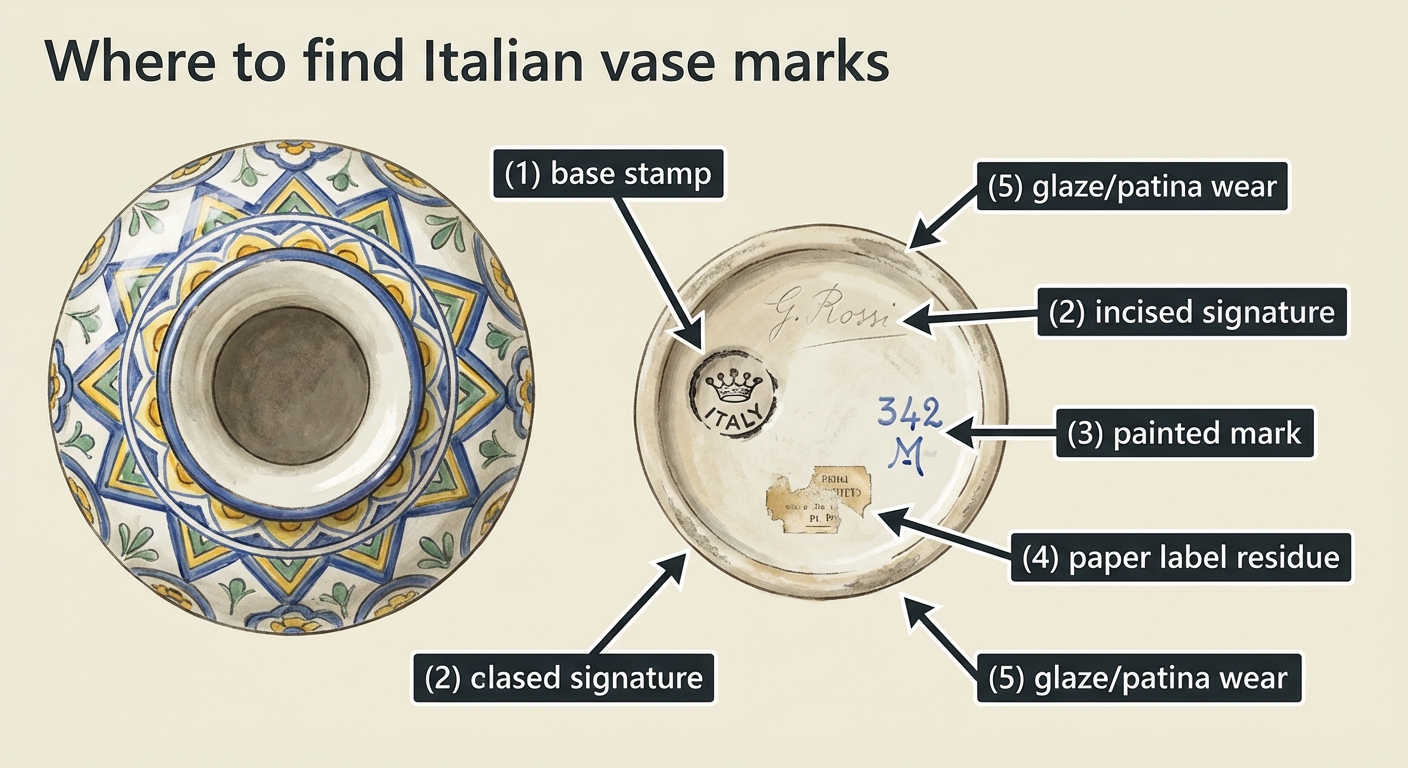
- Impressed / stamped: often in the foot ring or base; can include “ITALY,” a crown/anchor motif, or a factory name.
- Painted underglaze: looks slightly “under” the glaze; generally more credible than modern overpainted marks.
- Incised signatures: scratched into the clay before firing (or into the glaze). Compare handwriting style with known examples.
- Paper labels: residue can still be useful. Photograph it even if it’s fragmentary.
Common estate pitfall: “Capodimonte” is often applied to later decorative porcelain and is frequently misused. If a mark looks too fresh, too bold, or sits on top of grime, slow down and verify.
Step 3: date it by style (Liberty / Art Nouveau vs Art Deco)
When paperwork is missing, style cues help you narrow the period. For “circa early 20th century,” you’re typically in the 1900–1935 window, where Italian design shifts from flowing Liberty style (Italy’s Art Nouveau) into more geometric Art Deco language.
- Liberty / Art Nouveau cues: whiplash curves, iris/lily motifs, sinuous handles, and painterly botanical decoration.
- Art Deco cues: simplified geometry, stylized repeated motifs, strong symmetry, and bolder high-contrast palettes.
- Glaze clues: early 1900s pieces often show natural crazing and gentle wear on gilding; a perfectly pristine surface can mean later production (or restoration).
Condition checklist (what changes value the most)
Two vases can look “the same” to a casual eye but sell for very different prices because of condition. Document these items clearly before you list or consign:
- Rim chips: even small chips on the lip are noticeable and usually reduce value.
- Hairlines: hold the vase under a bright light; hairline cracks often show as a thin dark line.
- Restoration: overpaint, filler, and glued repairs are common. UV light can help reveal repainted areas.
- Crazing vs cracking: crazing (fine network) can be normal; structural cracks are more serious.
- Gilt wear: expected on genuine older pieces, but heavy loss can signal rough handling or prior cleaning.
Value ranges (realistic starting points)
Without a specific maker attribution, value is best estimated by comparing size, decoration quality, and condition against completed sales. The ranges below are intentionally broad — your vase can sit above or below them depending on what the base mark and decoration quality reveal.
- Unmarked decorative Italian ceramic vase (10–14 in): often $75–$250.
- Marked factory or known decorator, good condition: often $250–$700.
- Attributed artist / scarce workshop, strong provenance: can reach $800–$1,600+ and sometimes higher for exceptional examples.
- Pairs: matched pairs usually sell at a premium versus singles (and are easier to consign).
Always compare against completed sales (auction hammer or verified sold listings), not only asking prices. Asking prices can sit unsold for months.
Auction comps for Italian ceramic vases
Compare unmarked decorative vases against unmarked decorative results first. Use maker-marked Capodimonte, majolica, Raymor, Fantoni, or Faenza examples as upside context only when the mark, material, size, and condition support it.
| Photo | Sale | Date | Lot | Realized | Notes | Source |
|---|---|---|---|---|---|---|
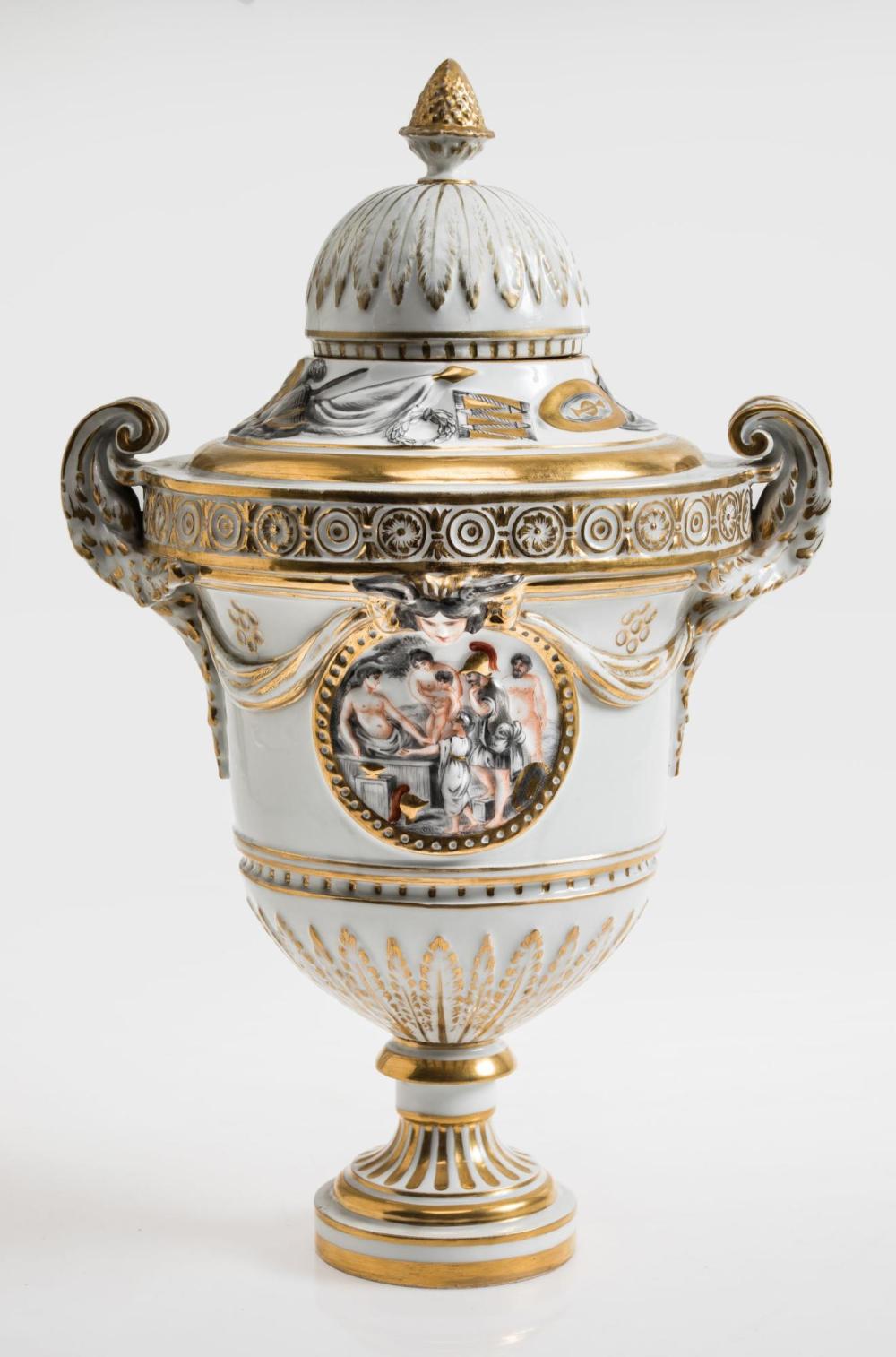 | Ansorena, Italian Capodimonte porcelain vase with lid, late 19th-early 20th century | December 12, 2025 | 1258 | EUR 800 | Good upside comp when Capodimonte attribution and lid condition are credible. | Invaluable / Ansorena |
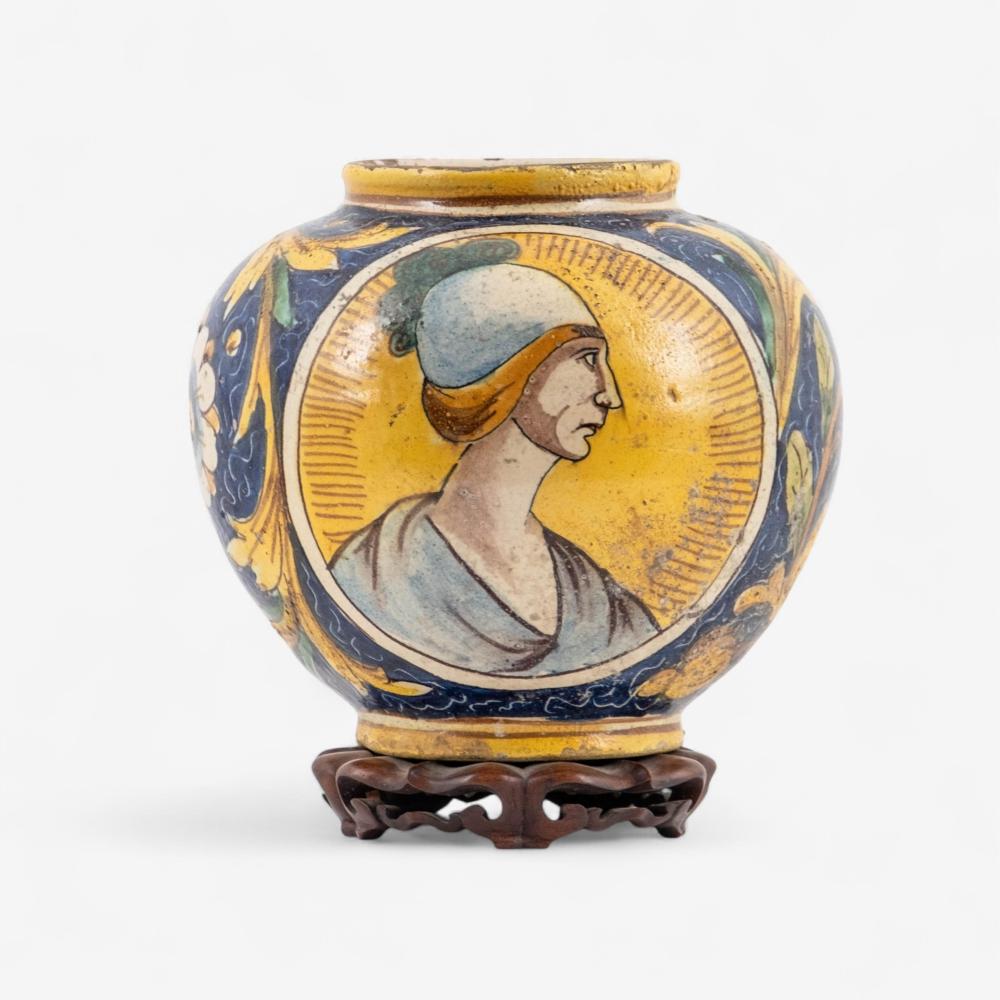 | Collective Hudson, Italian majolica fine antique Renaissance Revival earthenware ceramic vase | September 21, 2025 | 46 | USD $425 | Relevant for marked or higher-decoration majolica examples with collector appeal. | Invaluable / Collective Hudson |
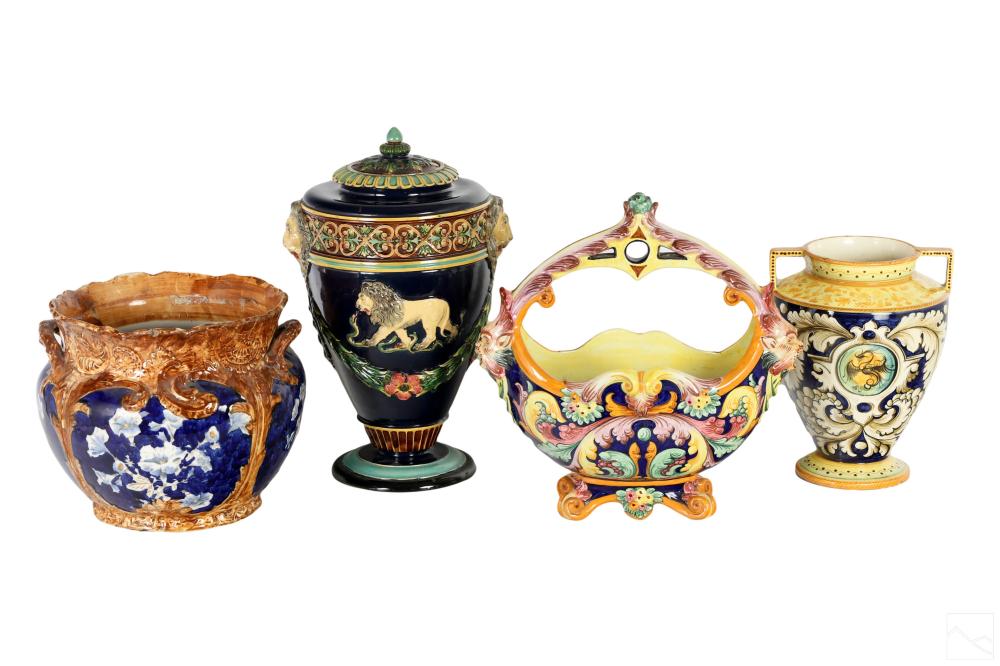 | Hill Auction Gallery, Italian majolica pottery bowl vase urn jardiniere | February 22, 2023 | 310 | USD $250 | Useful low-to-mid comp for decorative Italian majolica without top maker proof. | Invaluable / Hill |
| No image | Winter Associates, group including Mid-Century Italian Raymor pottery vase with paper label | April 25, 2022 | 8 | USD $250 | Group-lot Raymor context; use cautiously because multiple pieces share one price. | Invaluable / Winter |
| No image | Public Sale Auction House, Mid-Century Modern Fantoni Raymor Italian ceramic vase | October 9, 2021 | 273 | USD $300 | Named mid-century designer/distributor context; not a direct early-1900s comp. | Valuer Bridge dataset |
| No image | Carnegie's Auction Gallery, Tramonti Faenza Italian pottery yellow crystalline vase | May 17, 2025 | 269 | USD $500 | Faenza/maker-marked context for stronger modern Italian pottery examples. | Invaluable / Carnegie's |
Takeaway: a generic unmarked vase often belongs in the low hundreds, while credible Italian maker attribution, strong decoration, better scale, and clean condition can justify higher comps.
Have an Italian vase?
Check the mark and condition before choosing a price.
Upload the full vase, base mark, rim, handles, chips, hairlines, and any labels or paperwork. The free screener can flag the right market tier.
Upload photos for a free first lookHow to photograph your Italian vase for appraisal or sale
A strong photo set increases buyer confidence and helps an appraiser match your vase to reliable comps. Aim for these shots:
- Full profile: straight-on front and back, plus a 45° angle.
- Rim and mouth: close-ups to show chips or wear.
- Handles and joins: show how handles are attached and whether there are repaired breaks.
- Decoration close-ups: crisp photos of brushwork and glaze texture.
- Base + mark: fill the frame with the mark; take one photo in raking light for legibility.
- Scale: include a ruler or tape measure showing height.
How to sell (and when to get a professional appraisal)
If the vase is unmarked and decorative, local sale channels (estate sale, marketplace, decorator shops) can be efficient. If you have a clear mark, strong decoration quality, or provenance tied to a known collection, consider a specialist ceramics auction house or a professional appraisal first.
Appraisals are especially useful when you need an insurance replacement value, want to consign confidently, or suspect the vase is by a known Italian maker/workshop.
About the valuation method
We base value guidance on completed sales and comparable results, not only on asking prices. Online listings often sit unsold at optimistic numbers, while auction hammer prices reflect what a buyer actually paid.
Continue your valuation journey
Get help pricing and selling Italian ceramics
If you want a written value you can hand to a buyer, insurer, or consignor, our appraisers can review your photos, maker marks, and condition notes.
Appraiser directory
Browse vetted appraisers
Find an expert by specialty, location, and response time.
View appraisersHow We Research Valuation Data
Our appraisal guides are based on auction results, dealer pricing data, and professional appraiser insights. We may earn a commission when you use our free professional appraisal service. Learn about our editorial standards.
Instant checkout
Start an online appraisal
Upload photos and details securely. Specialists respond within 24 hours.
Start appraisalReferences
Search variations collectors ask
Readers often Google:
- early 20th century Italian vase value (unmarked)
- how to identify Italian pottery marks on the bottom
- Liberty style Italian vase marks and dating
- Italian Art Deco ceramic vase appraisal guide
- does crazing reduce the value of an antique Italian vase
- how to tell if a Capodimonte mark is real or reproduction
- best photos to take for a ceramic vase appraisal
- where to sell Italian vases (auction vs marketplace)
Each phrase maps back to the identification checks, pricing ranges, and selling workflow above.
Choose your next step
Use the path that matches the decision you need to make about the item.
Not sure it is worth appraising?
Start with a lower-friction screen to understand the likely category, evidence, and next step.
Upload photos for a free first lookWant proof before paying?
See how a signed report documents photos, comparable evidence, condition notes, and value conclusions.
View signed report sampleNeed a signed report?
Use this for insurance, estate, donation, resale, or documented value decisions.
Need documentation now? Start signed appraisalNeed local or specialist help?
Compare directory options when the work needs in-person review or a specialist near you.
Find local art specialistsSee what the report looks like
Sample reports show how photos, comparable evidence, condition notes, and a value conclusion are documented.