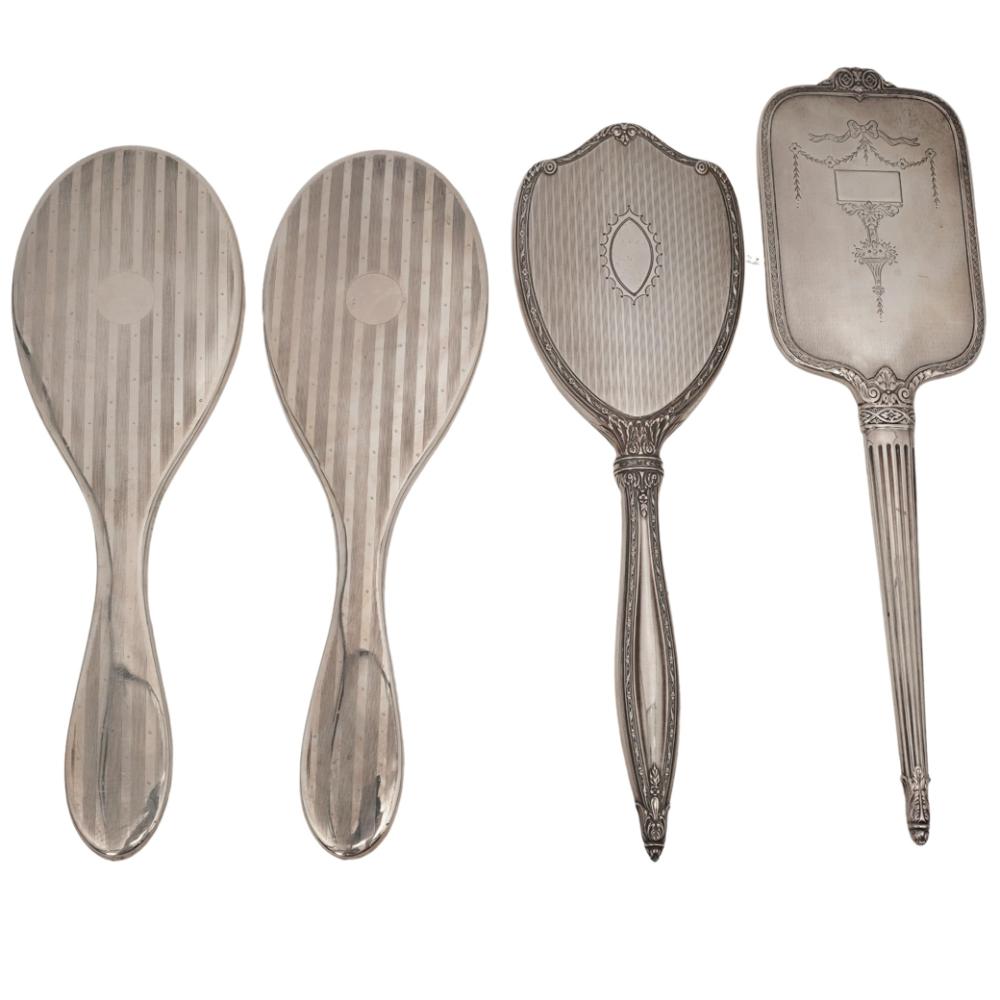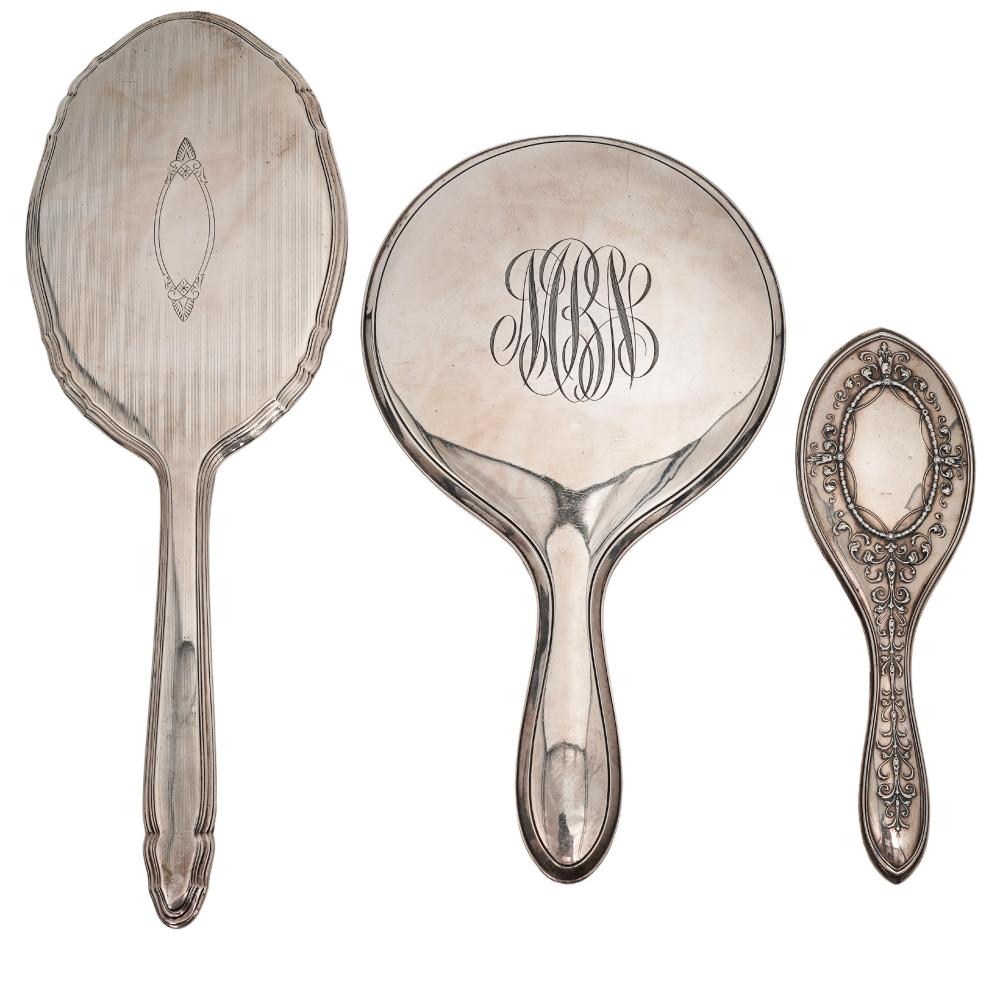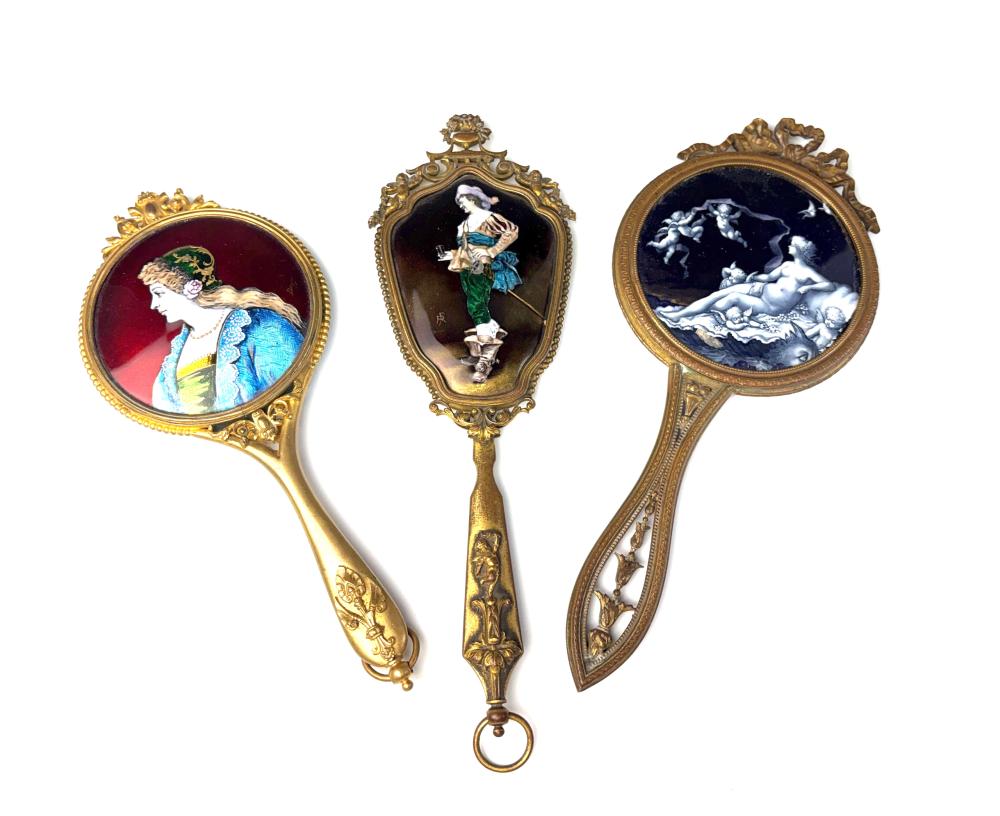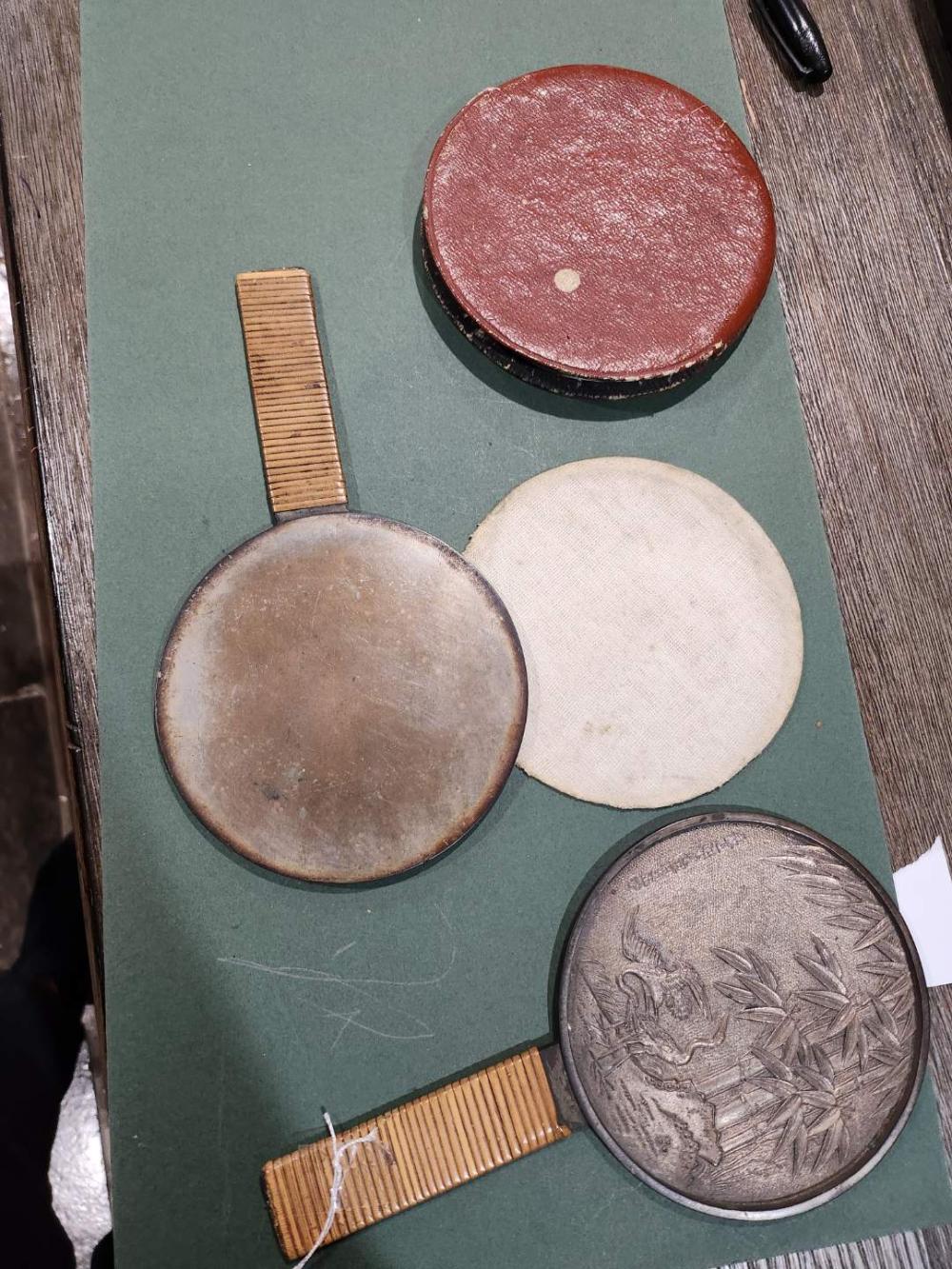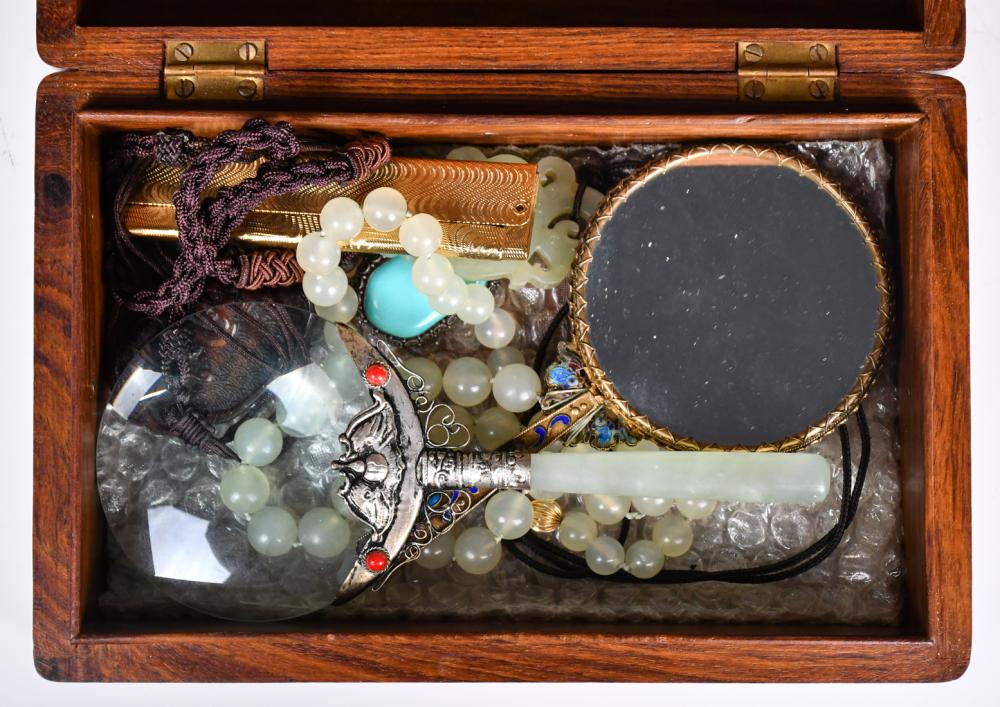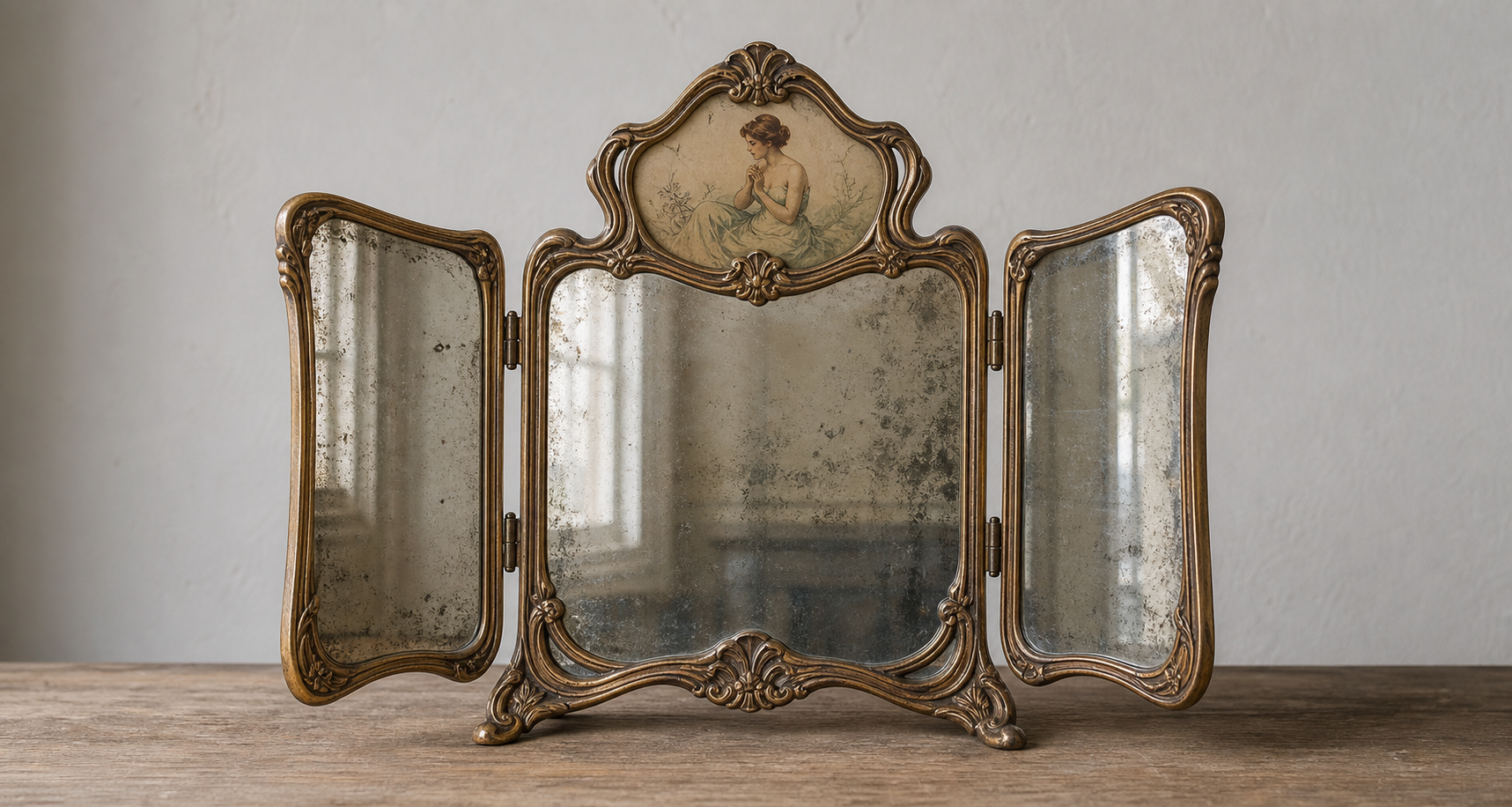
Antique hand mirrors can be silver, silver plate, celluloid, tortoiseshell, enamel, wood, or mixed materials. Value depends on material, maker marks, decoration, glass condition, handle integrity, and collector demand.
Identify the material and marks
Look for sterling, silver plate, hallmarks, maker stamps, patent marks, monograms, enamel work, and handle construction. Material evidence is the first step before comparing prices.
Inspect the mirror glass
Silvering loss, chips, cracks, replaced glass, loose handles, dents, and polishing wear can change value. Original glass with age is expected, but severe deterioration affects buyer interest.
Compare by type and quality
A plain plated dresser mirror and a signed sterling or enamel hand mirror are different markets. Match material, size, maker, decoration, and condition when using sold examples.
What a defensible value needs
Photograph both sides, the handle joint, mirror glass, edge, marks, monograms, and damage. Small marks often decide whether a hand mirror is common or more collectible.
Need a documented value?
Upload photos and details. Appraisily checks identity, condition, and market evidence, then prepares a signed appraisal report you can share.